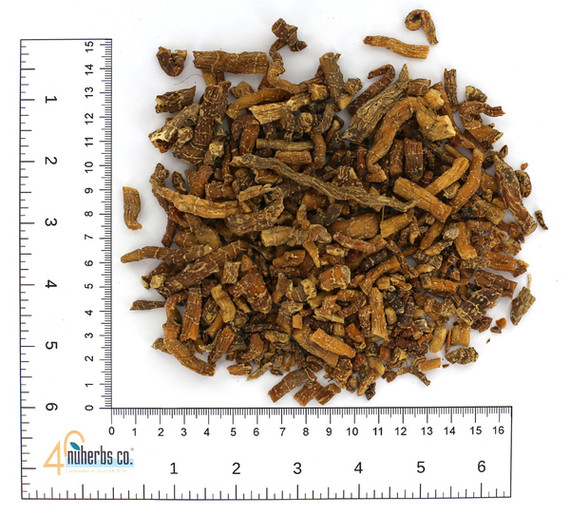


Cang Zhu (Black Atractylodes Rhizome) — Cut Form, 1 lb (Lab-Tested)
Cang Zhu (Atractylodes lancea) - A Vital Herb for Dampness Relief
Cang Zhu is a revered herb in Traditional Chinese Medicine (TCM), known for its potent ability to address patterns of "dampness" within the body. This classic herb is particularly beneficial when you experience sensations of heaviness or sluggishness, commonly associated with digestive discomfort. Cang Zhu works by promoting the transformation and excretion of dampness, invigorating the spleen's function to restore balance. Its invigorating properties help clear away excess moisture, allowing for improved digestion and enhanced vitality. Whether you are a seasoned practitioner or an informed consumer, incorporating Cang Zhu into your herbal regimen can provide foundational support for maintaining overall wellness and digestive clarity. Trust in the quality and efficacy of Cang Zhu, meticulously sourced and lab-tested to ensure every grain meets our high standards.
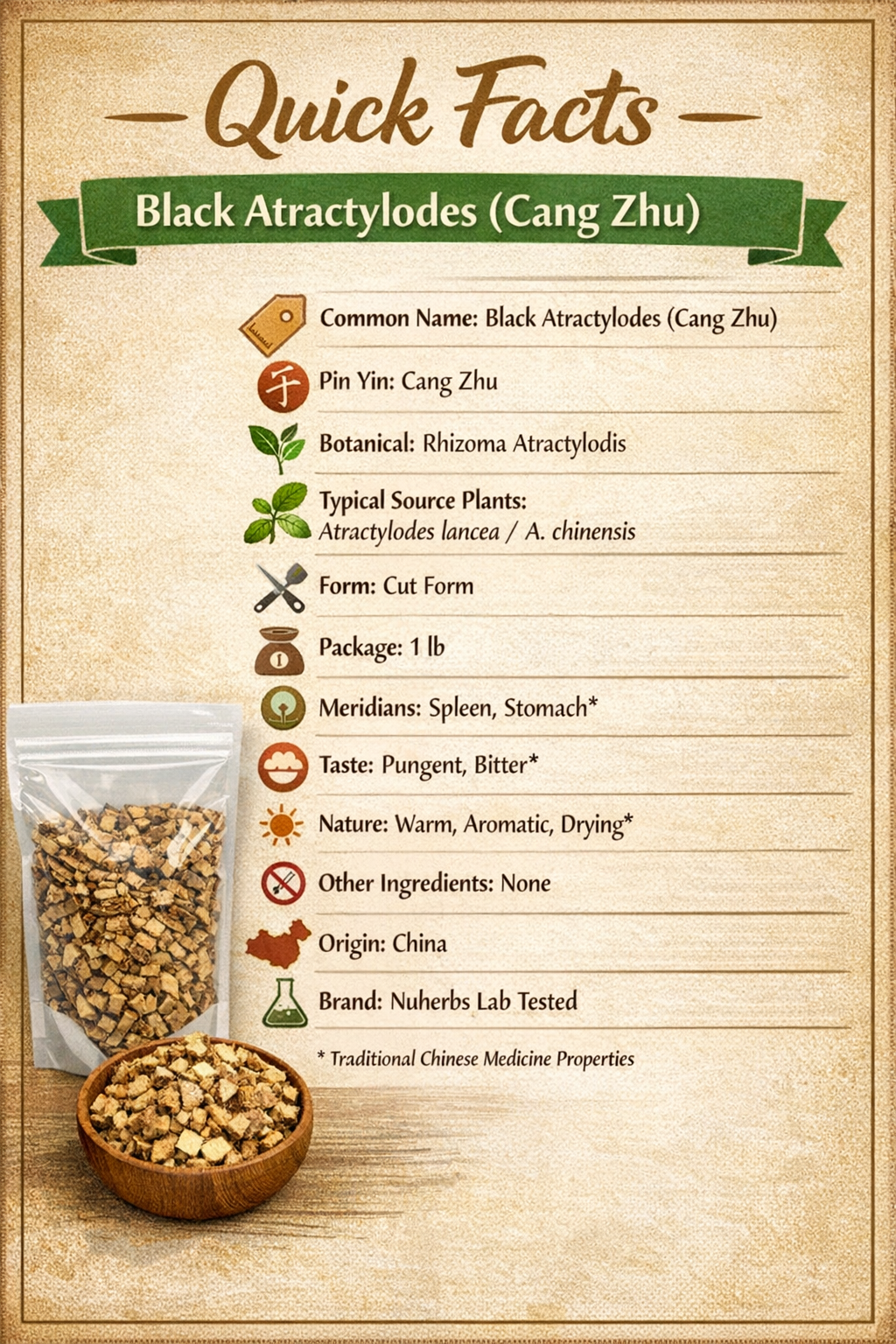
What Is Cang Zhu (Black Atractylodes Rhizome)?
Cang Zhu is the dried rhizome (underground stem) of Atractylodes species used in Traditional Chinese Medicine. It is known for a strong aromatic scent and a warming, drying character in TCM pattern language.*
Practical note: Cut form is commonly used for simmering/decoction.

What Is Cang Zhu Used For in TCM?
In Traditional Chinese Medicine, Cang Zhu is best known for transforming and drying “dampness,” especially when dampness affects the digestive center (often described as the Middle Jiao).*
1) Dries Dampness and Supports the Spleen/Stomach*
- Traditionally used when the body feels heavy, sluggish, or “stuck.”*
- Often chosen when digestion feels weighed down (fullness, bloating, poor appetite patterns).*
2) Supports Comfort When Dampness Affects Muscles & Joints*
- Used in traditional strategies for “wind-damp” patterns associated with heaviness or achiness.*
3) Supports the Exterior in Wind-Damp-Cold Patterns*
- Sometimes used traditionally when chills/body aches appear with a damp, blocked-feeling pattern.*
4) Traditional “Brightens the Eyes” Use*
- Classical sources describe traditional use for diminished vision patterns.*
*These are traditional pattern-based descriptions. They are not medical claims.
Cang Zhu vs Bai Zhu: When Black Atractylodes Is Used Instead of White
This is one of the most common questions shoppers ask. While both herbs relate to the Spleen/Stomach in TCM, they are used differently based on the person’s pattern.*
| Cang Zhu (Black Atractylodes) | Bai Zhu (White Atractylodes) |
|---|---|
| TCM “job”: Aromatically transforms and dries dampness* Energetics: More aromatic, warming, drying* Best fit: Dampness feels heavy, thick, obstructive (more “excess”)* Common pattern cues: Heaviness, fullness, greasy tongue coat, damp obstruction signs* Why chosen: You want stronger drying/transformation rather than gentle tonification* |
TCM “job”: Strengthens Spleen Qi and supports stability* Energetics: More tonifying, generally gentler and less drying* Best fit: Spleen Qi deficiency patterns (more “weak digestion” than “heavy damp”)* Common pattern cues: Fatigue, low appetite, loose stools from deficiency patterns* Why chosen: You want longer-term strengthening and support* |
When Cang Zhu Is Often Chosen Instead of Bai Zhu*
- When dampness feels heavy, “mucky,” thick, or obstructive.*
- When you want stronger drying and aromatic transformation.*
- When the pattern leans more excess damp than deficiency.*
When Bai Zhu Is Often Chosen Instead of Cang Zhu*
- When digestion needs gentle strengthening rather than drying.*
- When there are signs of dryness or yin deficiency (Cang Zhu may be too drying for some patterns).*
- When the goal is steadier, longer-term Spleen support.*
Many formulas choose one or the other depending on the full pattern. For personalized guidance, consult a qualified practitioner.
How to Use Cang Zhu (Cut Form)
Decoction (Traditional Simmered Tea)
Cut form is traditionally prepared as a decoction.
- Quick rinse the cut herb.
- Add to a pot with 3–4 cups of water.
- Bring to a light boil, then simmer 20–30 minutes.
- Strain and use as directed by your practitioner.
Typical traditional ranges are often described in classical sources (commonly 3–12g depending on formula and person). For your specific needs and safety, use practitioner guidance.
What Does It Taste Like?
Cang Zhu is aromatic and bold: typically described as pungent and bitter with a warming character.*
Cautions & Who Should Avoid Cang Zhu
- Do not use if pregnant or nursing unless directed by a qualified professional.
- Not recommended for individuals with loose, watery stools patterns.
- Use caution in patterns described as yin deficiency with heat signs or significant fluid deficiency, because Cang Zhu is warming and drying in TCM terms.*
- If you take medications or have medical conditions, consult a qualified clinician or pharmacist before use.
This product is not intended to diagnose, treat, cure, or prevent any disease.
Nuherbs Lab Tested Quality
Herbs are agricultural products. Consistent quality and testing help you shop with confidence.
- Dual testing (in-house + independent third-party testing)
- Microbial screening
- Broad pesticide screening
- Heavy metals screening (commonly including lead, mercury, arsenic)
Ask us if you need help locating batch documentation or general quality information.
Frequently Asked Questions
Is Cang Zhu the same as Bai Zhu?
No. Cang Zhu (Black Atractylodes) is generally more aromatic and drying in TCM terms, while Bai Zhu (White Atractylodes) is more tonifying and stabilizing. The choice depends on pattern.*
Is Cang Zhu the same as “Atractylodes”?
“Atractylodes” can refer to multiple species and multiple herbs. In TCM, Cang Zhu and Bai Zhu are distinct herbs used for different pattern goals.*
How do I store Cang Zhu?
Store sealed in a cool, dry place away from heat and moisture. Airtight containers help preserve aroma.
Can I use Cang Zhu every day?
Some patterns may use it short-term in formulas. Because it is warming and drying in TCM terms, daily long-term use is not ideal for everyone. Practitioner guidance is best.
Disclaimer: These statements have not been evaluated by the Food and Drug Administration. This product is not intended to diagnose, treat, cure, or prevent any disease.
References:
alternativehealing.org
https://tcmwiki.com/wiki/cang-zhu
http://www.itmonline.org/arts/atract.htm
https://www.americandragon.com/Individualherbsupdate/CangZhu.html
https://en.wikipedia.org/wiki/C%C4%81ng_zh%C3%BA