
Can You Take Chinese Herbs Long-Term?
The Truth About Herbal Cycling, Recovery, Consistency, and Why Some Herbs Seem to “Stop Working”
Quick Answer
Some Chinese herbs are traditionally used long term, while others are commonly rotated, adjusted seasonally, or balanced with companion herbs over time. In Traditional Chinese Medicine (TCM), the goal was never simply taking stronger herbs forever.
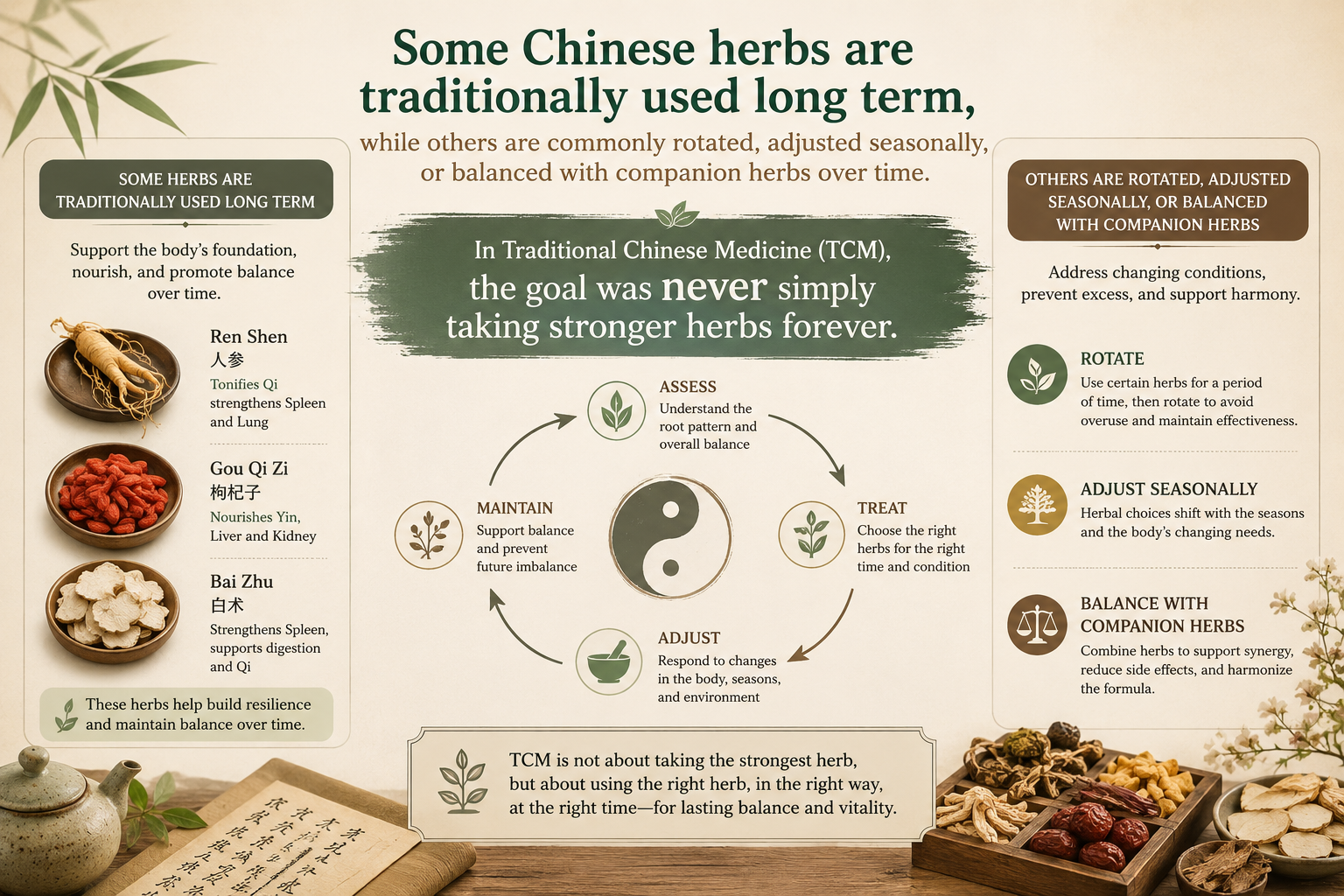
The real goal was:
-
balance
-
consistency
-
recovery
-
resilience
-
observation
-
supporting the body long term
One of the biggest mistakes people make is stopping supportive habits the moment they begin feeling better. Ironically that is often when consistency matters most.
The Herbal Mistake That Changed How I Look at Wellness Forever
When I first became interested in herbs, it was not because I wanted to “optimize wellness.”
It was because I was hurting. I had a severe back injury after a 400-pound shelving unit fell on me, and like many people dealing with ongoing discomfort, I was trying almost everything I could think of:
-
creams
-
supplements
-
stretches
-
exercises
-
herbal extracts
-
heating pads
-
bath soaks
-
mobility work
-
lifestyle changes
There were days the discomfort was so intense that even getting out of the bathtub felt difficult.
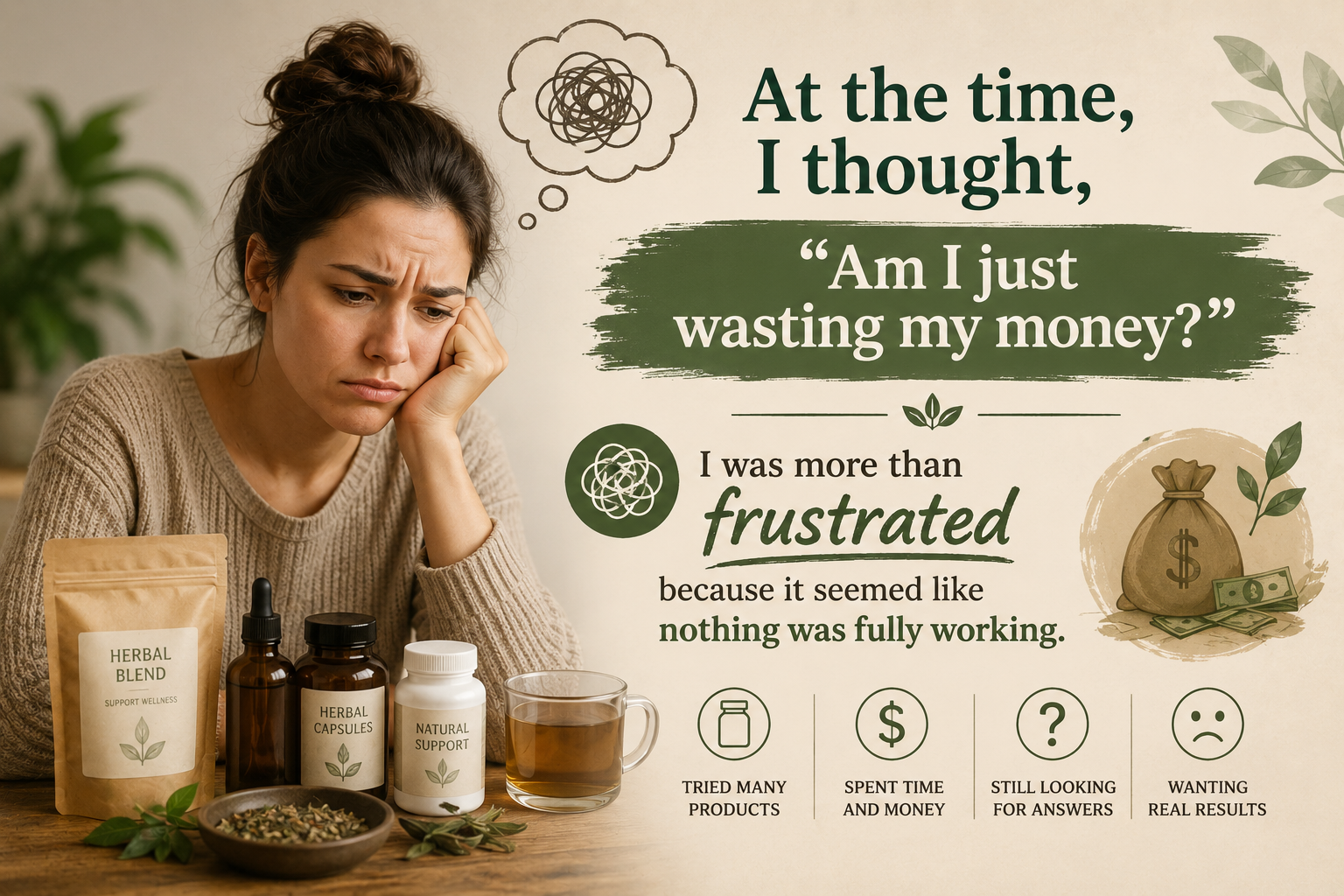
At the time, I thought, "Am I just wasting my money?" I was more than frustrated because it seemed like nothing was fully working.
Then I started noticing something strange.
Whenever I became more consistent with:
-
movement
-
stretching
-
Corydalis extract
-
Arnica cream
-
recovery routines
I slowly started feeling better. But the SECOND I noticed improvement, I would stop. Why?
Because I thought:
“Well, I must be fine now. I can move and not groan when I get up, so I am all better"
I would:
-
stop the cream
-
stop exercising
-
stop stretching
-
stop the routine
-
put movement completely on the back burner
And wow…was I wrong. Because every single time I stopped being consistent, the problems slowly crept back in again. That experience taught me one of the biggest lessons I have ever learned about herbs:
Herbs often work best when they are part of a consistent wellness routine — not a temporary emergency fix used only when things get bad.
Looking back now, the herbs were not failing me. I was failing the routine.
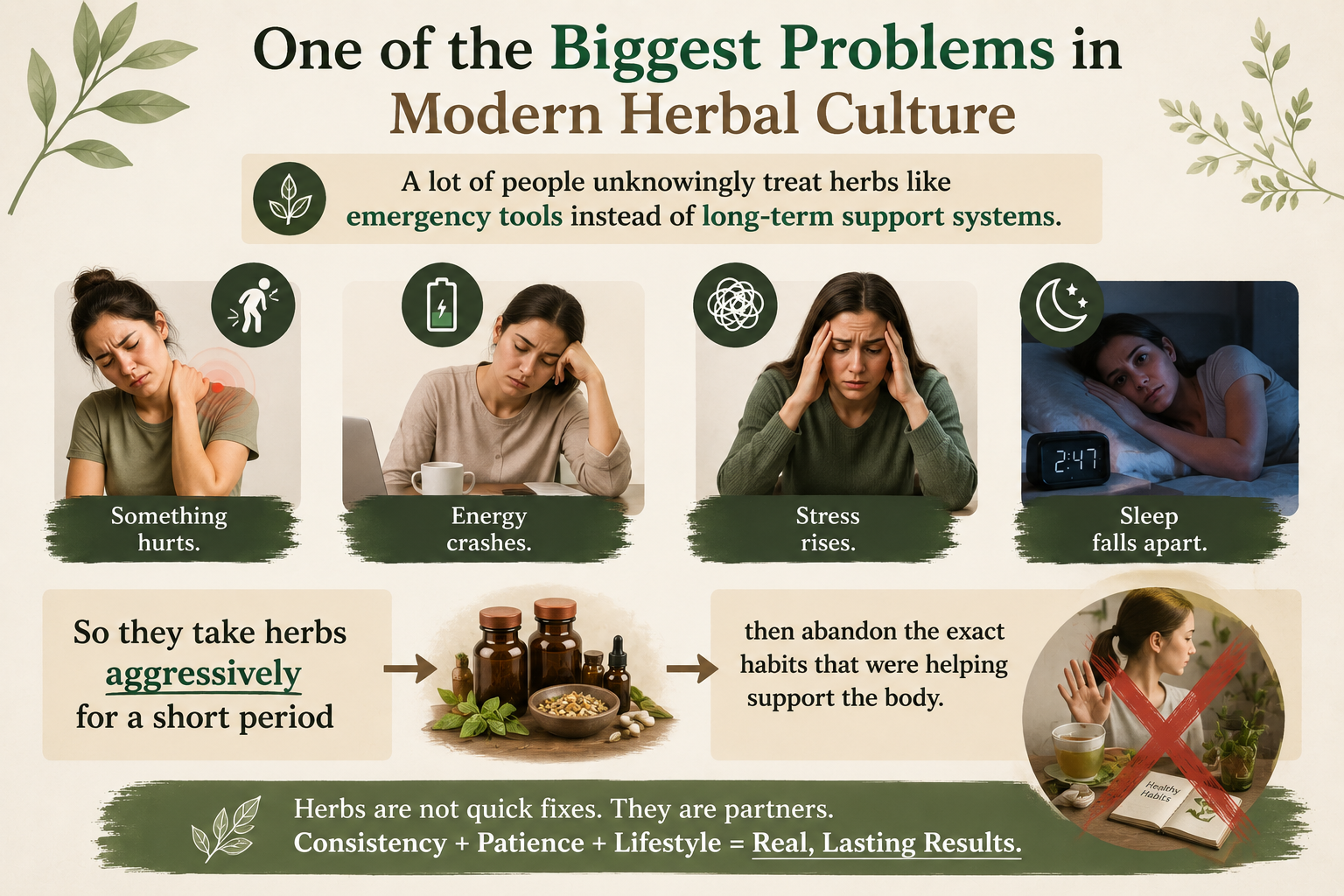
One of the Biggest Problems in Modern Herbal Culture
A lot of people unknowingly treat herbs like emergency tools instead of long-term support systems.
Something hurts.
Energy crashes.
Stress rises.
Sleep falls apart.
So they take herbs aggressively for a short period then abandon the exact habits that were helping support the body.
This is one thing Traditional Chinese Medicine understood centuries ago:
Lasting wellness usually comes from consistency, balance, and sustainable habits — not occasional bursts of effort.
Why Some Herbs Seem to “Stop Working”
Sometimes herbs truly do need adjustment or rotation.
But many times: the real problem is inconsistency.
People often:
-
stop herbs too early
-
abandon exercise
-
ignore sleep
-
return to inflammatory habits
-
stop stretching
-
constantly switch supplements
-
become inconsistent once symptoms improve
Then when problems return, they assume:
“The herbs stopped working.”
But sometimes the herbs WERE helping the routine just disappeared.
The “I Feel Better So I Quit” Trap
This is one of the biggest wellness mistakes people make. Feeling better tricks people into abandoning the exact habits that helped them improve.
This happens constantly with:
-
joint support
-
digestion support
-
stress support
-
mobility routines
-
stretching
-
sleep habits
-
herbal teas
-
recovery practices
Many people stop the moment they finally gain momentum.
What You Need To Know About Recovery
Recovery is often boring. It is SLOW. Plus, recovery is frustrating.
People expect:
-
miracle herbs
-
dramatic overnight changes
-
instant relief
-
one “magic” supplement
But real long-term recovery often looks like:
-
hydration
-
walking
-
stretching
-
mobility work
-
sleep
-
repetition
-
consistency
-
gradual improvement
That may not sound exciting but it is often the truth.
Traditional Chinese Medicine Was Never Only About Herbs
One of the biggest misunderstandings about Chinese medicine is assuming it was only about taking herbs.
Traditional Chinese Medicine also emphasized:
-
movement
-
digestion
-
circulation
-
emotional balance
-
sleep
-
moderation
-
consistency
-
seasonal adjustment
-
daily habits
This is one reason traditional systems focused heavily on:
supporting the whole person instead of chasing quick fixes.
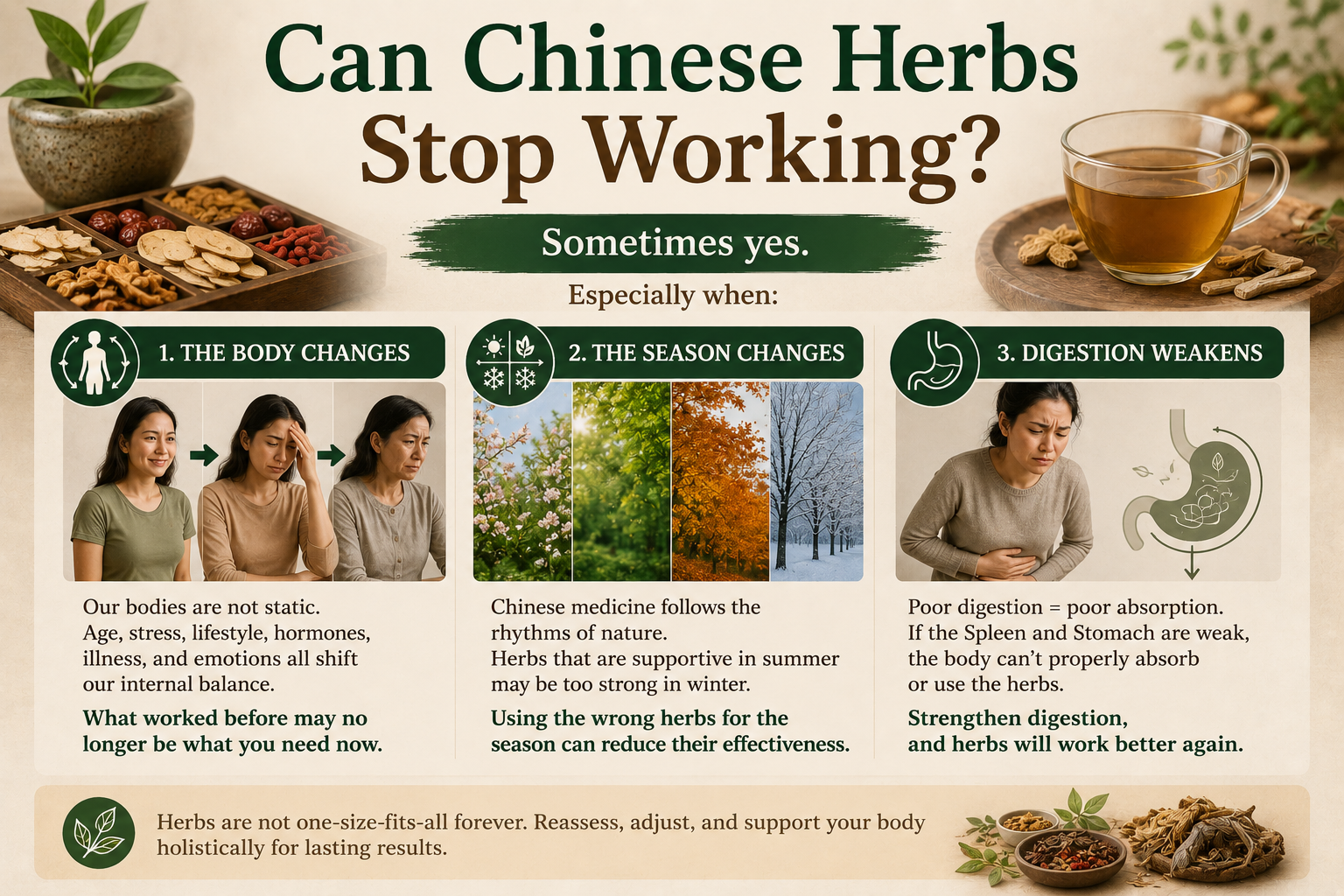
Can Chinese Herbs Stop Working?
Sometimes yes. Especially when:
-
the body changes
-
the season changes
-
digestion weakens
-
stress increases
-
sleep worsens
-
herbs no longer match the body’s current needs
But many times the bigger issue is:
-
inconsistency
-
unrealistic expectations
-
abandoning routines too early
This is why experienced herbal systems traditionally reassessed and adjusted formulas over time.
Why Chasing Stronger Herbs Often Backfires
One of the biggest misconceptions in modern wellness culture is:
“If it stopped working, I need something stronger.”
But stronger is not always better. In Traditional Chinese Medicine:
-
excessive warming may create heat
-
excessive cooling may weaken digestion
-
excessive detoxification may drain energy
-
excessive stimulation may worsen stress and sleep
Many people spend years chasing stronger and stronger solutions while ignoring:
-
recovery
-
consistency
-
sleep
-
movement
-
hydration
-
digestion
Sometimes the body does not need MORE stimulation. Sometimes it needs better support.
Quick Wellness Reality Check
| Problem | Common Mistake | Better Long-Term Approach |
|---|---|---|
| Joint discomfort | Stopping movement too early | Stay consistent with mobility |
| Stress | Taking herbs but sleeping poorly | Improve nighttime routine |
| Low energy | Overusing stimulants | Focus on recovery + consistency |
| Digestion | Using too many strong herbs | Simplify and support digestion |
| Brain fog | Chasing stronger supplements | Improve sleep + circulation |
| Wellness plateaus | Constantly switching herbs | Stay consistent longer |
Chinese Herbs Commonly Used for Long-Term Wellness Support
Corydalis (Yan Hu Suo)
Traditionally Used for Discomfort & Movement Support
Traditionally used for:
-
discomfort support
-
circulation support
-
mobility support
What I Personally Learned
Using it only occasionally never worked nearly as well as:
-
staying consistent
-
moving regularly
-
stretching
-
rebuilding supportive routines
Helpful Suggestion
Many people focus only on symptom relief while ignoring:
-
posture
-
movement
-
recovery habits
-
mobility work
Herbs often support the process they do not replace the process.
PubMed:
https://pubmed.ncbi.nlm.nih.gov/30079062/
Du Huo (Angelica pubescens)
Traditionally Used for Joint & Mobility Support
Traditionally used for:
-
stiffness
-
cold-damp discomfort
-
mobility support
Common Mistake
One of the biggest mistakes people make with joint support herbs is becoming inactive the moment symptoms improve. Movement is often PART of the recovery process.
Helpful Recovery Support Habits
Many people benefit from combining:
-
walking
-
stretching
-
posture correction
-
mobility exercises
-
supportive herbs
instead of relying entirely on one supplement.
PubMed:
https://pubmed.ncbi.nlm.nih.gov/30670244/
Suan Zao Ren
Traditionally Used for Stress & Sleep Support
Traditionally used for:
-
calming support
-
emotional balance
-
sleep support
-
nervous system wellness
What Most Websites Never Explain
Stress herbs often work better when combined with:
-
reducing overstimulation
-
nervous system recovery
-
better sleep habits
-
reducing chronic exhaustion
Herbs alone usually cannot outwork nonstop stress and burnout.
PubMed:
https://pubmed.ncbi.nlm.nih.gov/34407827/
Huang Qi (Astragalus)
Traditionally Used for Energy & Recovery Support
Traditionally used for:
-
Qi support
-
resilience
-
endurance
-
recovery support
Common Beginner Mistake
Many people take energy herbs while:
-
sleeping poorly
-
barely moving
-
overworking
-
eating poorly
-
ignoring recovery
Then they wonder why the herbs eventually feel less effective.
What Most People Never Realize
Energy recovery often requires:
-
sleep
-
hydration
-
movement
-
nourishment
-
consistency
—not just stronger stimulation.
PubMed:
https://pubmed.ncbi.nlm.nih.gov/33124790/
10 Chinese Herbs Commonly Used Long-Term
| Chinese Herb | Traditional Use | Why Some People Use It Long-Term | Common TCM Perspective |
|---|---|---|---|
| Huang Qi (Astragalus) | Energy, resilience | Daily vitality and recovery support | Builds Qi |
| Fu Ling (Poria) | Digestion, dampness | Gentle balancing support | Supports Spleen |
| Bai Zhu | Digestion, fatigue | Long-term digestive support | Strengthens Spleen Qi |
| Gou Qi Zi | Nourishment, aging support | Often used as food-like tonic | Nourishes Liver & Kidney Yin |
| Suan Zao Ren | Stress & sleep | Nighttime calming support | Calms Shen |
| Ye Jiao Teng | Relaxation support | Gentle long-term calming herb | Supports circulation & spirit |
| Chen Pi | Digestion, bloating | Supports digestive movement | Moves Qi |
| Shan Yao | Energy & nourishment | Food-like tonic support | Supports Spleen & Kidney |
| Ju Hua | Seasonal wellness | Often consumed as tea | Clears heat |
| Dang Shen | Energy & recovery | Gentler Qi tonic support | Tonifies Qi |
Signs You May Need An Adjustment Instead of More Herbs
Sometimes the answer is not: “Take more.”
Sometimes the body is asking for:
-
better sleep
-
less stress
-
more consistency
-
improved digestion
-
movement
-
hydration - this was one of my major issues, yet it is so simple. Don't overlook this.
-
formula adjustment
-
recovery
Common Signs You May Need Reassessment
-
herbs feel less effective
-
sleep worsens
-
bloating develops
-
energy crashes harder
-
digestion weakens
-
symptoms return immediately after stopping routines
Seasonal Wellness Matters More Than Most People Realize
Traditional Chinese herbal systems often adjusted herbs seasonally.
Spring
Movement and digestive support often become important.
Summer
Cooling and heat-clearing support may be emphasized.
Fall
Lung and moisture support become more common.
Winter
Warming and recovery-focused support are traditionally emphasized.
This flexibility helps prevent imbalance from relying on the exact same approach forever.
Best Forms of Chinese Herbs for Long-Term Use
Bulk Herbs
Traditionally used for decoctions and balanced formulas.
Powders
Convenient and versatile for daily use.
Extract Powders
More concentrated and often better suited for targeted support.
Teapills
Convenient for long-term routines and travel.
Creams & External Support
Helpful for combining topical support with lifestyle changes.
Helpful Beginner Recovery Routine
Morning
-
hydration
-
stretching
-
supportive herbs
-
light movement
-
breakfast with protein
Midday
-
walking
-
posture awareness
-
stress reduction
-
mobility breaks
Evening
-
calming routines
-
reduced stimulation
-
sleep support
-
mobility work
Simple routines repeated consistently often outperform aggressive short-term efforts.
Frequently Asked Questions
Can Chinese herbs be taken every day?
Some Chinese herbs are traditionally used daily, while others may require seasonal or formula adjustments depending on the individual.
Can herbs stop working over time?
Sometimes, especially if the body changes or routines become inconsistent.
Should you suddenly stop herbs?
Some people prefer gradual adjustment instead of abruptly stopping long-term routines.
Are herbs enough by themselves?
Usually herbs work best alongside:
-
movement
-
hydration
-
sleep
-
recovery habits
-
stress management
Why do herbs work at first then feel weaker later?
Sometimes the body adapts, but many times routines, sleep, stress, and consistency changed.
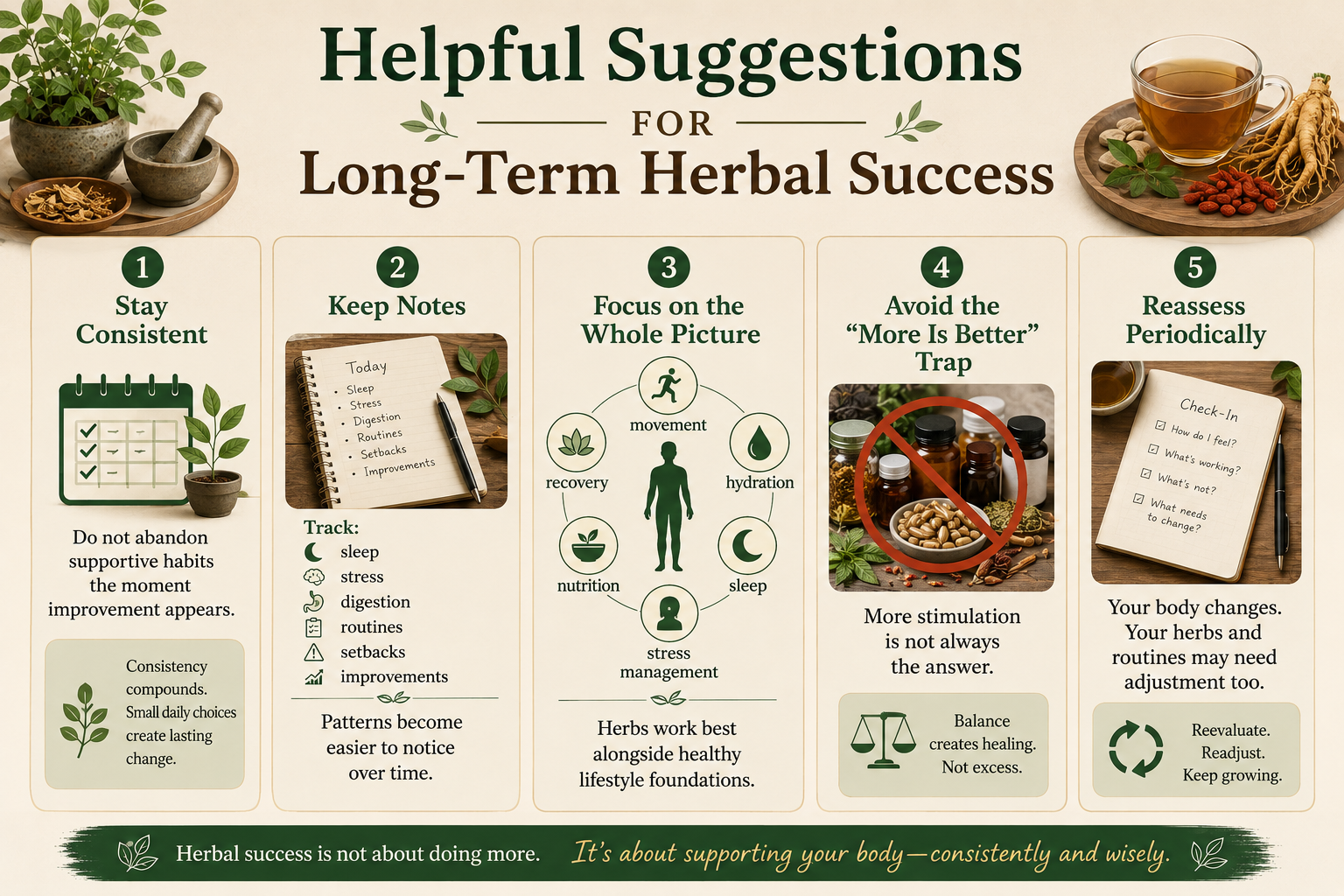
Helpful Suggestions for Long-Term Herbal Success
1. Stay Consistent
Do not abandon supportive habits the moment improvement appears.
2. Keep Notes
Track:
-
sleep
-
stress
-
digestion
-
routines
-
setbacks
-
improvements
Patterns become easier to notice over time.
3. Focus on the Whole Picture
Herbs work best alongside:
-
movement
-
hydration
-
sleep
-
nutrition
-
recovery
-
stress management
4. Avoid the “More Is Better” Trap
More stimulation is not always the answer.
5. Reassess Periodically
Your body changes.
Your herbs and routines may need adjustment too.
Trusted Herbal Quality Matters
Not all herbs are equal.
Factors that may influence long-term herbal experiences include:
-
freshness
-
sourcing
-
processing
-
storage
-
formulation
-
consistency
-
preparation method
This is one reason many people prefer:
-
lab-tested herbs
-
properly sourced herbs
-
professionally prepared formulas
-
consistent herbal routines
Explore Traditional Chinese Herbs for Wellness Support
Many people explore traditional Chinese herbs such as:
-
Corydalis (Yan Hu Suo)
-
Du Huo
-
Suan Zao Ren
-
Huang Qi
-
Fu Ling
-
Bai Zhu
-
Gou Qi Zi
The best approach depends on:
-
the individual
-
constitution
-
wellness goals
-
consistency
-
lifestyle habits
Final Thoughts
The Goal Was Never Just Taking More Herbs
Looking back now, one of the biggest lessons I learned was this:
consistency often matters more than intensity.
The herbs were not failing me. I was failing the routine. I kept stopping the exact things that were helping support my recovery:
-
movement
-
stretching
-
sleep
-
consistency
-
recovery habits
-
patience
Traditional Chinese Medicine was never simply about finding:
“the strongest herb.”
It was about:
-
balance
-
observation
-
recovery
-
consistency
-
adaptation
-
supporting the body over time
Sometimes, the most important step is not finding another supplement.
Sometimes it is simply staying consistent long enough for the body to truly benefit from the support you are already giving it.
Helpful Herbal Guides
|
Learn beginner-friendly ways to prepare, measure, steep, simmer, and store bulk herbs at home. |
|
|
Discover simple mistakes that may affect herbal flavor, freshness, brewing quality, and overall experience. |
|
|
Browse educational articles about herbs, teas, mushrooms, roots, and traditional wellness practices. |
|
|
Contact our team with questions about brewing methods, herb preparation, or choosing the right herbs. |
Author: 1st Chinese Herbs Research Team
Updated May 26 2026
References
Disclaimer
This article is for educational purposes only and is not intended to diagnose, treat, cure, or prevent any disease. Herbal responses vary from person to person. Always consult a qualified healthcare professional before using herbs, especially if pregnant, nursing, taking medications, or managing a medical condition.
Trusted Since 1994 | Lab-Tested Herbs | COA Available Upon Request | Fast Shipping from Washington State