
Why Some Chinese Herbs Are Harvested at 2 Years… and Others at 8
Ever wonder why one astragalus root is thin, pale, and inexpensive… while another is thick, golden, deeply aromatic, and costs significantly more?
Most people assume herbs are all harvested the same way.
But the truth is far more interesting.
In traditional herbal systems, when a plant is harvested can completely change the herb itself.
Some herbs are harvested young and tender. Others are intentionally left in the ground for years. Some roots are dug in autumn after the plant stores energy below the soil. Some flowers are harvested before fully blooming to preserve delicate aroma.
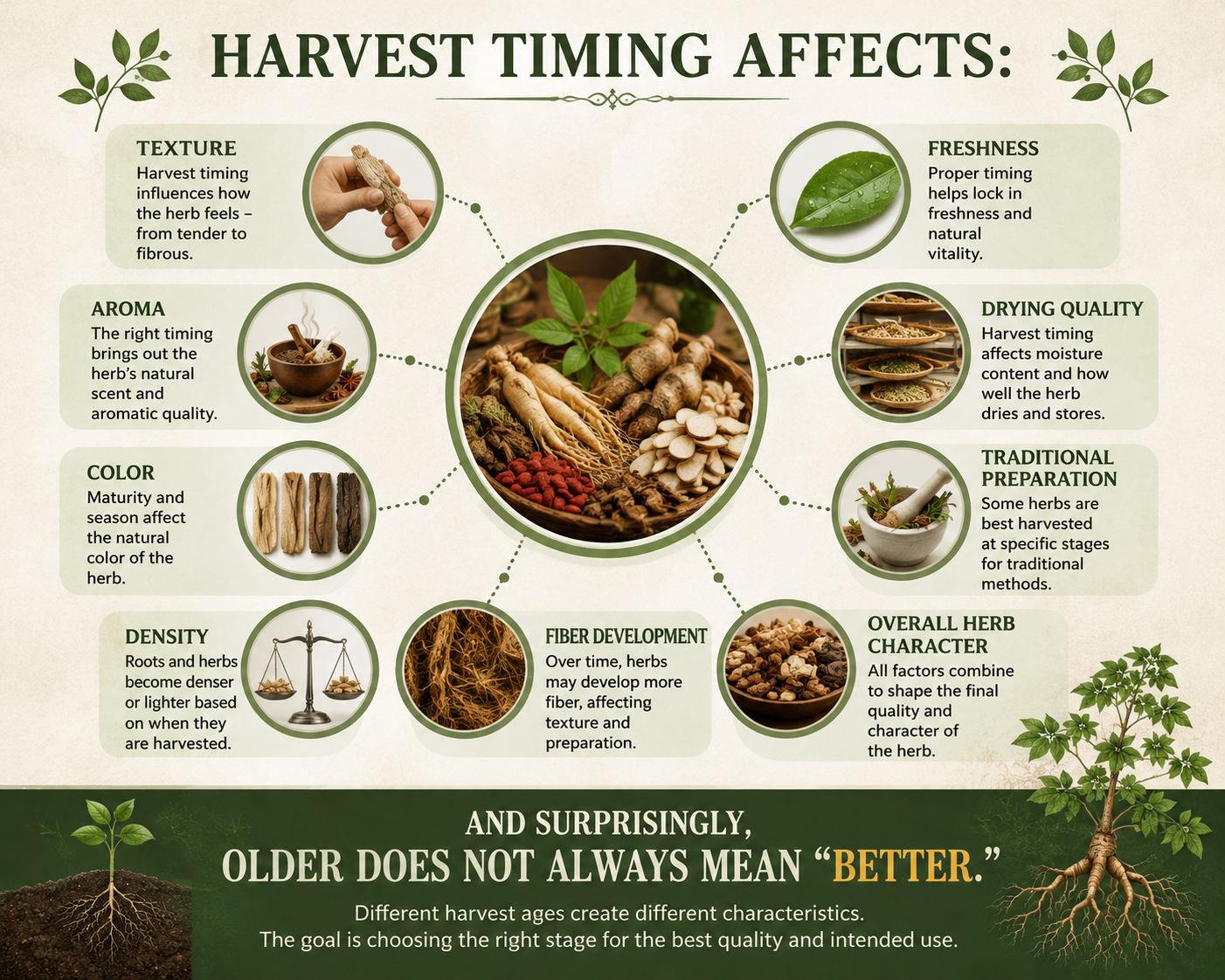
Harvest timing affects:
- texture
- aroma
- color
- density
- fiber development
- freshness
- drying quality
- traditional preparation
- overall herb character
And surprisingly, older does not always mean “better.”
Different harvest ages simply create different characteristics.
Quick Answer: Chinese herbs are harvested at different stages because plant maturity changes the herb’s aroma, texture, density, appearance, drying characteristics, and traditional preparation qualities. Some herbs are valued when young and tender, while others develop very different characteristics as they mature over time.
What You Need To Know About Herbal Harvesting
Most consumers only see the finished herb sitting in a bag, bottle, or jar.
They never see:
- how long the plant grew
- what season it was harvested
- how weather affected growth
- when the roots were dug
- whether flowers were picked early or late
- how maturity changed the plant
But harvest timing is one of the biggest factors affecting how an herb looks, smells, feels, and dries.
This is especially true for roots.
A younger root may be softer, lighter, and less fibrous.
An older root may become:
- thicker
- harder
- denser
- more aromatic
- darker
- more fibrous
Neither one is automatically “better.” They are simply different stages of growth.
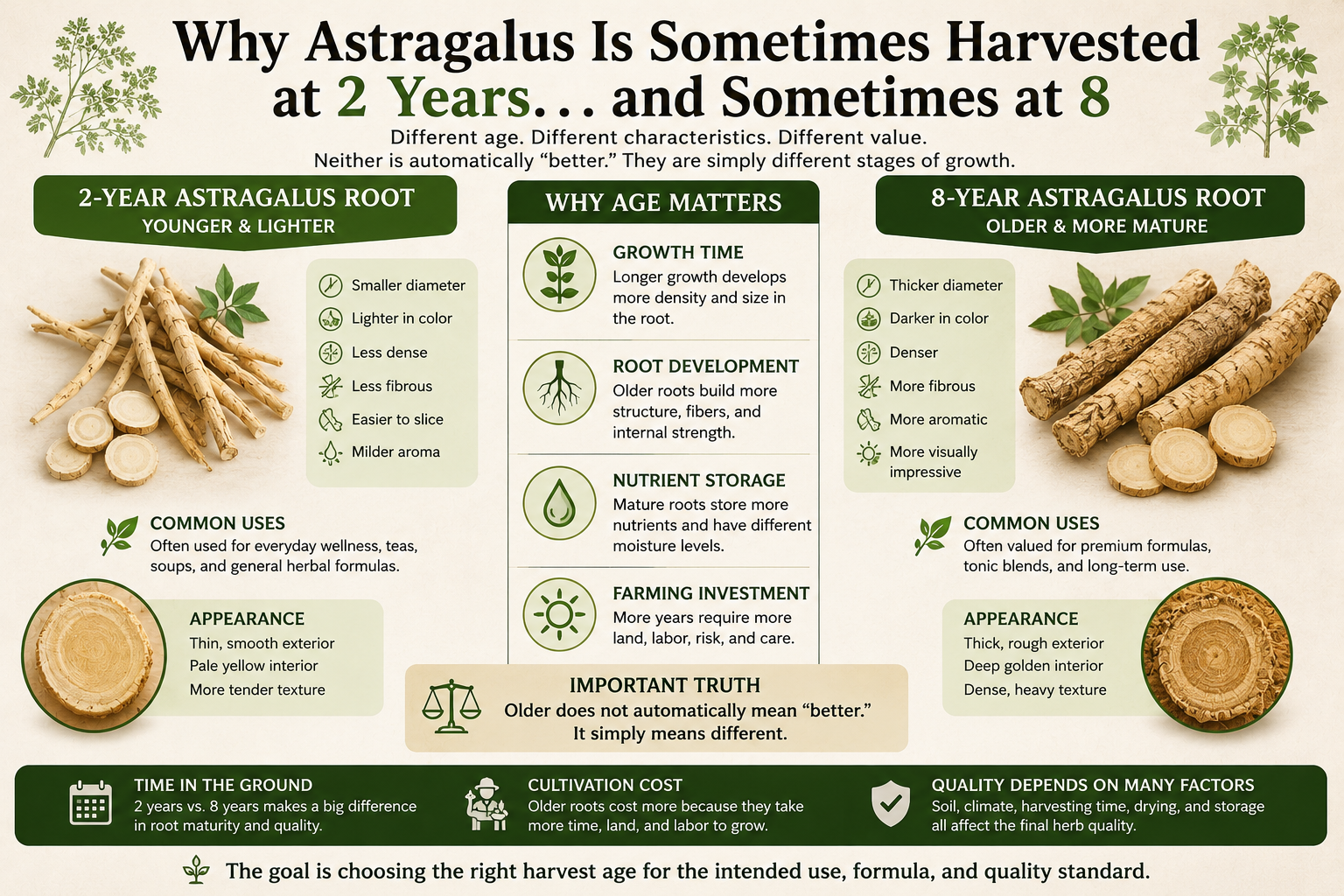
Why Astragalus Is Sometimes Harvested at 2 Years… and Sometimes at 8
Astragalus root (Huang Qi) is one of the best examples of how maturity changes an herb.
Younger astragalus roots are often:
- lighter in color
- smaller in diameter
- less dense
- less fibrous
- easier to slice
Older astragalus roots may become:
- thicker
- denser
- deeper in color
- more aromatic
- more visually dramatic
Growing a root for many years also requires:
- more land use
- more farming time
- greater weather risk
- longer storage planning
- more labor
This is one reason older roots often cost more.
However, it is important to understand something:
Older herbs are not automatically “stronger” or universally “better.”
As herbs mature, their characteristics change. Texture, density, aroma, appearance, and preparation qualities may all become different over time.
The goal is not always maximum age.
The goal is often selecting the right harvest stage for the intended preparation, traditional use, and overall quality.
Why Many Roots Are Harvested in Autumn
This is something most websites never explain.
Many roots are traditionally harvested in fall because the plant naturally begins shifting resources downward as seasonal growth slows.
At this stage:
- above-ground growth slows
- roots often become denser
- moisture levels may change
- storage qualities improve
- drying becomes easier in some climates
This seasonal timing has been observed and refined through generations of traditional harvesting practices. Harvest timing can completely change how a root looks once dried.
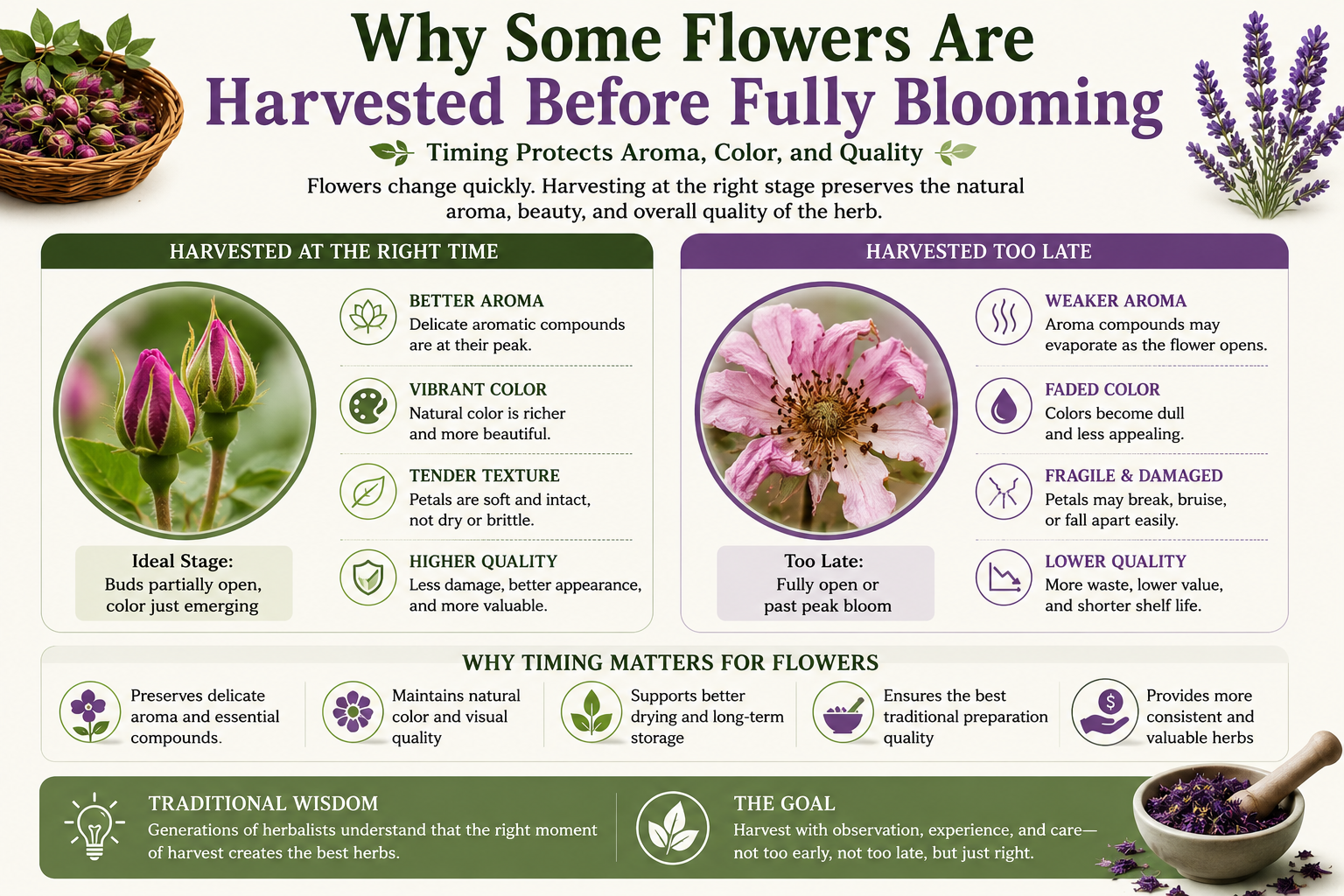
Why Some Flowers Are Harvested Before Fully Blooming
Flower harvesting follows a completely different logic than roots.
Some flowers are harvested before fully opening because delicate aroma compounds and visual qualities can change rapidly once the flower matures.
Depending on the plant, harvesting too late may lead to:
- faded color
- weaker aroma
- petal damage
- reduced visual quality
- faster breakdown during drying
This is one reason flower harvesting often requires precise timing and careful handling.
Young Herbs vs Mature Herbs
| Harvest Stage | Common Characteristics | Typical Appearance |
|---|---|---|
| Young Herbs | Tender, lighter, softer, less fibrous | Smaller, smoother, lighter in color |
| Mature Herbs | Denser, more fibrous, thicker texture | Larger, darker, heavier, more aromatic |
What You’ll Start Noticing Once You Understand Harvest Timing
Once people learn about harvest timing, they begin noticing details most consumers overlook.
- Why some roots are thicker than others
- Why aroma changes between batches
- Why some herbs feel woody while others feel soft
- Why color varies naturally
- Why older herbs may become more fibrous
- Why flowers are harvested at different stages
- Why some herbs cost significantly more
This is often the moment consumers stop viewing herbs as random dried plants and begin understanding them as agricultural craftsmanship.
Quick Herb Harvest Quiz
How much do you know about herb harvesting?
- Can the same herb look completely different depending on harvest age?
- Are older herbs automatically better?
- Can harvest timing affect aroma and texture?
- Are many roots traditionally harvested in autumn?
- Can flowers lose aroma if harvested too late?
Answers:
- Yes, maturity can dramatically change appearance and texture.
- No, older does not automatically mean better — just different.
- Yes, harvest timing affects aroma, density, drying, and appearance.
- Yes, many roots are traditionally harvested in fall.
- Yes, flower aroma and appearance may change rapidly after blooming.
Why Proper Harvest Timing Matters for Quality
Harvesting too early or too late can dramatically affect herb quality.
Poor harvest timing may lead to:
- weak aroma
- poor texture
- excess moisture
- difficult drying
- lower visual quality
- inconsistent appearance
This is one reason experienced growers pay close attention to:
- season
- weather
- plant maturity
- moisture levels
- flower stage
- root density
Harvest timing is part science, part observation, and part traditional experience passed down through generations.
This Is One of the Most Overlooked Parts of Herbal Quality
Most consumers focus only on the final product.
But harvesting is one of the earliest stages that shapes what the herb eventually becomes.
- Shop Bulk Chinese Herbs
- How To Use Bulk Herbs
- The Forgotten Processing Methods That Change Chinese Herbs Completely
- What No One Tells You About Chinese Herbs
- Contact Us
This educational hub was created to help explain the hidden side of Chinese herbs that most websites rarely discuss:
- harvest timing
- processing
- drying methods
- storage
- freshness
- traditional preparation
- why herbs from the same plant can look so different
The deeper people go into Chinese herbs, the more they realize these herbs were never treated as simple dried plants.
They were carefully grown, harvested, prepared, dried, stored, and refined through generations of observation and tradition.
And once you begin understanding harvest timing, you begin seeing herbs very differently.
Explore Quality Bulk Chinese Herbs
Shop bulk Chinese herbs, roots, teas, spices, mushrooms, powders, and traditional ingredients carefully selected with freshness and quality in mind.