
The Forgotten Processing Methods That Change Chinese Herbs Completely
Ever wonder why one Chinese herb smells rich, dark, and aromatic while another version of the “same” herb smells lighter, sweeter, smokier, roasted, or completely different?
Most people assume Chinese herbs are simply picked, dried, packaged, and shipped.
That is only part of the story.
For centuries, Chinese herbs were carefully prepared through traditional processing methods that could change the herb’s aroma, color, texture, taste, storage quality, and traditional use.
Some herbs were honey-fried. Others were steamed, roasted, vinegar-processed, wine-fried, salt-prepared, ginger-prepared, carbonized, sun-dried, or prepared with black soybean liquid.
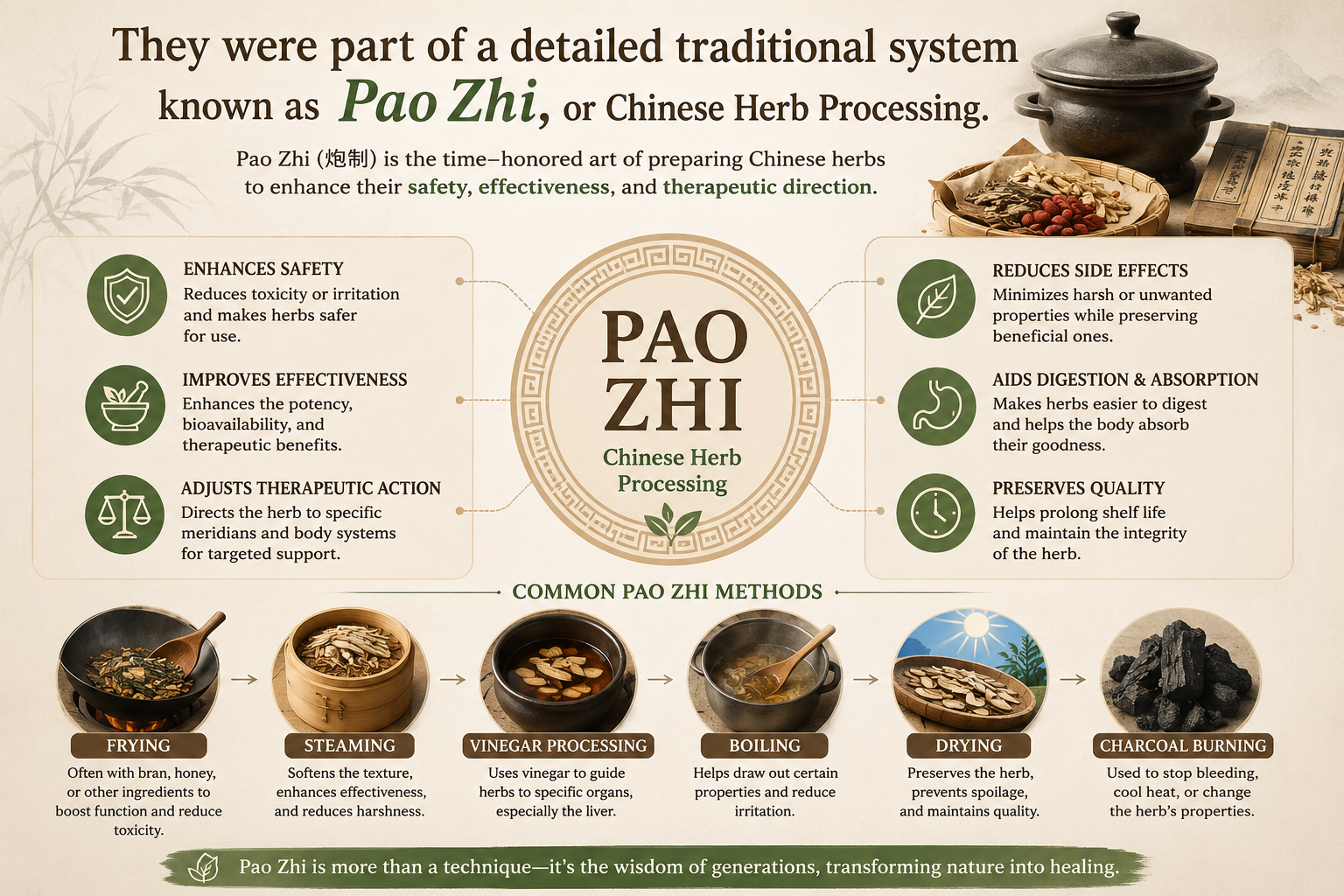
These methods were not random. They were part of a detailed traditional system known as Pao Zhi, or Chinese herb processing.
Quick Answer: Traditional Chinese herb processing was not simply about making an herb “stronger.” In many cases, processing was used to refine the herb, soften harshness, change aroma, improve texture, support storage stability, alter traditional characteristics, or make the herb better suited for certain formulas and preparation styles.
Why This Matters If You Buy Chinese Herbs
This matters because two herbs with the same name may not always look, smell, or feel the same.
One may smell earthy and raw. Another may smell sweet, dark, roasted, smoky, rich, or almost like dried fruit, molasses, toasted roots, or warm earth after rain.
That difference may come from:
- how the herb was harvested
- how it was dried
- whether it was processed
- how it was stored
- how fresh it is
- whether it was prepared traditionally
Once you understand processing, you begin noticing herbs differently. Color, scent, texture, moisture, and aroma become clues — not just random details.
What You Need To Know About Chinese Herbs
Most herb websites list a product name, a Latin name, and maybe a few traditional uses.
But they rarely explain why the herb was processed the way it was in the first place.
That missing explanation leaves consumers confused.
They may wonder:
- Why is this herb darker than the last one I bought?
- Why does this batch smell sweeter?
- Why does one root feel dry while another feels sticky?
- Why does one version look raw and another look roasted?
- Does darker mean better?
- Does prepared mean stronger?
The answer is not always simple. Processing does not automatically mean “better,” and raw does not automatically mean “weaker.” The method depends on the herb, the tradition, and the intended preparation.
 Let's Make This Easy
Traditional processing methods were not necessarily designed to make one herb stronger than another.
In many cases, the goal was to make the herb more refined, more suitable, or traditionally better prepared for a specific purpose.
Some methods were traditionally used to:
- soften harshness
- change aroma
- improve texture
- reduce moisture
- support storage stability
- alter warming or cooling qualities
- make herbs easier to prepare
- help herbs combine more smoothly in formulas
- change how the herb was traditionally understood in practice
The goal was often balance, preparation, compatibility, and refinement — not simply making an herb more powerful.
Think of It Like Coffee, Tea, or Cooking
Imagine buying coffee beans that were harvested, dried, roasted, and stored completely differently — yet sold under the same general name.
One coffee may taste bright and acidic. Another may taste dark, smoky, smooth, or rich.
The bean matters, but so does the processing.
Chinese herbs are similar. The plant matters, but the way it is prepared can dramatically change the final experience.
This is why traditional herb processing deserves more attention than it usually gets.
Why One Chinese Herb Can Look Completely Different Than Another
This is one of the most common sources of consumer confusion.
You may buy one version of an herb that looks:
- light
- dry
- raw
- fibrous
- earthy
Then later see another version that is:
- darker
- shinier
- stickier
- sweeter smelling
- smokier
- thicker
- more aromatic
Many people assume one of them must be fake or poor quality. Sometimes quality is the issue, but often the difference is processing.
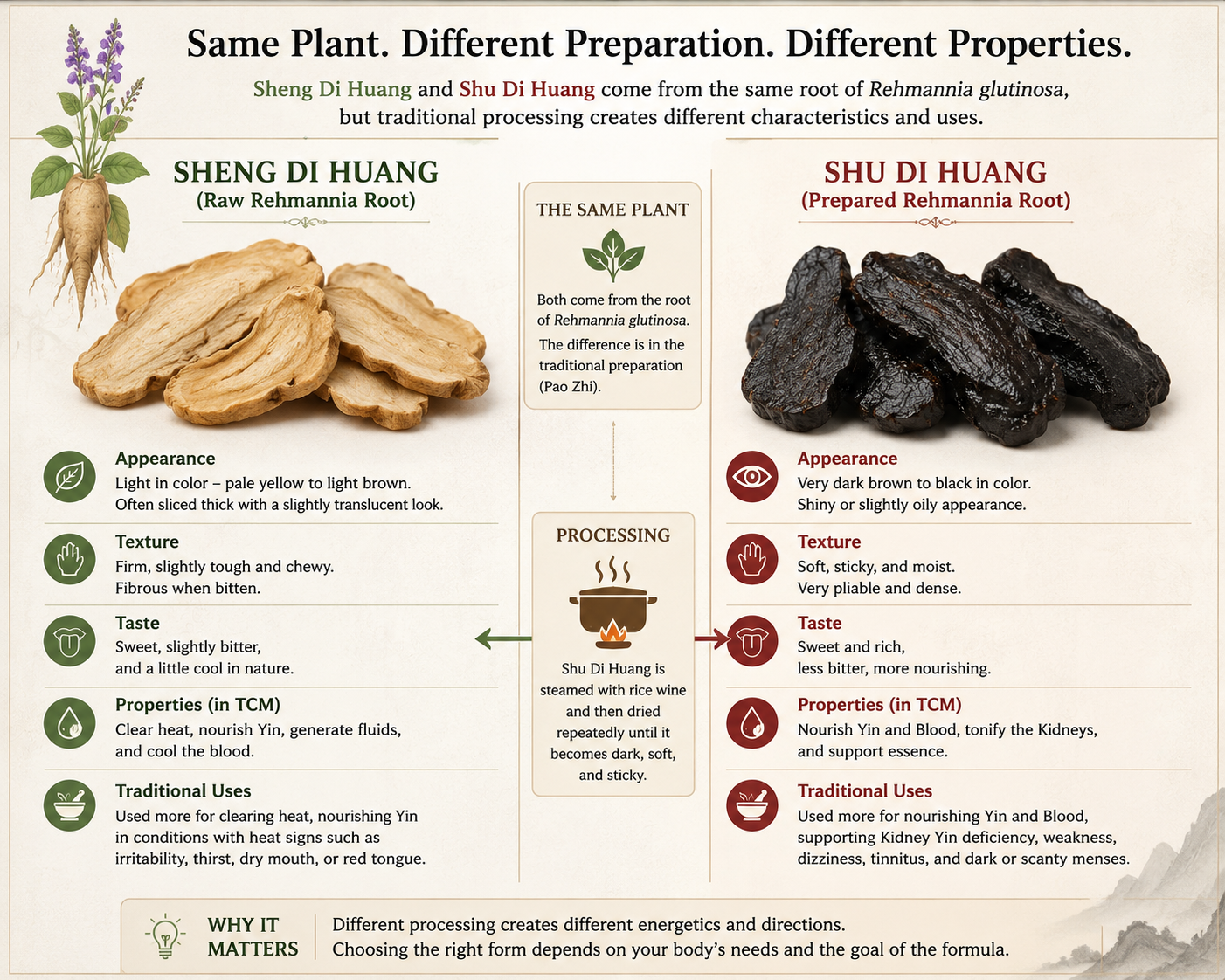
A classic example is:
- Raw Rehmannia — Sheng Di Huang
- Prepared Rehmannia — Shu Di Huang
They come from the same plant, but after repeated steaming and preparation, they look, smell, and feel dramatically different.
The Most Common Chinese Herb Processing Methods
This hub page gives you the big-picture overview. Each method deserves its own detailed guide, but this chart will help you understand the basics.
| Processing Method | What Happens | Traditional Purpose |
|---|---|---|
| Honey-Fried | Herbs are coated with honey and gently heated. | Often used to soften texture, change aroma, and refine traditional characteristics. |
| Vinegar-Processed | Herbs are prepared with vinegar before heating. | Traditionally used to alter aroma and directional qualities. |
| Wine-Fried | Herbs are processed with rice wine. | Traditionally used to create warmer aromatic qualities. |
| Ginger-Prepared | Herbs are processed with ginger juice. | Traditionally used to warm, soften, or refine certain herbs. |
| Salt-Processed | Herbs are prepared with salt water. | Traditionally used to alter texture and preparation qualities. |
| Steamed | Herbs are steamed one or more times. | Can dramatically change texture, color, aroma, and traditional properties. |
| Sun-Dried | Herbs are dried naturally in sunlight. | Traditional slower drying method that depends on weather, airflow, and handling. |
| Machine-Dried | Herbs are dried with controlled mechanical heat. | Supports more consistent moisture control and faster drying. |
| Carbonized | Herbs are heated until darkened or charred. | Traditionally used to alter the herb’s characteristics. |
| Black Soybean Prepared | Herbs are prepared with black soybean liquid. | Traditionally used in specialized preparation methods for certain herbs. |
What Happens When Processing Is Ignored?
Processing is not the only factor that determines herb quality, but ignoring preparation, drying, and storage can lead to disappointing herbs.
Problems may include:
- flat aroma
- faded color
- excess moisture
- musty smell
- weak character
- poor texture
- shorter shelf life
- inconsistent batches
This is why proper drying, storage, sourcing, and handling matter so much. A beautiful herb can still be ruined by poor drying or careless storage.
Quick Herb Processing Quiz
How much do you already know about herb processing?
Can two herbs from the same plant look completely different after processing?
Are all Chinese herbs simply harvested and dried?
Can drying methods affect aroma and texture?
Were processing methods traditionally used only to make herbs stronger?
Can preparation methods affect how herbs were traditionally used?
Answers:
Yes, two herbs from the same plant may look very different after processing.
No, many herbs go through additional traditional preparation methods.
Yes, drying can affect aroma, color, texture, and storage stability.
No, processing was often about refinement, balance, compatibility, and traditional preparation — not simply strength.
Yes, preparation methods can influence how herbs were traditionally understood and used.
Why Drying Methods Matter More Than People Realize
Most consumers never think about how herbs are dried.
Drying changes nearly everything.
Improper drying can affect:
- aroma
- texture
- freshness
- color
- moisture levels
- storage stability
- overall quality
Poor drying and poor storage are some of the biggest reasons herbs lose freshness and aroma.
This is one reason properly dried and carefully stored herbs often smell dramatically different from poorly handled herbs.
What You’ll Start Noticing Once You Understand Processing
Once you understand herb processing, you begin noticing details that most people overlook.
- Why some herbs smell vibrant while others smell flat
- Why one rehmannia root feels sticky while another feels dry
- Why some herbs darken after steaming or roasting
- Why some herbs develop deeper, sweeter aromas
- Why fresh herbs often have stronger natural aroma
- Why texture, smell, and color matter more than most people realize
- Why quality differences become easier to recognize
This is often the moment consumers stop seeing herbs as random dried plants and begin understanding them as a traditional craft.
Experience the Difference Yourself
One of the easiest ways to begin understanding traditional processing is to compare herbs side by side.
Pay attention to:
- aroma
- color
- texture
- freshness
- density
- moisture level
- overall appearance
You do not need to be an herbal expert to notice when an herb smells fresh, looks vibrant, or feels properly dried.
 Shop Quality Bulk Herbs
Explore bulk Chinese herbs, teas, spices, mushrooms, powders, and traditional ingredients stored with freshness and quality in mind.
This Is One Of The Most Overlooked Parts Of Chinese Herbal Medicine, But One Of The Most Important.
Processing methods are one of the least discussed — yet most fascinating — parts of traditional Chinese herbal systems.
Many people have used herbs for years without realizing how much preparation methods can affect the final herb.
That is why this educational hub was created: to help explain traditional herb preparation methods in a clear, useful, consumer-friendly way.
This hub will connect to deeper guides on:
- Honey-Fried Herbs Explained
- Why Some Herbs Are Vinegar-Processed
- Wine-Fried Herbs and Traditional Preparation
- Raw vs Prepared Rehmannia
- Sun-Dried vs Machine-Dried Herbs
- Why Sulfur-Free Herbs Matter
- The Traditional Art of Pao Zhi
- How Processing Changes Aroma, Color & Texture
The deeper people go into Chinese herbs, the more they realize these were never viewed as “just dried plants.”
They were carefully prepared, refined, stored, combined, and handled through generations of observation and tradition.
Once you begin understanding processing, you begin seeing herbs very differently.