
Chia Seeds: Benefits, How to Soak (Exact Ratio), Daily Amount, Safety + 3 Recipes
Chia seeds (Salvia hispanica) are tiny, mild-tasting seeds that turn into a gel when mixed with liquid. That gel is why chia is popular for digestive regularity, satiety (feeling full), and easy recipe upgrades.
Educational only. Chia seeds are a food and not intended to diagnose, treat, cure, or prevent disease. If you have medical conditions or take medications, consult a qualified clinician for personalized guidance.
Shop Chia Seeds
Quick Start (60 Seconds)
Start here
1 tsp chia + 8–12 oz water (or mix into yogurt/oats). Do this for 3–5 days.
Best method
Soak first. It’s easier on digestion and gives the best texture for puddings and smoothies.
Typical daily amount
Most people land at 1–2 Tbsp/day (split into two servings) if digestion is comfortable.
Big mistake
Don’t take large amounts dry without enough liquid. Chia swells and can cause discomfort.
What Are Chia Seeds?
Chia seeds are the edible seeds of Salvia hispanica. They’re famous for one special property: when chia meets liquid, it creates a gel. That gel is largely driven by soluble fiber—so chia can change recipe texture (pudding, smoothies, baked goods) and help some people feel fuller.
Black chia vs. white chia: is there a difference?
Most people won’t notice a meaningful nutrition difference. The biggest differences are usually appearance (white chia is lighter in recipes) and batch freshness/quality by supplier. Buy based on freshness, clean taste, and a reputable source.
Chia Nutrition: What Matters Most
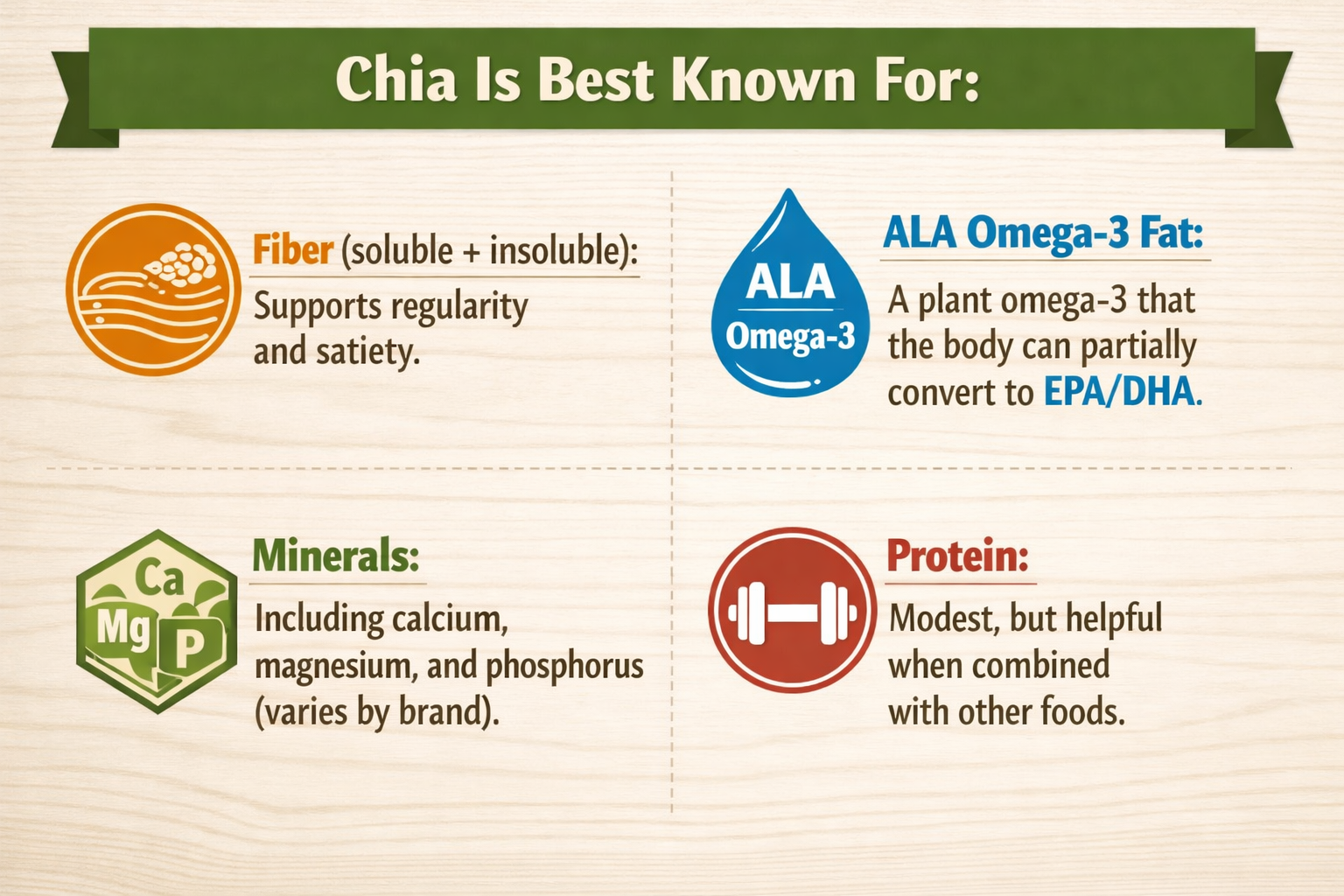
Chia is best known for:
- Fiber (soluble + insoluble): supports regularity and satiety.
- ALA omega-3 fat: a plant omega-3 that the body can partially convert to EPA/DHA.
- Minerals: including calcium, magnesium, and phosphorus (varies by brand and serving).
- Protein: modest, but helpful when combined with other foods.
Typical nutrition (example)
Exact values vary by brand. Use this as a general reference and confirm with your product label.
| Nutrient | Approx. per 2 Tbsp (28g) |
|---|---|
| Calories | ~137 kcal |
| Protein | ~4.4 g |
| Total fat | ~8.6 g |
| Omega-3 (ALA) | ~5.1 g |
| Carbohydrates | ~12.3 g |
| Fiber | ~10.6 g |
| Calcium | ~177 mg |
| Magnesium | ~95 mg |
| Phosphorus | ~265 mg |
| Zinc | ~1 mg |
Chia Seeds: Potential Benefits
Chia seeds are a food. They support health best when they improve the overall pattern of eating (more fiber, more whole foods, fewer refined snacks). Individual results vary.
1) Fullness and appetite support
The gel-forming fiber in chia can slow digestion and increase satiety for some people, which may help with portion control. Chia works best when it replaces refined snacks or helps you build a balanced meal (protein + fiber + whole-food carbs), not when it’s added on top of an already high-calorie diet.
2) Digestive regularity
Many people use chia to support regular bowel movements because it adds bulk and holds water. Hydration matters as much as the chia does—especially if you’re prone to constipation.
3) Heart-friendly nutrition patterns
Chia contains ALA (a plant omega-3) and a high amount of fiber. Diets higher in fiber and unsaturated fats are commonly associated with better cardiometabolic markers. Human studies on chia show mixed effects on weight and lipids, but fiber-forward eating patterns are consistently beneficial overall.
4) Blood sugar steadiness (food-based support)
Adding chia to meals can slow the absorption of carbohydrates, which may help smooth post-meal glucose spikes for some people. This is a food strategy, not a replacement for medical care.
If you use glucose or blood pressure medications, talk with your clinician about major diet changes—especially if you increase fiber quickly.
How to Use Chia Seeds (Soaking, Ratios, Timing)
Do you have to soak chia?
You don’t have to, but soaking is often easier on digestion and gives the best texture. If you’re sensitive to fiber or prone to bloating, start with soaked chia.
Best times to eat chia
- Morning: in yogurt, smoothies, or oats for a “stay full longer” effect.
- Midday: as chia pudding if you snack too much in the afternoon.
- Evening: if you need more fiber and your digestion tolerates it.
How Much Chia Per Day?
- Beginner: 1 tsp/day (preferably soaked) for 3–5 days
- Typical: 1 Tbsp/day
- Common upper range: 2 Tbsp/day (split into two servings)
Going from “low fiber” to “high chia” overnight is the fastest way to feel gassy and quit. Increase slowly and drink enough fluids.
Chia Gel: The Exact Ratio (And Why It’s Useful)
Chia gel is the most practical way to use chia without gritty texture. It thickens smoothies, improves satiety, and can act as a binder in baking.
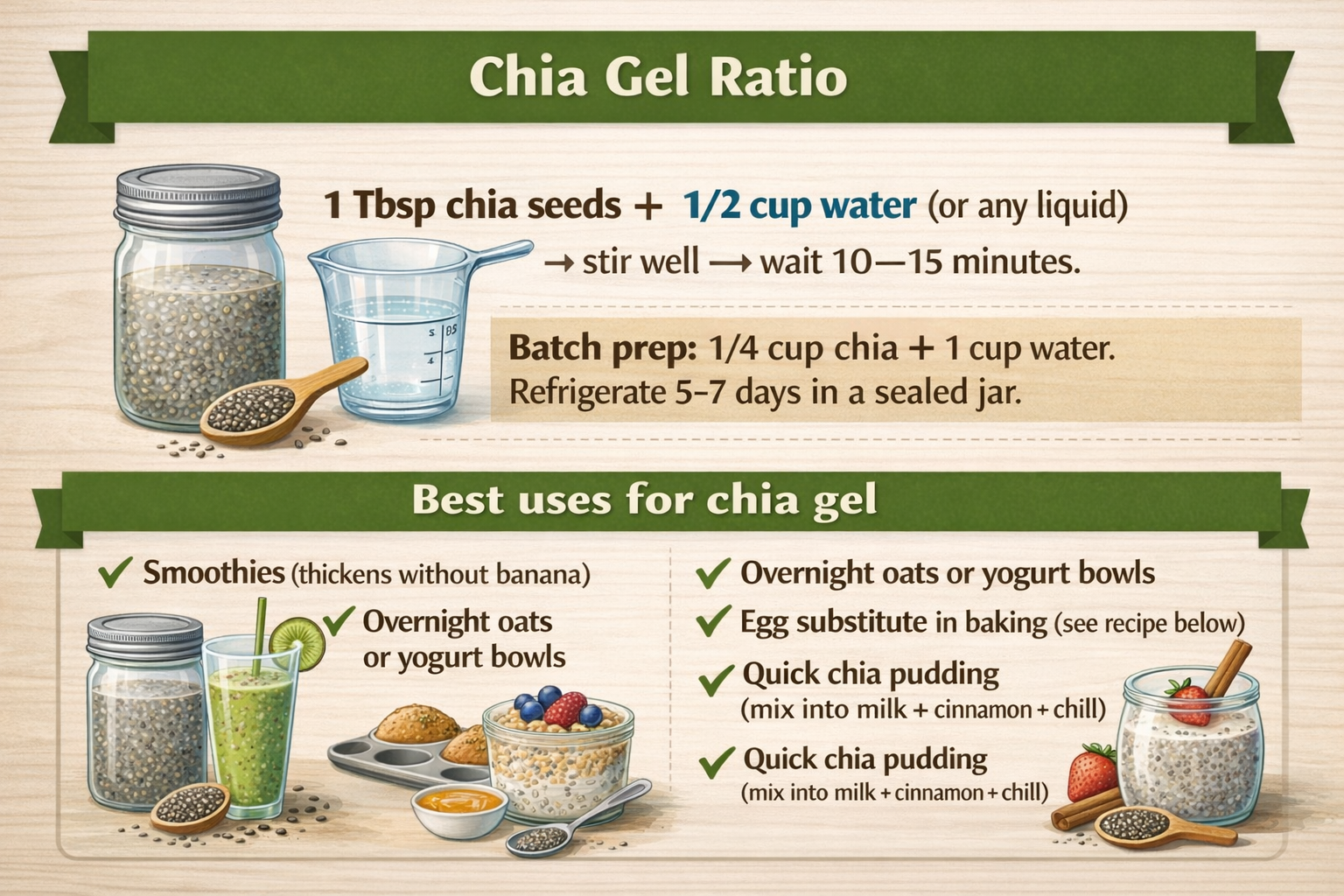
Chia Gel Ratio
1 Tbsp chia seeds + 1/2 cup water (or any liquid) → stir well → wait 10–15 minutes.
Batch prep: 1/4 cup chia + 1 cup water. Refrigerate 5–7 days in a sealed jar.
Best uses for chia gel
- Smoothies (thickens without banana)
- Overnight oats or yogurt bowls
- Egg substitute in baking (see recipe below)
- Quick chia pudding (mix into milk + cinnamon + chill)
How to Choose High-Quality Chia Seeds
1) Smell test (the quickest quality check)
Good chia should smell neutral or faintly nutty. If it smells “paint-like,” bitter, or rancid, it may be old or poorly stored.
2) Storage and packaging matter more than people realize
- Airtight packaging helps protect fats from staling.
- If your kitchen is warm, store chia in the fridge for best freshness.
- Avoid leaving chia in direct sunlight or near heat sources.
3) Organic vs non-organic
Organic can be a helpful preference for many shoppers, but “best” is really about freshness, clean taste, and reputable sourcing. Choose a supplier that clearly labels the product and supports customer questions.
4) “Whole vs ground” chia
Whole chia is the standard and is very versatile. Ground chia changes texture and can go stale faster once opened. For most people, whole chia is easiest and most shelf-stable.
FAQs:
Can chia cause constipation?
It can if you don’t drink enough water. Fix it by soaking chia and increasing fluids. If constipation continues, reduce the dose for 3–5 days.
Can chia cause bloating?
Yes—usually from too much too soon. Start with 1 tsp/day soaked, and increase gradually.
Is chia safe every day?
Many people use chia daily. Comfort + hydration matter most. If your digestion feels “off,” reduce the amount.
Is chia better than flax?
Chia doesn’t require grinding and forms a stronger gel. Flax is often best ground. Many people use both depending on goals and recipes.
Can kids eat chia?
Many families use small amounts (mixed into yogurt/oatmeal). Use age-appropriate portions and avoid dry chia in children. Ask your pediatrician if you have concerns.
White vs black chia?
Usually a cosmetic difference. Buy based on freshness, storage, and supplier reliability.
Kidney disease & diabetes: how to think about chia (food-based)
Chia is high in fiber and contains minerals. For many people, chia can fit into a balanced eating pattern, but portion size and hydration matter. If you have kidney disease, discuss your overall dietary mineral targets with your clinician/dietitian. If you use glucose-lowering medications, monitor for changes when increasing fiber.
This is not medical advice. It’s general food information intended to help you ask better questions.
Side Effects, Interactions, and Who Should Be Careful
Common side effects (usually from too much too soon)
- Bloating or gas
- Loose stools (if you jump to higher doses)
- Constipation (if hydration is too low)
Use extra caution if you:
- Have swallowing difficulties (avoid dry chia)
- Have GI strictures or serious digestive disorders (ask your clinician)
- Use blood thinners or blood pressure medications and plan to increase chia significantly (ask your clinician)
- Have kidney disease and must track mineral intake (portion size matters)
3 Full Recipes: Delicious Ways to Use Chia Seeds
Recipe #1: Classic Vanilla Chia Pudding (High-Protein Option Included)
Makes: 2 servings • Prep: 5 minutes • Chill: 2+ hours
Ingredients
- 3 Tbsp chia seeds
- 1 cup milk of choice (dairy or unsweetened almond/coconut)
- 1 tsp vanilla extract
- 1–2 tsp maple syrup or monk fruit (optional)
- Pinch of cinnamon (optional)
- Optional protein boost: 1/2 cup Greek yogurt stirred in after it sets
Instructions
- Whisk milk, vanilla, and sweetener in a jar/bowl.
- Add chia seeds and whisk vigorously for 20–30 seconds.
- Wait 5 minutes, whisk again (prevents clumps).
- Cover and refrigerate 2 hours or overnight.
- Top with berries, nuts, or a spoon of yogurt.
Too thick? Add a splash of milk and stir. Too thin? Add 1 tsp chia and wait 10 minutes.
Recipe #2: Lemon-Ginger Chia Water (“Hydration Gel Drink”)
Makes: 1 large drink • Prep: 3 minutes • Set: 10 minutes
Ingredients
- 1 Tbsp chia seeds
- 12–16 oz water
- 1–2 Tbsp fresh lemon juice
- 1/2 tsp grated ginger (or pinch of ginger powder)
- Optional: mint leaves
- Optional sweetener: stevia or monk fruit
Instructions
- Add chia to water and stir well for 30 seconds.
- Wait 5 minutes, stir again. Wait 5 more minutes.
- Add lemon, ginger, and optional mint/sweetener.
- Drink slowly. Add more water if it feels too thick.
New to chia? Start with 1 tsp chia in 12–16 oz water.
Recipe #3: Chia “Egg” for Baking + Quick Banana-Oat Pancakes
Makes: 1 chia egg (replaces 1 egg) • Set: 10 minutes
Chia Egg
- 1 Tbsp chia seeds (or 1 Tbsp ground chia)
- 3 Tbsp water
- Mix chia + water in a small bowl.
- Stir well and let sit 10 minutes until gel-like.
- Use in baking as you would 1 egg.
Quick Pancake Example (2 servings)
- 1 chia egg (from above)
- 1 ripe banana, mashed
- 1/2 cup oats (blended into oat flour) or 1/2 cup flour
- 1/2 tsp baking powder
- 1/2 tsp cinnamon
- Pinch of salt
- Milk as needed (2–6 Tbsp) to thin batter
- Mix chia egg + banana + dry ingredients.
- Add milk slowly until pancake-batter consistency.
- Cook on medium heat, ~2–3 minutes per side.
Storage, Freshness, and Quality
How to store chia seeds
- Keep dry chia in an airtight container away from heat and light.
- If your kitchen is warm, store chia in the refrigerator for maximum freshness.
- Chia gel: refrigerate and use within 5–7 days.
How to spot stale chia
- Strong bitter smell, rancid odor, or “paint-like” scent
- Off taste that’s sharp or unpleasant
- Clumping from moisture exposure in storage
References (USDA + Research)
References are provided for transparency. Research varies by population and study design. This is educational content about a food and not medical advice.
- USDA FoodData Central (chia seeds nutrition): FoodData Central: Chia Seeds
- PubMed Central review (chia seeds overview): PMC: Chia seeds—health potential and research discussion
- PubMed research search (for clinicians/review): PubMed: Salvia hispanica clinical studies
About This Guide
- Written by: 1st Chinese Herbs Editorial Team
- Last updated: January 2026
- Editorial approach: We prioritize clear, practical instructions (how to use) plus references for transparency.
- No disease claims: This content is educational and not intended to diagnose, treat, cure, or prevent disease.
- Questions? Visit our contact page: Contact Us