
Quick Answer: The best beginner-friendly Chinese herbs are easy to prepare, pleasant tasting, and simple to understand. Great first herbs include Astragalus Root, Goji Berries, Chrysanthemum Flowers, Red Dates, Tangerine Peel, Rose Buds, Licorice Root, Hawthorn Berry, Mulberry Leaf, and Honeysuckle Flower. You decide to try Chinese herbs for the first time. Five minutes later, you have seventeen browser tabs open, three unfamiliar herb names written down, and one big question: “What am I actually supposed to buy first?” That is exactly why this guide exists. You do not need to understand every Chinese herb to begin. You only need a few simple herbs, a basic brewing method, and a clear starting point. Most herb pages tell you what an herb is traditionally used for. That is helpful, but beginners also need to know: What does it taste like? Is it easy to prepare? Can I make it as tea? Is it too bitter for a beginner? Which herb should I buy first? What should I try after that? We are going to answer these questions and more. Just keep reading.... After helping customers choose herbs since 1994, we have noticed that beginners do best when they start with herbs they will actually use, not herbs that sound impressive but sit untouched in the cabinet. 1st Chinese Herbs has been helping customers learn about bulk herbs, teas, powders, and traditional formulas for more than 30 years. Our goal is simple: make Chinese herbs easier to understand, easier to use, and less intimidating for beginners. One of the biggest mistakes new herbal enthusiasts make is assuming they need to start with the most famous, strongest, or most complicated herbs. In reality, the best beginner herbs are usually the ones that are easiest to understand, easiest to prepare, and easiest to enjoy. The herbs featured in this guide were selected based on several beginner-friendly qualities: Most importantly, these herbs were chosen because they help build confidence. Once you become comfortable brewing a few simple herbs, understanding more advanced herbs and traditional formulas becomes much easier. Think of these herbs as your introduction to the world of Chinese herbalism—not because they are the only herbs worth learning, but because they provide a practical, enjoyable foundation for everything that comes next. Begin with Goji Berries, Chrysanthemum, Rose Buds, or Red Dates. These are simple, pleasant, and not intimidating. Try Astragalus Root. It helps you learn the difference between steeping delicate herbs and simmering tougher herbs. A simple beginner blend is Astragalus Root, Goji Berries, and Red Dates. Flowers and leaves usually steep quickly. Roots, barks, and mushrooms usually need longer simmering. Once you understand basic herbs, traditional formulas become much easier to approach. Astragalus + Goji Berries + Red Dates This blend is mild, slightly sweet, and beginner-friendly. It is a good first step before exploring stronger or more bitter herbs. You are not alone. One of the most common questions we hear is, "Which Chinese herb should I start with?" The answer often depends less on the herb and more on you. Think about the drinks and flavors you already enjoy. If you love coffee, you may prefer deeper, richer herbs with earthy flavors. If you enjoy floral teas, fragrant flowers may feel more familiar. If you naturally reach for sweeter drinks, starting with sweet and fruity herbs can make the experience much more enjoyable. Rather than trying to learn hundreds of herbs at once, start with herbs that match your personal taste preferences. The easier and more enjoyable your first experience is, the more likely you are to build a lasting herbal routine. Choose the path below that sounds most like you and discover your ideal first herb. You may prefer deeper, earthier herbs. Most beginners do not quit because herbs are too hard. They quit because no one explained how to start simply. Starting with the right herbs makes the entire experience easier. Some herbs are valuable in traditional herbal practice but may be too bitter or specialized for a first purchase. This does not mean these herbs are bad. It simply means they are usually not the friendliest first step. Preparation Tip: Flowers and berries can usually be steeped. Roots like Astragalus are often simmered for better extraction. (decoctions) Goji Berries, Astragalus Root, Chrysanthemum Flowers, Red Dates, and Tangerine Peel are excellent beginner choices because they are easy to use and have approachable flavors. If you want the easiest first herb, start with Goji Berries or Chrysanthemum Flowers. If you want a versatile soup or broth herb, start with Astragalus Root. Many beginners enjoy Goji Berries, Red Dates, Rose Buds, Chrysanthemum Flowers, and Tangerine Peel because they are sweet, fruity, floral, or citrusy. Goji Berries, Red Dates, Astragalus Root, Rose Buds, and Chrysanthemum Flowers are generally much more approachable than strongly bitter herbs. Many beginner herbs are easy to prepare. Flowers, leaves, and berries are often steeped like tea. Roots, barks, and mushrooms are commonly simmered. Start with three to five herbs. This gives you enough variety without creating confusion. Yes. A simple beginner blend is Astragalus Root, Goji Berries, and Red Dates. Bitterness is a natural flavor found in some herbs. In Traditional Chinese Medicine, taste is part of how herbs are traditionally understood. Beginners may want to start with sweeter or milder herbs first. You do not need to begin with the most complicated herb, the strongest herb, or the longest formula name on the shelf. Start simple. Choose one or two herbs that taste good. Learn how to prepare them. Then build from there. Chinese herbs become much easier once you stop trying to learn everything at once. Get Real Herbs. Feel the Difference. This information is for educational purposes only and is not intended to diagnose, treat, cure, or prevent any disease. Herbs may not be appropriate for everyone. If you are pregnant, nursing, taking medication, managing a medical condition, or unsure whether an herb is right for you, consult a qualified healthcare professional before use.Beginner-Friendly Chinese Herbs: What to Buy First, How to Use Them, and Where to Start
New to Chinese Herbs? You Are Not Behind.
 Let's Make This Easy
 Trusted Since 1994
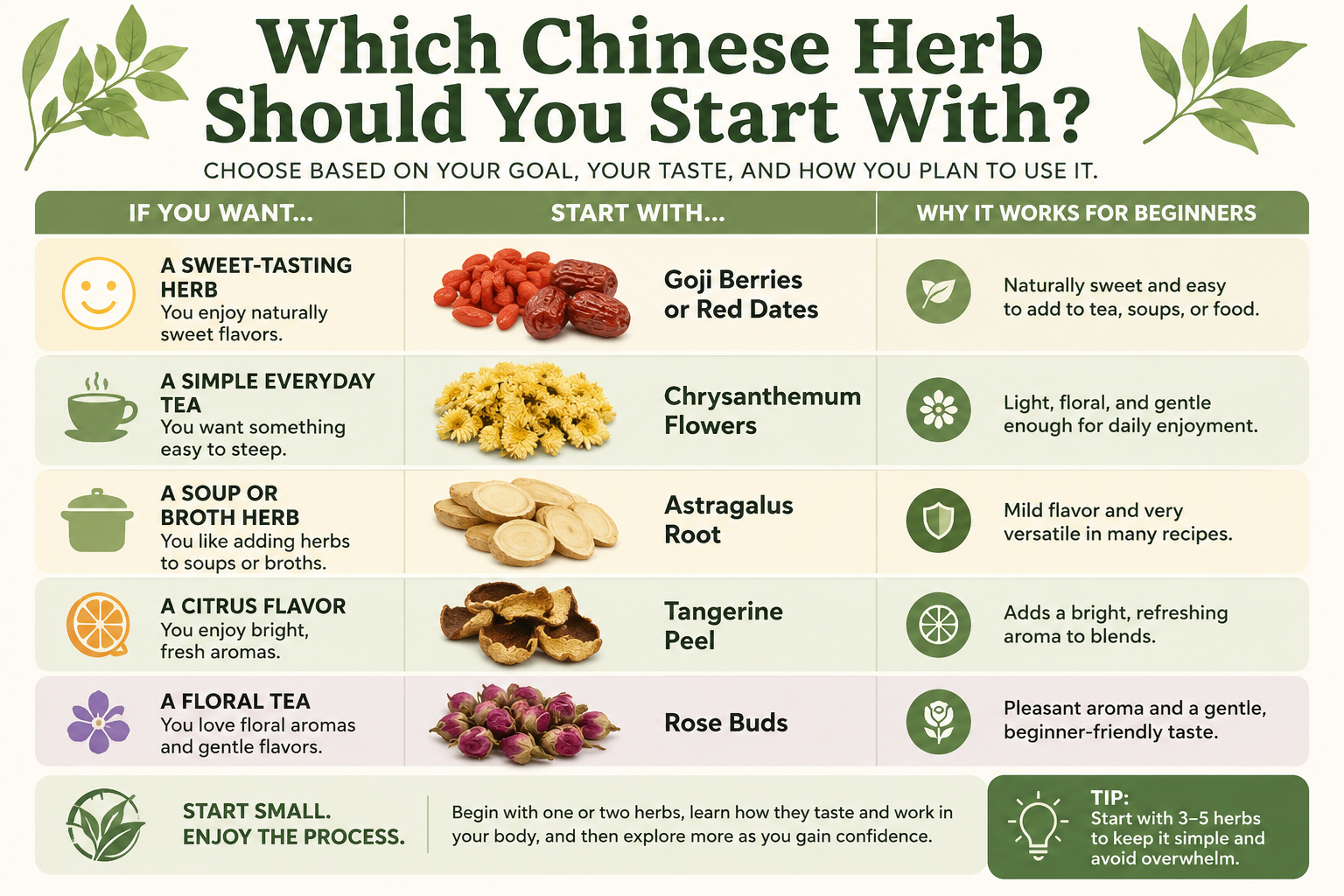
Which Chinese Herb Should You Start With And Why?
If You Want...
Start With...
Why It Works for Beginners
A sweet-tasting herb
Goji Berries or Red Dates
Naturally sweet and easy to add to tea or food
A simple everyday tea
Chrysanthemum Flowers
Light, floral, and easy to steep
A soup or broth herb
Astragalus Root
Mild flavor and very versatile
A citrus flavor
Tangerine Peel
Adds bright aroma to blends
A floral tea
Rose Buds
Pleasant aroma and beginner-friendly taste
Top 10 Beginner-Friendly Chinese Herbs Ranked
Why Were These Herbs Chosen for Beginners?
Beginner Herbs Side by Side
Herb
Taste
Difficulty
Best Use
Good First Buy?
Goji Berries
Sweet, raisin-like, fruity
Very Easy
Tea, oatmeal, soup
Yes
Astragalus Root
Mild, slightly sweet, broth-like
Easy
Soup, broth, decoction
Yes
Chrysanthemum
Light, floral
Very Easy
Tea
Yes
Red Dates
Sweet, date-like
Very Easy
Tea, soup, blends
Yes
Tangerine Peel
Citrus peel, aromatic
Easy
Tea blends
Yes
Rose Buds
Floral, fragrant
Very Easy
Tea
Yes
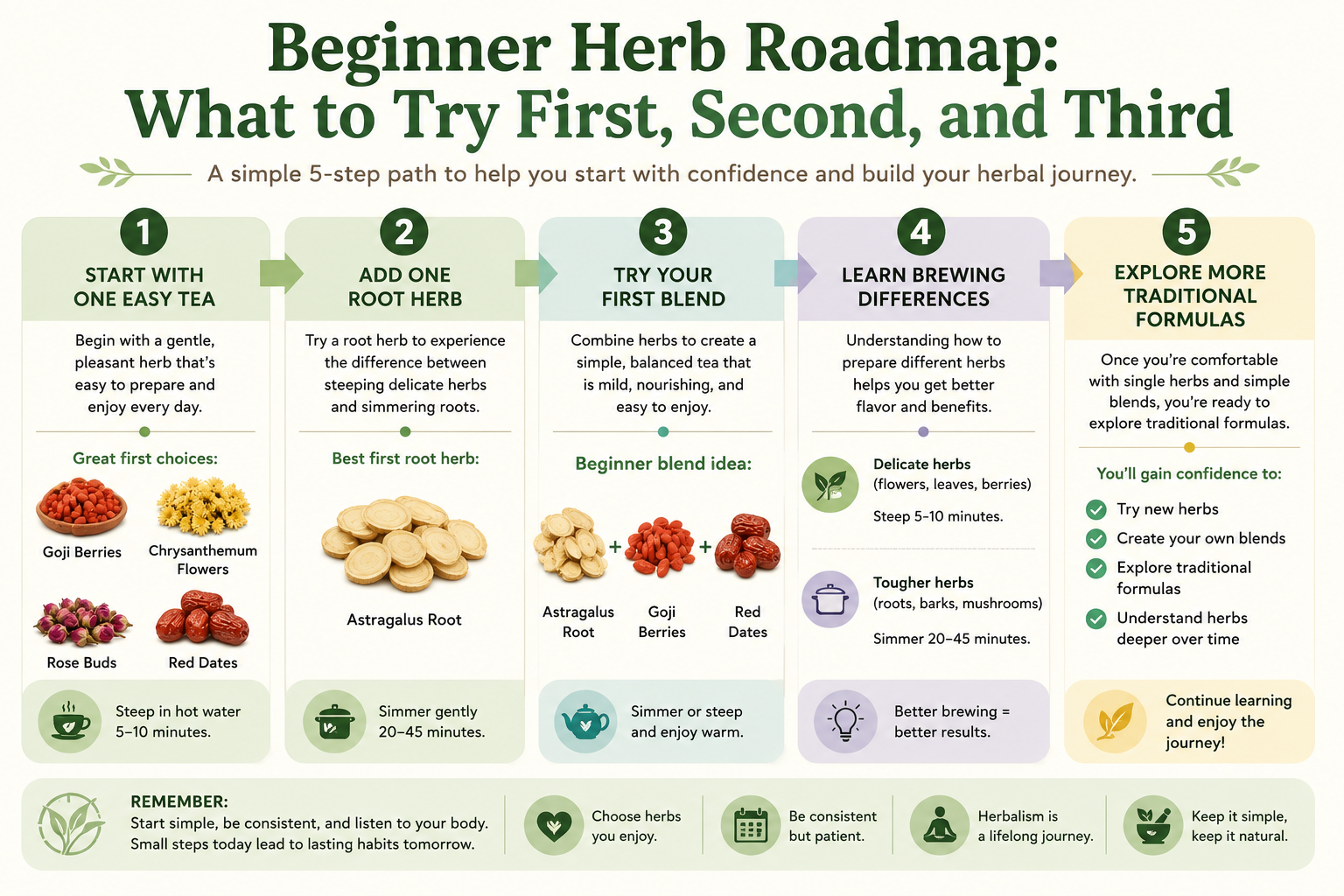
Beginner Herb Roadmap: What to Try First, Second, and Third
Step 1: Start With One Easy Tea
Step 2: Add One Root Herb
Step 3: Try Your First Blend
Step 4: Learn Brewing Differences
Step 5: Explore More Traditional Formulas
Best First Beginner Blend
Beginner Herbs by Personality - Still Not Sure Where to Start?
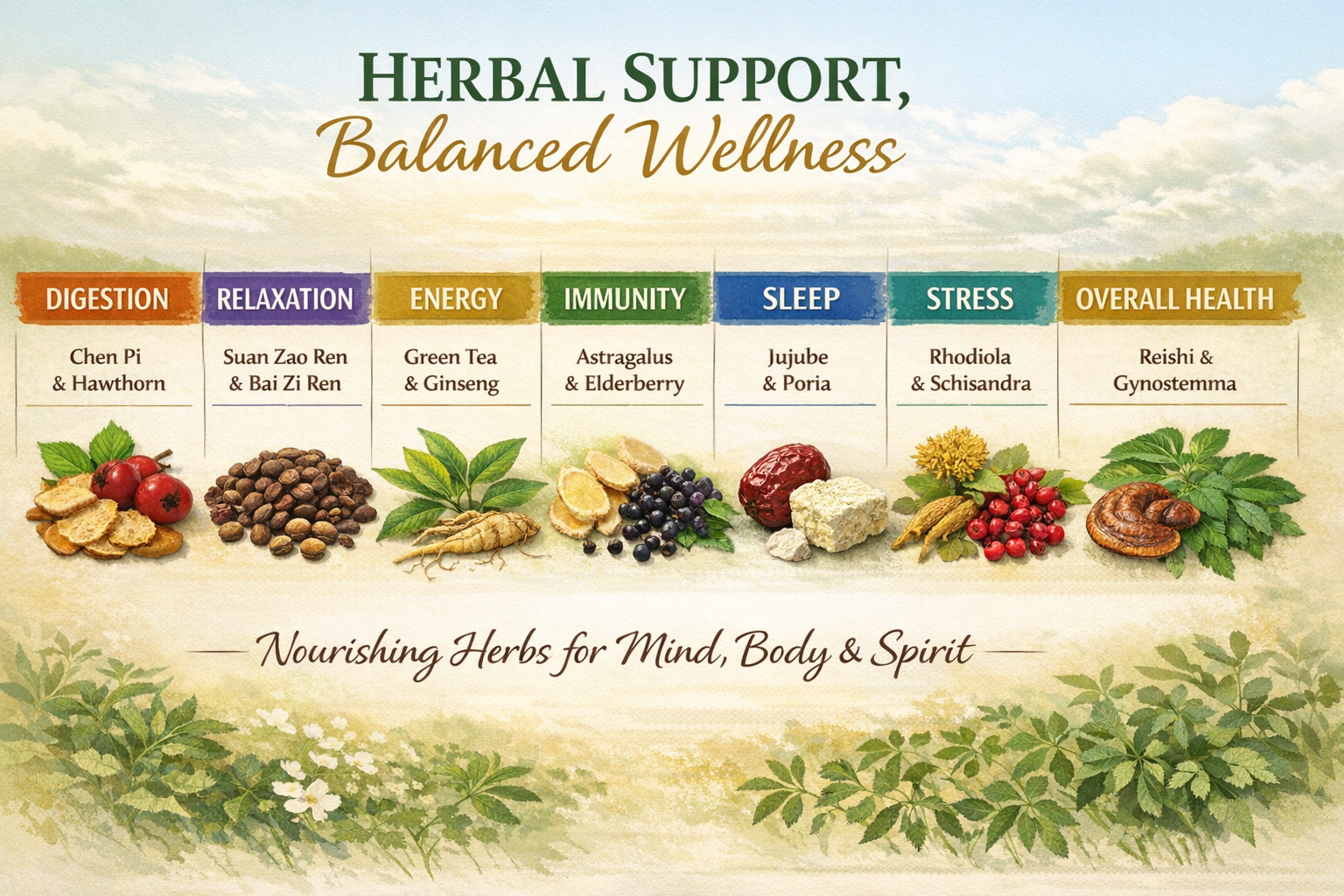
The Coffee Drinker
The Sweet Tea Lover
The Floral Tea Person
The Foodie
Why Beginners Give Up on Herbs
What Do Beginner Chinese Herbs Actually Taste Like?
Which Herbs Should Beginners Avoid at First?
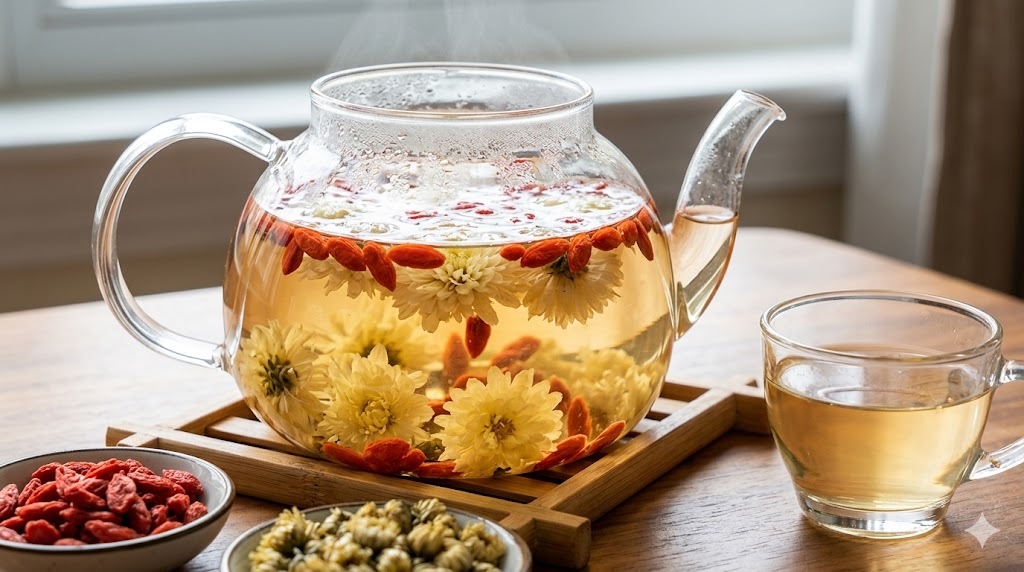 Beginner-Friendly Tea Recipes
Sweet Beginner Tea
Floral Beginner Tea
Citrus Beginner Tea
Simple Astragalus Broth Tea
Best Beginner Herb Collections
Sweet Beginner Collection
Floral Beginner Collection
Everyday Beginner Collection
Helpful Beginner Links
Frequently Asked Questions
What is the best Chinese herb for beginners?
What Chinese herb should I buy first?
Which Chinese herbs taste good?
Which Chinese herbs are not bitter?
Are Chinese herbs hard to prepare?
How many herbs should a beginner buy?
Can I mix beginner herbs together?
Why do some Chinese herbs taste so bitter?
Final Thoughts
Important Disclaimer
Scientific Research & Further Reading
While this guide focuses on helping beginners learn how to start using Chinese herbs, modern scientific research has investigated many of the plants discussed throughout this article. The following PubMed resources provide additional information for readers interested in learning more about the phytochemistry, traditional uses, and scientific investigation of these herbs.
- Astragalus Root (Huang Qi) Research on PubMed
- Goji Berry (Gou Qi Zi) Research on PubMed
- Chrysanthemum Flower (Ju Hua) Research on PubMed
- Tangerine Peel (Chen Pi) Research on PubMed
- Red Date (Da Zao) Research on PubMed
- Rose Bud (Mei Gui Hua) Research on PubMed
- Licorice Root (Gan Cao) Research on PubMed
- Hawthorn Berry (Shan Zha) Research on PubMed
- Mulberry Leaf (Sang Ye) Research on PubMed
- Honeysuckle Flower (Jin Yin Hua) Research on PubMed
Research databases such as PubMed contain studies ranging from laboratory investigations to human clinical trials. Individual studies should not be interpreted as proof of effectiveness for any particular health condition. Readers should evaluate the totality of evidence and consult qualified healthcare professionals regarding personal health decisions.