
Chrysanthemum vs Mint: Which Cooling Herb Is Better for Spring, Summer, Hydration, and Refreshing Tea?
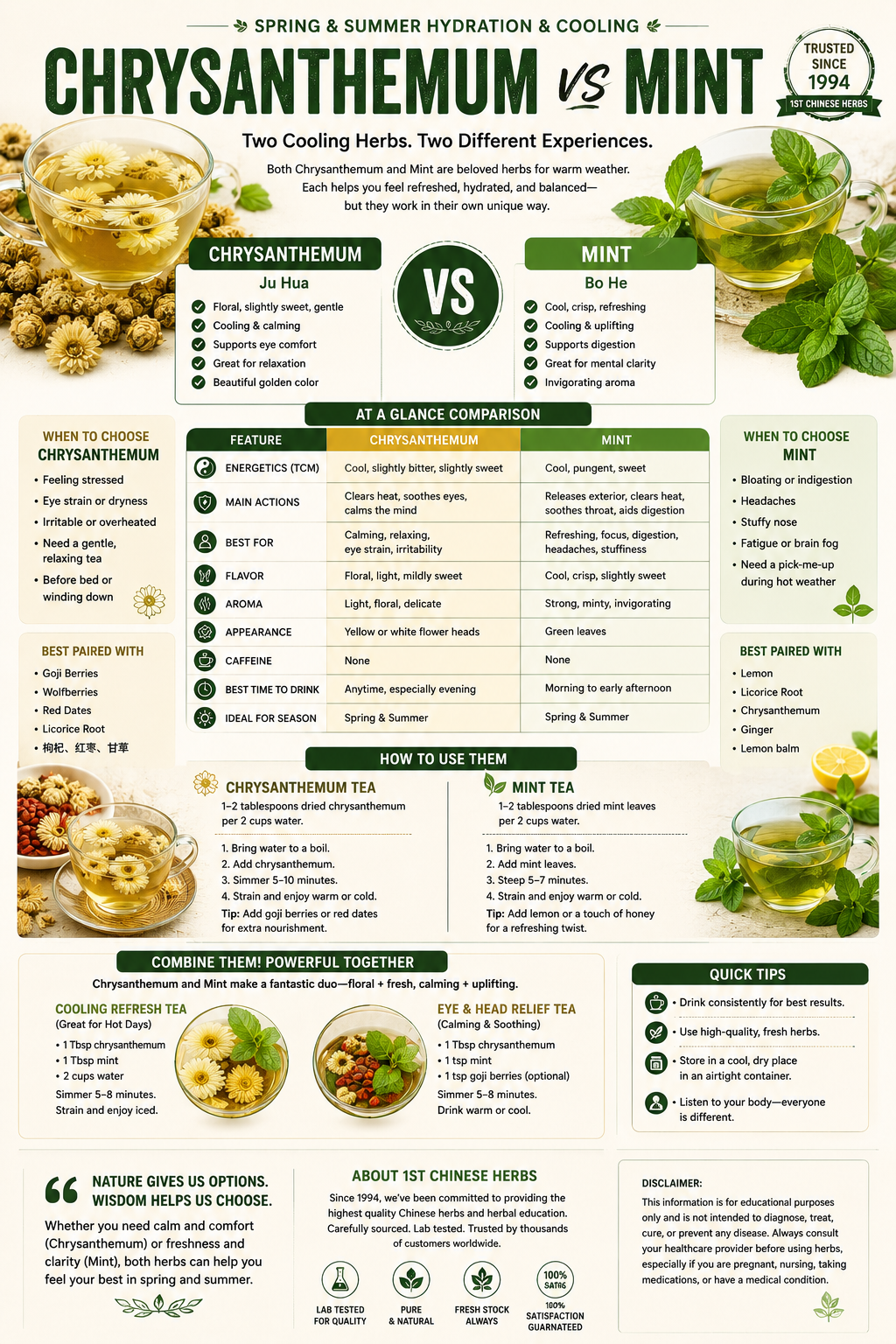
When warm weather arrives, many people naturally start looking for herbs that feel cooling, refreshing, and easy to drink.
Two herbs show up again and again:
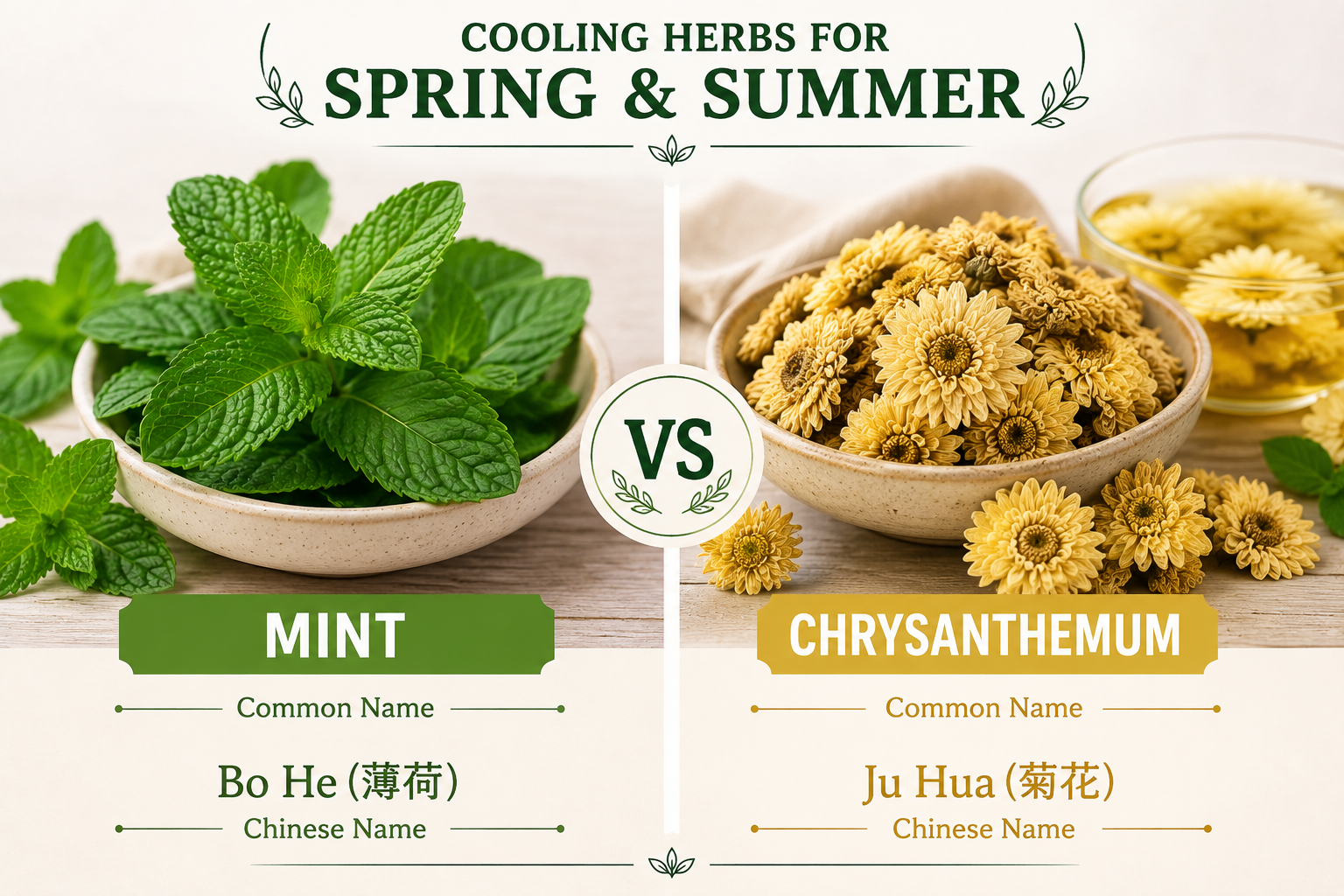
Chrysanthemum (Ju Hua)
and
Mint (Bo He)
At first glance, they seem similar.
Both are cooling herbs.
Both are popular in spring and summer.
Both make excellent teas.
But here’s what most people don’t realize.
They create completely different experiences.
 The Big Difference Nobody Explains
Here is the easiest way to understand them.
Chrysanthemum cools and calms.
Mint cools and refreshes.
That one idea explains almost everything.
Chrysanthemum feels gentle. Soft. Relaxing.
Mint feels bright. Crisp. Energizing.
This is usually the aha moment.
Because most people instantly know which sounds more like them.
Quick Comparison Chart
| Feature | Chrysanthemum | Mint |
|---|---|---|
| Chinese Name | Ju Hua | Bo He |
| Herb Type | Flower | Leaf |
| Flavor | Floral, slightly sweet | Cool, minty, crisp |
| Personality | The Calmer | The Refresher |
| Best For | Cooling + relaxing | Cooling + uplifting |
| Beginner Friendly | Excellent | Excellent |
| Best Season | Spring & Summer | Spring & Summer |
| Best Time | Afternoon or evening | Morning or midday |
Meet The Herbs
Chrysanthemum — The Calmer
If Chrysanthemum were a person, it would say:
“Slow down. Cool off. Relax.”
Chrysanthemum tea feels gentle and soothing.
Many people choose it when they want:
- cooling tea
- something calming
- floral tea
- summer refreshment
Interesting fact:
Chrysanthemum tea has been enjoyed across Asia for hundreds of years as a warm-weather favorite.
Mint — The Refresher
If Mint were a person, it would say:
“Wake up. Freshen up. Let’s go.”
Mint feels lively.
Bright.
Crisp.
People usually reach for mint when they want:
- freshness
- cooling
- lightness
- refreshing tea
Interesting fact:
Mint is one of the most widely consumed herbs in the world.
Which Herb Sounds More Like You?
Choose Chrysanthemum if you say:
- “I feel overheated.”
- “I want something gentle.”
- “I like floral teas.”
- “I want to unwind.”
Choose Mint if you say:
- “I need something refreshing.”
- “I like bright flavors.”
- “I want something energizing.”
- “I love crisp teas.”
How To Use Each Herb
| Herb | Best Forms | How People Use It |
|---|---|---|
| Chrysanthemum | Dried flowers, tea | Tea, iced tea |
| Mint | Fresh leaf, dried leaf | Tea, iced tea, blends |
 How to Make Chrysanthemum Tea
- 1–2 tbsp dried flowers
- 2 cups hot water
Steep 5–8 minutes.
Drink warm or iced.
Best pairings:
- Goji berries
- Red dates
- Honey
How to Make Mint Tea
- 1–2 tbsp dried mint OR fresh mint leaves
- 2 cups hot water
Steep 5–7 minutes.
Drink warm or iced.
Best pairings:
- Lemon
- Honey
- Licorice root
Which Tastes Better?
This depends entirely on preference.
Chrysanthemum is:
- light
- floral
- gentle
Mint is:
- cool
- crisp
- fresh
If you like floral tea, Chrysanthemum wins.
If you like refreshing tea, Mint wins.
Which Herb Is Better for Summer?
Both are excellent.
But they shine differently.
Chrysanthemum is better for calm cooling.
Mint is better for fresh cooling.
Can You Combine Them?
Yes—and they work beautifully together.
Chrysanthemum + Mint creates a balanced tea that feels:
- cooling
- refreshing
- uplifting
- calming
This is one of the best spring and summer tea combinations.
When To Avoid These Herbs
| Herb | Use Caution If |
|---|---|
| Chrysanthemum | Ragweed allergy, medications, pregnancy |
| Mint | GERD, reflux, pregnancy, medications |
Final Comments
Choose Chrysanthemum if your goal is calm cooling and gentle relaxation.
Choose Mint if your goal is refreshing cooling and bright energy.
That is the real difference.
Chrysanthemum cools and calms.
Mint cools and refreshes.
One helps you slow down.
The other helps you wake up.
And sometimes?
The best answer is both.
Author
Sarah Johnson
Certified Herbalist | Founder, 1st Chinese Herbs
Trusted Since 1994
Sarah Johnson has spent more than 30 years helping customers understand herbs, teas, roots, flowers, and botanical wellness products.
What Research Says About Chrysanthemum and Mint
Both Chrysanthemum and Mint have been widely used in traditional herbal systems for generations. Modern research continues to explore the plant compounds that make these herbs popular in tea and wellness routines.
Chrysanthemum Research
1. Chrysanthemum Contains Powerful Antioxidant Compounds
Research shows Chrysanthemum flowers contain flavonoids, phenolic acids, and volatile compounds associated with antioxidant and anti-inflammatory activity.
Why it matters: This helps explain why Chrysanthemum remains popular as a cooling tea herb.
2. Chrysanthemum Tea Shows Strong Antioxidant Activity
Research on Chrysanthemum tea found significant antioxidant activity and beneficial plant compounds in hot water tea extracts.
Why it matters: This supports Chrysanthemum’s popularity as a functional tea.
3. Chrysanthemum Has Strong Phytochemical Activity
A large review found Chrysanthemum species contain bioactive compounds associated with antioxidant, anti-inflammatory, and immune-supporting properties.
Why it matters: This helps explain why Chrysanthemum is valued in traditional wellness practices.
Mint Research
4. Mint Has Well-Studied Digestive Support Properties
Peppermint has been widely studied for digestive comfort, especially due to menthol and volatile oils found naturally in mint leaves.
Why it matters: This helps explain why Mint tea is often enjoyed after meals or as a refreshing digestive tea.
5. Peppermint Oil Has Documented Functional Benefits
Research shows peppermint contains active compounds that may support digestive wellness and comfort.
Why it matters: Mint’s refreshing feeling is not just flavor—its volatile compounds contribute to the experience.
6. Mint Contains Antioxidant and Bioactive Compounds
Mint leaves naturally contain menthol, rosmarinic acid, and other beneficial plant compounds with antioxidant activity.
Why it matters: This helps explain why Mint remains one of the most popular herbal teas worldwide.
Final Research Takeaway
Research continues to show that both Chrysanthemum and Mint contain valuable plant compounds that support their long-standing use in herbal wellness traditions.
Chrysanthemum stands out for gentle cooling, floral tea, and antioxidant compounds.
Mint stands out for refreshing flavor, digestive support, and cooling essential oils.
This is one reason both herbs remain favorite spring and summer tea choices.