

Astragalus Root (Huang Qi) Organic Slices — How to Use, Tea & Soup Recipes, Quality Guide + Research
Astragalus Root (Pin Yin: Huang Qi, also searched as Astragalus) is a classic, food-like Chinese root traditionally used to support strong Qi (traditional language). Our Certified Organic sliced Astragalus is an easy “starter form” because it simmers beautifully in soup, broth, and tea—then strains cleanly.
Educational information only. Herbs are not intended to diagnose, treat, cure, or prevent any disease. If you are pregnant, nursing, have an autoimmune condition, have chronic kidney disease, have diabetes, or take prescription medications (especially immunosuppressants), consult a qualified clinician before use.
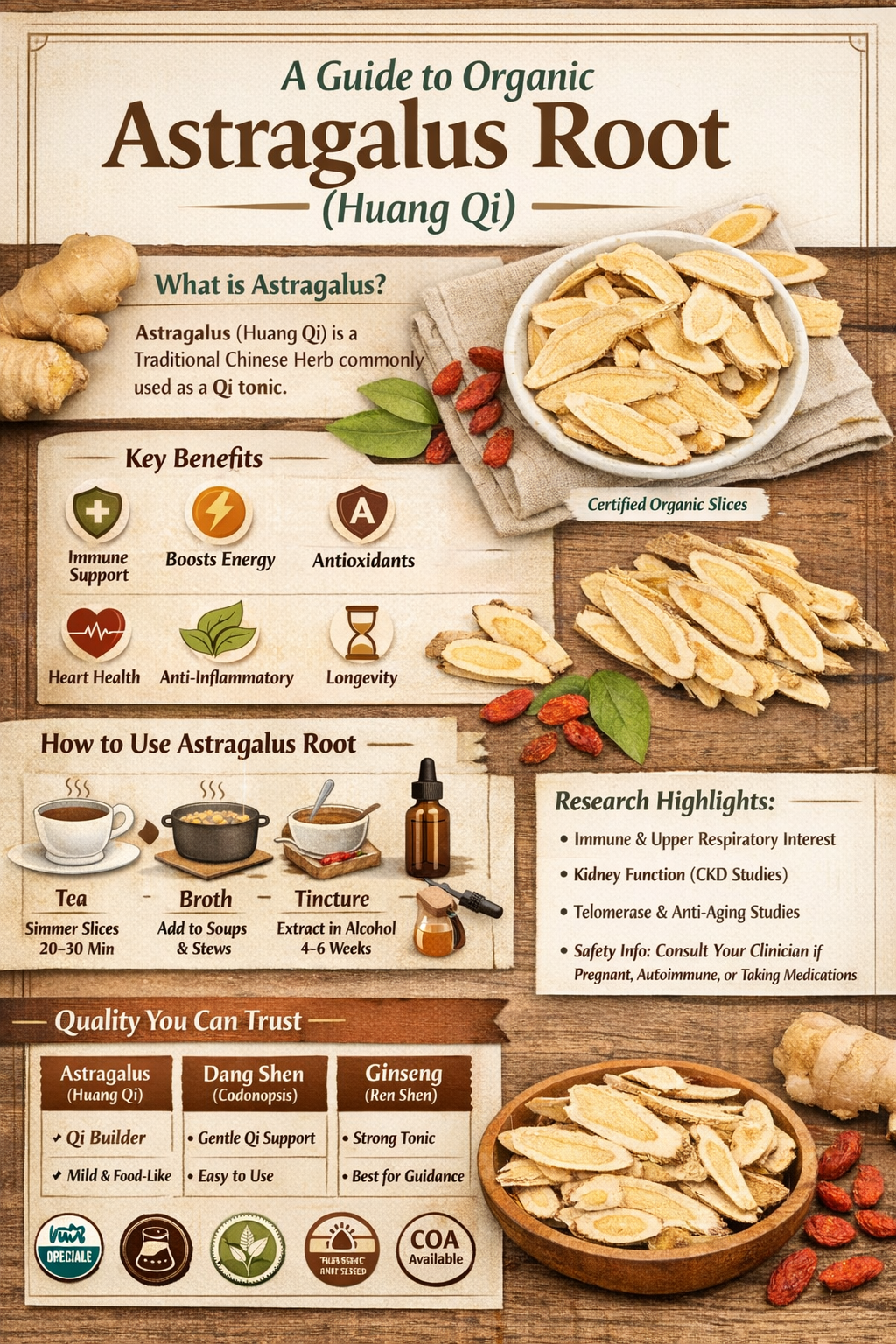
Shop Organic Astragalus Root Slices
Best for: tea/decoction • soups & broth • winter pantry cooking •
Quick Facts: Organic Astragalus Root Slices
| Common Name | Astragalus Root |
| Pin Yin Name | Huang Qi |
| Botanical Name | Astragalus membranaceus root |
| TCM Channels | Lung, Spleen |
| Properties (Traditional) | Sweet, Slightly Warm (traditional language) |
| Form | Sliced (not uniform pieces) |
| Organic | Yes, Certified Organic |
| Package Size | 1 lb |
| Origin | China |
| Brand | Nuherbs Organic |
| Other Ingredients | None (single-ingredient herb) |
Quality You Can Verify
When you’re buying Astragalus Root (Huang Qi), quality matters because it’s often used in long-simmer teas and broths. Here’s what we look for—and what smart buyers should expect from any trustworthy seller.
Our Quality Checklist
- Identity-focused sourcing: We prioritize species-authenticated, traceable supply.
- Clean handling: Proper drying and storage to protect aroma and freshness.
- Screening for common contaminants: Reputable brands test for microbiology, heavy metals, and pesticide residues.
- Organic options: Many customers prefer organic roots for frequent kitchen use.
Ask us about available batch documentation (when provided by the brand/manufacturer). We believe in transparency.
How to Spot Good Astragalus Slices at Home
- Aroma: mildly sweet/earthy (not musty or sour)
- Look: pale yellow interior with fibrous “thread” texture
- Feel: dry and firm, not soft or damp
- Storage tip: airtight container, away from heat and moisture
What Does Astragalus Taste Like?
Astragalus is mildly sweet, earthy, and “brothy.” It’s not a sharp spice. In soups, it adds a soft, comforting depth rather than a strong flavor.
- If your tea tasted “woody”: simmer gently and don’t over-concentrate it.
- If your soup tasted flat: add a few slices of fresh ginger and a pinch of dried citrus peel (like Chen Pi) to brighten it.
Traditional Benefits of Huang Qi
In Traditional Chinese Medicine (TCM), Huang Qi is traditionally used as a Qi-tonic to support vitality and resilience (traditional language). Modern research discussions often focus on its polysaccharides and saponins, but we keep this section consumer-safe and claim-appropriate.
- Immune support (traditional + research interest): used traditionally to support “defensive Qi.”
- Energy & stamina support (traditional language): often used when someone feels “run down.”
- Antioxidant & inflammatory pathway research interest: Astragalus constituents are widely studied in this context.
- Cardiovascular and metabolic marker research interest: studied in various models and some human contexts.
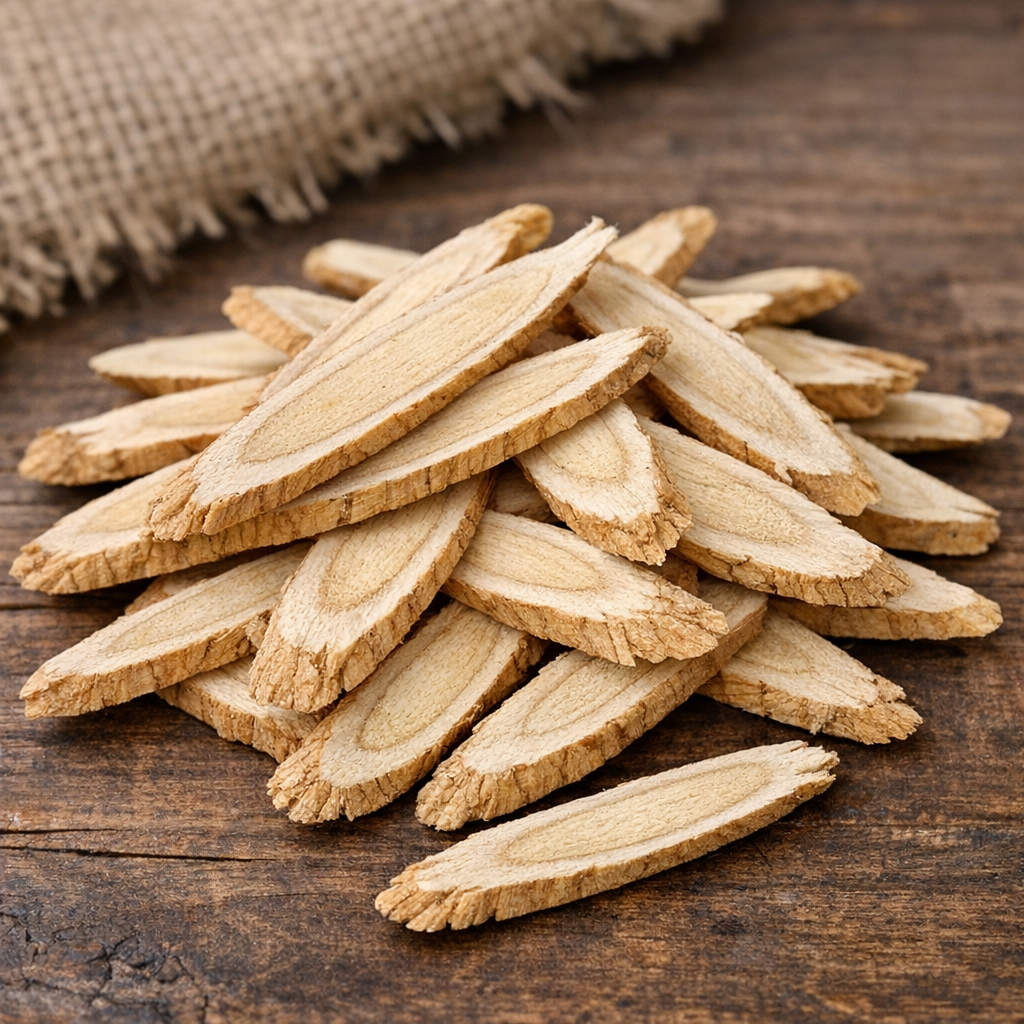 Best Ways to Use Astragalus Root Slices
1) Astragalus Tea (Decoction Method)
Ingredients: Astragalus slices + water
- Add 1–2 tablespoons dried slices to 3 cups water.
- Bring to a gentle boil, then reduce to a simmer.
- Simmer 20–30 minutes.
- Strain and sip warm.
Common use pattern: many people drink it as a seasonal tea or use it as a base and add ginger/citrus peel for flavor.
2) Tincture (Traditional Herbal Prep)
Ingredients: dried astragalus root + alcohol (vodka/brandy)
- Fill a clean glass jar with dried astragalus slices.
- Cover fully with alcohol so all herb is submerged.
- Seal and store in a cool, dark place for 4–6 weeks, shaking occasionally.
- Strain and bottle.
Use note: tincture amounts vary; follow clinician guidance.
3) Broth & Soup (Most Beginner-Friendly)
Add slices directly to soup or broth and simmer. Remove the slices before serving (they’re woody and typically not eaten).
4) Topical Use (Research-interest only)
Some people use herbal oils/extracts topically. If you do, patch test first and avoid broken skin unless guided by a qualified professional.
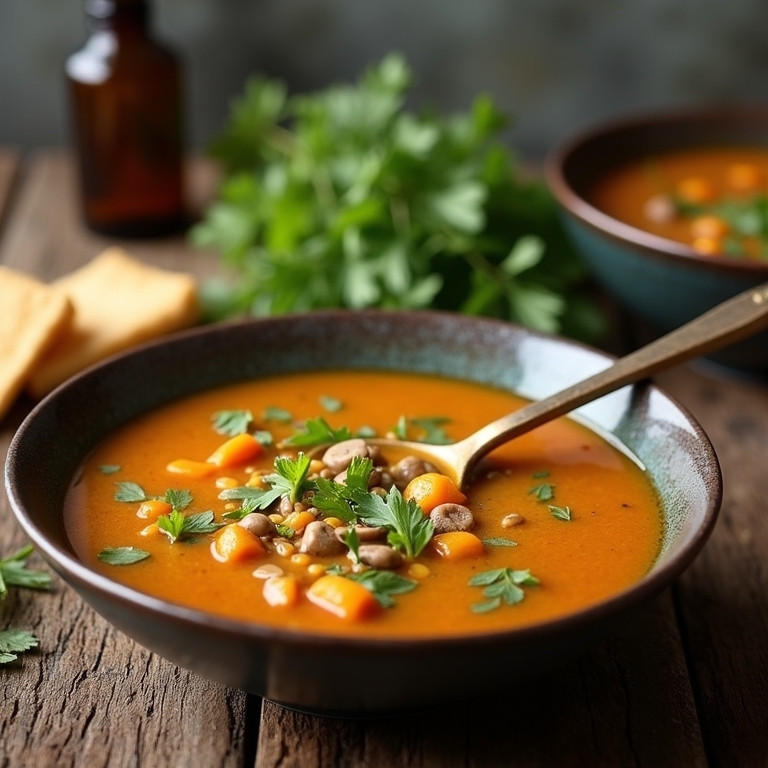 Astragalus Root Chicken Soup
Ingredients
- 1 whole chicken (3–4 lb), cut into pieces
- 4–5 slices dried Astragalus root
- 6–8 slices fresh ginger
- 2–3 garlic cloves, crushed
- 6–8 cups water or chicken broth
- 2–3 carrots, sliced
- 2 celery stalks, sliced
- 1 onion, chopped
- Salt + black pepper to taste
- Optional: 1–2 Tbsp goji berries (add near the end)
Instructions
- Blanch the chicken (optional but makes cleaner broth): boil chicken 5–10 minutes, drain, rinse.
- Add chicken + fresh water/broth to pot. Add astragalus, ginger, garlic.
- Bring to a boil, reduce to simmer, cover and simmer 1–1.5 hours.
- Add vegetables and simmer 20–30 minutes more.
- Season. Add goji berries in last 10 minutes if using.
- Remove astragalus slices before serving.
Quality & Testing
How to Identify Good Astragalus Slices
- Aroma: mildly sweet/earthy, not musty
- Appearance: pale yellow interior, fibrous texture; slices vary naturally
- Storage: keep sealed, cool, and dry to preserve aroma
Brand Notes: Nuherbs Testing (as stated by the brand)
Nuherbs notes that batches are tested by in-house and independent labs, and that additional testing may include microbiology, pesticide screening, and heavy metals. Always store herbs properly once opened.
Cautions, Interactions & Who Should Ask a Clinician First
- Pregnant or nursing: avoid unless directed by a qualified clinician.
- Immunosuppressant medications: astragalus may interfere; ask your clinician before use.
- Autoimmune conditions: consult a clinician before using immune-active herbs.
- Diabetes medications / glucose monitoring: discuss with a clinician and monitor consistently.
- Digestive sensitivity: use modest amounts if you’re prone to GI upset.
- Lyme disease: if you have Lyme disease or are under treatment, consult a qualified clinician before using any immune-active herbs.
California Prop 65: Follow your site’s standard Prop 65 notice format for this product category.
Naturally Occurring Components
Astragalus is discussed in research literature for compounds such as astragalosides and flavonoids. Examples commonly listed include: astragaloside I–IV, beta-sitosterol, formononetin, calycosin, daucosterol, cycloastragenol (research interest), and various polysaccharides.
Note: constituent presence and amounts vary by growing region, harvest time, and processing.
FAQs
Is astragalus the same as Huang Qi?
Yes. Huang Qi is the traditional Chinese name often used for Astragalus root (commonly sourced from A. membranaceus in commerce).
Can I take astragalus every day?
Many people use it seasonally or in routines, but daily use depends on your health history and medications. When in doubt, consult a clinician.
Is astragalus better as tea or soup?
For most beginners, soup/broth is easiest and tastes best. Tea is simple too, but it can taste “woody” if over-concentrated.
How do I store astragalus slices?
Keep sealed in an airtight container, away from heat and moisture. Proper storage protects aroma and freshness.
Research & PubMed (Educational Links)
Research often uses standardized extracts or specific fractions; it should not be read as proof that any herb treats or prevents disease.
- General overview + safety: NCCIH Astragalus overview
- Interactions (notably immunosuppressants): MSKCC Astragalus monograph
- URTI/nephrotic syndrome context (paper often cited): Zou 2013 (PMC)
- CKD / eGFR study (observational context): Yoshino 2022 (Frontiers / PMC)
- Major review (A. membranaceus): Auyeung 2016 (PubMed)
- Astragalus polysaccharides immunomodulation review: Frontiers/PMC 2025 review
- TA-65/telomerase (research-only): TA-65 trials & meta-analysis
Research
- https://www.nccih.nih.gov/health/astragalus
- https://www.mskcc.org/cancer-care/integrative-medicine/herbs/astragalus
- https://pmc.ncbi.nlm.nih.gov/articles/PMC3638577/
- https://pmc.ncbi.nlm.nih.gov/articles/PMC8921640/
- https://pubmed.ncbi.nlm.nih.gov/26916911/
- https://pmc.ncbi.nlm.nih.gov/articles/PMC12689378/
- https://pubmed.ncbi.nlm.nih.gov/29546832/
- https://pmc.ncbi.nlm.nih.gov/articles/PMC12644169/
1 Review
-
Astragalus
Excellent