

Qing Pi Powder — Green Tangerine Peel, Plum Flower, 500 Grams
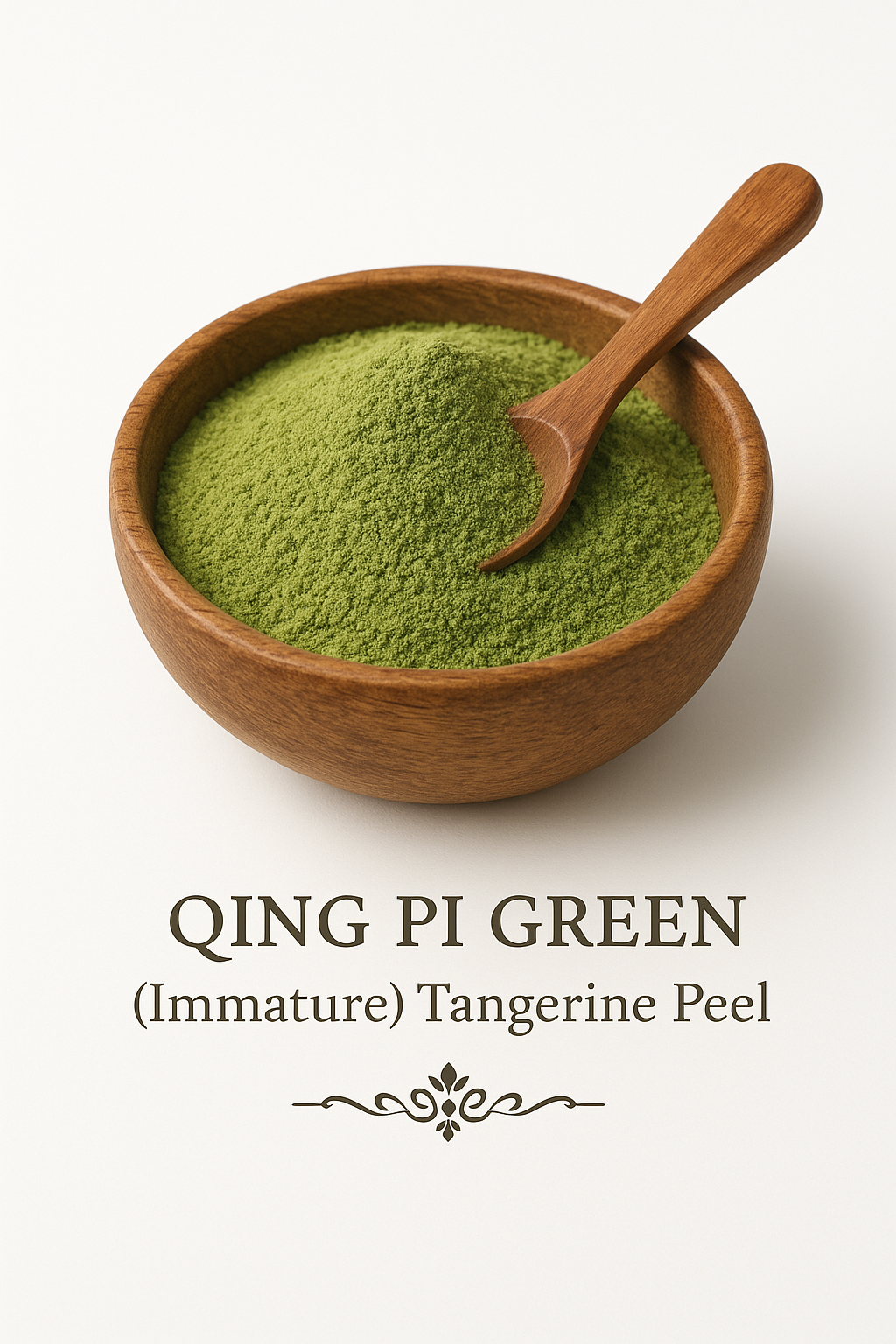
Qing Pi, also known as Green Tangerine Peel or Immature Citrus Peel, is the dried peel of young, unripe fruit from Citrus reticulata. In Traditional Chinese Medicine, Qing Pi is classified as an aromatic herb that regulates the movement of Qi. It is traditionally described as bitter, acrid, and warm, with an association with the Liver, Gallbladder, and Stomach channels.
This Plum Flower Qing Pi is supplied as a fine powder, making it convenient for customers who prefer an herb that is easy to measure, blend, encapsulate, or incorporate into practitioner-directed preparations. Its concentrated citrus aroma and distinctly bitter flavor reflect the character of immature tangerine peel.
Qing Pi and Chen Pi are sometimes confused because both come from tangerine peel. They are not interchangeable. Qing Pi is prepared from immature green peel and is traditionally considered stronger and more directing, while Chen Pi is made from mature peel and is generally considered gentler and more suitable for supporting everyday digestive harmony within the traditional Chinese herbal framework.
Qing Pi Powder at a Glance
- Common names: Green Tangerine Peel, Immature Tangerine Peel, Immature Citrus Peel
- Pin Yin name: Qing Pi
- Botanical source: Citrus reticulata, immature peel
- Form: Fine powder, approximately 80–100 mesh
- Package size: 500 grams, approximately 1.1 pounds
- Ingredients: 100% Qing Pi powder; nothing else added
- Brand: Plum Flower
- Origin: China
- Traditional taste and temperature: Bitter, acrid, and warm
- Traditional channels: Liver, Gallbladder, and Stomach
- Quality: Species authenticated and laboratory tested
- Caution: Do not use during pregnancy or while nursing unless directed by a qualified healthcare professional
What Is Qing Pi?
Qing Pi is the dried peel of immature tangerine or mandarin fruit. The fruit is collected while it is still young and green, before it reaches full ripeness. The peel is then cleaned, dried, and prepared for traditional herbal use.
The name reflects this stage of development. “Qing” refers to the green or immature nature of the peel, while “Pi” means peel or skin. Harvesting the fruit early gives Qing Pi a sharper aroma, more pronounced bitterness, and a different traditional role than mature tangerine peel.
Qing Pi belongs to the same broad citrus tradition as Chen Pi, but the harvest stage matters. Herbalists distinguish plant parts not only by species but also by maturity, processing, aroma, flavor, region, and intended formula role. This is why a green immature peel and a mature dried peel from related citrus varieties are treated as separate herbal materials.
Botanical identification
Qing Pi is commonly sourced from immature fruit of Citrus reticulata and related cultivated varieties. Citrus plants belong to the Rutaceae family. The fresh fruit has a fragrant peel containing volatile aromatic compounds, while the dried peel contains naturally occurring flavonoids, essential-oil constituents, pectin, and other plant compounds.
Because this product is finely milled, customers will not see the curved peel pieces found in a cut-herb product. The powder should nevertheless retain a recognizable citrus aroma, a tan-to-greenish-brown appearance, and a distinctly bitter, pungent taste.
Why Choose Qing Pi Powder?
Powder offers convenience for customers who do not want to cut, grind, or strain whole peel. The fine texture is similar to baking flour and allows the herb to be measured in small, consistent portions.
Benefits of the powdered form
- Easy to measure: The powder can be measured with a small scale or measuring spoon.
- Convenient for blending: It combines readily with other powdered herbs in practitioner-designed formulas.
- Suitable for capsules: Customers who dislike the bitter taste may place the powder into empty capsules.
- Useful in culinary preparations: A small amount can be incorporated into broths, soups, spice blends, or other recipes when appropriate.
- No straining required: Unlike whole or cut peel, the powder may be consumed as part of the preparation.
- Compact storage: Powder is easy to keep in an airtight container and requires little preparation space.
Powder is not automatically stronger than whole peel by weight, but it has more exposed surface area. This can affect flavor, mixing, extraction speed, and how easily the material disperses. Start conservatively and follow the directions of a qualified practitioner when Qing Pi is being used as part of a personalized herbal plan.
Qing Pi vs. Chen Pi: What Is the Difference?
Qing Pi and Chen Pi both come from citrus peel, but they are collected at different stages and traditionally assigned different roles. Understanding this difference helps customers select the correct product instead of assuming that every form of dried tangerine peel is the same.
| Feature | Qing Pi | Chen Pi |
|---|---|---|
| English name | Immature or Green Tangerine Peel | Mature or Aged Tangerine Peel |
| Harvest stage | Collected while the fruit is young and unripe | Collected after the fruit matures |
| Traditional character | Stronger, sharper, and more directing | Gentler, broader, and more commonly used |
| Taste | Pronounced bitterness with pungent citrus notes | Bitter and pungent with a rounder, aged citrus aroma |
| Traditional channels | Liver, Gallbladder, and Stomach | Lung and Spleen |
| Traditional emphasis | Moving constrained Qi and addressing more pronounced stagnation patterns | Regulating Qi, harmonizing the middle, drying dampness, and transforming phlegm |
| Everyday suitability | Typically chosen more selectively and often used in formulas | More commonly selected for teas, cooking, and general formula use |
| Are they interchangeable? | No. They come from related citrus material, but their maturity, character, and traditional applications differ. | |
Simple buying guide: Choose Qing Pi when a practitioner or established formula specifically calls for immature green tangerine peel. Choose Chen Pi when the recipe or formula calls for mature dried tangerine peel. Do not substitute one for the other solely because both are citrus peels.
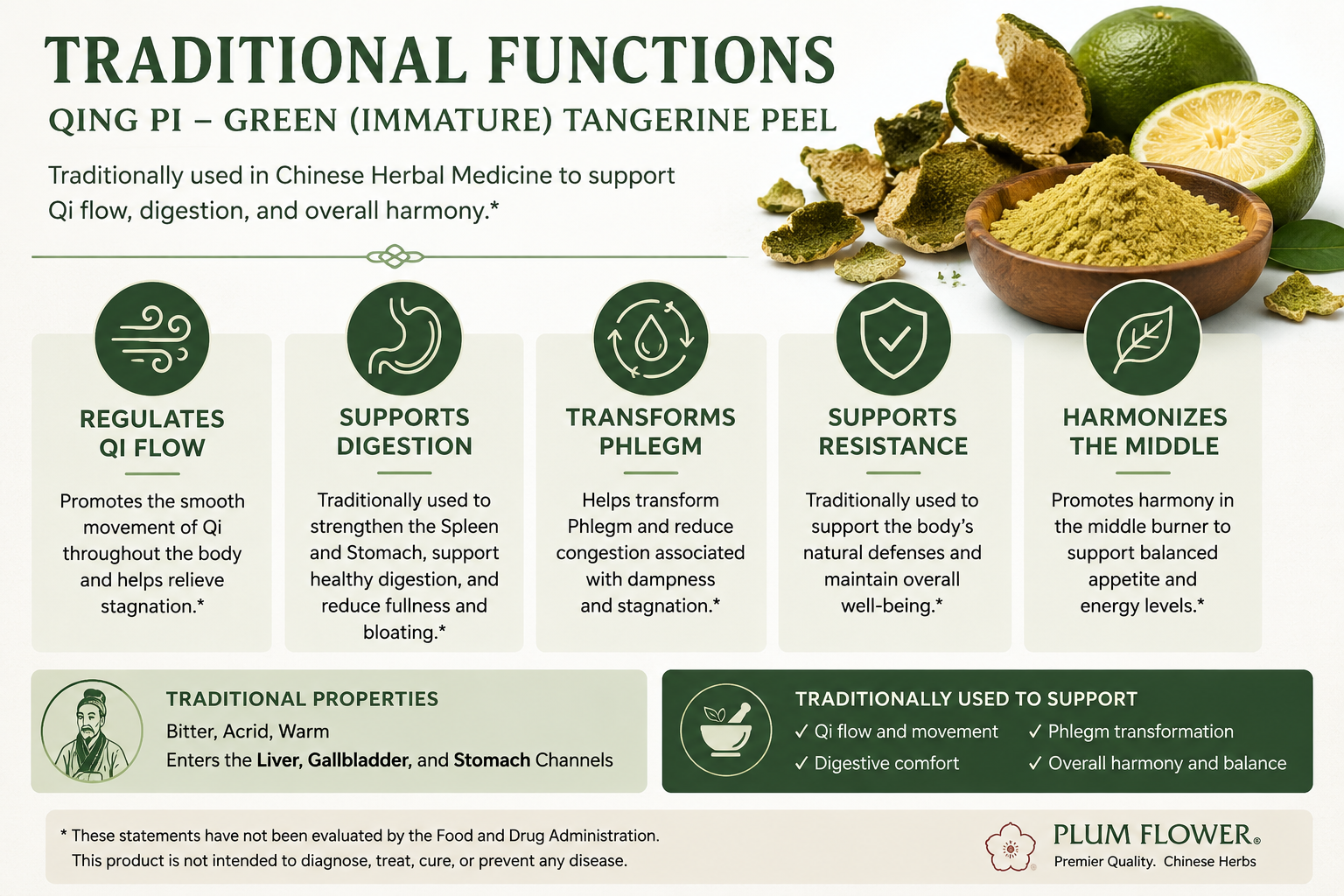
Qing Pi in the Traditional Chinese Herbal Framework
Traditional Chinese Medicine classifies herbs through qualities such as taste, temperature, direction, channel association, and formula role. These historical classifications are not modern medical diagnoses and should not be interpreted as proof that an herb treats a disease.
Within this traditional framework, Qing Pi is commonly placed among herbs that regulate Qi. It is described as more forceful than Chen Pi and is generally used selectively rather than as an ordinary citrus-flavored beverage.
Traditional properties
- Taste: Bitter and acrid or pungent
- Temperature: Warm
- Channels: Liver, Gallbladder, and Stomach
- Traditional category: Herbs that regulate Qi
Traditional functions
Traditional materia medica references describe Qing Pi as having roles that include spreading constrained Liver Qi, breaking up accumulated or stagnant Qi, reducing certain forms of food accumulation, and helping address traditional patterns involving distension or discomfort.
These statements belong to the traditional Chinese herbal system. They do not mean Qing Pi has been proven to diagnose, treat, cure, or prevent digestive, respiratory, metabolic, liver, gallbladder, or other medical conditions.
Why formula context matters
Qing Pi is frequently selected as one component of a multi-herb formula. Its bitterness, warmth, and traditionally forceful moving nature may be balanced by other ingredients according to the intended formula. This is one reason customers should avoid assuming that a larger quantity will produce a better result.
A trained practitioner considers the individual, the full traditional pattern, other herbs in the formula, medications, constitution, and duration of use. When a practitioner has prescribed a specific amount, follow those instructions rather than a generalized internet dosage.
What Does Qing Pi Powder Taste and Smell Like?
Qing Pi powder has a pronounced citrus fragrance with bitter, pungent, and slightly resinous notes. It is not sweet like fresh tangerine fruit. The immature peel produces a sharper, greener flavor than mature or aged Chen Pi.
What to expect
- Aroma: Concentrated citrus peel with green, aromatic, and slightly woody notes
- Taste: Bitter, pungent, warming, and distinctly citrus-like
- Color: Usually tan, olive-brown, greenish-brown, or medium brown
- Texture: Fine and flour-like, approximately 80–100 mesh
Natural variation is expected. Botanical powders may differ slightly in color, fragrance, and texture from harvest to harvest. These differences can reflect growing region, cultivar, harvest timing, drying conditions, and the natural character of the plant material.
How to Use Qing Pi Powder
Qing Pi powder is more practical for mixing or encapsulating than for preparing a traditional strained decoction. Because the particles are very fine, they may remain suspended in water or settle at the bottom of a cup.
Follow your healthcare practitioner’s directions for personal use. The preparation ideas below explain common ways powdered bulk herbs can be handled. They are not medical dosing instructions.
1. Mix with warm water
- Measure the practitioner-directed quantity of Qing Pi powder.
- Place it in a cup or heat-safe bowl.
- Add a small amount of warm water and stir into a smooth paste.
- Add more warm water and stir thoroughly.
- Drink as directed, stirring again if the powder settles.
The flavor is quite bitter. A small amount of honey may soften the taste when that addition is appropriate for the user’s dietary needs.
2. Prepare as a short simmer
- Add the directed amount of powder to water in a small saucepan.
- Whisk well to break apart clumps.
- Bring the water to a gentle simmer.
- Simmer briefly while stirring.
- Remove from heat and allow it to cool to a comfortable temperature.
Fine powder is difficult to strain through an ordinary kitchen strainer. A coffee filter or very fine cloth may be used, although some material and aromatic constituents may remain in the filter.
3. Place into empty capsules
Empty vegetarian capsules can make bitter powdered herbs easier to take. A capsule-filling tray and an accurate gram scale improve consistency. Capsule capacity varies by capsule size and powder density, so do not assume that every capsule contains the same weight without measuring it.
Follow practitioner or product-label directions for the total quantity. Keep filled capsules dry and clearly labeled, and store them away from children and pets.
4. Blend with other powdered herbs
Qing Pi may be included in a customized powdered formula when recommended by a qualified practitioner. Mix thoroughly so the ingredients are evenly distributed. Do not create a medicinal formula solely by combining herbs based on similar-sounding online benefit lists.
5. Culinary use
A very small quantity can provide a bitter citrus note to soups, broths, marinades, spice blends, and other recipes. Because the flavor is concentrated, begin with less than you think you need. Qing Pi is not the best substitute for sweet orange zest when a recipe is intended to taste fruity or sweet.
6. Tincture preparation
Some experienced herbal preparers use dried citrus peel in alcohol-based or glycerin-based extracts. Extraction ratios, alcohol percentages, serving quantities, sanitation, and shelf-life requirements vary. Home tincture instructions should come from a reliable herbal preparation reference or qualified professional rather than a generalized product description.
Do not use a homemade tincture during pregnancy, while nursing, for children, or alongside prescription medications without professional guidance.
How to Recognize High-Quality Qing Pi Powder
Once an herb has been milled, visual identification becomes more difficult. This makes supplier controls, species authentication, manufacturing practices, and laboratory testing especially important.
Look for these quality indicators
- Clear botanical identification: The label should identify the plant and specify that the immature peel is used.
- No undeclared ingredients: The powder should not contain fillers, artificial colors, flavors, sweeteners, or preservatives unless clearly disclosed.
- Recognizable aroma: Quality Qing Pi should retain a distinct citrus-peel fragrance.
- Appropriate bitterness: The powder should taste bitter and pungent rather than sugary or bland.
- Fine, consistent milling: A uniform powder is easier to measure and mix.
- Testing program: Reputable suppliers evaluate botanical materials for identity and contaminants.
- Proper storage: The product should be protected from moisture, heat, sunlight, and strong surrounding odors.
How to store Qing Pi powder
Keep the package tightly sealed in a cool, dry place. Avoid storing it beside a stove, dishwasher, humidifier, or sunny window. Always use a clean, dry spoon. Moisture can cause clumping and may shorten the usable life of botanical powders.
Do not use the powder if it develops an unusual musty odor, visible moisture, mold, insect activity, or other signs of contamination.
About Plum Flower Quality Herb Powders
Plum Flower is an established manufacturer of Chinese herbal products. Its bulk powders are produced through controlled manufacturing processes designed to support identity, consistency, and quality.
- Manufactured in internationally certified GMP facilities
- Quality-control procedures performed during manufacturing
- Third-party laboratory testing used to confirm selected results
- Tested for microbial contamination and selected heavy metals
- Screened for pesticide residues according to the manufacturer’s testing program
- No preservatives added to this single-herb product
- Species-authenticated botanical material
- Produced from sulfur-free material according to the supplier’s stated standards
Laboratory testing does not make an herb appropriate for every person, nor does it prove that an herb will produce a particular health result. It helps provide greater confidence that the material meets defined identity and quality specifications.
Why Customers Choose This Qing Pi Powder
- Pure single-herb powder with nothing else added
- Fine 80–100 mesh consistency
- Large 500-gram package
- Species-authenticated Plum Flower herb
- Laboratory-tested quality program
- Convenient for blending, measuring, or encapsulating
- Supplied by 1st Chinese Herbs, trusted since 1994
Modern Research on Tangerine Peel Compounds
Citrus peels contain a complex mixture of naturally occurring compounds. Published research commonly discusses flavonoids such as hesperidin and polymethoxylated flavones, along with volatile compounds, essential oils, pectin, and other constituents.
Laboratory and preclinical researchers have investigated citrus-peel materials in relation to antioxidant activity, digestive function, microbial activity, inflammatory pathways, metabolism, and other biological processes. However, research conditions vary considerably. Studies may use mature Chen Pi, citrus essential oil, purified compounds, concentrated extracts, animal models, cultured cells, or citrus varieties that are not identical to the Qing Pi powder sold on this page.
These findings cannot be used to conclude that ordinary Qing Pi powder will produce the same effects in people. They also do not establish Qing Pi as a treatment for bloating, abdominal pain, cough, phlegm, obesity, metabolic disorders, or any other disease.
Research interpretation matters
- A purified compound is not the same as the complete powdered peel.
- An extract may be many times more concentrated than an ordinary serving of powder.
- Research on mature Chen Pi should not automatically be applied to immature Qing Pi.
- Cell and animal studies do not prove clinical effectiveness in humans.
- Traditional terminology and modern biomedical terminology describe different systems.
Educational research links
- Citri Reticulatae Pericarpium: botany, ethnopharmacology, phytochemistry, and pharmacology
- Citrus peel flavonoid extracts and their researched bioactivities
- Review of the phytochemistry and pharmacological research involving Citrus reticulata peel
- Recent review of the properties and applications of aged tangerine peel
- Research record supplied for further educational reading
Research is provided for education only. It does not establish that this finished product diagnoses, treats, cures, or prevents any disease.
Cautions and Responsible Use
- Pregnancy and nursing: Do not use during pregnancy or while nursing unless specifically directed by a qualified healthcare professional.
- Children: Consult a qualified pediatric healthcare professional before giving concentrated herbal powders to children.
- Prescription medications: Ask your physician or pharmacist to review possible interactions before use.
- Medical conditions: Seek professional guidance if you have a digestive disorder, liver or gallbladder condition, bleeding disorder, cardiovascular condition, or another ongoing medical concern.
- Surgery: Tell your surgical team about all herbs and supplements you use.
- Sensitivity: Discontinue use and seek appropriate care if an allergic or unexpected reaction occurs.
- Traditional caution: Qing Pi is traditionally considered a stronger Qi-moving herb and may not be suitable for weak or deficient presentations unless balanced appropriately in a formula.
- Serving amount: Follow the directions of your healthcare practitioner rather than increasing the amount based on taste or perceived results.
California Proposition 65
California Proposition 65 warnings may be required for herbal products because plants can absorb naturally occurring trace elements from soil, water, and the surrounding environment. A warning does not necessarily mean that a product violates federal safety standards. Contact us when you need additional product-quality information or available testing documentation.
Important healthcare notice
Traditional Chinese herbs should be considered complementary to modern healthcare, not replacements for appropriate medical evaluation or treatment. Discuss herbs, dietary supplements, and possible medication interactions with your physician or pharmacist.
Frequently Asked Questions About Qing Pi Powder
What is Qing Pi?
Qing Pi is the dried immature peel of tangerine or mandarin fruit, commonly associated with Citrus reticulata. It is used in Traditional Chinese Medicine as an herb that regulates Qi.
Is Qing Pi the same as Chen Pi?
No. Qing Pi is collected while the citrus fruit is immature and green. Chen Pi is prepared from mature peel and may be aged. They have different flavors, traditional channel associations, strengths, and formula roles.
Can I substitute Chen Pi for Qing Pi?
Not automatically. Use the herb named in your formula or preparation. Consult a qualified practitioner before substituting one citrus peel for another.
What does Qing Pi powder taste like?
It has a strong citrus-peel aroma with a bitter, pungent, and slightly warming flavor. It is sharper and less rounded than mature Chen Pi.
What color should the powder be?
Natural Qing Pi powder may range from greenish tan to olive-brown or medium brown. Botanical powders vary somewhat by harvest, cultivar, processing, and storage.
Does this product contain fillers?
No. This is a single-herb product containing Qing Pi powder with nothing else added.
How fine is the powder?
The powder is approximately 80–100 mesh, giving it a fine texture similar to baking flour.
Can Qing Pi powder be used to make tea?
It can be mixed into warm water, but it will not behave like a tea bag or cut peel. The fine particles may remain suspended or settle at the bottom. Follow your practitioner’s preparation directions.
Can I put Qing Pi powder into capsules?
Yes, powdered herbs are commonly placed into empty capsules. Use an accurate scale and follow practitioner or label directions because capsule capacity varies.
Is Qing Pi used for digestion?
Traditional Chinese herbal references associate Qing Pi with formulas addressing particular patterns of constrained or stagnant Qi that may include digestive discomfort. This traditional use is not evidence that the product treats a digestive disease.
Does Qing Pi boost metabolism?
Citrus-peel extracts and isolated compounds have been investigated in metabolism-related research, but that does not establish that ordinary Qing Pi powder “boosts metabolism” or causes weight loss in people.
Can I use Qing Pi every day?
Qing Pi is traditionally considered stronger and more directing than Chen Pi. Regular or extended use should be discussed with a qualified practitioner, especially when medications or medical conditions are involved.
How should I store it?
Store the powder tightly sealed in a cool, dry location away from heat, humidity, direct sunlight, children, and pets. Always use a clean, dry utensil.
Can Qing Pi be used during pregnancy?
No. Do not use this product during pregnancy or while nursing unless specifically directed by a qualified healthcare professional.