
Beginner Herbal Guide Most people do not struggle with Chinese herbs because herbs are too complicated. They struggle because no one clearly explains how to use them in real life. If you have ever bought Chinese herbs and then thought, “Now what am I supposed to do with this?” — you are not alone. Many beginners feel excited when they order herbs, then overwhelmed when the bag arrives. This guide explains how to use Chinese herbs at home in a simple, practical way: how to steep, simmer, measure, store, and build a routine that you can actually follow. Chinese herbs are not meant to sit forgotten in a kitchen cabinet until they become part of the “mystery bag collection.” They work best when you understand what form you bought, how it should be prepared, and how to use it consistently. At 1st Chinese Herbs, we have helped customers learn about bulk herbs, powders, teas, mushrooms, and teapills since 1994. Our goal is to make herbs feel clear, approachable, and usable — not intimidating. Chinese herbs are roots, bark, leaves, flowers, seeds, fruits, minerals, fungi, and other natural materials traditionally used in Chinese herbal systems. They are often selected based on taste, temperature, traditional function, body pattern, preparation method, and how they work together. For beginners, the most important thing is not memorizing hundreds of herbs. It is learning the basics: The biggest beginner mistake is treating every herb like a grocery store tea bag. Some herbs release their qualities quickly in hot water. Others are tough, dense, or woody and need time to simmer. Covering the cup is especially helpful for aromatic herbs because the scent is part of the experience. If the aroma disappears into the kitchen air, you lose part of what makes the tea enjoyable. Not everyone has time to simmer herbs every day. That is where powders, granules, and teapills can help. Powders are often mixed into warm water, smoothies, applesauce, honey, or soft foods. They are fast, but they can taste stronger because you are consuming the whole powdered material. Granules are usually concentrated herbal extracts that dissolve in warm water. They are convenient for travel and daily routines. Teapills are small round pills based on traditional formulas. They are often used by people who want a formula-style approach without brewing a decoction. This is where beginners often get stuck. A teaspoon of one herb may weigh very differently than a teaspoon of another herb. Fluffy flowers, dense roots, powders, and bark pieces do not measure the same. For accuracy, grams are better than spoon measurements. If you use herbs regularly, a small kitchen scale can make your routine much easier. The best herbal routine is not the most complicated one. It is the one you will actually do. Herbs are sensitive to heat, light, moisture, and air. Poor storage can make even good herbs lose aroma, color, and quality faster. Freshness matters. Herbs should generally look, smell, and feel appropriate for that plant material. Not every herb is fragrant, but stale herbs often smell flat, dusty, or lifeless. Herbs are powerful traditional wellness tools, but they are not automatically right for everyone. Use extra caution if you are pregnant, nursing, taking medications, managing a medical condition, preparing for surgery, or buying herbs for a child. If you have a medical condition or take prescription medication, speak with a qualified healthcare professional before using herbs. Start simple. Choose one goal, one herb form, and one routine. Once you understand how herbs fit into your day, everything becomes easier. No. Some herbs are best steeped, while tougher herbs such as roots, bark, seeds, and dense slices often need simmering as a decoction. The easiest way is to choose one goal, one herb form, and one simple routine. Beginners often do better with consistency than complicated formulas. Powders are usually faster and more convenient. Bulk herbs are helpful when you want to see the herb, smell it, simmer it, or prepare traditional teas and decoctions. Many herbs naturally have bitter, earthy, sour, sweet, or aromatic flavors. In traditional herbal systems, taste is part of how herbs are understood. Most decoctions take about 20–45 minutes depending on the herbs used and the preparation instructions. Sometimes, but beginners should start simple. Combining too many herbs at once makes it harder to understand what is helping, what is too strong, or what does not fit your body. Store herbs in a cool, dry place away from heat, moisture, sunlight, and strong odors. Airtight containers help preserve freshness. You do not need to become an herbal expert overnight. Start with one simple routine, learn how your herbs are prepared, and build confidence one cup at a time. Get Real Herbs. Feel the Difference.Using Chinese Herbs at Home: Beginner Guide to Teas, Decoctions, Powders, Granules & Daily Routines
What You Need To Know
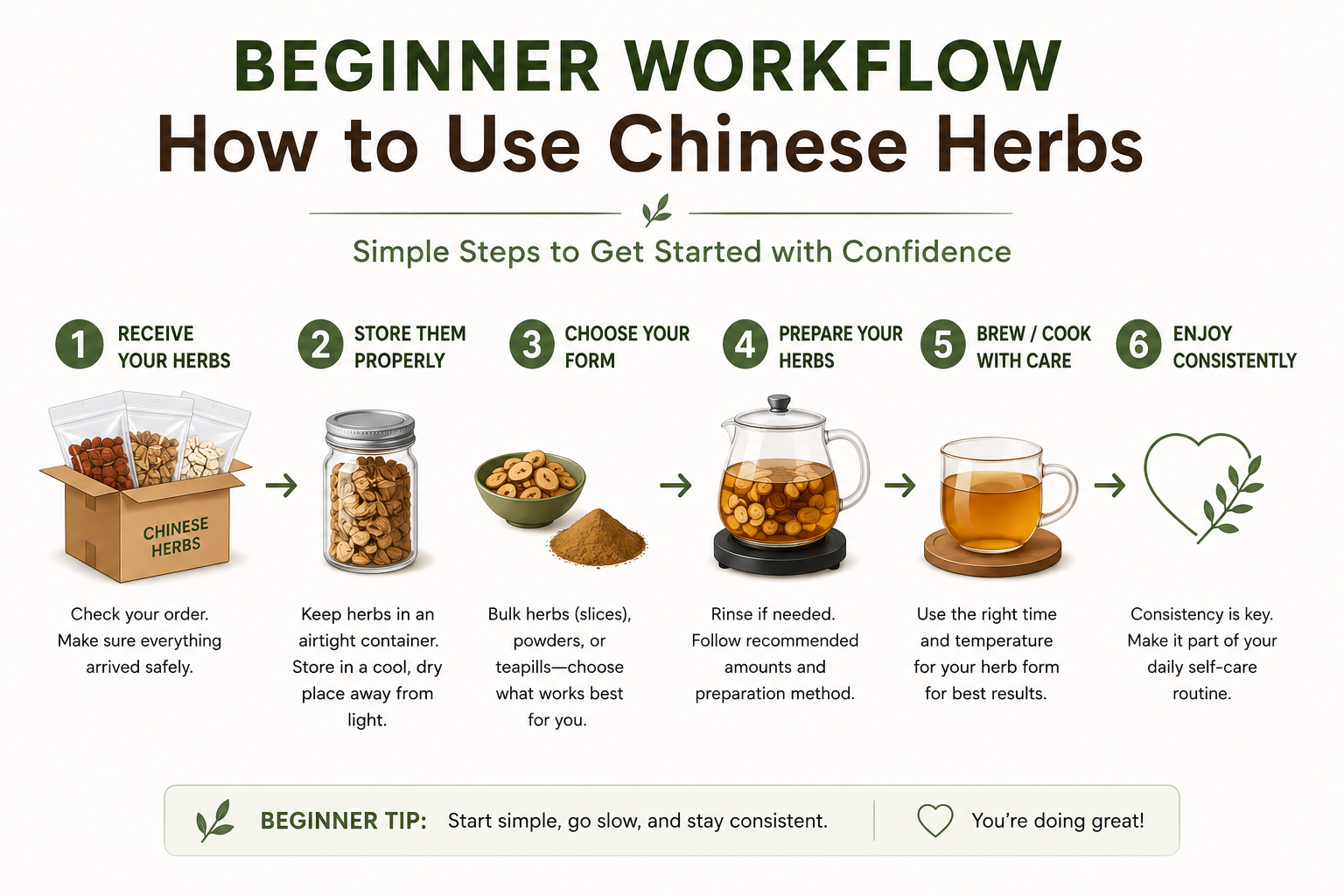
What Are Chinese Herbs?
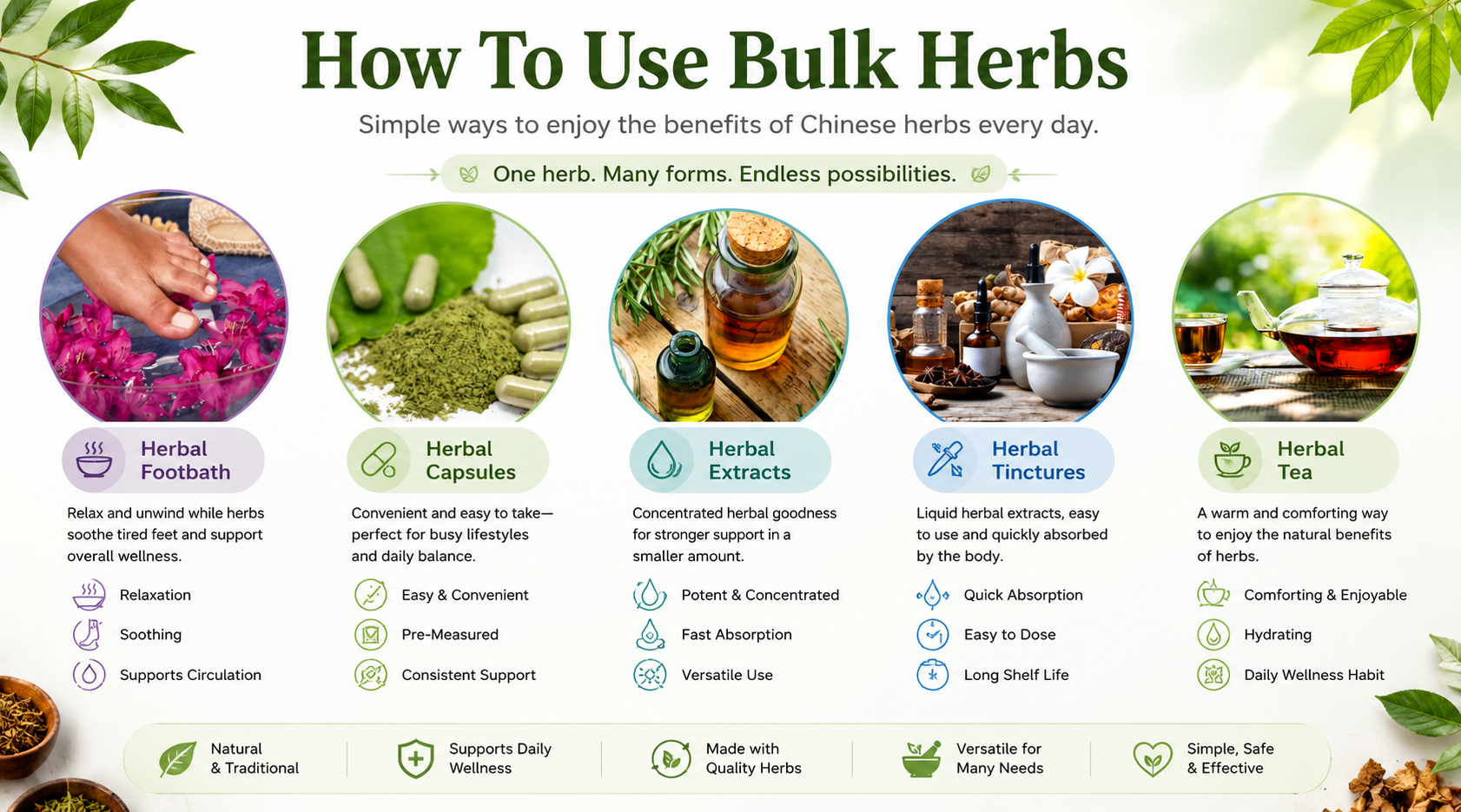
Chinese Herb Preparation Methods: Simple Comparison
Method
Best For
Typical Time
Beginner Ease
Tea / Infusion
Leaves, flowers, aromatic herbs
5–15 minutes
Easy
Decoction
Roots, bark, seeds, dense herbs
20–45 minutes
Moderate
Powders
Fast daily use, mixing into drinks or food
1–2 minutes
Very easy
Granules
Convenience and travel
1 minute
Easiest
Teapills
Traditional formulas in convenient form
Under 1 minute
Very easy
Tea vs Decoction: The Beginner Mistake That Causes the Most Confusion
Use Tea / Infusion For:
Use Decoction For:
How to Make a Simple Chinese Herbal Tea
How to Make a Basic Herbal Decoction
Powders, Granules, and Teapills: When Convenience Matters
Powders
Granules
Teapills
How Much Herb Should You Use?
How to Build a Simple Herbal Routine
How to Store Chinese Herbs at Home
How to Tell If Herbs Are Fresh
Natural color, not faded or suspiciously bright.
Fresh, distinct aroma when expected.
Dry, not damp, sticky, or rubbery.
Many dried herbs lightly snap or crack.
Distinct, not musty or stale.Safety: When to Be Careful With Chinese Herbs
Not Sure Where to Start?
FAQ: Using Chinese Herbs at Home
Can I use all Chinese herbs as tea?
What is the easiest way to start using Chinese herbs?
Are powders easier than bulk herbs?
Why do Chinese herbs taste bitter?
How long does a decoction take?
Can I mix several herbs together?
How should I store Chinese herbs?
Start Using Herbs With Confidence