
Herbal Brewing Guide Learn how long to steep leaves and flowers, when to simmer roots and bark, and why brewing time can completely change the taste, strength, and experience of your herbal tea. This guide helps you understand tea vs decoction, steeping times, simmering times, water temperature, flavor, freshness, and simple brewing routines. Use the calculator below to estimate the best brewing time based on the type of herb you are using. Choose the type of herb you are using to see the suggested brewing method, steep time, and beginner tip. Use this simple chart as a beginner-friendly guide. Always follow product instructions when available. This is one of the biggest beginner questions. A tea is usually made by steeping lighter herbs in hot water. A decoction is made by simmering tougher herbs over time. Brewing time can affect taste, strength, aroma, and overall herbal experience. If tea is too weak, it may have been underbrewed. If it tastes harsh or bitter, it may have been overbrewed or prepared with water that was too hot. A high-quality herb can still disappoint if it is prepared incorrectly. That is why steeping time and simmering time are so important. Yes. Many beginners assume hotter is always better, but that is not always true. Yes. Some herbs can become too strong, too bitter, or unpleasant when steeped too long. This is especially true for delicate flowers, leaves, and aromatic herbs. Roots and bark are usually more forgiving because they are often meant to simmer longer. Weak tea usually comes from one of these problems: Some herbs naturally taste bitter. In Traditional Chinese Medicine, bitter taste is part of how herbs are understood. However, bitterness can also become stronger when herbs are oversteeped, overboiled, or used in too large an amount. Bitter does not always mean bad. But if the taste is harsh, stale, musty, or unpleasant, check the herb quality, storage, and brewing time. Freshness matters. Herbs should look, smell, and feel appropriate for that plant material. Old herbs often lose aroma, color, and flavor. The best herbal routine is the one you can actually follow. Start with quality herbs, use the right brewing method, and keep your routine simple. One properly prepared cup can make herbs feel far less confusing. Leaves and flowers are often steeped for 5–10 minutes. Roots, bark, seeds, and mushrooms usually need simmering for 20–45 minutes or longer. Steeping means pouring hot water over herbs and letting them sit. Simmering means gently cooking herbs in water over time. No. Delicate herbs may become harsh or bitter if boiled aggressively. Dense herbs such as roots and bark usually tolerate simmering better. Some roots, bark, and mushrooms can be brewed more than once. Flowers and leaves usually lose flavor faster. Some herbs are naturally bitter, but bitterness can also come from oversteeping, boiling too hard, using too much herb, or using old herbs. For beginners, flowers and leaves are usually easiest as tea. Powders and granules are also convenient because they prepare quickly. Yes, especially with aromatic herbs. Covering helps preserve aroma and keeps the tea warm while steeping. Herbal brewing does not need to be confusing. Start with the type of herb you have, choose the right method, and give the process enough time. Get Real Herbs. Feel the Difference.
Chinese Herbal Steep Time Calculator & Brewing Guide
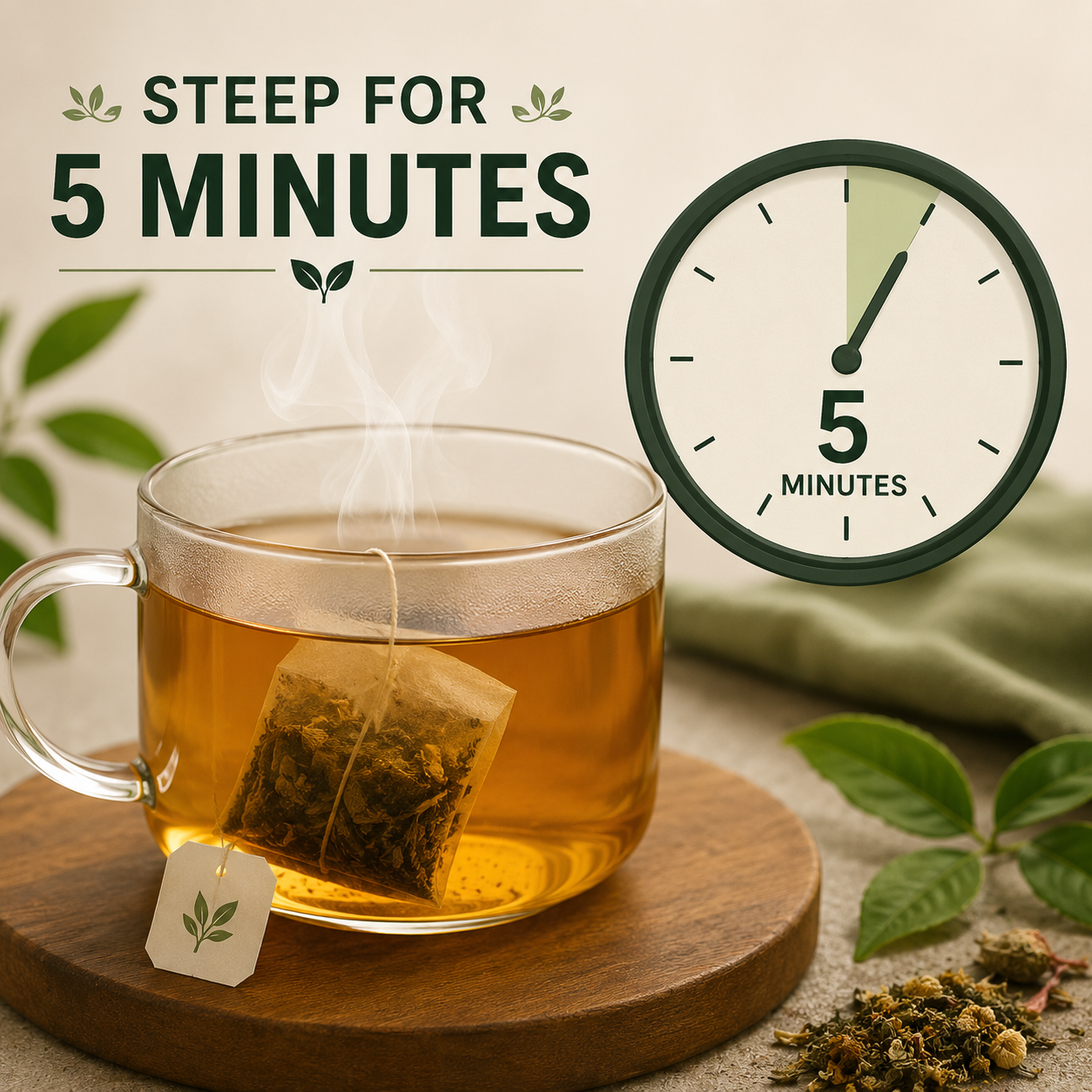 Most people do not fail with herbs because herbs are “too complicated.” They struggle because nobody explains how to brew them correctly. A delicate flower and a dense root should not be prepared the same way.
Chinese Herbal Steep Time Calculator
Chinese Herbal Steep Time Calculator
Quick Herbal Brewing Chart
Herb Type
Best Method
Typical Time
Beginner Tip
Leaves
Steep
5–10 minutes
Cover while steeping to preserve aroma.
Flowers
Steep
5–8 minutes
Do not overbrew delicate flowers.
Roots
Simmer / Decoction
20–45 minutes
Use a gentle simmer, not a violent boil.
Bark
Simmer / Decoction
30–45 minutes
Bark needs time to release into water.
Mushrooms
Simmer
30–60 minutes
Longer simmering is often preferred.
Powders
Mix
1–5 minutes
Stir into warm water, tea, or soft food.
Tea vs Decoction: What Is the Difference?
Use Steeping For:
Use Simmering For:
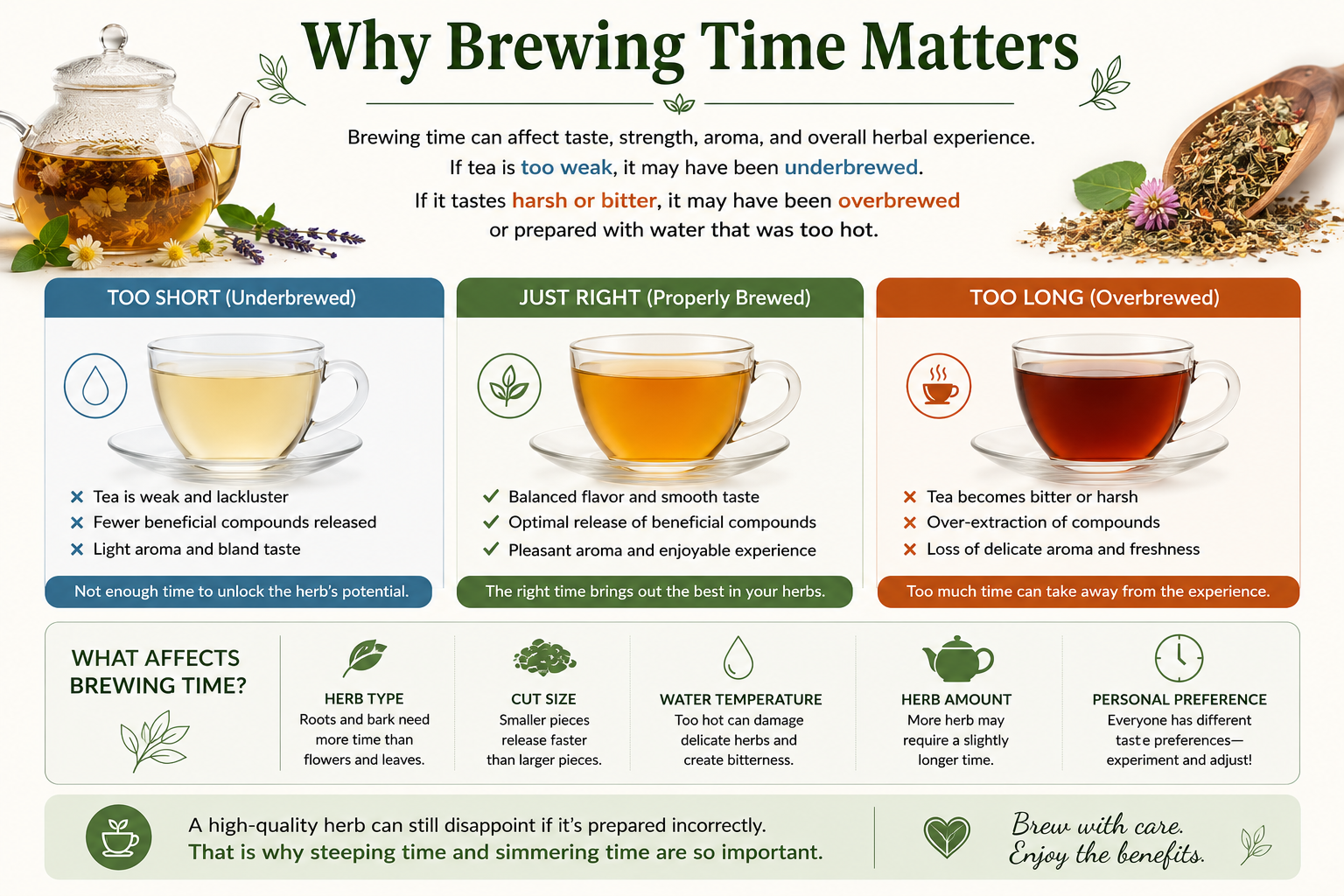
Why Brewing Time Matters
Does Water Temperature Matter?
Can You Oversteep Herbal Tea?
Why Does My Herbal Tea Taste Weak?
Why Does Herbal Tea Taste Bitter?
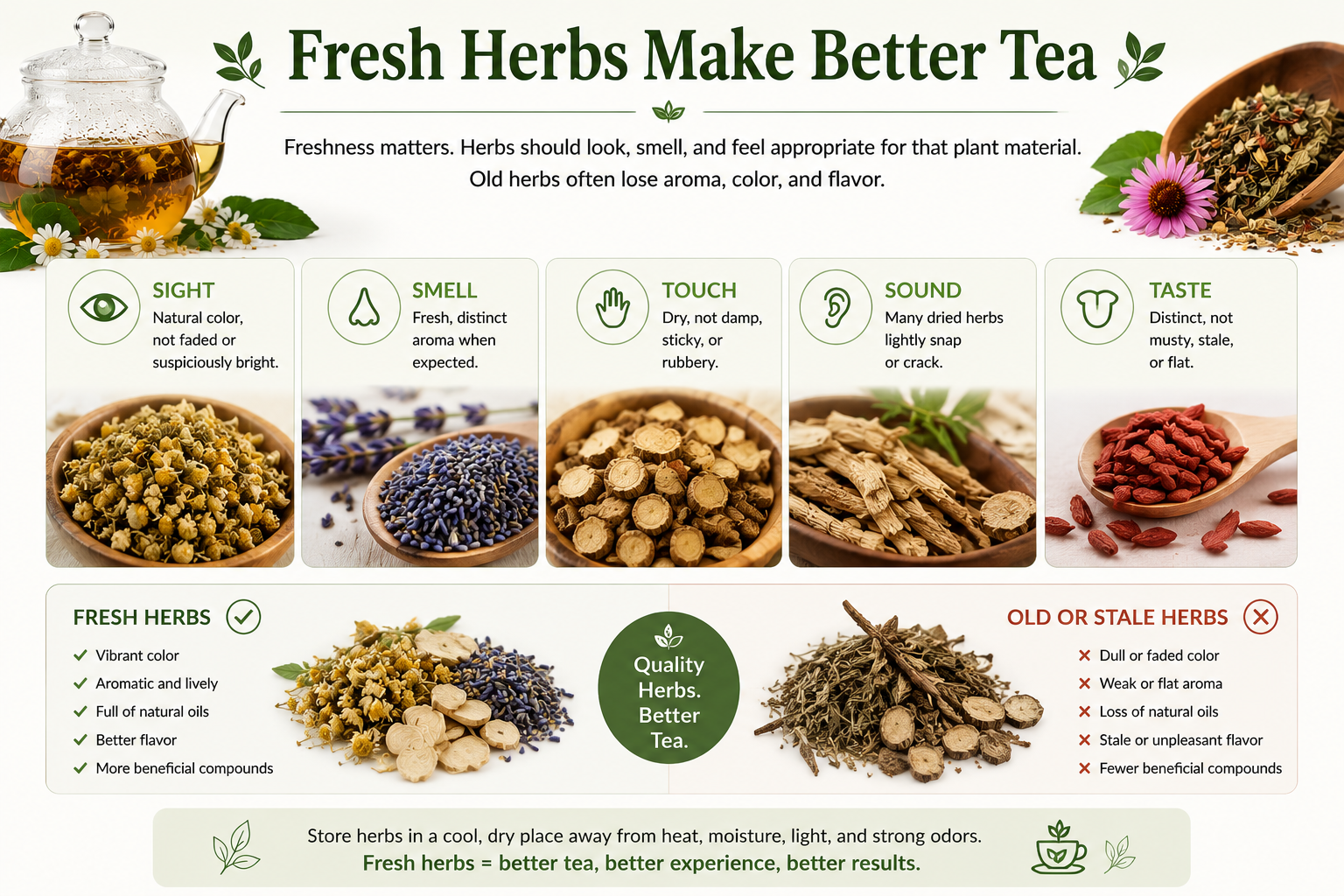
Fresh Herbs Make Better Tea
Natural color, not dull or suspiciously bright.
Fresh aroma when expected.
Dry, not damp or sticky.
Some roots lightly snap or crack.
Distinct, not musty or flat.How to Build a Better Herbal Tea Routine
Ready to Brew Better Herbs?
FAQ: Herbal Steep Times and Brewing
How long should I steep Chinese herbs?
What is the difference between steeping and simmering?
Can I boil all herbs?
Can I reuse herbs for a second brew?
Why does my herbal tea taste bitter?
What is the easiest way to brew herbs?
Should I cover herbal tea while steeping?
Final Thoughts
Herbal Steep Time Calculator
Quick Answer: Leaves and flowers are usually steeped for 5–10 minutes. Roots, bark, seeds, and mushrooms usually need a longer simmer, often 20–45 minutes or more. The right brewing method helps you get more from your herbs and avoid weak, bitter, or disappointing tea.
Simple Rule: Leaves and flowers usually steep. Roots, bark, seeds, and mushrooms usually simmer.
Beginner Tip: Think slow soup, not kitchen volcano. A gentle simmer is usually better than aggressive boiling.
Sight:
Smell:
Touch:
Sound:
Taste: