
Herbal Steeping & Decoction Timer
The Smarter Way To Brew Roots, Mushrooms, Bark, Leaves, Flowers & Traditional Chinese Herbs
Most online tea timers were designed for green tea bags and black tea — not medicinal mushrooms, roots, bark, berries, twigs, or traditional bulk herbs.
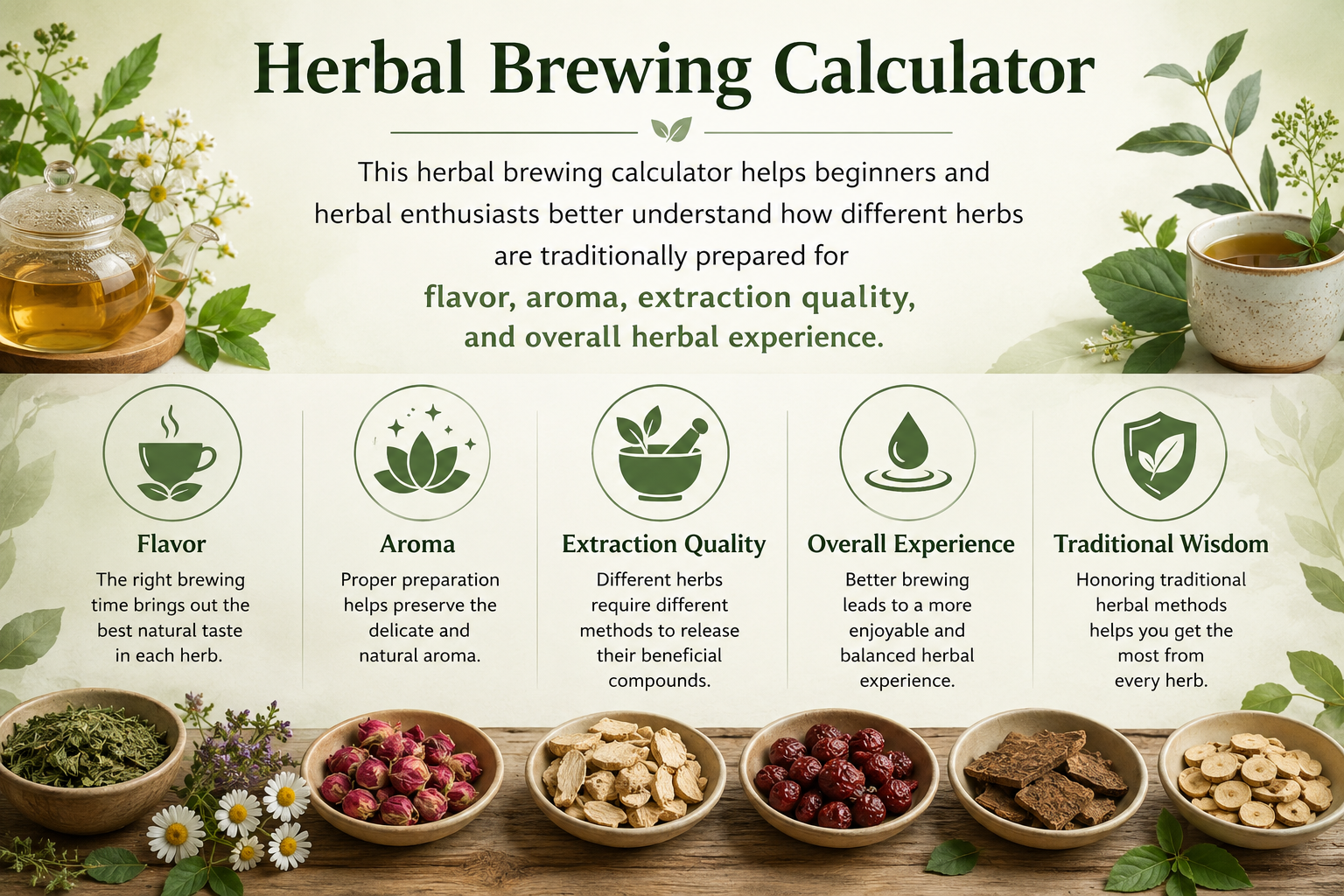
This herbal brewing calculator helps beginners and herbal enthusiasts better understand how different herbs are traditionally prepared for flavor, aroma, extraction quality, and overall herbal experience.
Quick Herbal Brewing Answer
Leaves and flowers often require shorter steeping times, while roots, bark, mushrooms, seeds, and dense herbs traditionally require simmering or decoction methods for deeper extraction.
Herbal Brewing Calculator
Select the herb type below to see suggested preparation methods and brewing times.
Why Brewing Time Matters
The way herbs are prepared can dramatically change the overall herbal experience. Brewing too briefly may create weak tea with little aroma or depth, while overbrewing may create bitterness, overpower delicate herbs, or negatively affect flavor.
Different plant materials respond differently to heat and water. Leaves, flowers, roots, mushrooms, bark, berries, and stems all release their natural compounds at different rates, which is why proper steeping and simmering methods matter so much.
Flavor
Correct brewing time helps herbs develop a fuller, smoother, and more balanced taste. Underbrewed herbs may taste weak, while overbrewed herbs can become harsh or unpleasant.
Aroma
Many herbs contain delicate aromatic compounds that are sensitive to heat. Proper preparation helps preserve natural fragrance and creates a more enjoyable sensory experience.
Strength
Roots, mushrooms, bark, and dense herbs often need longer simmering times to release their natural compounds into the water more effectively.
Bitterness
Some herbs naturally become more bitter when steeped too long or brewed at excessive temperatures. Gentle preparation can help maintain a smoother taste.
Extraction Quality
Proper brewing helps water pull more flavor, aroma, and plant compounds from the herb material. Different herbs require different methods for optimal extraction.
Overall Herbal Experience
When herbs are brewed correctly, the tea often feels smoother, richer, more aromatic, and more enjoyable overall — helping create a more traditional and satisfying herbal experience.
What You Need To Know
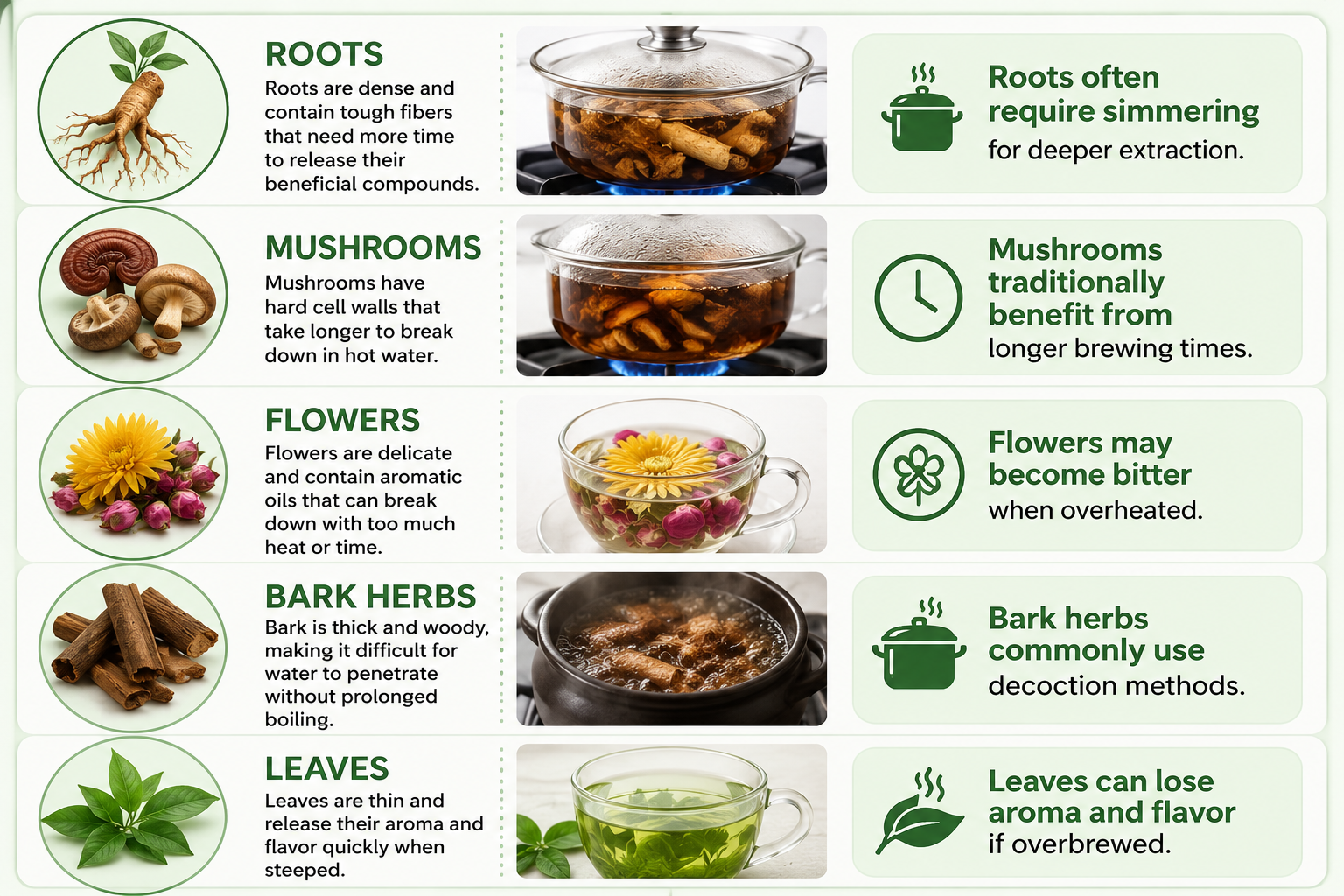
Most tea websites treat all herbs exactly the same. At 1st Chinese Herbs, we believe roots, mushrooms, flowers, bark, and leaves all deserve different preparation methods for a better herbal experience.
But roots, bark, mushrooms, flowers, leaves, berries, and stems all respond differently to water temperature and brewing time.
- Roots often require simmering for deeper extraction
- Mushrooms traditionally benefit from longer brewing times
- Flowers may become bitter when overheated
- Bark herbs commonly use decoction methods
- Leaves can lose aroma and flavor if overbrewed
Herbal Brewing Comparison Chart
| Herb Type | Method | Suggested Time |
|---|---|---|
| Leaves | Infusion | 5–10 Minutes |
| Flowers | Gentle Steeping | 3–7 Minutes |
| Roots | Simmering | 25–45 Minutes |
| Bark | Decoction | 45–60 Minutes |
| Mushrooms | Extended Simmer | 45–90 Minutes |
Why Herbal Preparation Matters
A high-quality herb can still disappoint if it is prepared incorrectly.
Steeping too briefly may result in weak flavor and poor extraction. Brewing too long may create bitterness or overpower delicate herbs.
Understanding traditional herbal preparation methods helps create a better overall herbal experience while respecting how different herbs have historically been used.
Helpful Herbal Guides
|
Learn beginner-friendly ways to prepare, measure, steep, simmer, and store bulk herbs at home. |
|
|
Discover simple mistakes that may affect herbal flavor, freshness, brewing quality, and overall experience. |
|
|
Browse educational articles about herbs, teas, mushrooms, roots, and traditional wellness practices. |
|
|
Contact our team with questions about brewing methods, herb preparation, or choosing the right herbs. |
Author: 1st Chinese Herbs Research Team
Updated May 20 2026