

Ren Dong Teng (Honeysuckle Vine Stem): Uses in TCM, How to Prepare, Quality & Cautions | Plum Flower
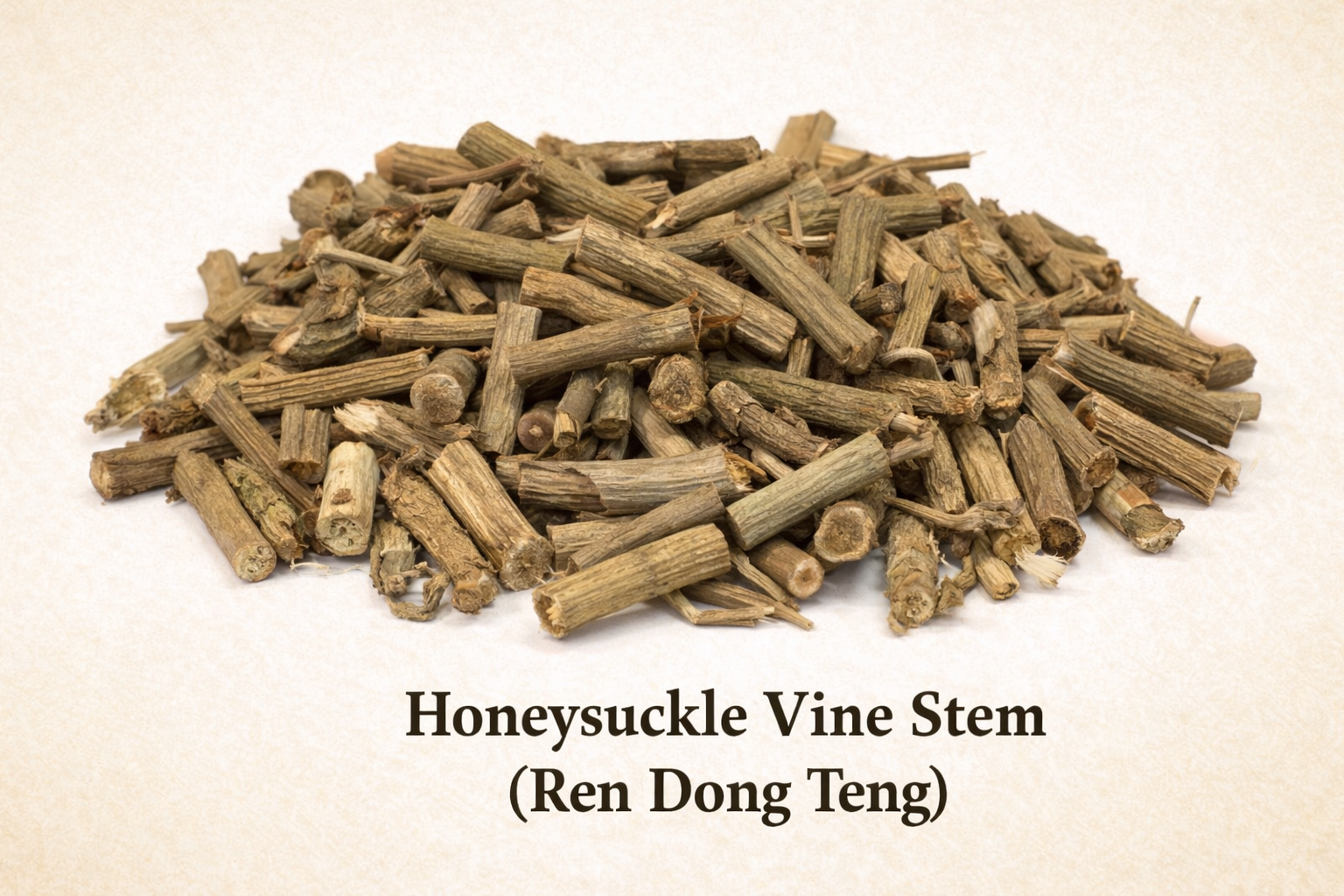
Ren Dong Teng—also called Honeysuckle Vine Stem—is a traditional Chinese herb made from the vine/stem of Lonicera japonica. In Traditional Chinese Medicine (TCM), it’s best known for clearing heat and relieving toxicity (traditional terms) and for supporting comfort when patterns are described as “heat,” “wind-heat,” or “toxin” affecting the throat, skin, or joints. Rather than vague claims, this page answers what shoppers actually search: what Ren Dong Teng is, how it differs from honeysuckle flower, what “sweet/cold” means in TCM language, how to prepare cut pieces, what it’s commonly combined with in classical-style strategies, how to store it, and the cautions that matter—so you can buy the correct herb and use it responsibly.
Quick Summary On Honeysuckle Stem
Ren Dong Teng (Caulis Lonicerae / Honeysuckle Vine Stem) is traditionally used to:
-
Support the body’s “clearing heat” response in TCM pattern language
-
Support comfort when patterns are discussed as wind-heat affecting the channels/collaterals (classic phrasing often used for joint discomfort in heat-type patterns)
-
Provide botanical compounds (like chlorogenic acid and related constituents) that are widely studied in the honeysuckle family
Here’s what matters most:
-
Correct identity: Lonicera japonica vine/stem (Ren Dong Teng)
-
Form: cut/sliced pieces extract best with simmering
-
Quality signals: species-authenticated brand, clean cut, low dust
-
Cautions: especially pregnancy/nursing and medication interactions
Product Details
- Common name: Honeysuckle Vine / Honeysuckle Stem
-
Botanical name: Lonicera japonica Thunb.
-
Pin Yin: Ren Dong Teng (忍冬藤)
-
TCM nature/flavor (traditional): Sweet, Cold
-
Channels: Heart, Lung (varies by source/tradition)
-
Brand: Plum Flower (species-authenticated)
-
Other ingredients: None (single herb)
-
Size: 500g (1.1 lb)
-
Form: Cut/Sliced (sizes vary)
-
Origin: China
-
GMP: Yes
-
COA: Available upon request
What Is Ren Dong Teng?
Ren Dong Teng (Caulis Lonicerae Japonicae) is the dried vine/stem of Lonicera japonica. Traditional references and modern reviews describe it as sweet and cold, and it is commonly placed in the category of herbs that clear heat and relieve toxicity in TCM frameworks.
Ren Dong Teng vs. Honeysuckle Flower (Jin Yin Hua): What’s the difference?
-
Ren Dong Teng = vine/stem (often chosen when traditional strategies emphasize “unblocking channels/collaterals” along with heat-clearing)
-
Jin Yin Hua = flower (commonly discussed more for “wind-heat” and external-type pattern language in many modern summaries)
Pro Tip: If your formula says Ren Dong Teng, you want the vine/stem—not the flower—because they’re used differently in traditional formula design.
Traditional TCM Uses
1) “Clears heat and relieves toxicity”
In TCM language, this is commonly used when someone is dealing with a “hot, inflamed” pattern presentation (traditional framework), especially when the throat/upper body or skin is involved.
2) “Unblocks the channels” for heat-type discomfort
Ren Dong Teng is also discussed in traditional comparisons as helping with heat/wind-heat patterns affecting the collaterals (traditional language frequently used in the context of joint discomfort).
3) Supports the body’s normal cleansing and balance processes
Many modern herb summaries translate the traditional “heat-toxin” concept into language like supporting the body’s natural defenses and healthy inflammatory response—without making disease claims.
What’s Inside Ren Dong Teng (Naturally Occurring Components)
Consumers increasingly search for “active compounds” and quality markers. Research on honeysuckle vine/stem highlights constituents such as chlorogenic acid and isochlorogenic acids, plus iridoid glycosides like loganin and related compounds, which are often used in research and quality control discussions.
How to Prepare Ren Dong Teng (Cut Pieces)
Roots and vines typically extract better with gentle simmering than quick steeping.
Option A: Classic decoction (best for cut/sliced vine)
-
Rinse quickly to remove surface dust
-
Add to a pot and cover with water (add extra for simmering)
-
Bring to a gentle boil, then reduce to a low simmer
-
Simmer 30–45 minutes
-
Strain and use according to your formula instructions or qualified guidance
Option B: “Tea-style” simmer
If you want something simpler than a full decoction, a light simmer is usually more effective than pouring hot water over it and steeping briefly.
Storage tip: Keep a small working jar for daily use; keep bulk sealed to preserve aroma and reduce humidity exposure.
What's Next
What does “sweet, cold” mean?
In TCM, “cold” herbs are often used in heat-pattern presentations; “sweet” is often associated with harmonizing/supportive qualities. This is pattern language, not a disease claim.
What does it taste like?
Typically mild to slightly bitter/vegetal compared with strongly bitter “heat-clearing” roots.
Can I take this alone?
Many people use Ren Dong Teng inside a formula (traditional approach), because formula pairing is how TCM is traditionally practiced.
Batch Quality
Batch Quality You Can Verify
We treat Ren Dong Teng like a food-grade botanical because quality is what makes it usable.
Identity & Cleanliness
-
Species-authenticated brand (Plum Flower)
-
Single-ingredient: no additives
-
Cut/sliced pieces (natural size variation)
Packaging & Freshness
-
Sealed packaging to protect aroma
-
Stored cool, dry, away from light/humidity
Documentation
-
GMP supply chain
-
COA available upon request
Lab-tested where applicable • GMP • Family-owned since 1994 • Packed for freshness.
Cautions & Interactions
Use caution or seek professional guidance if you:
-
Are pregnant or nursing
-
Have sensitive digestion or patterns often described as “cold Spleen/Stomach deficiency” (TCM framework)
-
Take prescription medications (especially if you’re managing complex conditions)—check with a clinician/pharmacist for interaction safety.
This product information is for educational purposes only and is not intended to diagnose, treat, cure, or prevent any disease.
FAQ
What is Ren Dong Teng used for in TCM?
Traditionally, Ren Dong Teng is used to clear heat and relieve toxicity and is often selected in formula strategies for heat/wind-heat patterns that may involve throat, skin, or heat-type discomfort.
Is Ren Dong Teng the same as honeysuckle flower?
No. Ren Dong Teng is the vine/stem; honeysuckle flower is typically sold as Jin Yin Hua. They are used differently in traditional practice.
How do I prepare Ren Dong Teng?
For cut pieces, a 30–45 minute simmer is a common preparation style for stronger extraction than a quick steep.
Why does the herb say “cold”?
“Cold” is TCM pattern language and usually indicates use in “heat” presentations.
Who should avoid or be cautious with Ren Dong Teng?
Pregnancy/nursing, highly sensitive digestion, and those on medications should consult a professional first.
Shop Ren Dong Teng
If you want species-authenticated Ren Dong Teng (Honeysuckle Vine Stem) with clear labeling, clean cut pieces, and documentation available on request, this Plum Flower 500g bag is a strong apothecary staple for traditional heat-clearing formula strategies.
Use Honeysuckle Vine & Stem to make a honeysuckle vine decoction or honeysuckle vine tincture.
Check out our How to Use Bulk Herbs page to see how to use herbs correctly.
Reference
- Lonicerae Japonicae Caulis (Ren Dong Teng): research progress review
- Anti-inflammatory property and functional substances of Lonicerae Japonicae Caulis
- Study on anti-inflammatory efficacy and correlative components of Caulis Lonicerae japonicae
- Lonicera japonica: ethnopharmacology, phytochemistry, and pharmacology review