

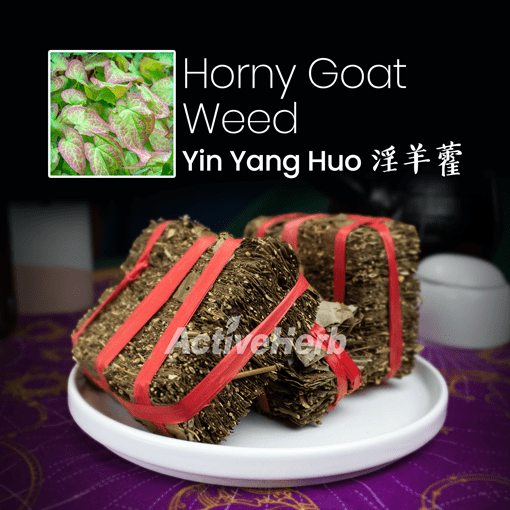
Yin Yang Huo (Epimedium) — Cut Herb (Bulk Tea)
Also known as: Horny Goat Weed • Epimedium • Herba Epimedii • Barrenwort • 淫羊藿
Quick Summary
- What it is: A traditional Chinese herb (Epimedium spp.) used for “Kidney Yang support” in TCM.
- Why people use it: Traditionally for vitality, endurance, and warm, active constitution support.
- How it’s commonly prepared: Gentle simmer (tea/decoction) from cut leaf material.
- Important note: Species and active-compound levels can vary; quality sourcing matters.
These statements have not been evaluated by the Food and Drug Administration. This information is educational and is not intended to diagnose, treat, cure, or prevent any disease.
What Is Yin Yang Huo (Epimedium)?
Yin Yang Huo (淫羊藿) is the Traditional Chinese Medicine (TCM) name most commonly used for Epimedium leaf (often listed as Epimedium spp.), a genus native to parts of Asia and widely used in classical herbal practice. In English, it’s often called horny goat weed or barrenwort.
In bulk-herb form, Yin Yang Huo is typically sold as cut leaf (for tea/decoction) or as powders/extracts (for more concentrated use). This page focuses on cut herb for bulk tea.
Product Details On Yin Yang Huo
- Common names: Yin Yang Huo, Horny Goat Weed, Epimedium, Herba Epimedii
- Botanical name: Epimedium spp.
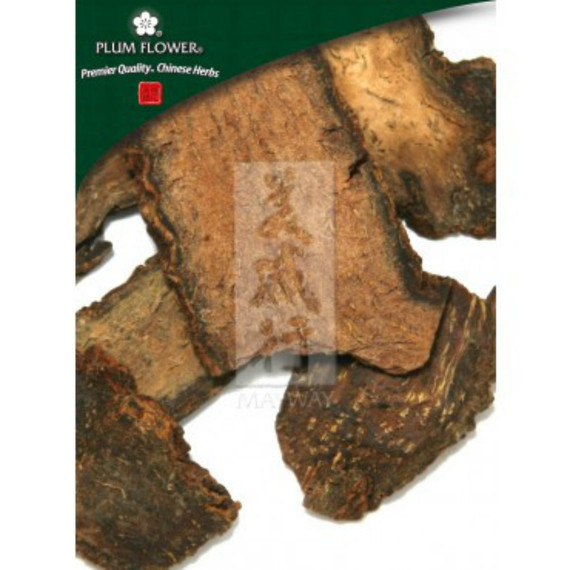
- Plant part: Leaf / aerial parts (cut)
- TCM properties: Acrid, Sweet, Warm (traditional description)
- Channels/Meridians (TCM): Liver, Kidney (traditional attribution)
- Ingredients: Single herb (no added fillers)
- Quantity: 1 pound
- Origin: China
TCM Perspective: Why “Yin Yang Huo” Is Considered Warming
In TCM language, Yin Yang Huo is traditionally described as a warming herb that supports Kidney Yang. “Yang” is often associated with active, warming, motivating functions—think movement, drive, and resilience.
Traditionally, it’s used in formulas (rather than as a solo herb) when someone presents a pattern that practitioners interpret as coldness, fatigue, low motivation, or reduced vitality. It also appears in classic contexts where practitioners aim to support sinews and bones and help the body “move through” damp-cold discomfort.
Because it’s considered warming and drying, many traditions emphasize balancing it appropriately—especially for people who already run warm, dry, or easily flushed.
How It Works: Icariin + What Research Suggests
Epimedium contains a family of flavonoids; the best-known is icariin. Lab and preclinical research suggests icariin may influence pathways involved in circulation signaling and endothelial nitric oxide activity. This is part of why Epimedium is often discussed in the context of “performance” and vitality support.
1) PDE5 inhibition (mechanism discussed in research)
Icariin has demonstrated PDE5 inhibitory activity in vitro (lab studies), a pathway associated with blood-flow signaling. This is not the same as taking a prescription medication, and it does not mean Epimedium will produce the same effect in humans— but it helps explain why the herb has a long-standing reputation in vitality traditions.
2) Nitric oxide / eNOS signaling (vascular research context)
Cell studies suggest icariin can influence endothelial nitric oxide synthase (eNOS) expression and related nitric-oxide signaling, which is part of normal vascular function. Again, this is educational mechanistic context, not a medical claim.
3) Bone metabolism research interest
Epimedium and icariin are also studied in the context of bone metabolism and remodeling pathways. The research is evolving and includes preclinical and review literature that explores osteoblast/osteoclast signaling.
Quality Note (Why This Matters When Buying Bulk)
- Species variability is real: “Epimedium spp.” can represent multiple source species.
- Potency is not guaranteed by name alone: harvesting, processing, and storage affect quality.
- Clean handling matters: ask about micro testing and heavy-metal screening when available.
Tip: If a listing doesn’t clearly state plant part (leaf) and form (cut vs powder/extract), treat it as a buyer red flag.
How to Brew Yin Yang Huo as Bulk Tea (Cut Herb)
Cut Yin Yang Huo is typically prepared with a gentle simmer rather than a quick steep. This helps extract flavor and constituents from the leaf material more consistently.
Simple Bulk Tea Method (Cut Herb)
- Rinse (optional): quick rinse to remove surface dust, then drain.
- Add to pot: place herb in a small saucepan with water (about 2 cups per serving).
- Gentle simmer: bring to a light simmer, then reduce heat and simmer 10–20 minutes.
- Strain: pour through a strainer or reusable tea bag.
- Optional flavor pairings: add ginger slice, cinnamon stick, or a squeeze of lemon to taste.
If you are working with a practitioner, follow their preparation instructions.
How it tastes
Expect a mildly herbaceous, slightly bitter-green profile. Many people blend it with warming kitchen spices for a smoother cup.
Storage (bulk tea best practices)
- Store in an airtight container away from heat, sunlight, and humidity.
- Keep away from strong-smelling products (herbs can absorb odors).
- If clumping or “musty” odor occurs, discontinue use.
Safety, Interactions, and Who Should Avoid It
Yin Yang Huo is traditionally considered warming and may be inappropriate for some constitutions or situations. If you are pregnant, nursing, or managing a medical condition, consult a qualified clinician before use.
Do NOT use (or get medical guidance first) if you:
- Are pregnant or nursing.
- Use nitrates (for chest pain) or prescription PDE5 inhibitors (risk of excessive blood-pressure lowering).
- Take blood pressure medications or have low blood pressure.
- Take blood thinners/anticoagulants or have a bleeding disorder.
- Have a hormone-sensitive condition (discuss with your clinician first).
Stop use and seek medical advice if you experience dizziness, palpitations, severe headache, or unusual symptoms.
California Prop 65: If you are in California, follow any Prop 65 notices provided on the product listing.
FAQ
Is “horny goat weed” the same as Yin Yang Huo?
Often, yes. “Horny goat weed” is a common English name used for Epimedium. “Yin Yang Huo” is the TCM name typically used for Epimedium leaf. Always verify botanical name, plant part, and form.
What’s the best form for tea?
For tea/decoction, choose cut leaf. Powders and extracts are different formats and are usually used differently.
Does Epimedium contain icariin?
Many Epimedium species contain icariin and related flavonoids, but levels can vary by species and processing—another reason quality sourcing matters.
Can I take it daily?
Some people use it occasionally; daily use should be guided by a qualified practitioner—especially if you run warm, have blood-pressure concerns, take medications, or are combining multiple stimulating herbs.
Research & Sources
- Dell’Agli et al. (2008) — Icariin derivatives and PDE5 inhibition (PubMed)
- Xu & Huang (2007) — Icariin and eNOS/NO signaling in endothelial cells (PubMed)
- Shindel et al. (2010) — Review/discussion of erectogenic & neurotrophic effects (PMC)
- Memorial Sloan Kettering — Epimedium overview (MSKCC)
- Zhuang et al. (2023) — Epimedium review (PMC)
Educational content only. Not medical advice.