

How to Safely Buy Chinese Herbs Online
And Feel Confident About What You’re Taking
Not all herbal products are created equal. This page walks you through how to choose safe, high-quality Chinese herbs online, avoid common pitfalls, and shop with a company that has spent decades earning trust: 1st Chinese Herbs.
- ✔ Established 1994
- ✔ Lab-Verified Quality
- ✔ Sulfur-Free Herb Options
- ✔ Quality-Focused Suppliers
- ✔ Education-Driven, DSHEA-Compliant
Who This Page Is For
If you’ve ever stared at a screen full of herb names and thought, “I have no idea which company to trust,” this page is for you.
Maybe:
- You’ve heard great things about Chinese herbs but feel uneasy ordering them online.
- You’re not sure what “lab-tested” or “sulfur-free” really means.
- You want to avoid wasting money on herbs that sit on the shelf because you don’t know how to use them.
- You’d like to shop with a company that actually explains what you’re buying instead of just shouting “SALE!”
Below, you’ll find a step-by-step framework you can use to evaluate any herbal website, plus a look at how 1st Chinese Herbs puts these principles into practice.
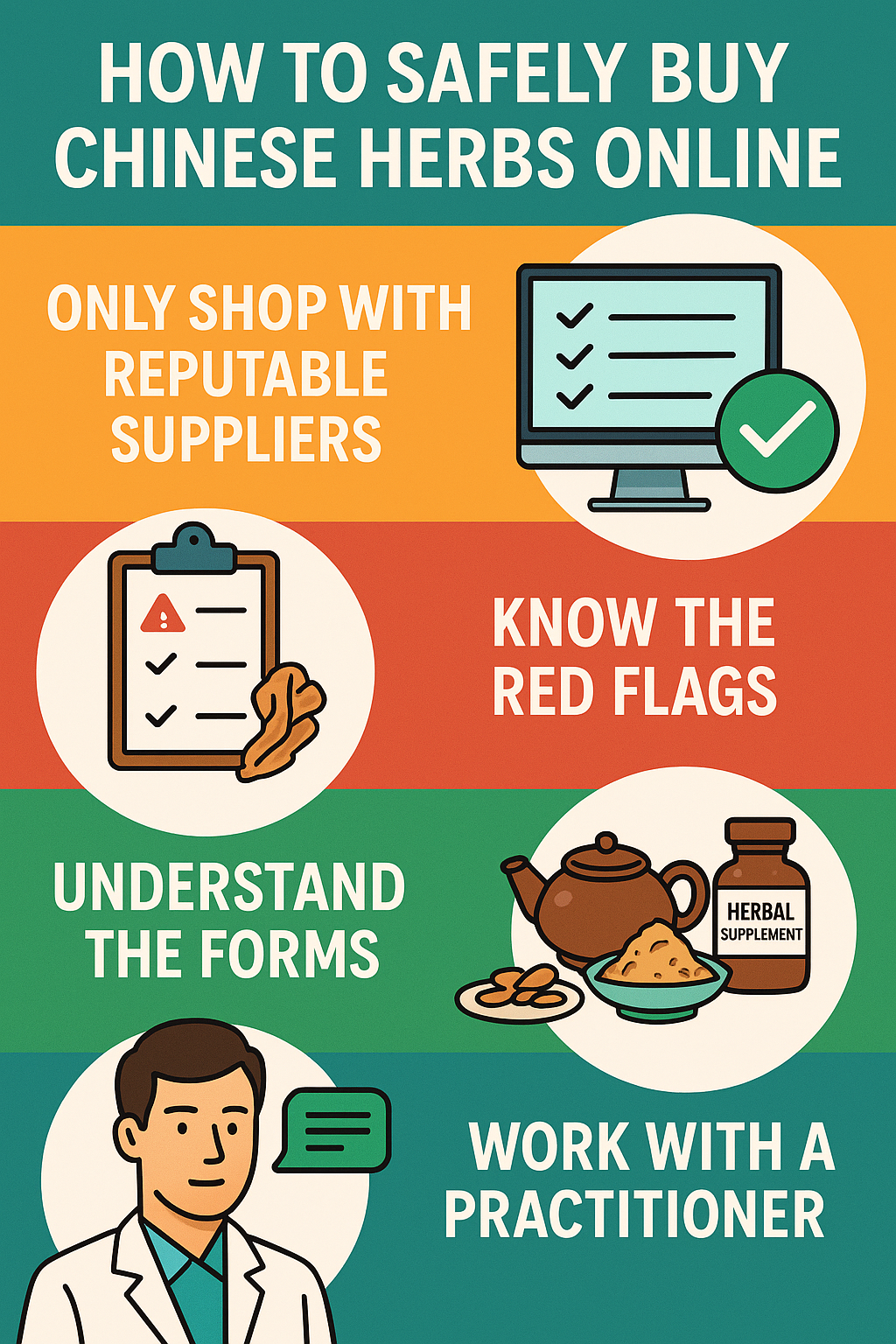 Safe Chinese Herbs Online – Quick Snapshot
- Safe buying starts with the seller.
Reputable companies invest in testing, clear labeling, and honest education instead of hiding behind vague marketing terms. - Quality is not optional.
Heavy metals, pesticide residues, and poor handling are real risks when herbs are sourced or stored carelessly. - 1st Chinese Herbs focuses on herbs first, profits second.
We’ve built our business around bulk Chinese herbs, classic formulas, and teaching customers how to use them wisely.
Step 1: How to Judge Whether an Online Herb Store Is Actually Safe
Before you look at the price or the pretty product photos, ask these questions about the website in front of you:
1. Do They Discuss Testing in Plain Language?
A serious company will be upfront about testing. Look for mentions of:
- Screening for potential contaminants (heavy metals, microbes, pesticide residues)
- Identity verification (making sure the plant is what the label says it is)
- Batch or lot control and the ability to provide more information when asked
2. Do They Follow Recognized Quality Standards?
Terms like “GMP” (Good Manufacturing Practices) and “quality-controlled facility” are clues that the company takes production and handling seriously. Herb storage, packaging, and traceability all matter.
3. Are the Product Pages Truly Informative?
A trustworthy product page includes:
- Common and Latin names of the herb
- Part of the plant (root, bark, leaf, flower, seed, etc.)
- Form (cut, powder, extract, teapill, tincture)
- Net weight and other basic specifications
4. Is There Real Education on the Site?
Look for:
- Guides on how to use herbs
- Safety tips and realistic expectations
- Clear reminders to involve your healthcare provider and/or herbal practitioner
If a site only offers flashy claims and “miracle cure” language, that’s a sign to be cautious.
5. Can You Reach a Human Being?
Does the company:
- List a physical address?
- Offer a phone number or email that gets a real response?
- Share anything about who they are and why they do this?
Herbal products are personal. You should not feel like you’re dealing with a faceless, unaccountable drop-shipper.
Step 2: Red Flags When Buying Herbs Online
If you notice any of the signs below, pause before checking out:
- Herbs are extremely cheap compared to the rest of the market, with no explanation why.
- There is no mention of testing, quality, or standards anywhere on the site.
- Product descriptions are vague or copy-pasted, with little detail on plant identity or form.
- The company relies heavily on exaggerated health claims or “cure-all” language.
- Contact information is limited to a generic form, with no real person or address in sight.
Herbs are an investment in your body. If a website treats them like anonymous, interchangeable commodities, that website doesn’t deserve your trust.
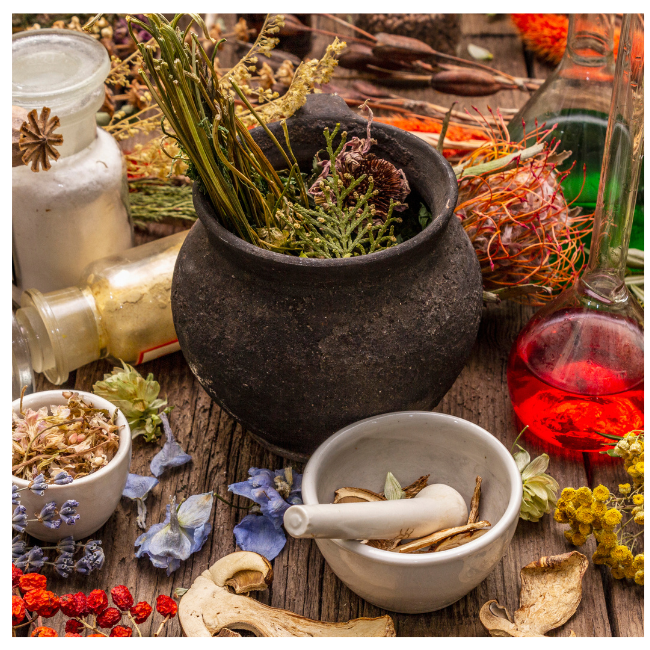 Step 3: Choose the Right Form of Chinese Herbs for Your Life
Once you’ve identified a safe supplier, the next question is: which form of herb makes sense for you? A product is only helpful if you’ll actually use it.
Whole & Cut Herbs
These look the most “old-school”: slices of root, pieces of bark, dried berries, flowers, or fungi. They are typically simmered into decoctions (strong teas).
- Best for: Traditional TCM preparation, practitioner-guided formulas.
- Pros: You can see the plant, adjust amounts, and follow time-honored methods.
- Cons: Requires time, a stove, and tolerance for strong flavors.
Herbal Powders
Powders are simply herbs ground into fine particles. They can be mixed into drinks or put into empty capsules.
- Best for: People who want convenience and custom blends.
- Pros: No long boiling; easier to incorporate into daily routines.
- Cons: Flavor can be intense; proper storage is important.
Extract Powders & Granules
Extract powders are made by decocting herbs, concentrating the liquid, and drying it into a powder. They are typically stronger per gram than plain herb powders.
- Best for: Busy people needing stronger formulas in smaller doses.
- Pros: Quick to prepare, mixes easily with warm water.
- Cons: Only as good as the company’s extraction and testing practices.
Teapills / Tablets
Tiny pills made from herbal formulas. These are widely used for convenience and consistency.
- Best for: People who will never make a decoction but want to follow a practitioner’s formula suggestions.
- Pros: Portable, simple to take, no kitchen time involved.
- Cons: Formula and dose are less flexible.
Ready to explore herbs in the form that fits your lifestyle?
Browse Bulk & Cut Herbs Shop Extract Powders View Teapills & FormulasStep 4: Simple, Beginner-Friendly Preparation Methods
You don’t need to be an herbalist to prepare herbs correctly, but you do need a clear, simple process. Always follow the guidance of your practitioner and the directions on the label.
Basic Decoction (Simmered Tea) – General Example
- Measure your herbs according to professional or product instructions.
- Add herbs and water to a non-reactive pot (stainless steel, glass, or ceramic).
- Soak 20–30 minutes to help soften the material and start extraction.
- Bring to a gentle boil, then simmer for the recommended time, often 20–45 minutes.
- Strain the liquid, discard the spent herbs when finished, and divide the decoction into portions.
- Use within 24–48 hours, storing any extra in the refrigerator.
Using Powders & Extract Powders
- Stir the suggested amount into warm water, tea, or another suitable beverage.
- Use a small measuring spoon or scale for consistent servings.
- Start with the lower end of the recommended range, especially if you are new to the herb.
Using Teapills
- Follow the dose and frequency listed on the label or prescribed by your practitioner.
- Take with water, and stay consistent with timing if possible.
- Avoid taking more than directed without professional guidance.
Real-World Questions About Buying Chinese Herbs Online
“Can I just buy herbs from any seller on a marketplace?”
Some reputable brands do sell on large marketplace platforms, but those same platforms also host sellers with unknown sourcing, vague labels, and little accountability. It’s safer to locate the brand’s main website, see how they talk about quality, and, when possible, buy directly from them.
“Are Chinese herbs safe because they’re natural?”
Natural does not automatically mean harmless. Herbs can be powerful: that is why traditional systems such as TCM developed detailed rules for combining, preparing, and using them. Quality, correct identification, dosage, your overall health, and professional oversight all matter.
“Is the cheapest option ever a good idea?”
Everyone loves a fair price, but rock-bottom prices without any explanation usually mean corners were cut somewhere. Quality testing, careful sourcing, and proper handling cost money. When it comes to herbs, “too good to be true” often is.
When You Should Not DIY Your Chinese Herbs
Even if you enjoy learning about herbs, there are times when you should not go it alone. Professional evaluation is important when:
- You are pregnant, nursing, or planning pregnancy.
- You are considering herbs for infants, children, or older adults.
- You live with serious or complex health conditions.
- You take multiple prescription medications or have a complicated medical history.
- Your symptoms are severe, changing rapidly, or not clearly diagnosed.
Use this page to improve your understanding, then bring your questions to your licensed healthcare provider and a qualified herbal or TCM practitioner.
Why 1st Chinese Herbs Has Earned Customer Trust Since 1994
Focused on Herbs, Not Fads
1st Chinese Herbs is not a general supplement warehouse. We have specialized in Chinese herbs, classic formulas, and herbal education for decades. Our attention is on plants and people, not chasing the latest quick-fix trend.
Quality-First, Lab-Verified Herbs
We work with suppliers who prioritize quality and testing. Herbs are selected with attention to identity and potential contaminants, and we strive to offer sulfur-free options whenever possible. Our goal is to provide herbs we feel comfortable serving to our own families.
Honest, Clear Product Pages
Our product descriptions are written to tell you what you actually need to know:
- Common and Latin names
- Plant part used
- Form (cut, powder, extract, teapill, etc.)
- Net weight and related details
We avoid overpromising, and we stay within DSHEA guidelines so you can trust what you are reading.
Education Built In
Beyond selling herbs, we invest time into writing guides, how-to articles, and educational pages that you can share with your practitioner or loved ones. Our mission is not only to ship a box of herbs but to help you feel confident about using them correctly.
Real People on the Other Side
Questions about herb forms, ordering, or where to find more information? Our Contact Us page connects you with a real team who understands herbs and cares about customer experience.
If you’re ready to buy from a company that takes herb safety seriously, we’d be honored to serve you.
Shop Bulk Chinese Herbs Shop Teapills & Formulas Ask Us a QuestionShort FAQ: Safe Chinese Herb Shopping
Are Chinese herbs safe to buy online?
They can be, when you choose companies that invest in testing, clear labeling, and responsible education. Avoid sellers who hide behind vague descriptions or rely on extreme health claims.
Why do some herbs say “sulfur-free”?
Some herbs may be preserved with sulfur-based methods. Sulfur-free options avoid this type of treatment. Many customers prefer sulfur-free herbs, and we prioritize them whenever possible.
Should I tell my doctor I’m using herbs?
Yes. Any time you add herbs or supplements, it is wise to let your healthcare provider and pharmacist know, especially if you take prescription medications or have ongoing health conditions.
Next Steps: Shop Smart, Learn More, and Save
Important Disclaimer
The information on this page is for educational purposes only. It is not intended to diagnose, treat, cure, or prevent any disease, and it does not replace medical advice, diagnosis, or treatment from a licensed healthcare provider.
Always consult your healthcare provider and a qualified herbal or Traditional Chinese Medicine practitioner before starting, stopping, or changing any herbal regimen—especially if you are pregnant, nursing, taking medications, or managing any health condition.
If you experience severe, sudden, or rapidly worsening symptoms, seek emergency medical care immediately.