
Beginner Guide to Chinese Teapills
How to Use Traditional Chinese Teapills Without Guessing, Overdoing It, or Giving Up Too Soon
Get Real Herbs. Feel the Difference.
What You Will Learn in This Guide
Whether you are completely new to Traditional Chinese teapills or simply want a better understanding of how to use them comfortably and confidently, this guide walks you through the essentials in plain English.
- What Are Chinese Teapills?
Learn what teapills are, why they became popular, and how they compare to traditional herbal decoctions. - How to Start Using Teapills
A beginner-friendly approach to starting slowly, reading labels, and building a consistent herbal routine. - Beginner Mistakes
Discover the most common mistakes people make with Chinese teapills and how to avoid unnecessary confusion. - What to Expect
Understand realistic timelines, consistency, and what many people experience when starting herbal routines. - How to Choose Quality Teapills
Learn what separates high-quality teapills from low-quality products, including freshness, storage, and sourcing. - FAQ
Quick answers to common beginner questions about dosage, timing, combining formulas, and more.
Traditional Chinese teapills can be one of the easiest ways to use classic Chinese herbal formulas. The problem is that most websites tell you what to take, but almost nobody explains how to actually start.
You buy the bottle. You open it. You read the label. Then you see something like: “Take 8 pills, three times daily.”
And suddenly the questions begin.
Is that too much? Should you start slower? Should you take them with food? Can you combine formulas? Are you supposed to crush them? Make tea with them? Take them forever?
This guide was written to make Chinese teapills easier to understand, easier to use, and much less intimidating.
Shop Chinese TeapillsShop Bulk Herbs
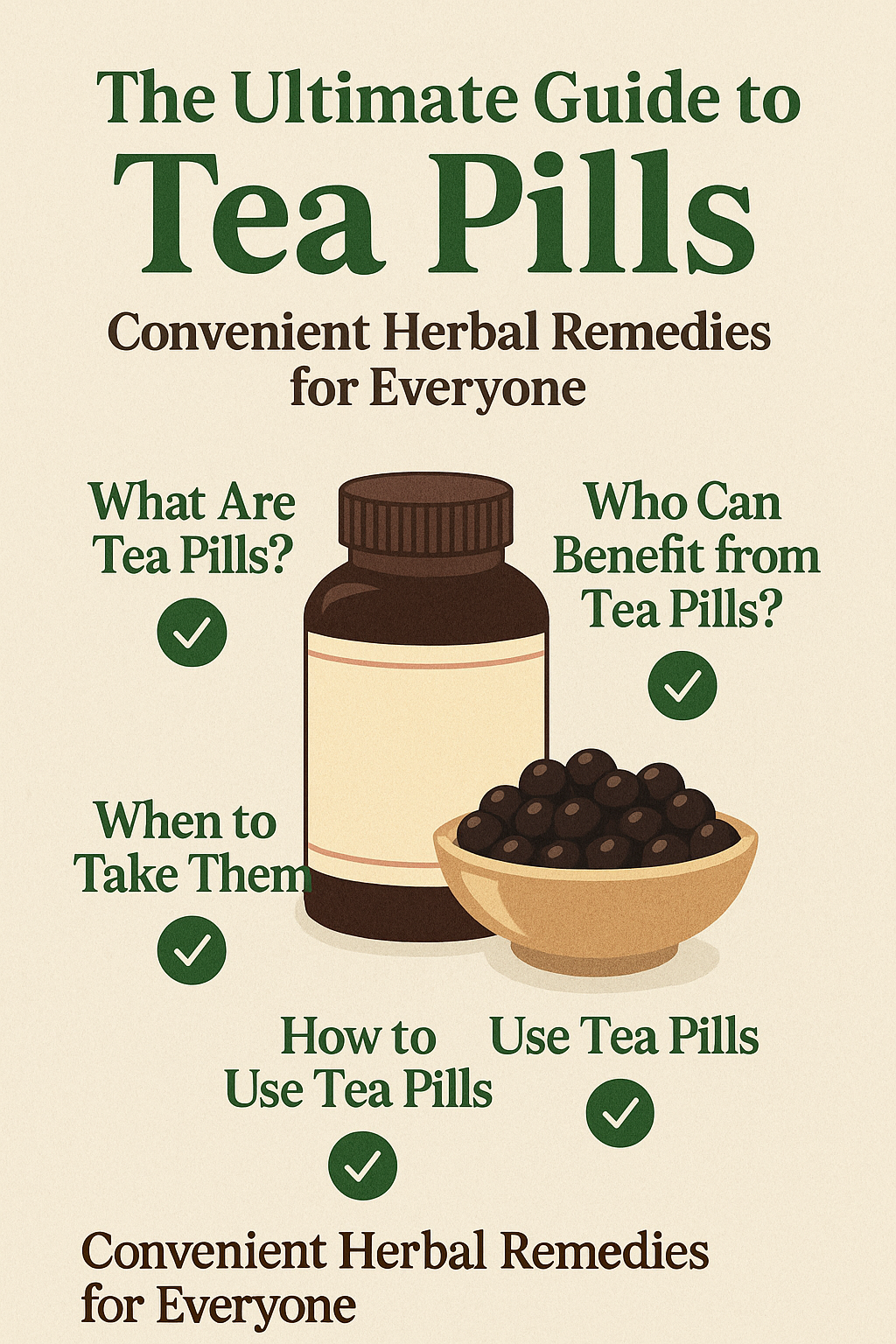 Quick Answer: How Should Beginners Start Using Chinese Teapills?
Many beginners prefer starting with a smaller serving once daily, then gradually increasing toward the suggested serving size on the bottle over several days if everything feels comfortable.
This gradual approach may be especially helpful if you are new to herbs, have sensitive digestion, take multiple supplements, or tend to respond strongly to new products.
The goal is not to rush. The goal is to build a consistent, comfortable herbal routine.
Check serving size, cautions, and directions.
Begin with a smaller serving if you are new.
Take at a similar time each day.
Pay attention before adding more formulas.
What Exactly Are Chinese Teapills?
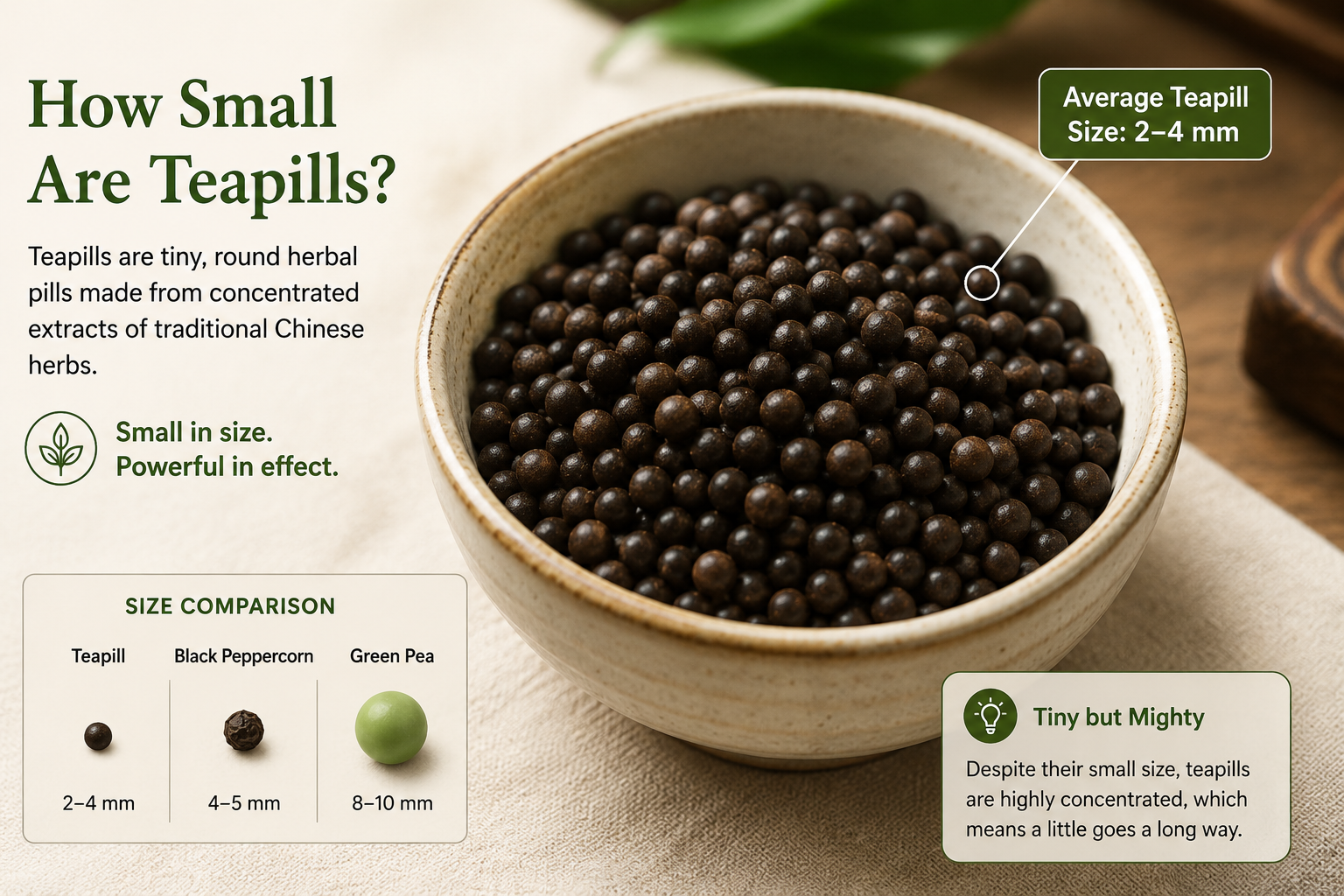
Traditional Chinese teapills are small herbal pills made from Chinese herbal formulas. They were developed as a more convenient alternative to traditional decoctions, where herbs are simmered in water for an extended period of time.
In other words, teapills helped solve a very real modern problem: most people do not have time to simmer roots, barks, seeds, and botanicals for an hour every day.
Teapills are portable, shelf-stable, easy to use, and simple to fit into a daily routine.
Teapills vs. Decoctions vs. Powders: Which Herbal Form Is Easiest?
| Herbal Form | Best For | Preparation | Convenience | Taste |
|---|---|---|---|---|
| Teapills | Beginners, travel, daily routines | No cooking required | Excellent | Mild compared to teas |
| Decoctions | Traditional preparation and customized formulas | Requires simmering herbs | Lower | Strong herbal taste |
| Powders | Mixing into warm water, smoothies, or recipes | Moderate | Good | Varies by herb |
| Capsules | Simple supplement-style use | None | Excellent | Minimal |
The Biggest Mistake Beginners Make With Teapills
The biggest mistake is assuming that because herbs are natural, more must be better.
Traditional Chinese formulas are built around balance. Some formulas are warming. Some are cooling. Some are moving. Some are nourishing. Some are drying. Some are moistening.
Jumping into multiple formulas or large amounts right away may make the process more confusing than helpful.
Think of teapills less like a one-size-fits-all multivitamin and more like a traditional formula with a specific purpose and personality.
7 Common Beginner Mistakes With Chinese Teapills
Many beginners feel more comfortable starting gradually instead of jumping into the full serving immediately.
Start with one formula first so you can understand how your body responds.
Traditional herbs are often used as part of a consistent wellness routine, not as overnight magic.
Different formulas have different directions, serving sizes, and cautions.
Taking herbs randomly makes it harder to know whether they are supporting your routine.
Freshness, storage, sourcing, and manufacturing standards matter.
If something does not feel right, pause and seek proper guidance.
How Are Teapills Traditionally Taken?
Many people take teapills with warm water. Some prefer taking them after meals, especially when starting out, because this may feel gentler on digestion.
Traditional use varies by formula, person, and practitioner guidance. That is why it is important to read the bottle directions and avoid assuming every formula should be used the same way.
| Question | Beginner-Friendly Answer |
|---|---|
| Should I take teapills with food? | Many beginners prefer taking them after meals with warm water. |
| Can I crush teapills? | Most people swallow them with warm water. If swallowing pills is difficult, ask a qualified practitioner or product expert for guidance. |
| Can I make tea from teapills? | Teapills are usually taken as pills. For tea, bulk herbs or powders are usually more appropriate. |
| Can I combine formulas? | Some people do, but beginners should usually start with one formula first. |
What Should You Expect? A Realistic Teapill Timeline
One reason people give up too early is that nobody explains what a realistic herbal routine may feel like. Not everyone feels something dramatic immediately, and that does not automatically mean the formula is not useful.
| Timeframe | What Some People Notice | What To Do |
|---|---|---|
| Day 1–3 | You are mostly building the habit and observing comfort. | Start simply. Do not add several formulas at once. |
| Week 1 | You may notice how the formula fits into your routine. | Stay consistent and pay attention to digestion, energy, and comfort. |
| Week 2–4 | Some people notice more subtle routine-based support. | Reassess whether the formula still feels appropriate. |
| Longer Term | Use depends on the formula, goals, and practitioner guidance. | Do not use long term without understanding why you are using it. |
How to Choose a Quality Chinese Teapill
Not all teapills are created equal. Quality may be affected by sourcing, freshness, storage, manufacturing standards, ingredient authenticity, and formula reputation.
Why Most Teapill Websites Confuse Beginners
Most teapill websites make one serious mistake: they assume customers already understand Traditional Chinese Medicine.
They list a formula, show a bottle, add a short direction line, and expect people to know what to do next.
But most beginners are wondering:
- When should I take this?
- Should I take it with food?
- How long should I use it?
- Can I combine it with another formula?
- What if I do not feel anything right away?
- How do I know if this formula is right for me?
At 1st Chinese Herbs, we believe customers deserve plain-English education, not guesswork.
Ready to Start With Traditional Chinese Teapills?
Begin with quality products, clear directions, and simple guidance. Start slowly, stay consistent, and choose formulas with intention.
Beginner-Friendly Teapill Categories
If you are new to Chinese teapills, it may help to browse by general wellness category instead of randomly choosing a formula.
| Category | Why People Browse This Category | Shop |
|---|---|---|
| Chinese Teapills | Convenient traditional formulas in pill form. | Shop Chinese Teapills |
| Bulk Herbs | Best for teas, decoctions, and traditional preparation. | Shop Bulk Herbs |
| Herb Powders | Useful for mixing into warm water, smoothies, or recipes. | Browse Herb Powders |
Can You Combine Chinese Teapill Formulas?
Some experienced users and practitioners combine formulas, but beginners should be careful. Combining too many formulas at once can make it difficult to know what is helping, what is too much, or what may not be a good fit.
A simple rule: start with one formula, use it consistently, observe your response, and only consider adding more once you understand your baseline.
When Should You Not Use Teapills Without Guidance?
Use extra caution if you are pregnant, nursing, taking prescription medication, managing a medical condition, preparing for surgery, giving herbs to children, or unsure whether a formula fits your constitution.
Traditional Chinese formulas are not one-size-fits-all products. The same formula may not be appropriate for every person.
The Real Secret to Success With Teapills
The people who usually have the best experience with traditional Chinese teapills are not the people trying to take massive amounts immediately or constantly jumping from one formula to another looking for overnight results.
More often, it is the people who start gradually, stay consistent, pay attention to their body, keep things simple, and give the formula time to become part of a steady routine.
Traditional Chinese herbal systems have long emphasized rhythm, balance, and consistency. Not panic. Not extremes. Not chasing trends every three days.
Sometimes the smartest herbal approach is also the simplest: start reasonably, stay consistent, and let the process unfold naturally.
Helpful Resources
- Shop Chinese Teapills
- Shop Bulk Herbs
- Browse Herb Powders
- How to Use Bulk Herbs
- What No One Tells You About Chinese Herbs
Frequently Asked Questions About Chinese Teapills
How should beginners start taking Chinese teapills?
Many beginners prefer starting with a smaller serving once daily, then gradually increasing toward the suggested serving size listed on the bottle if everything feels comfortable.
Can Chinese teapills be taken with food?
Many people prefer taking teapills with warm water after meals, especially when starting out. Always follow the product label and any practitioner guidance.
How long does it take to notice changes from teapills?
Experiences vary. Some people notice subtle changes quickly, while others mainly notice gradual support as part of a consistent routine.
Can I combine multiple teapill formulas?
Some people do, but beginners usually do better starting with one formula first so they can understand how their body responds.
Are teapills stronger than herbal tea?
Teapills and teas are different forms. Teapills are convenient and concentrated, while teas and decoctions offer a more traditional preparation experience.
Should I take teapills forever?
Not necessarily. Length of use depends on the formula, your goals, and professional guidance. Reassess regularly instead of using any formula without purpose.
What makes a good teapill?
A good teapill should come from a trusted herbal company, have clear labeling, be stored properly, and be made with quality herbal ingredients.
References
- Understanding Traditional Chinese Medicine Therapeutics – PubMed Central
- Traditional Chinese Medicine Network Pharmacology – PubMed
- Treatment Adherence in Integrative Medicine – PubMed
- Treatment Adherence in Integrative Medicine – PMC
- Introduction to Traditional Herbal Medicines – NIH
- Traditional Chinese Herbal Formula Compatibility – PMC