

Mu Dan Pi (Moutan Root Bark / Tree Peony Bark): Uses in TCM, How to Prepare, Quality & Cautions
Mu Dan Pi (Moutan Root Bark) is the peeled root-bark of the tree peony (Paeonia suffruticosa), traditionally used in Traditional Chinese Medicine (TCM) to clear heat, cool the blood, and support healthy circulation patterns described in classical language as “invigorating blood.” It’s commonly chosen when formulas call for a cooling, circulation-supporting bark rather than a warming tonic. Modern scientific reviews also discuss key natural constituents such as paeonol and paeoniflorin, which helps explain why this herb is widely researched today.
QUICK SUMMARY Of Mu Dan Pi
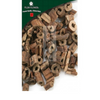
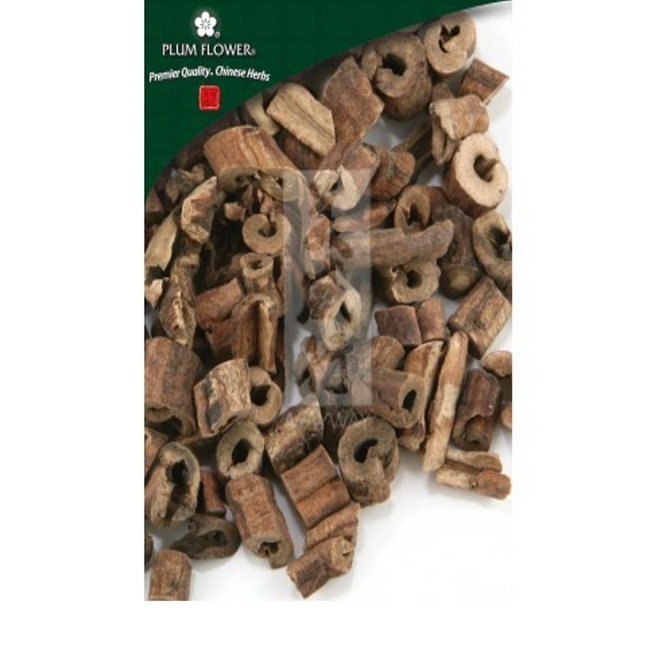
What Mu Dan Pi is: Tree peony root-bark (Paeonia suffruticosa), cut pieces (not powder, not granules).
Traditional TCM focus: clear heat • cool blood • support circulation patterns (traditional terminology).
Best preparation: gentle simmering (decoction) — bark extracts best with time + heat.
Buy with confidence: look for clear botanical ID, clean aromatic slices, low dust, and sealed packaging.
COMPARISON TABLE
Mu Dan Pi vs Chi Shao vs Bai Shao
| Feature | Mu Dan Pi (Moutan Root Bark) | Chi Shao (Red Peony Root) | Bai Shao (White Peony Root) |
|---|---|---|---|
| Plant part | Root bark | Root | Root |
| Typical shopping confusion | “Is bark the same as root?” → No | Often confused with Bai Shao | Often confused with Chi Shao |
| Traditional positioning (plain English) | Cooling + circulation support patterns (TCM) | Often used in circulation/heat pattern formulas (TCM) | Often used for nourishing/comfort patterns (TCM) |
| Best when… | Your formula specifically says Mu Dan Pi / Cortex Moutan | Formula says Chi Shao | Formula says Bai Shao |
| Key takeaway | Match the exact herb + plant part your formula calls for | Same | Same |
ROOT-BARK VS ROOT
Mu Dan Pi is root-bark, not the inner root. In TCM purchasing, the plant part matters because “bark,” “root,” “seed,” and “flower” often have different traditional roles and different constituent profiles. When a formula names Mu Dan Pi, match it exactly.
Choose your path:
-
I’m making a decoction (cut bark): Best choice for traditional simmering and formula-style preparation.
-
I’m using powders/extracts: Faster and convenient, but not the same as raw cut bark—follow the label.
-
I’m following a formula: Match the exact herb name + plant part, then follow the formula instructions.
HOW TO PREPARE MU DAN PI CUT PIECES (step-by-step)
Option A: Classic Decoction (most traditional for cut bark)
-
Rinse quickly to remove surface dust.
-
Add cut pieces to a pot and cover with water (add extra water for simmering).
-
Bring to a gentle boil, then reduce to a low simmer.
-
Simmer 30–45 minutes (bark typically needs time).
-
Strain and use according to your formula instructions or qualified guidance.
Taste tip: Mu Dan Pi is naturally bitter/cooling. Many people prefer it used in a formula rather than alone.
QUALITY
Batch Quality You Can Verify
We treat Mu Dan Pi like a food-grade botanical — because quality is what makes herbs usable.
Identity
-
Clearly labeled botanical name: Paeonia suffruticosa root-bark
-
Single-herb ingredient: no fillers, dyes, or preservatives
Clean cut
-
Cut/sliced pieces with natural size variation
-
Packed to reduce excess dust and support consistent measuring
Testing & documentation
- Brand quality program + traceability
- COA available upon request
- Storage & freshness
- Stored sealed, cool, dry, and away from humidity/light
CAUTIONS
-
Do not use if pregnant or nursing unless advised by a qualified professional.
-
If you take prescription medications or have a medical condition, consult a qualified clinician/pharmacist before use.
This information is for educational purposes only and is not intended to diagnose, treat, cure, or prevent any disease.
FAQ
1) What is Mu Dan Pi (Moutan Root Bark)?
Mu Dan Pi is the root-bark (the outer bark layer) of the tree peony, botanically Paeonia suffruticosa. In Traditional Chinese Medicine (TCM), it is traditionally described as helping to clear heat, cool the blood, and support healthy circulation patterns (traditional terminology).
2) Is Mu Dan Pi the same as peony root?
Not exactly. Mu Dan Pi is peony root-bark (the bark layer). Other “peony root” products are often the inner root (not the bark) and may be labeled as Bai Shao or Chi Shao, depending on the specific peony material.
Shopping tip: always match the exact herb name + plant part your formula calls for.
3) Mu Dan Pi vs Chi Shao vs Bai Shao — which one do I need?
Use the one your formula specifies:
-
Mu Dan Pi (Moutan Root Bark): tree peony root-bark (Paeonia suffruticosa root-bark)
-
Chi Shao (Red Peony Root): typically a red peony root material (root, not bark)
-
Bai Shao (White Peony Root): typically a white peony root material (root, not bark)
Quick rule: If the formula says Mu Dan Pi, you need root-bark, not “peony root.” If you’re unsure, ask your practitioner or cross-check the Latin/botanical name and plant part.
4) How long should I simmer Mu Dan Pi?
For cut bark pieces, a common home method is a gentle simmer for 30–45 minutes. Bark and dense materials generally extract better with time and steady heat than quick steeping.
If you’re following a classical formula or practitioner instructions, follow that timing (some formulas adjust timing based on what it’s combined with).
Check out our How to Use Bulk Herbs page to see how to use herbs correctly.
About Plum Flower Quality Herb Cut Bulk Herbs
Plum Flower is an established worldwide manufacturer of high-quality Chinese herbs, and innovative Chinese medicinal herbs and products. Plum Flower uses sulfur-free herbs and laboratory tests its products for contamination and heavy metals, such as mercury, lead, and pesticides.
Main Characteristics (Attributes) of Herbs
- Harvested at the proper level of maturity and correct time of the season to maximize potency.
- Free from Chlorine
- Manufactured without the use of sulphur
- Preservative Free
- Made at GMP internationally certified facilities (Good Manufacturing Practices) Quality control tests are done at the manufacturing site and at third party labs to confirm results
- Aluminum Phosphate free
- Packaged in an airtight sealed bag
- Pin Yin Names and Botanical Names are listed on the bag
- Certificate of Analysis are available upon request
- Conforms to Standards of Chinese Pharmacopeia
- No dyes, colors, or bleaching of the herbs
- We are a authorized direct distributor of Plum Flower Herbs.
- 500 gram bag size which equal anywhere from 4 to 6 cups of herbs
Chinese Traditional herbs should be regarded as a supplementary aspect to modern western healthcare, and not as a replacement. Chinese traditional herbs ( Teas ) emphasize harmony, and balance.
Why use Chinese Bulk Herbs?
Traditional Chinese Medicine curative herbal formulas have been developed, improved and perfected for over 5000 years.
Traditional Chinese Medicine is an ancient, holistic medical system used all over the world to treat a wide variety of health issues. Traditional Chinese Medicine (TCM) works by helping to balance the bodies’ functions thus restoring health.
As soon as the Chinese people began to carve out a civilization in ancient China it developed a cultural heritage that has continued to the present day. TCM is the oldest and one of the safest, effective systems one can use to care for their body, it promotes health and helps to sustain longevity.
Chinese herbs have been with mankind for 5,000 years and will be with us in the years ahead – it is using nature’s bountiful gifts to have good health.
- Origins, phytochemistry, pharmacology, analytical methods and safety of Cortex Moutan (systematic review) — PMC
- Moutan Cortex: A review of origins, phytochemical composition, and research progress (paeonol/paeoniflorin discussed) — PubMed
- Paeonol: pharmacological effects and mechanisms of action (review) — PubMed
- Paeonia × suffruticosa (Moutan Peony) review (includes Moutan cortex / bark) — PMC
1 Review
-
Mu dan pi
Excellent quality, great customer service, and fast delivery