
Create Your Own Herbal Tea Formula for Wellness & Balance
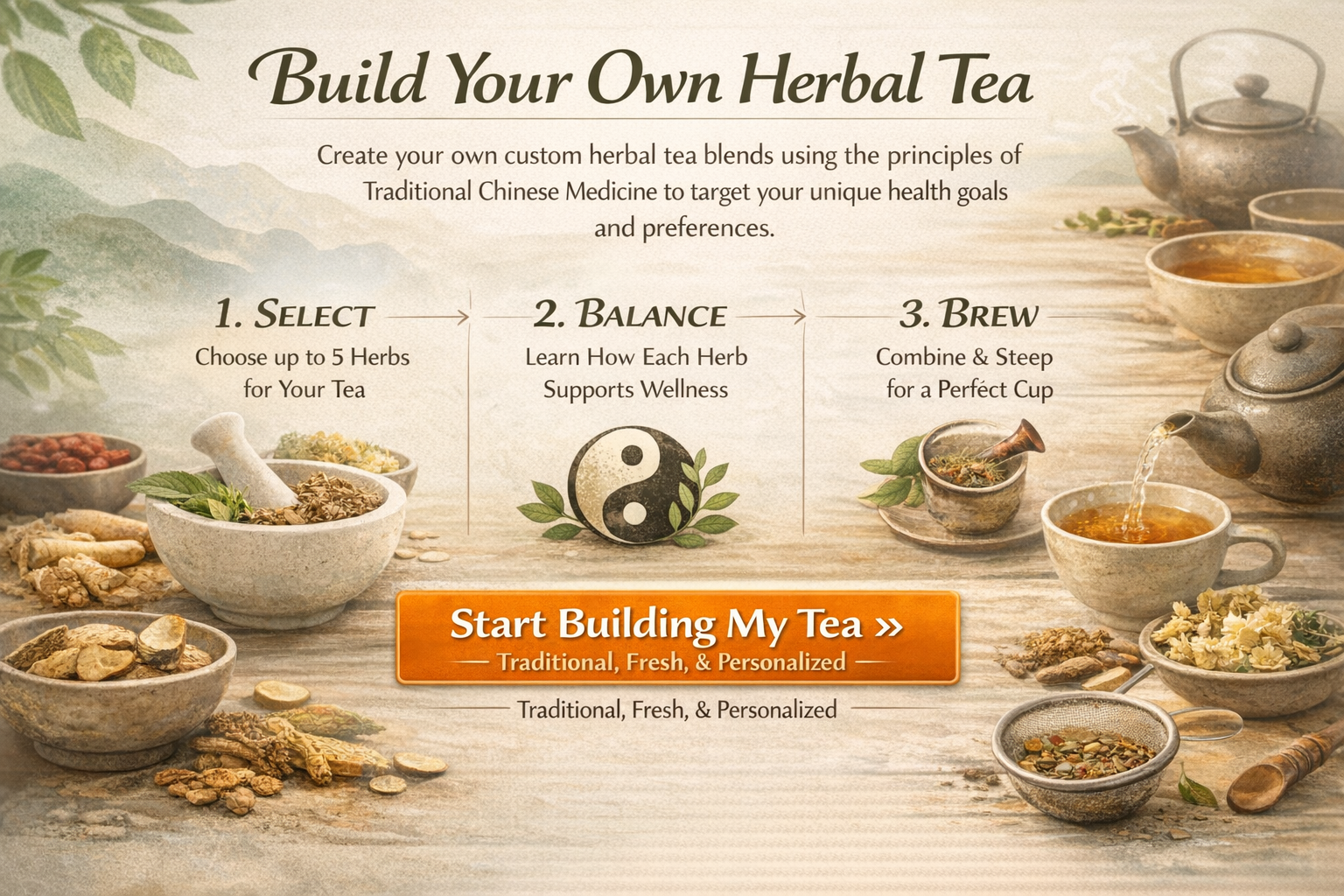
Custom Chinese Herbal Tea Blend Builder
Build a tea that matches your wellness focus, flavor preference, and brewing style.
This tool helps customers explore traditional Chinese herbal tea ideas more easily, including newer high-interest topics like blood sugar, GLP-1 support, cardiovascular wellness, and memory support.
Why This Builder Helps
- Matches herbs to common wellness goals
- Suggests herbs traditionally combined together
- Explains why the herbs fit the direction selected
- Shows easier brewing guidance for beginners
Step 1 — Choose Your Wellness Focus
Step 2 — Choose a Flavor Style
Step 3 — Choose a Brewing Style
Your Custom Tea Blend
How to Choose the Right Herbal Tea
Traditional Chinese herbal practice often considers the direction, temperature, taste, and preparation style of herbs rather than choosing a single herb at random. Some herbs are lighter and better for tea infusions, while others are denser roots or bark that are more traditionally simmered.
This builder is designed to help customers explore traditional herbal tea ideas more easily by matching a wellness focus with a flavor direction and brewing style that fit the herbs more naturally.
Popular Herbal Tea Interests
Mulberry Leaf, Cinnamon Twig, Bitter herbs traditionally used in wellness tea discussions
Lotus Leaf, Hawthorn, Chen Pi style directions for lighter daily support
Hawthorn, Dan Shen style traditions, Chrysanthemum
Polygala, Ginkgo-style traditions, Goji Berry
Chen Pi, Ginger, Hawthorn
Suan Zao Ren, Bai Zi Ren, Jujube-style tea direction
Ready to Build a Better Herbal Routine?
Explore premium herbs, roots, berries, flowers, mushrooms, and tea ingredients designed to help customers create practical daily tea routines.
Shop Herbs NowFrequently Asked Questions About Herbal Tea Blends
How are herbs chosen for a tea blend?
Herbs are often chosen based on their traditional actions, flavor, preparation style, and how well they combine with one another in a balanced tea.
Why do some blends use roots while others use flowers?
Flowers and lighter herbs are often steeped as infusions, while roots, bark, and denser materials are more traditionally simmered to extract their qualities more fully.
Can beginners use herbal tea blends?
Many people begin with simple tea blends because they are approachable and easier to prepare, though more complex situations are traditionally discussed with a trained practitioner.
Why are herbs often combined instead of used alone?
In traditional herbal systems, herbs are often combined so they can complement one another, create balance, and produce a more complete tea direction.
Educational Disclaimer: This herbal tea blend builder is provided for educational and informational purposes only. The herbal suggestions shown reflect traditional herbal perspectives and commonly discussed combinations found in herbal literature and traditional Chinese herbal practice. These examples are intended to help users explore herbal tea ideas and are not intended to diagnose, treat, cure, or prevent any disease. References to Lyme support on this page refer to herbs commonly discussed in traditional herbal literature related to immune resilience, circulation support, and general wellness strategies and are not medical claims. These statements have not been evaluated by the U.S. Food and Drug Administration. Products offered by 1st Chinese Herbs are not intended to diagnose, treat, cure, or prevent any disease. Always consult a qualified healthcare professional before using herbal products, especially if you are pregnant, nursing, taking medications, have a medical condition, or are under medical supervision.