

Che Qian Zi (Plantain Seed) Powder — Plantago asiatica Seed
Che Qian Zi is the seed of Plantago asiatica, traditionally described as sweet and cooling and commonly used in TCM to “clear damp-heat” and support fluid pathways. In modern food-science research, Plantago seed polysaccharides have been studied for fiber-like behavior in the gut (fermentation and microbiota effects), primarily in preclinical settings.
Educational information only. Herbs are not intended to diagnose, treat, cure, or prevent any disease. If you are pregnant, nursing, have a medical condition, or take medications, consult a qualified clinician before use.
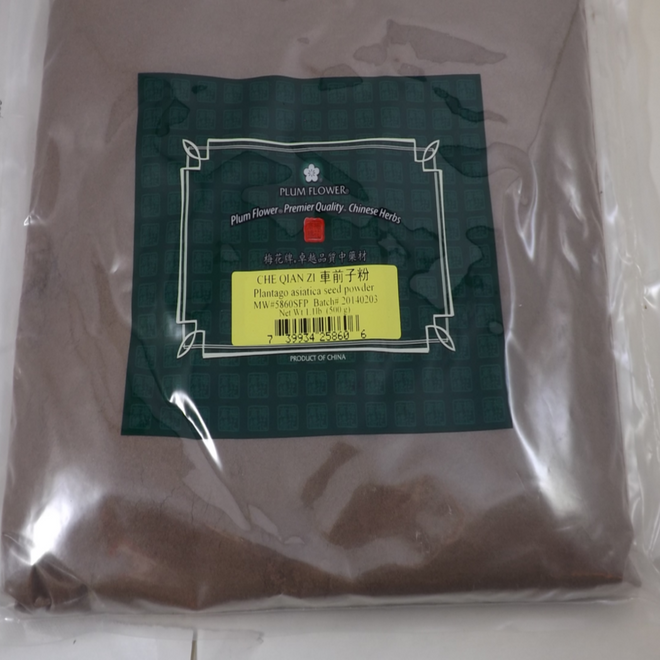
Plantain Seed (Che Qian Zi) Powder — Plum Flower Brand
- Botanical: Plantago asiatica seed
- Form: Fine powder (80–100 mesh; flour-like)
- Ingredients: 100% single herb (no fillers, nothing added)
- Size: 500 g (1.1 lb)
- Traditional properties: Sweet, Cold
- Channels/Meridians: Bladder, Kidney, Liver, Lung
Quick Facts
- Common name: Plantain seed
- Pin Yin: Che Qian Zi
- Other names: Plantain Seed, Semen Plantaginis, Asiatic plantain
- Brand: Plum Flower (species-authenticated)
- Origin: China
- Other ingredients: None (single-ingredient product)
- Dosage: Follow your clinician’s instructions.
- Label cautions: Do not use if pregnant or nursing. Do not use in cases of exhaustion from overwork or kidney deficiency (traditional guidance).
Important:
| What you’re looking at | Botanical | Plant part | Common consumer use |
|---|---|---|---|
| Che Qian Zi (this page) | Plantago asiatica | Seed | Traditional “damp-heat” support; fiber-like polysaccharides studied (mostly preclinical) |
| Psyllium husk | Plantago ovata | Husk | Common OTC fiber supplement; studied clinically for bowel regularity and microbiota effects |
| Plantain leaf | Plantago major / Plantago asiatica | Leaf | Often discussed in Western herb traditions; not the same as the seed |
Why this matters: Research results and traditional uses can differ based on species and plant part. When comparing products, always confirm you’re looking at Plantago asiatica seed if your goal is Che Qian Zi.
Why Customers Choose Powder
This Che Qian Zi is milled into a very fine powder (80–100 mesh), similar to baking flour.
- Faster mixing: Fine powders disperse more evenly (with the right method).
- Easy measuring: Consistent spooning and repeatable routines.
- Versatile: Works for tea-style liquids, warm foods, or capsules.
Real talk: Fine powders can thicken faster and clump if dumped straight into hot water. That’s why the next section matters.
How to Mix Che Qian Zi Powder Without Clumping
The 30-Second “No-Clump Slurry” Method
- Put your powder into a cup.
- Add 2–3 tablespoons of cool or room-temp water.
- Stir into a smooth slurry.
- Top off with more water (or warm liquid) while stirring.
Texture Dial
- Thin: Mix and drink promptly (less thickening time).
- Medium: Let sit 1–2 minutes, stir again.
- Thicker: Let sit 3–5 minutes, then stir well (best for those who prefer gel-like texture).
Customer tip: If texture bothers you, try stirring a small amount into warm foods (congee, broth) instead of drinking it.
How People Use Che Qian Zi
Dosage: Follow your clinician’s instructions.
Use Idea #1: Simple Water Mix (most common)
Use the slurry method above. Many people prefer taking it earlier in the day so they can assess hydration and comfort.
Use Idea #2: Stir Into Warm Foods
- Congee or oatmeal: stir in right before eating.
- Broth: whisk in small amounts at the end for a thicker mouthfeel.
Use Idea #3: Capsule Convenience
Some customers prefer capsules to avoid texture and taste. If you sell capsule tools or empty capsules, place them as upsells here.
Che Qian Zi vs Psyllium vs Plantain Leaf
| Product | Best known for | Texture | Who often prefers it |
|---|---|---|---|
| Che Qian Zi Plantago asiatica seed |
Traditional damp-heat support; seed polysaccharides studied for microbiota effects (preclinical). | Can thicken; easier with slurry method | People wanting a TCM-aligned seed product + fiber-like behavior |
| Psyllium husk Plantago ovata husk |
Widely used clinical fiber supplement; studied for bowel regularity and microbiota changes. | Strong gel; thickens quickly | People specifically shopping “fiber supplement” first |
| Plantain leaf | Different traditional context; not the same as seed products | Not typically used for gel-like fiber | People following Western herb traditions |
Powder vs Whole Seed: Which Should You Choose?
This section prevents hesitation and increases conversions because it helps customers pick confidently.
Choose Powder if you want…
- Fast mixing (with the slurry method)
- Easy measuring and consistent routines
- Option to capsule it
- Flour-like texture for warm foods
Choose Whole Seed if you want…
- Easier straining from liquids
- A different mouthfeel (less “powdery”)
- Traditional decoction-style use
- Pregnant or nursing: Do not use unless directed by a qualified clinician (label guidance).
- Traditional cautions: Avoid use in “exhaustion from overwork” or “kidney deficiency” patterns (traditional guidance).
- Hydration: Fiber-forward powders may thicken; take with adequate fluid unless you are on a clinician-directed fluid restriction.
- Medication timing: Fiber and mucilage can affect absorption timing; many clinicians recommend separating fiber powders from medications by ~2 hours unless otherwise directed.
California Prop 65
Botanical products can naturally contain trace constituents from soil and the environment. Prop 65 language is often included out of caution and compliance. If you want product-specific testing details, contact us—we’re happy to help you choose confidently.
Naturally Occurring Components (What’s In Che Qian Zi)
Che Qian Zi contains multiple phytochemical families. Research and reviews commonly discuss polysaccharides along with other compounds (including phenylethanoid glycosides such as acteoside/verbascoside and plantamajoside) as part of the broader chemical profile.
Plantainoside A–F; acteoside; acteoside isomer; desrhamnosyl acteoside; leucosceptoside; martynoside; isomartynoside; plantamajoside; calceorioside B.
Frequently Asked Questions
Is Che Qian Zi the same as psyllium?
No. Psyllium is usually Plantago ovata husk. Che Qian Zi is Plantago asiatica seed. They are related but not identical, and research differs by species and plant part.
Does Che Qian Zi powder thicken like a gel?
It can. That’s normal for mucilage-type plant fibers. Use the slurry method and adjust the “texture dial” to your preference.
What does it taste like?
Mild, earthy, and slightly grain-like. Many customers prefer it mixed into warm foods if texture is a concern.
How should I store the powder?
Keep tightly sealed, away from humidity and heat. Powders clump when exposed to moisture—an airtight jar helps.
Can I cook with it?
Yes. Many people stir small amounts into congee or broth near the end. Avoid high-heat dry cooking, which can cause clumping or scorching.
Should I take it away from medications?
Often yes. Fiber can affect absorption timing. A common approach is ~2 hours away from medications unless your clinician advises otherwise.
Research & PubMed References
We include the studies below to support general educational statements about Plantago seed polysaccharides and related mechanisms. Much of this evidence is preclinical or food-science research and should not be interpreted as medical claims.
- Plantago asiatica seed polysaccharide and microbiota (mouse study): reported effects on colon microbiota composition.
- Review of Plantago polysaccharides: overview of structure and reported bioactivities; helpful for understanding “fiber-like” mechanisms.
- In vitro intestinal function study (Plantago asiatica seed polysaccharide): reported slowing glucose diffusion and effects on digestive enzyme activity in lab models.
- Processing evolution review of Plantaginis Semen: discusses historical processing and chemical constituent categories.
About Plum Flower Quality Herb Powders
Plum Flower is an established worldwide manufacturer of high-quality Chinese herbs and innovative Chinese medicinal herbs and products. Plum Flower uses sulfur-free herbs and laboratory tests its products for contamination and heavy metals, such as mercury, lead, and pesticides.
- Made at GMP internationally certified facilities (Good Manufacturing Practices). Quality control tests are done at the manufacturing site and at third party labs to confirm results.
- Manufactured using Unsulfured, Chlorine free, Aluminum Phosphate free herbs when possible.
- Microbials and heavy metals tested. No preservatives.
Chinese Traditional herbs should be regarded as an added feature to modern western healthcare, and not as a replacement. Chinese traditional herbs ( Teas ) emphasize harmony, and balance.