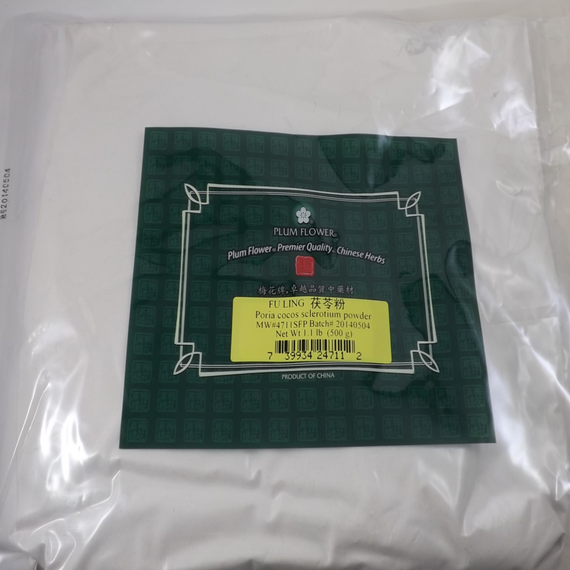


Fu Shen (Spirit Poria) Powder — Poria / Hoelen Fungus (500g)
Fu Shen (Pin Yin: Fu Shen) is a form of Poria—the dried sclerotium of Poria cocos (often listed in modern texts under Wolfiporia species names as taxonomy evolves). In Chinese herbal tradition, Fu Shen is especially known for its “Shen-calming” focus (the calm-spirit category) while also being used in the broader Poria tradition for supporting comfortable fluid metabolism and digestive “dampness” patterns (traditional language).
Educational information only. Herbs are not intended to diagnose, treat, cure, or prevent any disease. If you are pregnant, nursing, have kidney disease, or take medications, consult a qualified clinician before use.
Shop Fu Shen (Spirit Poria) Powder
- Common Name: Poria / Hoelen Fungus / Tuckahoe
- Botanical Name: Poria cocos (sclerotium)
- Pin Yin: Fu Shen
- Also Known As: Poria cocos fungus, Hoelen, Tuckahoe, sclerotium of tuckahoe
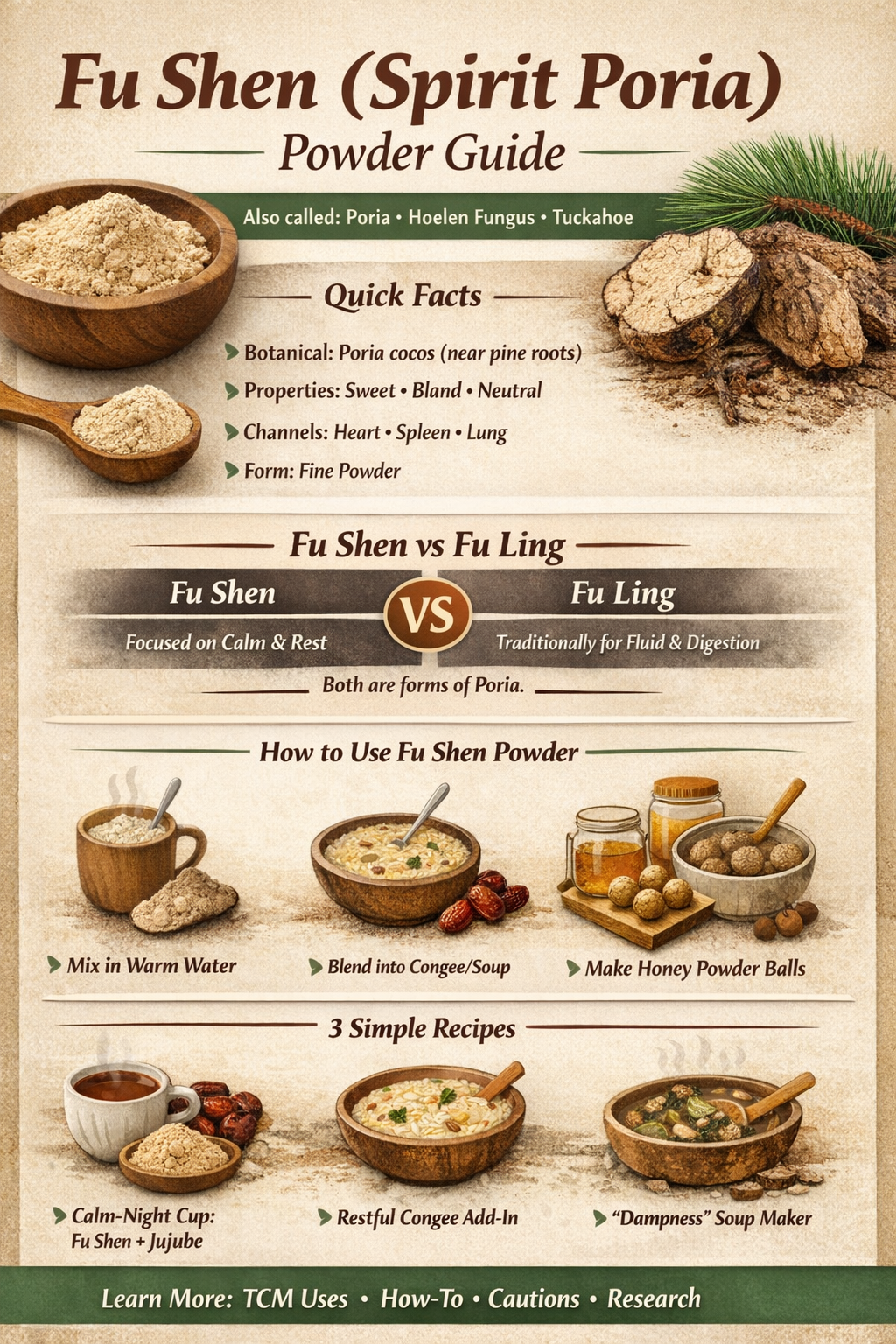
- Channels/Meridians (traditional): Heart, Spleen, Lung
- Properties (traditional): Sweet • Bland • Neutral
- Form: Fine powder (80–100 mesh; flour-like)
- Package Size: 500g (1.1 lb)
- Origin: China
- Brand: Plum Flower (species-authenticated)
- Ingredients: 100% Fu Shen / Poria (no fillers, nothing added
Quick Key Takeaways
- What it is: Fu Shen is a “spirit poria” form of Poria sclerotium, traditionally associated with calming the Shen.
- How it’s traditionally described: sweet, bland, neutral; supports dampness patterns + calm (traditional language).
- Why powder is convenient: easy to add to warm water, congee, soups, or “powder balls.”
- Best for beginners: it’s mild—more functional than flavorful.
What Is Fu Shen (Spirit Poria)?
Poria is a unique fungus that forms an underground storage body called a sclerotium—traditionally harvested near pine roots. In trade usage and many references, Fu Shen is described as the portion associated with or encasing pine root material, and it’s especially valued for “Shen-calming” traditions.
Fu Shen vs Fu Ling: What’s the Difference?
Fu Ling usually refers to the plain Poria sclerotium used broadly for “dampness” patterns (traditional language). Fu Shen (Spirit Poria) is commonly differentiated by its association with pine root and is traditionally chosen when the goal emphasizes calm, rest, and settling (traditional language).
What Does Poria Taste Like?
Poria (including Fu Shen) is very mild, slightly starchy, and neutral—more of a “function ingredient” than a bold-tasting herb. That’s why it works so well in congee, soups, and warm-water mixes.
Traditional TCM Uses of Fu Shen
In Traditional Chinese Medicine, Fu Shen is traditionally used to:
- Calm the Spirit (Shen) and support restful sleep patterns (traditional language)
- Support healthy fluid metabolism (often described as “promoting urination” in classical texts)
- Support Spleen function in “dampness” patterns (traditional language)
Traditional properties: Sweet, Bland, Neutral • Channels: Heart, Spleen, Lung
How to Use Fu Shen Powder
Option 1: Warm-water mix (fastest)
Stir the powder into warm water and drink. Because the taste is mild, many customers add it to a bedtime routine beverage.
Option 2: Add to congee or soup
Blend into rice congee or broth near the end of cooking. This is one of the most traditional “food-herb” style uses.
Option 3: “Powder balls” (traditional-style convenience)
Mix with a small amount of honey or date paste to form tiny balls and take with warm water. (Optional method—skip sweeteners if you avoid them.)
Traditional Use Amounts
Follow your clinician’s instructions.
In traditional practice, Poria/Fu Shen is often used in formula ranges (commonly in grams per day under practitioner guidance). Powder amounts vary by person, pattern, and formula goals—especially if there are kidney concerns.
3 Evergreen Recipes
Recipe #1: Calm-At-Night “Fu Shen Warm Cup”
- Fu Shen powder (per clinician guidance)
- Warm water
- Optional: a few jujube/date pieces for a gentle flavor (food-style)
Recipe #2: Restful Congee Add-In
- Cooked rice congee
- Stir in Fu Shen powder near the end
- Optional: add Suan Zao Ren tea alongside (separate cup) for a bedtime ritual
Recipe #3: “Dampness-Friendly” Soup Builder
- Broth + ginger slices
- Add mushrooms + greens
- Whisk Fu Shen powder into the broth near the end
- Pregnant or nursing: do not use unless directed by a qualified clinician (your label guidance).
- Do not overuse: follow professional guidance, especially if using daily.
- “Kidney deficiency” (TCM caution): avoid unless guided by a practitioner trained in TCM patterning (label guidance).
- Medications/medical conditions: consult your clinician before use.
California Prop 65
Prop 65 statements may apply to naturally occurring trace elements found in plants due to soil and environment.
FAQs
Is Fu Shen the same as Fu Ling?
They’re closely related. Fu Shen is typically differentiated as “spirit poria” and commonly described as the portion associated with pine root, chosen when calm/rest is emphasized (traditional language).
What does Fu Shen powder taste like?
Very mild and neutral—easy to mix into warm water or congee.
Can I take Fu Shen every day?
Some people use it regularly in traditional food-herb style, but frequency and amount should be guided by a clinician—especially with kidney concerns.
Why is Poria discussed in sleep-quality research?
Human studies have examined Poria cocos extracts for sleep-quality outcomes and GABA-related mechanisms. This is educational only and not a medical claim.
PubMed Research (Educational)
These citations are provided for education only. Many studies use extracts, specific fractions, or animal models and should not be interpreted as medical claims.
- Kim et al., 2022 — Poria cocos extract and sleep quality/structure (mechanism-focused)
- Kim et al., 2023 — Clinical testing of Poria cocos extract in suboptimal sleep quality
- Hao et al., 2024 — Poria cocos + Ziziphus spinosa + GABA supplement trial (sleep quality outcomes)
- Zhang et al., 2022 — Poria polysaccharide & anxiety-like behavior in sleep deprivation model
- Wei et al., 2022 — Pachymic acid (Poria triterpene) review
- Ríos, 2011 — Chemical constituents & pharmacology review (PDF)
- Lei et al., 2025 — Modern review: history, phytochemistry, quality, safety (ScienceDirect)
- Zhou et al., 2025 — Poria polysaccharides and gut microbiota (in vitro)
Check out our How to Use Bulk Herbs page to see how to use herbs correctly. Our web page is constantly expanding, as of today we have articles on:
- How to make salves, poultice, tinctures, teas, capsules, gargles, and foot bathes.
- How to make a citrus facial splash
- Cayenne pepper: Caterpillar and aphid spray ( Natural insect repellent )
- Citrus potpourri basket.
About Plum Flower Quality Herb Powders
Plum Flower is an established worldwide manufacturer of high-quality Chinese herbs, and innovative Chinese medicinal herbs and products. Plum Flower uses sulfur-free herbs and laboratory tests its products for contamination and heavy metals, such as mercury, lead, and pesticides.
- Made at GMP internationally certified facilities (Good Manufacturing Practices) Quality control tests are done at the manufacturing site and at third party labs to confirm results.
- Manufactured using Unsulfured, Chlorine free, Aluminum Phosphate free herbs when possible.
- Microbials and heavy metals tested. No preservatives.
Chinese Traditional herbs should be regarded as an added feature to modern western healthcare, and not as a replacement. Chinese traditional herbs ( Teas ) emphasize harmony, and balance.