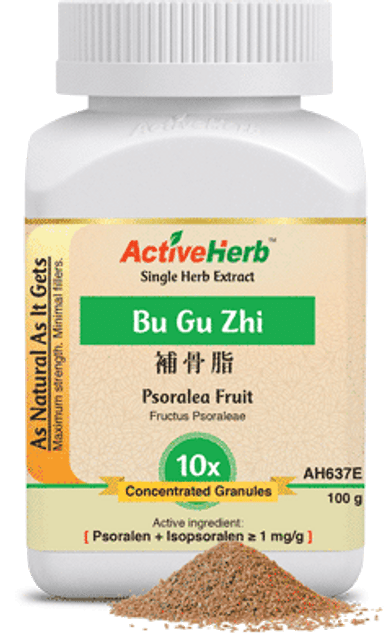


Bu Gu Zhi (Psoralea Fruit) — Lab-Tested Cut Form (1 lb) — Nuherbs
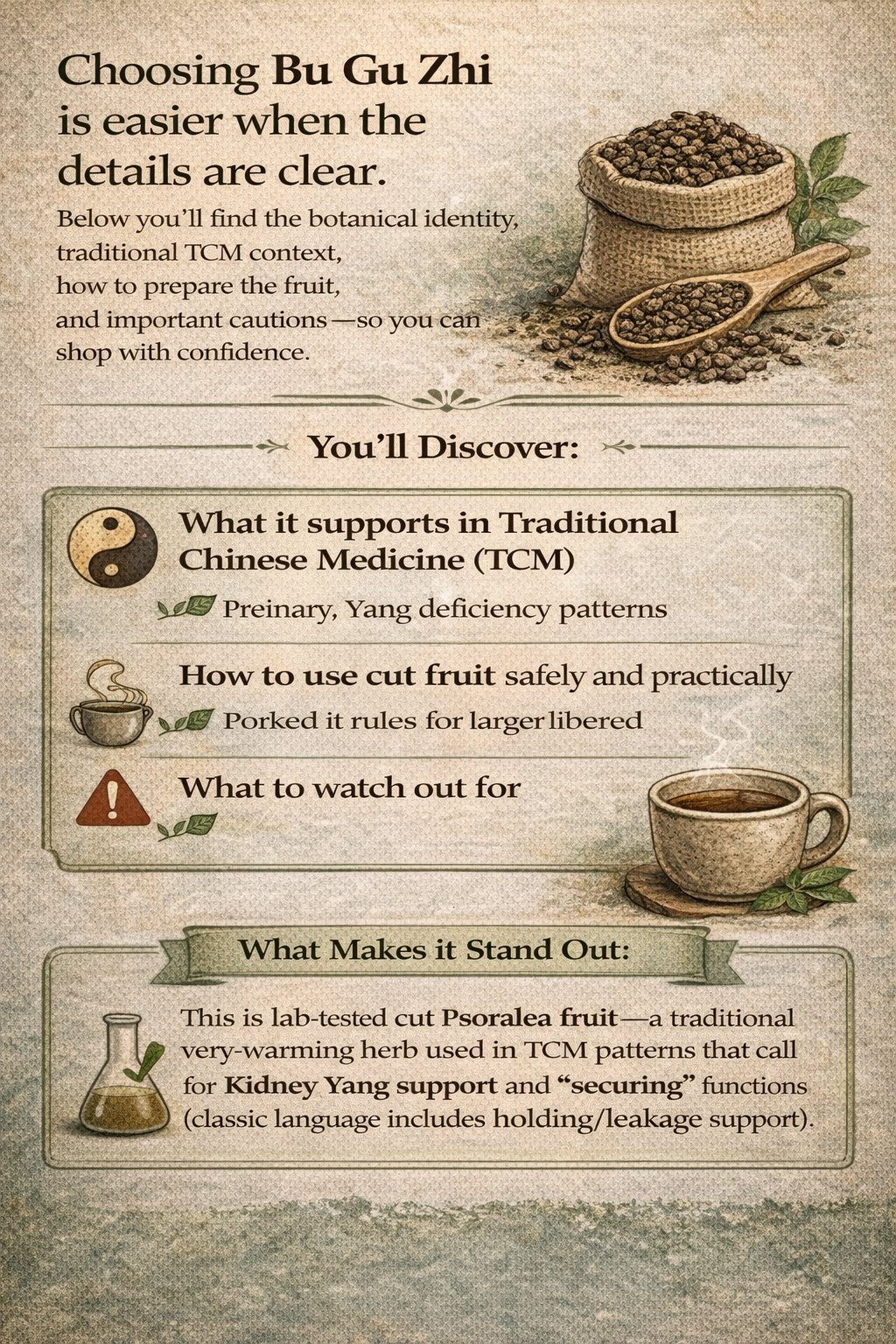
Choosing Bu Gu Zhi is easier when the details are clear. Below you’ll find the botanical identity, traditional TCM context, how to prepare the fruit, and important cautions—so you can shop with confidence.
-
What it supports in Traditional Chinese Medicine (TCM)
-
How to use cut fruit safely and practically
-
What to watch out for
This is lab-tested cut Psoralea fruit—a traditional very-warming herb used in TCM patterns that call for Kidney Yang support and “securing” functions (classic language includes holding/leakage support).
Quick Facts On Bu Gu Zhi
-
Common name: Psoralea Fruit
-
Pin Yin: Bu Gu Zhi
-
Botanical name: Psoralea corylifolia (Fructus Psoraleae)
-
Form: Cut fruit (loose herb for decoction / tea)
-
Size: 1 lb bulk bag
-
Quality: Lab-tested (Certificate of Analysis Upon Request)
-
TCM profile: bitter/pungent, warm/very warm
-
Traditional category: Yang tonic (often listed under Kidney Yang deficiency tonics)
What is Bu Gu Zhi?
Bu Gu Zhi is the dried fruit (seed) of Psoralea corylifolia. In East Asian herbal traditions, it is described as warming and associated with Kidney and Spleen support in classic pattern language.
Why the name matters (“Bu-Gu-Zhi”)
The name is often translated along the lines of “invigorate bone essence/fat” in traditional naming—one reason it’s commonly discussed in bone-strength contexts in classical and modern herbal commentary.
Bu Gu Zhi Is Traditionally Used For
People most often choose Bu Gu Zhi when their practitioner is supporting patterns commonly described as:
-
Kidney Yang deficiency patterns (warming/tonifying direction)
-
“Securing” functions (traditional phrasing: holding essence/urine; supportive, not a disease claim)
-
Spleen-Kidney warmth support (traditional framework)
These statements describe traditional use within TCM. This product is not intended to diagnose, treat, cure, or prevent any disease.
Why choose cut form (instead of powder or extract)?
Cut herb is ideal if you want:
-
Traditional decoction control (you choose strength and simmer time)
-
Flexible blending with other bulk herbs
-
A form many practitioners prefer for custom formulas
If you want convenience, we also carry extract/granules versions (great for travel and routine use).
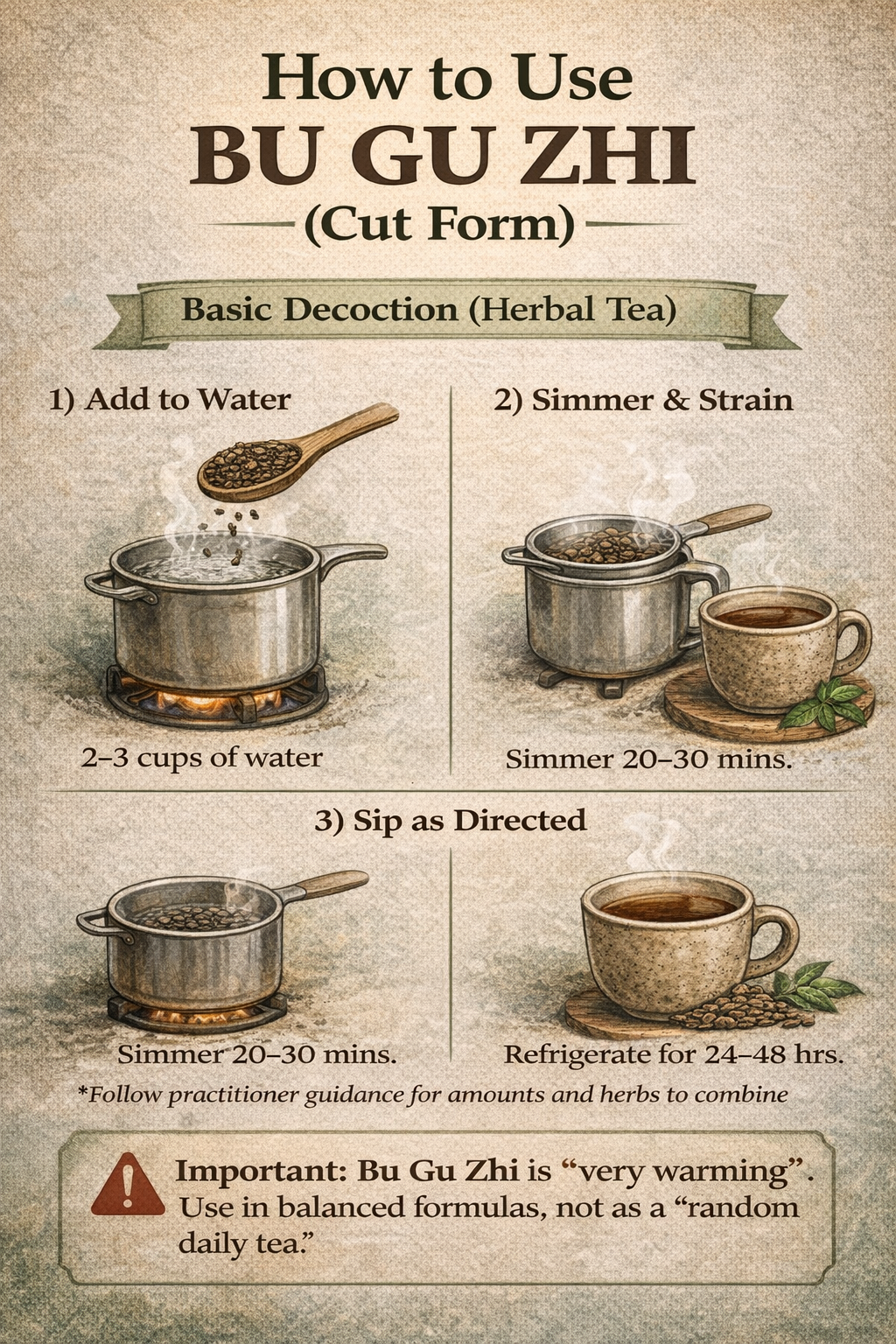
How to Use Bu Gu Zhi (Cut Form)
Basic decoction method (most common)
-
Add the prescribed amount to water in a small pot.
-
Bring to a gentle boil, then simmer.
-
Strain and sip as directed.
Taste/feel: warming, aromatic, and distinctly herbal.
Best practice: Because Bu Gu Zhi is very warming, it’s often used in balanced formulas rather than as a “random daily tea.”
Dosage: Follow practitioner guidance.
Safety first
Bu Gu Zhi is a powerful traditional herb and has well-documented cautions, especially with high dosing or certain sensitivities.
1) Liver safety: don’t megadose
There are published case reports and reviews describing liver injury associated with Fructus Psoraleae, especially at high doses or in susceptible individuals.
Practical “safe shopping” guidance (non-medical):
-
Do not exceed professional guidance.
-
Avoid if you have known liver disease unless supervised.
-
Stop use and seek medical advice if you develop symptoms like unusual fatigue, dark urine, yellowing of eyes/skin, or persistent nausea.
2) Photosensitivity: psoralen compounds + UV exposure
Psoralen compounds are known for photosensitizing/phototoxic reactions when combined with UVA exposure (this is the same general class used in PUVA therapy).
Practical guidance:
-
Be cautious with intense sun/UV exposure.
-
Be extra cautious if you use photosensitizing medications or treatments.
3) Pregnancy/nursing
Avoid during pregnancy or nursing unless a qualified clinician directs otherwise.
Quality
Buying herbs online shouldn’t feel like gambling.
This product stands out because it’s:
-
From a recognized TCM brand (Nuherbs)
-
Lab-tested (strong trust cue vs. random resellers)
-
Sold by 1st Chinese Herbs with 30+ years of experience
FAQ
Is Bu Gu Zhi the same as Babchi?
Often, yes—Babchi is a common name used for Psoralea corylifolia in other traditional systems; naming can vary by region and supplier.
Why do some people avoid Bu Gu Zhi?
Main reasons: it’s very warming, it can be photosensitizing, and there are published reports of liver injury linked to Fructus Psoraleae—especially with high dosing or certain products.
What makes “lab-tested” worth it?
For herbs with potent constituents, lab testing helps support identity and quality consistency
Can I take Bu Gu Zhi by itself?
Many practitioners prefer it in balanced formulas (especially for warming herbs). Follow professional guidance.
Check out our How to Use Bulk Herbs page to see how to use herbs correctly. Our web page is constantly expanding, as of today we have articles on:
- How to make salves, poultice, tinctures, teas, capsules, gargles, and foot bathes
- How to make a citrus facial splash
- Cayenne pepper: Caterpillar and aphid spray ( Natural insect repellent )
- Citrus potpourri basket
Author:
1st Chinese Herbs” (family-owned since 1994)
Last updated: Feb 2026
Reviewed by the herbal education team
References:
https://pubmed.ncbi.nlm.nih.gov/31758650/
https://www.sciencedirect.com/science/article/abs/pii/S1874390020301877
https://www.researchgate.net/publication/337468664_Clinicopathological_features_of_Bu_Gu_Zhi-induced_liver_injury_a_long-term_follow_up_cohort_study
https://us.dermatology-m.com/blogs/news/bu-gu-zhi-nature-s-retinol-alternative
https://onlinelibrary.wiley.com/doi/abs/10.1111/liv.14306