
Red Dates vs Goji Berries: Why Chinese Families Rarely Choose Between Them
Walk into a traditional Chinese kitchen and you'll notice something strange. No matter where you look, two ingredients keep showing up.
Red Dates.
Goji Berries.
Tea recipes?
They're there.
Soup recipes?
They're there.
Chicken broth?
They're there.
Grandma's mystery pot simmering on the stove? Almost certainly there. At first, most people assume they're basically the same thing. After all, they're both red. They're both fruits. They're both sold in herbal stores. They're both used in tea. But that's where the similarity ends.
In reality, comparing Red Dates and Goji Berries is a little like comparing honey and lemons.
You can use either one by itself.
But once you understand what each brings to the table, you realize why people almost always use both.
And that realization changes how you look at Chinese herbs forever.
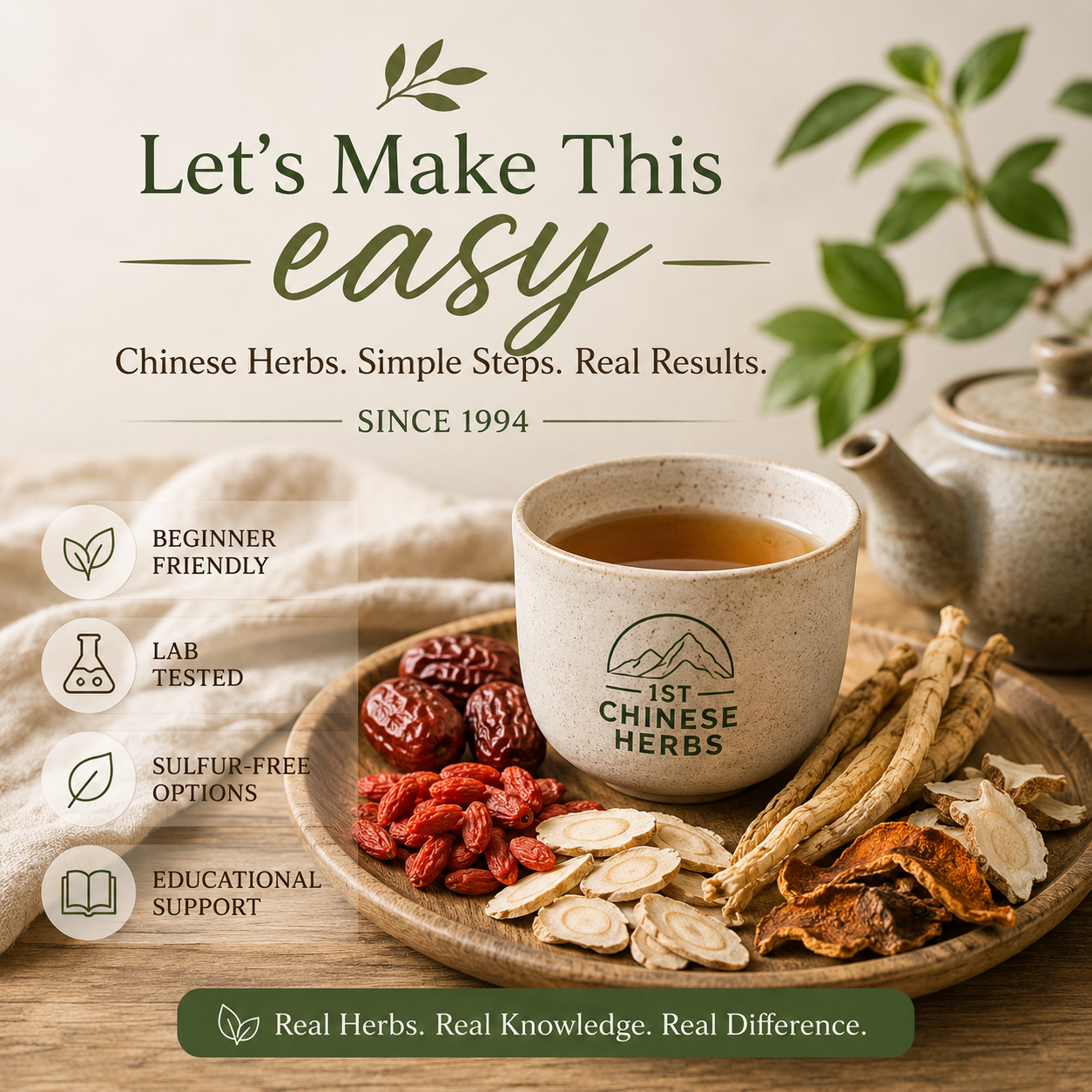 The Secret Nobody Explains
Here's the biggest misunderstanding beginners make.
They think Red Dates and Goji Berries are substitutes.
They're not.
They're teammates.
Red Dates bring depth.
Goji Berries bring brightness.
Red Dates make things richer.
Goji Berries make things livelier.
Red Dates are the fireplace.
Goji Berries are the sunshine coming through the window.
One without the other works.
But together?
Everything tastes better.
That's why they appear together in thousands of traditional recipes.
If You Could Only Buy One...
This is the question people actually want answered.
So let's answer it.
If you're completely new to Chinese herbs and can only buy one product today:
Buy Red Dates. Why? Because they're almost impossible to dislike.
Most Americans immediately understand them. The flavor is naturally sweet.
No bitterness. No strange aftertaste. No learning curve.
You can drop them into:
-
Tea
-
Oatmeal
-
Rice
-
Soup
-
Broth
-
Desserts
And they instantly improve the flavor.
Red Dates are the gateway herb.
Why Most People Eventually Buy Goji Berries Too
Then something interesting happens. People start making more recipes. And suddenly they notice something. Every recipe keeps calling for Goji Berries.
At first they ignore them. Then they try them. Then they realize Goji Berries do something Red Dates cannot. They add life.
Color.
Brightness.
Freshness.
They're the ingredient that makes a tea look beautiful.
They're the ingredient people ask about when they see a cup on social media.
They're the ingredient that turns "brown tea" into something worth photographing.
Which One Tastes Better?
Okay, so first, it depends upon the person. It's about equal on who chooses which one is the best.
Most Adults Prefer Red Dates First
They're sweeter.
More comforting.
More familiar.
Closer to foods people already enjoy.
Think:
-
Apples
-
Caramel
-
Raisins
-
Dates
Combined into one ingredient.
Most Herbal Enthusiasts Eventually Love Goji Berries
Why?
Because the flavor grows on you.
The slight fruitiness adds complexity.
After you've had enough sweet teas, Goji Berries become the ingredient that keeps things interesting.
Which One Makes Better Tea?
Red Dates win for comfort.
Goji Berries win for beauty.
Red Dates create a tea you drink while wrapped in a blanket during a rainstorm.
Goji Berries create a tea you serve when friends come over.
Most experienced tea drinkers eventually combine both.
Which One Would Be Harder To Replace?
This is where things get interesting.
If Goji Berries disappeared tomorrow, you could still make most traditional recipes.
If Red Dates disappeared tomorrow, Chinese kitchens would lose one of their most important natural flavor builders.
That's how fundamental they are.
Red Dates don't just add sweetness.
They make other ingredients taste better.
That's why they appear in everything.
Why Chinese Grandmothers Keep Both On Hand
Because they solve different problems.
When a recipe feels flat?
Add Red Dates.
When a recipe feels boring?
Add Goji Berries.
When a tea feels harsh?
Add Red Dates.
When a tea looks dull?
Add Goji Berries.
Once you see it, you can't unsee it.
The Pantry Test
Imagine your pantry contains only five Chinese herbs.
Which of these deserves a permanent place?
You Guessed It!! Both.
Not because they're trendy.
Not because they're famous.
Because they're useful.
Day after day.
Year after year.
Recipe after recipe.
Most herbs come and go.
These two stay.
That's why families have been buying them for generations.
And that's why newcomers who try them often wonder why they waited so long.
Final Verdict
The biggest surprise about Red Dates and Goji Berries is that they're not competitors.
They're partners.
Red Dates provide warmth, richness, sweetness, and comfort.
Goji Berries provide color, brightness, freshness, and character.
Individually they're good.
Together they're one of the most successful herbal pairings ever created.
And perhaps that's why after hundreds of years, Chinese kitchens still haven't found a better combination.
Scientific References
Goji Berry (Gou Qi Zi)
-
Lycium barbarum (Goji Berry): A Comprehensive Review of Chemical Composition, Bioactive Compounds, Health-Promoting Activities, and Applications in Functional Foods
https://pubmed.ncbi.nlm.nih.gov/41092619/ -
Lycium barbarum (Goji) as Functional Food: A Review of Its Phytochemistry and Pharmacology
https://pubmed.ncbi.nlm.nih.gov/35593666/ -
Goji Berries as a Potential Natural Antioxidant Medicine
https://pubmed.ncbi.nlm.nih.gov/30728882/
Red Dates (Hong Zao / Ziziphus jujuba)
-
The Jujube (Ziziphus jujuba Mill.) Fruit: A Review of Current Knowledge of Fruit Composition and Health Benefits
https://pubmed.ncbi.nlm.nih.gov/23480594/ -
A Review of Dietary Ziziphus jujuba Fruit (Jujube)
https://pubmed.ncbi.nlm.nih.gov/28680447/ -
A Review of Edible Jujube, the Ziziphus jujuba Fruit
https://pubmed.ncbi.nlm.nih.gov/33324222/