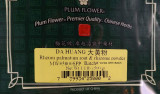


Da Huang (大黄) — Chinese Rhubarb Root & Rhizome (Rheum palmatum)
Da Huang is a classic Traditional Chinese Medicine (TCM) herb traditionally used to drain excess, clear internal heat, and promote bowel elimination. This page explains what it is, how it’s traditionally used, how concentrated extract powders differ from raw herb, and how to use it responsibly.
- Clear labeling: botanical name, form, and cautions
- Customer support for product questions before purchase
- Transparency-first education (fact-based informational articles )
Common name: Chinese Rhubarb
Pin Yin: Da Huang (pronounced “dah hwahng”)
Botanical name: Rheum palmatum root & rhizome
Channels: Large Intestine, Liver, Stomach
TCM nature/taste: Bitter, Cold
Form: Concentrated full-spectrum extract powder
Size: 100g (3.5 oz)
Brand: Plum Flower
What is Da Huang (Rhubarb Rhizome)?
Da Huang (Chinese rhubarb) refers to the dried root and rhizome of Rheum palmatum. In TCM it is known as a powerful herb traditionally used to drain excess, clear internal heat, and promote bowel elimination. It is not the same thing as culinary rhubarb stalks used in pies.
Why is Da Huang important in Traditional Chinese Medicine?
Da Huang is considered a major TCM herb because it is used when the body shows signs of excess accumulation (not deficiency). Traditionally it is used to:
- Clear heat and reduce internal “excess” patterns
- Relieve toxicity accumulation (traditional use language)
- Move stagnation including “Blood stasis” patterns (traditional use)
- Promote bowel movements when elimination is obstructed
Note: These are traditional-use statements, not disease claims.
Active compounds: why Da Huang is so strong
The effectiveness of Da Huang is attributed to naturally occurring compounds that have been studied widely:
- Anthraquinones (e.g., emodin, rhein, chrysophanol; plus sennoside-related compounds): traditionally associated with stimulating intestinal motility.
- Tannins and related polyphenols: associated with astringent/mucosal support qualities.
- Flavonoids: studied for antioxidant support.
- Other constituents: including catechin and additional polyphenols listed in many materia medica references.
Da Huang is dose- and preparation-dependent. In practical terms, the difference between “supporting elimination” and “too strong” is often just a small dosage change. This is why starting low and using short-term is emphasized.
Da Huang extract powder vs raw herb: what’s the advantage?
Advantages of concentrated granules / extract powder
- Convenient: easy to measure and dissolve (no long boiling required).
- Consistent: concentrated forms help provide more predictable servings.
- Shelf-stable: properly stored powders typically keep well for longer periods.
- Flexible: allows smaller dose changes—useful because Da Huang is potent.
If you are new to Da Huang, extract powder can be easier to use responsibly because you can start with smaller servings and adjust gradually.
How to use Da Huang extract powder
Beginner-friendly approach
- Start low (smaller serving than you think).
- Use short-term, not daily long-term.
- Increase only if needed and only if well tolerated.
- Stop if you experience cramping or loose stools.
Ways to take it
- Tea: dissolve a small amount in hot water; sip and assess tolerance.
- Capsules: for those who prefer precise, taste-free use.
- Practitioner formulas: best for individualized pattern matching.
Dosage varies widely by person, constitution, and goal. Consult a qualified practitioner for personalized guidance, especially if you use medications or have chronic digestive issues.
Who Da Huang is best for (and who it’s not)
In classic TCM logic, Da Huang is best suited for excess patterns—not deficiency. People typically consider it when they feel “blocked,” full, overheated, or backed up.
- Occasional constipation with fullness
- Heat/excess patterns (TCM language)
- Short, practitioner-guided “clear out” protocols
- Spleen deficiency (Pi Xu), fatigue, loose stools
- Pregnancy or nursing
- Long-term daily use goals
Safety, cautions, and rebound constipation (read this)
Not suitable for Spleen deficiency (Pi Xu).
Long-term usage is not recommended.
Possible side effects
- Abdominal cramping
- Loose stools or diarrhea
- Electrolyte imbalance risk if overused
How to avoid “rebound constipation” after stopping
- Use Da Huang short-term (not daily long-term).
- When stopping after frequent use, taper rather than abruptly stopping.
- Support elimination with hydration, fiber foods, gentle movement, and magnesium if appropriate for you.
California Prop 65: This product includes a Prop 65 notice for California customers. Follow label guidance.
Frequently Asked Questions
How fast does Da Huang work?
Timing varies by serving size, constitution, and whether it’s combined with other herbs. Because it is potent, start low and assess your response.
Is Da Huang safe to take every day?
Da Huang is generally considered a short-term herb in TCM due to its strong downward-draining nature. Long-term daily use is not recommended unless directed by a qualified practitioner.
What’s the difference between Da Huang and culinary rhubarb?
Da Huang uses the root and rhizome of Rheum palmatum for traditional herbal use. Culinary rhubarb refers to the stalks used in food and is not the same herbal material.
Who should avoid Da Huang?
Avoid if pregnant or nursing, if you have Spleen deficiency (Pi Xu), chronic diarrhea, or if you are frail/deficient. Consult your healthcare professional if you take medications or have a medical condition.
Product Description: Da Huang Full-Spectrum Extract Powder

Common Name: Chinese Rhubarb
Botanical Name: Rheum palmatum root & rhizome
Channels: Large Intestine, Liver, Stomach
Other Ingredients: Dextrin
Form: Concentrated Extract Powder (Full Spectrum)
Package Size: 100 g (3.5 oz)
Origin: China
Brand: Plum Flower
Naturally occurring components: chrysophanol, rheumemodin, sennoside, heterodianthrone, chrysophanein, catechin, 2-O-Cinnamoyl - 1,6-di-O-galloyl-β-D-glucoside, rhatannin
Editorial note: This page is written for educational purposes using traditional-use language. For personalized guidance, consult a qualified healthcare professional experienced in Chinese herbalism.
About Plum Flower Quality Herb Powders
Plum Flower is an established worldwide manufacturer of high-quality Chinese herbs, and innovative Chinese medicinal herbs and products. Plum Flower uses sulfur-free herbs and laboratory tests its products for contamination and heavy metals, such as mercury, lead, and pesticides.
- Made at GMP internationally certified facilities (Good Manufacturing Practices) Quality control tests are done at the manufacturing site and at third party labs to confirm results.
- Manufactured using Unsulfured, Chlorine free, Aluminum Phosphate free herbs when possible.
- Microbials and heavy metals tested. No preservatives
Traditional Chinese Herbs
Chinese Traditional herbs should be regarded as an added feature to modern western healthcare, and not as a replacement. Chinese traditional herbs (Teas) emphasize harmony, and balance.
Reference:
https://pubmed.ncbi.nlm.nih.gov/10437188/
https://stramcenter.com/blog/blog-detail/da-huang-a-downward-draining-herb/#:~:text=One%20recent%20study%20points%20to,herbs%20damp%20heat%2Dclearing%20property.
alternativehealing.org