
Rou Cong Rong vs. Yin Yang Huo: Which Traditional Vitality Herb Fits Your Lifestyle?
If you opened the herbal cabinet of someone who has studied Traditional Chinese Medicine for years, you might notice something interesting.
Alongside familiar herbs like Astragalus, Reishi, and Goji Berries, there are often two herbs that quietly earn a permanent place on the shelf.
Rou Cong Rong.
Yin Yang Huo.
Although these herbs are frequently discussed together, they are not the same herb, nor have they traditionally been chosen for the same reasons.
Both have been valued for centuries in Traditional Chinese Medicine as herbs associated with vitality, warmth, and maintaining overall wellness as part of a balanced lifestyle.
Yet each offers its own traditional personality.
Rou Cong Rong is often described as deeply nourishing.
Yin Yang Huo is traditionally known for its warming and more active character.
If you could only choose one, which traditional vitality herb belongs in your herbal pantry?
Let’s compare them side by side.
Quick Comparison: Rou Cong Rong vs. Yin Yang Huo
| Feature | Rou Cong Rong | Yin Yang Huo |
|---|---|---|
| Common Name | Cistanche | Horny Goat Weed, Epimedium |
| Pin Yin | Rou Cong Rong | Yin Yang Huo |
| Botanical Name | Cistanche deserticola | Epimedium brevicornum |
| Plant Part | Stem | Leaf |
| Traditional Nature | Warm | Warm |
| Traditional Flavor | Sweet, slightly salty | Pungent, sweet |
| Traditional Character | Steady and nourishing | Warm and active |
| Tea Flavor | Mild, earthy, slightly sweet | Herbal, grassy, slightly bitter |
| Beginner Friendly | ★★★★★ | ★★★★☆ |
| Often Prepared As | Decoction, tea, formulas | Tea, decoction, formulas |
The Biggest Difference Between These Two Herbs
The easiest way to understand these herbs is this:
Rou Cong Rong is the steady campfire.
It is traditionally viewed as warm, nourishing, and supportive over time.
Yin Yang Huo is the morning sunrise.
It is traditionally viewed as warm, bright, and more active in character.
Neither herb is automatically better. They simply have different traditional personalities.
That is why many experienced herbal enthusiasts eventually keep both herbs in their pantry rather than choosing only one.
Why People Begin Looking for These Herbs
Most people do not wake up one morning thinking they need to learn about Rou Cong Rong or Yin Yang Huo.
Instead, they begin asking broader questions.
- “How can I continue feeling like myself as I get older?”
- “How can I maintain enthusiasm for daily life?”
- “How can I stay active and enjoy my routines?”
- “Which traditional herbs have been valued for vitality for generations?”
- “Which herb fits my lifestyle best?”
Traditional Chinese Medicine has long viewed vitality as more than simply having energy.
Vitality can include warmth, motivation, stamina, confidence, connection, and the ability to stay engaged in the life you enjoy.
Within that traditional framework, both Rou Cong Rong and Yin Yang Huo have earned lasting reputations, although each has historically been selected for different traditional reasons.
Which Herb Sounds Most Like You?
Choose Rou Cong Rong If...
You find yourself saying:
- “I want something steady and nourishing.”
- “I prefer herbs that feel gentle and supportive.”
- “I like mild, earthy teas.”
- “I want a traditional herb that fits into a long-term routine.”
- “I am more interested in deep nourishment than strong stimulation.”
Rou Cong Rong may be the better fit if you are drawn to herbs that feel grounding, steady, and traditionally replenishing.
Choose Yin Yang Huo If...
You find yourself saying:
- “I want something warmer in traditional character.”
- “I enjoy bold herbs with a stronger personality.”
- “I am interested in classic Chinese herbs associated with vitality.”
- “I prefer herbs that feel more active and warming.”
- “I want to explore one of the most famous traditional vitality herbs.”
Yin Yang Huo may be the better fit if you are drawn to herbs traditionally associated with warmth, movement, and a more stimulating herbal personality.
How Traditional Herbalists Viewed These Herbs
Rou Cong Rong: The Nourishing Vitality Herb
Rou Cong Rong has long been appreciated in Traditional Chinese Medicine for its nourishing traditional character.
It is often described as warm, sweet, and slightly salty. In traditional herbal theory, that profile gives it a deeper, more replenishing feel.
Many people compare Rou Cong Rong to a slow-building warmth rather than a quick spark.
That makes it especially interesting for people who prefer herbs that are traditionally used as part of a steady, long-term wellness routine.
Yin Yang Huo: The Warming Vitality Herb
Yin Yang Huo is one of the most famous Chinese herbs associated with traditional vitality.
Its common English name, Horny Goat Weed, is well known, but the traditional Chinese view is more nuanced than the nickname suggests.
Traditionally, Yin Yang Huo is understood as warm, pungent, sweet, and more active in character.
Where Rou Cong Rong feels like steady nourishment, Yin Yang Huo feels more like warmth and movement.
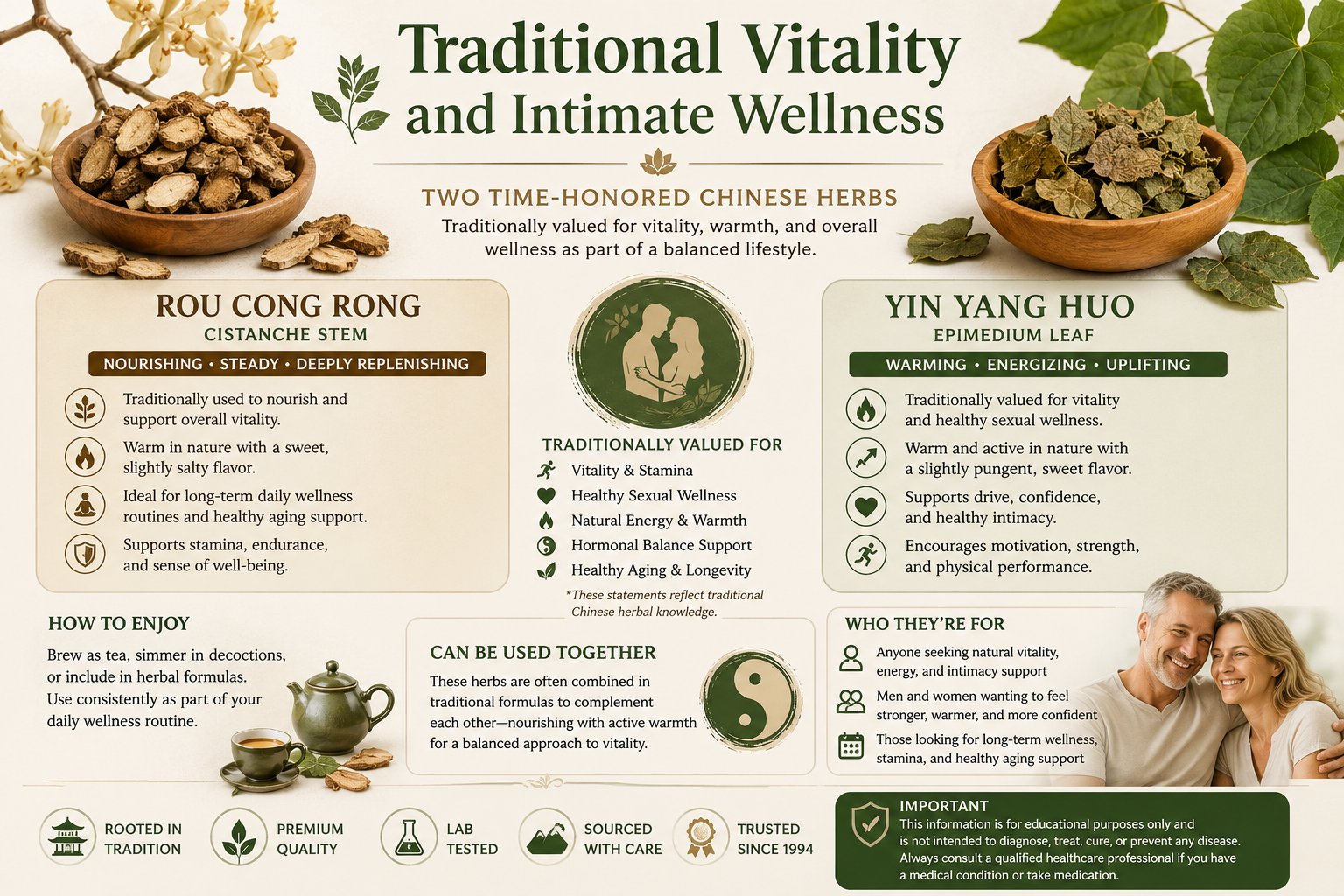
Traditional Vitality and Intimate Wellness
This is one of the main reasons people compare Rou Cong Rong and Yin Yang Huo.
Both herbs have long histories in Traditional Chinese Medicine and are often discussed in formulas associated with vitality, warmth, confidence, and healthy reproductive wellness traditions.
To stay accurate and responsible, it is important to separate traditional herbal history from modern medical claims.
These herbs are not being presented as treatments for low libido, sexual dysfunction, fertility concerns, hormone conditions, or any medical condition.
Instead, they are best understood as traditional herbs historically valued in vitality-focused herbal practice.
The Lifestyle Difference
Many people researching these herbs are not simply looking for “more energy.”
They are often looking for a fuller sense of vitality.
That may include wanting to feel warmer, more engaged, more present, more active, or more connected to daily life.
In traditional herbal thinking, vitality is not separate from the rest of life. It is connected to how you feel in your body, how you show up in relationships, and how much enthusiasm you have for the day ahead.
That is why herbs like Rou Cong Rong and Yin Yang Huo have remained meaningful for generations.
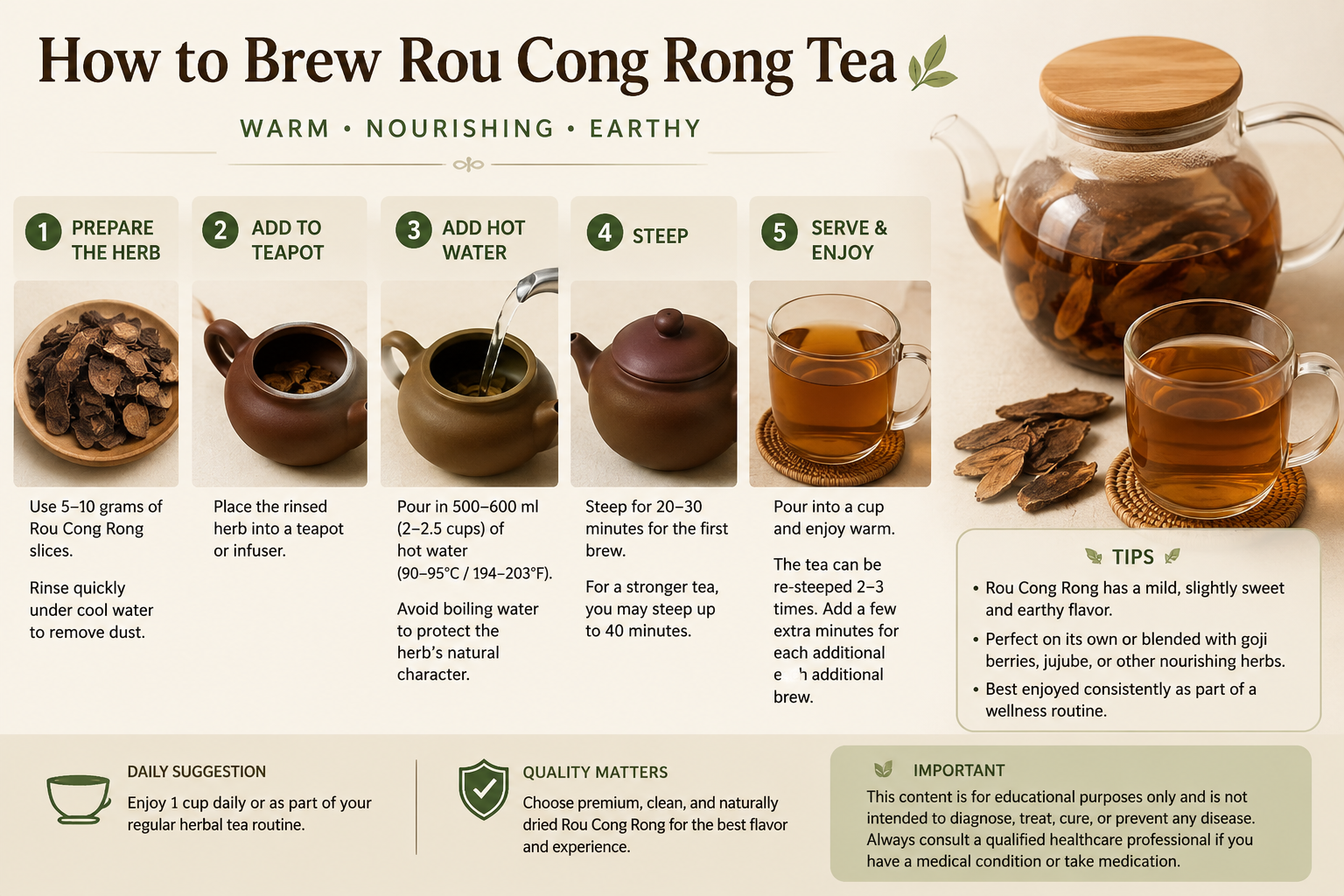
How Real People Prepare Them
How People Use Rou Cong Rong
Rou Cong Rong is commonly prepared as a traditional decoction. Because it is a denser stem herb, simmering is often preferred over a quick steep.
Many people use it in:
- Traditional decoctions
- Herbal formulas
- Tea blends with other roots or tonics
- Long-simmered preparations
Its flavor is generally mild, earthy, slightly sweet, and easier to tolerate than many stronger Chinese herbs.
How People Use Yin Yang Huo
Yin Yang Huo is a leaf herb, so it is often easier to prepare as tea than dense roots or stems.
Many people use it in:
- Tea
- Traditional decoctions
- Herbal formulas
- Blends with other warming herbs
Its flavor is stronger than Rou Cong Rong. It is more herbal, grassy, and slightly bitter, which is why some people prefer it blended rather than taken alone.
Can Rou Cong Rong and Yin Yang Huo Be Used Together?
Yes. These herbs are often discussed together in traditional formulas because their traditional qualities can complement one another.
Rou Cong Rong contributes a nourishing, steady quality.
Yin Yang Huo contributes a warmer, more active quality.
That complementary relationship helps explain why many traditional formulas do not treat them as competitors.
Instead, they may be paired as part of a broader traditional strategy.
That does not mean everyone should combine them. Herbal needs vary greatly by person.
Before combining herbs, especially warming herbs, consult a qualified practitioner if you are pregnant, nursing, taking medication, or managing a health condition.
Which Herb Is Better for Beginners?
For many beginners, Rou Cong Rong is the easier starting point.
Why?
- It has a milder flavor.
- It feels more nourishing in traditional character.
- It is less sharp or bitter than Yin Yang Huo.
- It fits well into long-simmered decoctions.
Yin Yang Huo is also popular, but it has a stronger traditional personality and a more assertive taste.
If you are completely new to Chinese herbs, Rou Cong Rong may feel more approachable.
If you already enjoy warming herbs and stronger herbal flavors, Yin Yang Huo may be more interesting to explore.
Taste Comparison
| Herb | Flavor | Best Preparation | Beginner Notes |
|---|---|---|---|
| Rou Cong Rong | Mild, earthy, slightly sweet, slightly salty | Decoction or formula | Usually easier for beginners |
| Yin Yang Huo | Grassy, herbal, slightly bitter | Tea, decoction, or formula | Better blended for taste |
If taste matters to you, Rou Cong Rong will usually be the gentler option.
If you do not mind stronger herbal flavors, Yin Yang Huo may be just fine.
Common Myths About Rou Cong Rong and Yin Yang Huo
Myth 1: They Are Basically the Same Herb
They are not.
Rou Cong Rong comes from a stem and is traditionally viewed as nourishing and steady.
Yin Yang Huo comes from a leaf and is traditionally viewed as warming and more active.
Myth 2: Yin Yang Huo Is Only About Its Nickname
The name Horny Goat Weed gets attention, but it does not tell the whole story.
In Traditional Chinese Medicine, Yin Yang Huo has a broader traditional identity connected with warmth, vitality, and traditional formula use.
Myth 3: Stronger Is Always Better
Not necessarily.
The better herb is the one that fits the person, the traditional pattern, the preparation style, and the wellness routine.
For some people, the steadier nature of Rou Cong Rong may be more appropriate. For others, the warming character of Yin Yang Huo may be the reason they are interested in it.
Myth 4: Traditional Vitality Herbs Work Like Stimulants
Traditional vitality herbs are not the same as caffeine or quick stimulants.
In Chinese herbal practice, vitality is understood through a much broader lens that includes warmth, balance, nourishment, and long-term wellness routines.
Frequently Asked Questions
What is Rou Cong Rong?
Rou Cong Rong is a traditional Chinese herb commonly known as Cistanche. It is traditionally valued for its warm, nourishing character.
What is Yin Yang Huo?
Yin Yang Huo is a traditional Chinese herb commonly known as Epimedium or Horny Goat Weed. It is traditionally valued for its warming and active character.
Which herb is better for traditional vitality?
Both herbs are associated with traditional vitality. Rou Cong Rong is usually viewed as more nourishing and steady, while Yin Yang Huo is viewed as warmer and more active.
Do these herbs support libido?
Both herbs have been historically discussed in traditional vitality and reproductive wellness formulas. They are not intended to diagnose, treat, cure, or prevent low libido, sexual dysfunction, fertility concerns, or any medical condition.
Can Rou Cong Rong and Yin Yang Huo be taken together?
They are often discussed together in traditional formulas, but combining herbs should be done thoughtfully. Consult a qualified practitioner if you take medications, have a medical condition, are pregnant, or are nursing.
Which tastes better?
Rou Cong Rong is usually milder and easier for beginners. Yin Yang Huo has a stronger, grassy, slightly bitter herbal flavor.
Which is better for beginners?
Rou Cong Rong is often easier for beginners because of its mild taste and steady traditional character.
Is Yin Yang Huo the same as Horny Goat Weed?
Yes. Yin Yang Huo is commonly known in English as Horny Goat Weed, though the traditional Chinese understanding of the herb is broader than the common nickname.
Are these herbs warming?
Both herbs are traditionally considered warm. Yin Yang Huo is often viewed as more active and warming in traditional character.
Final Verdict: Which Traditional Vitality Herb Fits Your Lifestyle?
Choose Rou Cong Rong if you want a traditional herb known for its nourishing, steady, mild, and grounding character.
Choose Yin Yang Huo if you are interested in a traditional herb historically associated with warmth, vitality, and a more active herbal personality.
Many experienced herbal enthusiasts eventually keep both herbs in their pantry because each brings something different to traditional herbal practice.
Rou Cong Rong brings steady nourishment.
Yin Yang Huo brings warming vitality.
Together, they represent two of the most recognized traditional Chinese herbs for vitality-focused wellness routines.
Important Safety Notes
- Do not use if pregnant or nursing unless advised by a qualified healthcare professional.
- Consult a qualified practitioner before use if you take medications or have a medical condition.
- Yin Yang Huo may not be appropriate for everyone due to its traditionally warming nature.
- Do not use these herbs as a substitute for medical care.
- Stop use and consult a healthcare professional if unusual symptoms occur.
Scientific Research & Further Reading
The following studies provide additional information about the chemistry, traditional use, pharmacology, and clinical research surrounding Rou Cong Rong (Cistanche) and Yin Yang Huo (Epimedium). They are provided for educational purposes and should not be interpreted as evidence that these herbs diagnose, treat, cure, or prevent any disease.
Rou Cong Rong (Cistanche deserticola)
- Bioactive Components, Pharmacological Properties, and Clinical Potential of Cistanche deserticola
A comprehensive review of the major constituents, traditional use, phytochemistry, and current research on Cistanche species. - The Role of Cistanches Herba and Its Ingredients in Modern Research
Reviews traditional applications, phytochemicals, and contemporary research involving Cistanche species. - Phenylethanoid Glycosides from Cistanche deserticola
Discusses the primary bioactive compounds found in Cistanche and summarizes current research on their biological activity. - Antifatigue Activity of Phenylethanoid-Rich Extract from Cistanche deserticola
Experimental research investigating exercise endurance and fatigue-related outcomes in laboratory models.
Yin Yang Huo (Epimedium)
- Epimedium: Pharmacological Activities and Clinical Applications
A comprehensive review discussing traditional uses, phytochemistry, major constituents such as icariin, and modern pharmacological research. - Icariin: A Review of Its Pharmacological Effects
Reviews the chemistry, traditional background, and biological activity of icariin, one of the primary flavonoids found in Epimedium. - Advances in Research on Epimedium Species
Summarizes phytochemistry, traditional Chinese medicine applications, and current scientific investigations. - Chemical Constituents and Biological Activities of Epimedium
Overview of the major flavonoids and naturally occurring compounds found within Epimedium species.
General References
- Chinese Pharmacopoeia
- Bensky, Clavey & Stöger. Chinese Herbal Medicine: Materia Medica.
- World Health Organization Monographs on Selected Medicinal Plants
What the Research Can—and Cannot—Tell Us
Scientific research on Rou Cong Rong and Yin Yang Huo continues to expand, particularly in the areas of phytochemistry, laboratory investigations, and traditional herbal applications.
Understanding both the traditional history and the modern research allows you to make more informed decisions when choosing herbs that fit your own wellness routine.
Disclaimer
The information provided is for educational purposes only and is not intended as medical advice. These products are not intended to diagnose, treat, cure, or prevent any disease. Always consult a qualified healthcare professional before using herbal products, especially if you are pregnant, nursing, have a medical condition, or take medications.