

Shan Yao (Huai Shan): Chinese Yam Root Benefits, Uses & TCM Guide
Some herbs clear. Some herbs move.
Shan Yao builds.
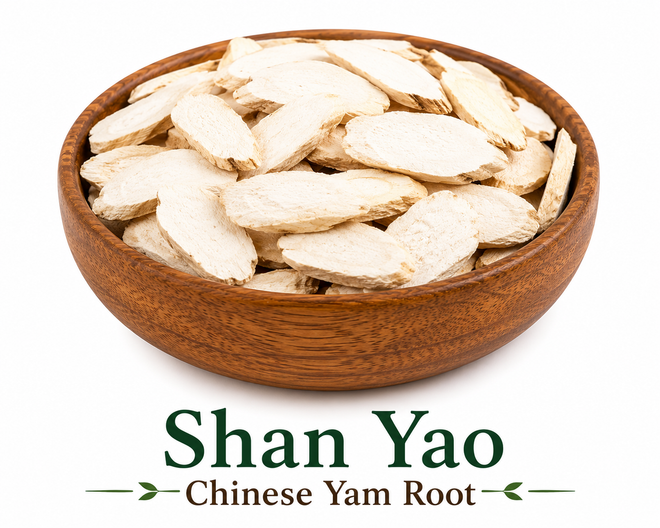
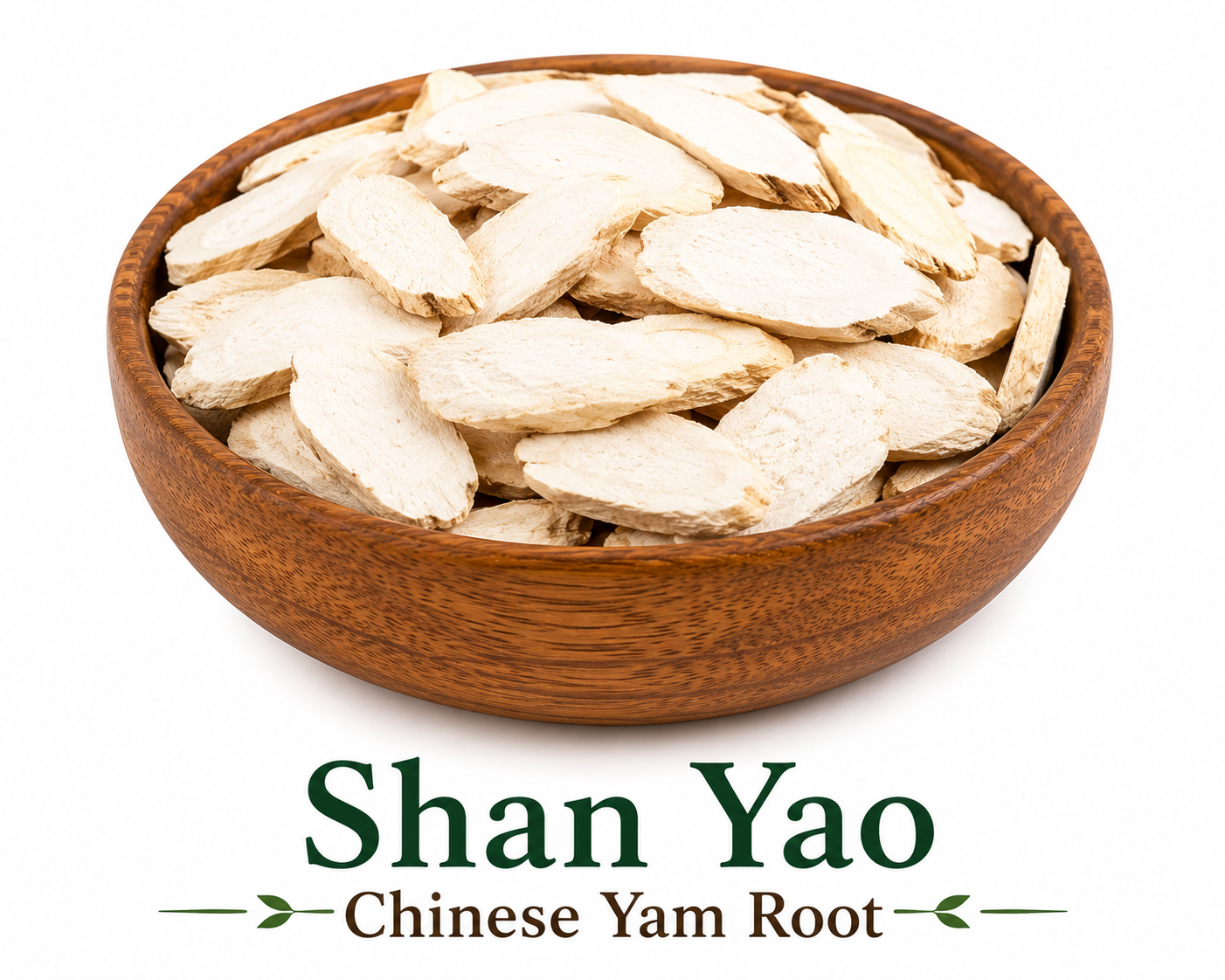 In Traditional Chinese Medicine, Shan Yao (Chinese Yam Root) is one of the most respected nourishing herbs for supporting digestion, replenishing Qi, and strengthening long-term vitality.
Known as Huai Shan, this sweet, neutral herb is highly valued because it tonifies without being too warming, drying, or heavy.
That makes it one of the most balanced tonic herbs in Chinese medicine.
Shan Yao is traditionally used to support the Spleen, Lung, and Kidney systems, making it a favorite for digestion, energy, respiratory support, and overall vitality.
Quick Product Summary
| Common Name | Chinese Yam Root |
| Pin Yin Name | Shan Yao / Huai Shan |
| Botanical Name | Dioscorea opposita Radix |
| Channels | Kidney, Lung, Spleen |
| Package Size | 1 pound |
| Form | Cut / sliced, unsulfured |
| Brand | Nuherbs Lab Tested |
| Origin | China |
| Taste | Sweet |
| Nature | Neutral |
| Testing | Lab Tested |
| Other Ingredients | None |
Why Shan Yao Is Special
Shan Yao stands out because it nourishes three major systems at once:
- Spleen → digestion and nutrient absorption
- Lung → respiratory support
- Kidney → long-term vitality and essence
Very few herbs support all three this well.
This makes Shan Yao one of the most versatile tonic herbs in TCM.
Traditional TCM Uses of Shan Yao
- Tonifies Spleen Qi
- Supports digestion
- Nourishes Lung Yin
- Supports normal breathing
- Tonifies Kidney energy
- Supports long-term vitality
Top Benefits of Chinese Yam Root
Supports Digestive Health
Shan Yao is highly regarded for strengthening digestion and supporting nutrient absorption.
Supports Healthy Energy
By tonifying Spleen Qi, Shan Yao is traditionally used for fatigue and low energy.
Supports Respiratory Wellness
Traditionally used to support the lungs and nourish Lung Yin.
Supports Kidney Function and Vitality
Used for long-term nourishment and vitality support.
What Does Shan Yao Taste Like?
Shan Yao has a mild, sweet, starchy flavor with soft earthy notes.
Taste Profile: Sweet, mild, earthy, neutral.
Shan Yao vs Other Tonic Herbs
| Herb | Best For | Why Choose Shan Yao? |
|---|---|---|
| Shan Yao | Digestion + Lung + Kidney | Best balanced tonic |
| Huang Qi | Qi support | Shan Yao better for digestion |
| Bai Zhu | Spleen support | Shan Yao more nourishing |
| Dang Shen | Energy support | Shan Yao gentler long-term |
How to Use Shan Yao
- Tea
- Decoction
- Soup
- Porridge
- Capsules
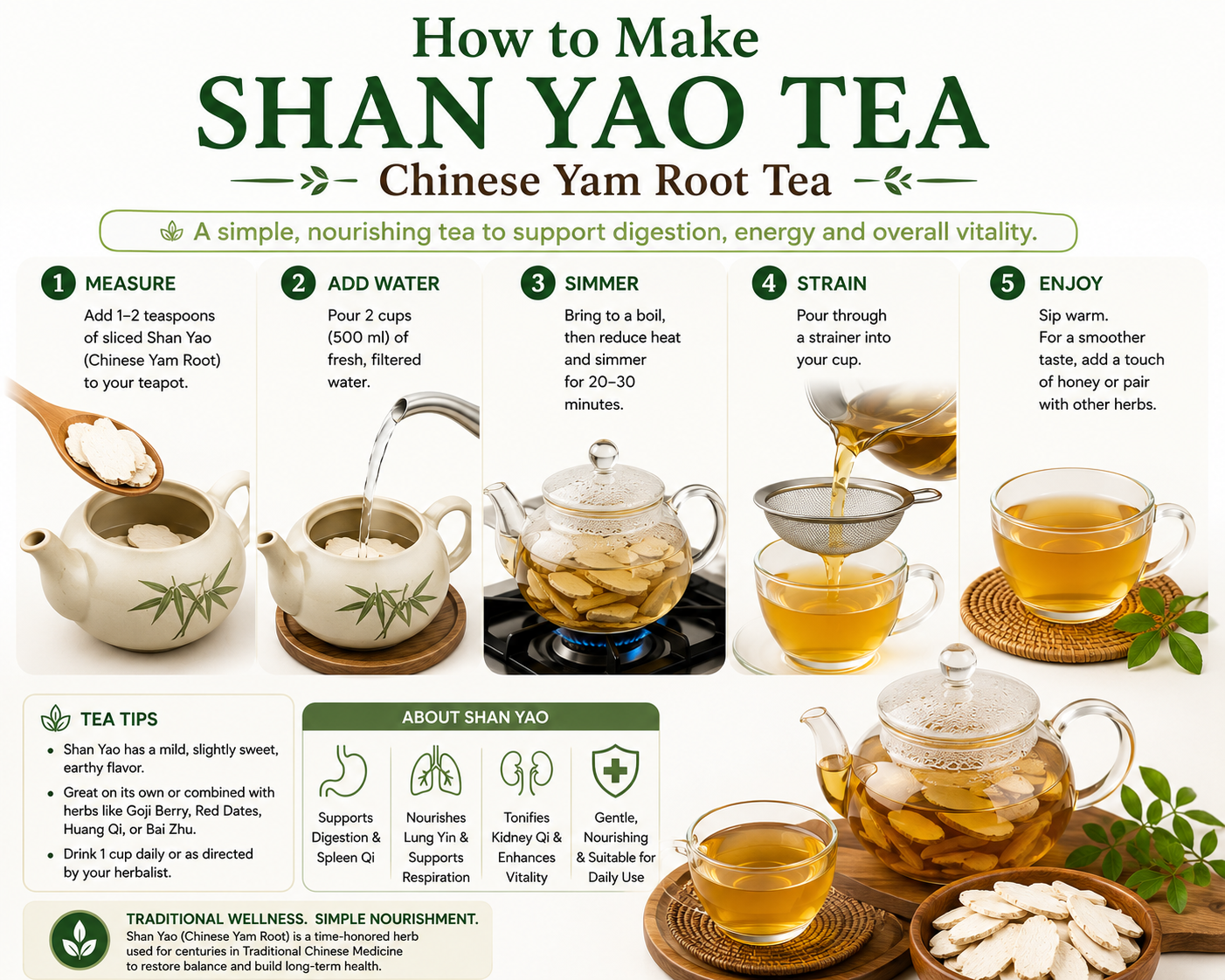
How to Make Shan Yao Tea
- Use 1–2 teaspoons sliced Shan Yao
- Add 2 cups water
- Simmer 20–30 minutes
- Strain and drink warm
Best Herb Pairings with Shan Yao
- Shan Yao + Huang Qi
- Shan Yao + Bai Zhu
- Shan Yao + Dang Shen
- Shan Yao + Goji Berry
Who Uses Shan Yao?
- TCM practitioners
- Herbalists
- Tea drinkers
- People focused on digestion
- People seeking long-term vitality support
PubMed Research on Chinese Yam Root
- Anti-diabetic research
- Anti-inflammatory studies
- Antioxidant research
- Hormonal support studies
Get Real Herbs. Feel the Difference.
Frequently Asked Questions
What is Shan Yao used for?
Shan Yao is traditionally used to support digestion, energy, lung health, and long-term vitality.
Is Shan Yao warming or cooling?
Shan Yao is considered neutral.
Can Shan Yao be used as tea?
Yes. Shan Yao is commonly used in tea, soups, and decoctions.
Who should avoid Shan Yao?
Do not use if pregnant or nursing without practitioner guidance.
Cautions
Do not use if pregnant or nursing.
Should not be used alone when there is accumulated dampness in the abdomen.
Disclaimer: These statements have not been evaluated by the FDA. This product is not intended to diagnose, treat, cure, or prevent any disease.
References
Chinese Materia Medica
Jade Remedies by Peter Holmes.
https://www.ncbi.nlm.nih.gov/pmc/articles/PMC4331973/
https://pubmed.ncbi.nlm.nih.gov/16756078/
https://www.ncbi.nlm.nih.gov/pmc/articles/PMC3866735/
https://www.ncbi.nlm.nih.gov/pmc/articles/PMC4632431/
https://pubmed.ncbi.nlm.nih.gov/24689699/