
Simple Beginner Chinese Herbal Combinations That Actually Make Sense
Easy Daily Herbal Tea Blends for Digestion, Energy, Calm, and Immune Support
Most people do not fail with Chinese herbs because they picked the “wrong” herb.
They usually fail because:
- they start too complicated
- buy too many products
- expect instant miracles
- or nobody explained how herbs actually fit into real life
So they end up with:
- 14 bags of random herbs
- confusion
- overwhelm
- and a kitchen cabinet that slowly starts looking like an abandoned apothecary.
That is exactly why simple herbal combinations matter.
Not because simple is “weak.”
But because simple is sustainable.
And sustainable routines are usually what create long-term results.
At 1st Chinese Herbs, we believe herbs should feel understandable, practical, and approachable—especially for beginners.
Since 1994, we have helped customers learn how to actually USE herbs, get results… not just buy them.
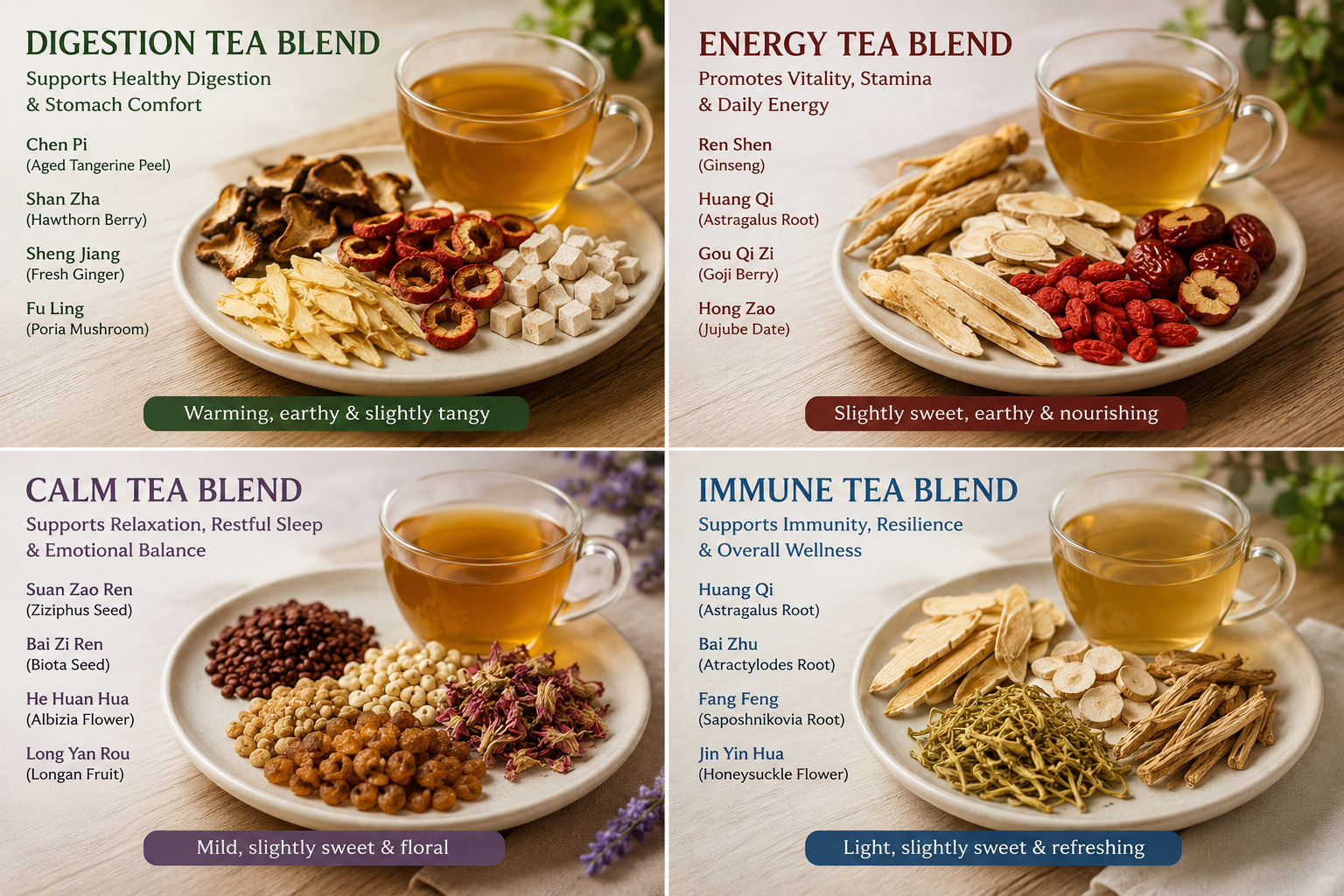
Quick Answer: What Are Beginner Chinese Herbal Combinations?
Beginner Chinese herbal combinations are small groups of herbs traditionally used together for a specific purpose such as:
- digestion support
- calmness and relaxation
- immune balance
- daily energy
- warming circulation
- general vitality
Most beginner combinations work best when they:
- contain 2–5 herbs
- have clear goals
- are easy to prepare
- support consistency
- and fit naturally into daily routines
The goal is not to impress people with complexity.
The goal is to create something you will actually continue using.
Grocery Store Herbal Tea vs Traditional Chinese Herbal Combinations
Let’s be honest for a second.
We are NOT against grocery store herbal tea blends.
Sometimes a fruity hibiscus tea on a hot summer day tastes fantastic.
And there is absolutely nothing wrong with enjoying tea simply because it tastes good.
But there is a major difference between:
“something refreshing to sip”
and
“a traditional herbal combination designed around balance, vitality, function, and long-term wellness support.”
Those are not always the same thing.
Many grocery store teas are designed primarily around:
- flavor
- aroma
- branding
- colorful packaging
Traditional Chinese herbal combinations were often built around:
- function
- warming or cooling properties
- organ systems
- timing
- balance
- synergy
- and consistency over time
One is:
“this tastes nice.”
The other is:
“this was traditionally combined for a reason.”
That difference matters.
Why Chinese Herbal Combinations Often Work Better Together
One of the biggest misconceptions beginners have is this:
“Shouldn’t I just take the strongest herb possible?”
Not usually.
Traditional Chinese Medicine rarely relies on a single herb alone.
Why?
Because herbs often balance and support each other.
Think of it like cooking.
Garlic alone is intense.
Sea salt alone is intense.
Ginger alone is intense.
But together?
Now you have something balanced.
Chinese herbal systems developed combinations because:
- some herbs guide others
- some reduce harshness
- some improve digestion
- some balance temperature
- some support absorption
- some strengthen overall harmony
That is why many classic formulas survived for centuries.
 The Beginner Rule Almost Nobody Tells You
Start with SMALLER combinations first.
Seriously.
Some beginners buy:
- 17 herbs
- 4 powders
- 3 tinctures
- mushroom extracts
- random internet recommendations
- and a tea press they never use
…all before making their first cup of tea.
That is not herbal wisdom.
That is botanical chaos.
Simple combinations help you:
- understand your body
- notice patterns
- reduce overwhelm
- stay consistent
- and build confidence
And honestly?
Many experienced herbalists STILL use very simple combinations daily.
Beginner Digestion Tea Combination
For Heavy Meals, Sluggish Digestion, and “Brick in the Stomach” Feelings
You know that feeling after eating too much greasy food…
Where your stomach feels like it is trying to process a bowling ball?
This is the type of traditional warming combination many people turn to when digestion feels sluggish or stagnant.
Simple Digestion Combination
Suggested Herbs
- Sheng Jiang (Fresh Ginger)
- Chen Pi (Aged Tangerine Peel)
- Shan Zha (Hawthorn Berry)
- Fu Ling (Poria Mushroom)
Why This Combination Works
Sheng Jiang (Fresh Ginger)
Traditionally used to warm digestion and support movement.
Flavor:
warming, spicy, aromatic
What most people notice:
a comforting warmth in the stomach area.
Chen Pi (Aged Tangerine Peel)
One of the classic herbs traditionally used for stagnant digestion and dampness.
Flavor:
citrus-like, slightly bitter, aromatic
What most websites miss:
good Chen Pi should smell STRONG and vibrant.
If it smells like dusty cardboard…
it is probably old.
Shan Zha (Hawthorn Berry)
Traditionally used in Chinese medicine around rich or heavy meals.
Flavor:
slightly tart, fruity
Fu Ling (Poria)
Traditionally used to support fluid balance and digestion.
Flavor:
mild, earthy
How To Prepare This Digestion Tea
Simple Beginner Method
Simmer:
- 2–3 slices fresh ginger
- 1 tsp chen pi
- 1 tsp shan zha
- small amount fu ling
Simmer gently for 20 minutes.
Drink warm after meals.
What This Digestion Combination FEELS Like
Many beginners describe it as:
- warming
- grounding
- settling
- less “heavy”
- more comfortable after eating
Not like an energy drink.
Not like a stimulant.
More like:
your body slowly exhaling.
Shop This Digestion Combination
Beginner Calm & Relaxation Combination
For Racing Thoughts, Stress, and Feeling Mentally “Stuck On”
Some people are physically tired…
…but mentally still running 900 browser tabs at midnight.
That is where calming herbal routines often become helpful.
Not because they “knock you out.”
But because routines themselves matter.
Warm tea.
Slower breathing.
Less stimulation.
Consistency.
That combination matters more than most people realize.
Simple Calm Combination
Suggested Herbs
- Suan Zao Ren (Ziziphus Seed)
- Bai Zi Ren (Biota Seed)
- He Huan Hua (Albizia Flower)
- Long Yan Rou (Longan Fruit)
Why This Combination Works
Suan Zao Ren
Traditionally used to calm and nourish.
Flavor:
mild, nutty, slightly sour
Bai Zi Ren
Traditionally associated with calming and moistening support.
Texture:
slightly oily and rich
He Huan Hua
Known traditionally as a “happiness” herb.
Flavor:
lightly floral
Long Yan Rou
Traditionally used to nourish and support relaxation.
Flavor:
sweet and comforting
What This Tea FEELS Like
Not sedation.
Not being “drugged.”
More like:
your nervous system slowly stops yelling at you.
Many people pair this tea with:
- reading
- prayer
- stretching
- reduced evening screen time
- quiet routines
Herbs often work better when the environment supports them.
Beginner Immune & Vitality Combination
The Traditional “I Want To Stay Strong” Tea
This is the type of combination many people traditionally used during seasonal changes.
Especially when:
- exhausted
- run down
- depleted
- overworked
- stressed
- or constantly burning the candle at both ends
Simple Vitality Combination
Suggested Herbs
- Huang Qi (Astragalus Root)
- Gou Qi Zi (Goji Berry)
- Hong Zao (Jujube Dates)
- Dang Shen
Why This Combination Works
Huang Qi
One of the most recognized Qi-support herbs in Chinese medicine.
Flavor:
mildly sweet, earthy
Gou Qi Zi
Traditionally associated with nourishment and vitality.
Flavor:
sweet, fruity
Hong Zao
Adds warmth and harmonizing support.
Flavor:
rich, sweet
Dang Shen
Traditionally used for energy and digestive support.
Flavor:
mild and slightly sweet
What Most Websites Never Tell You
The goal of many traditional vitality teas was NOT:
“feel insane energy in 15 minutes.”
That is modern marketing.
Traditional systems often focused on:
- consistency
- nourishment
- resilience
- recovery
- long-term support
That is a very different philosophy.
Beginner Energy & Focus Combination
For Afternoon Slumps and Feeling Mentally Drained
This is for the:
“I am exhausted by 2 PM and staring at the computer like it personally offended me” crowd.
Simple Energy Combination
Suggested Herbs
- Ren Shen (Ginseng)
- Huang Qi
- Gou Qi Zi
- Chen Pi
Why This Combination Works
Ren Shen
Traditionally valued for energy and resilience support.
Flavor:
earthy, slightly bitter
Huang Qi
Supports sustained vitality.
Gou Qi Zi
Helps soften stronger herbs and adds nourishment.
Chen Pi
Helps keep heavier tonics from feeling overly cloying.
What This Combination FEELS Like
Usually not:
“jittery caffeine explosion.”
More often:
- steadier energy
- less crashing
- smoother focus
- less afternoon burnout
How Long Before You Notice Herbal Routines?
This is one of the biggest beginner questions.
And honestly?
The internet has created wildly unrealistic expectations.
Beginner Timeline Expectations
| Timeframe | What Beginners Often Notice |
|---|---|
| Day 1–3 | Taste, warmth, aroma awareness |
| Week 1 | Improved consistency and routine |
| Week 2–3 | Better understanding of preferred herbs |
| Month 1+ | More personalized habits and familiarity |
Herbs are often less about “instant miracles”…
…and more about building supportive routines.
What Most Websites Never Tell You About Chinese Herbs
Freshness Matters MASSIVELY
Fresh herbs should often:
- smell vibrant
- look alive
- feel dry but not dusty
- have strong aroma
- retain natural color
Weak smell?
Old herbs.
Muted taste?
Possibly stale.
Rubbery texture?
Improper storage.
The 5-Senses Freshness Check
Sight
Color should look natural and vibrant.
Smell
Aroma should be noticeable.
Touch
Herbs should feel dry—not damp or rubbery.
Sound
Many herbs lightly crack when broken.
Taste
Flavor should feel alive and distinct.
Why Sulfur-Free Herbs Matter
Some low-quality herbs are sulfur fumigated to:
- brighten appearance
- prevent insects
- extend shelf life artificially
That does NOT automatically mean better quality.
At 1st Chinese Herbs, we focus on:
- properly stored herbs
- lab-tested products
- sulfur-free options
- traditional quality standards
- educational support
- shipping from Washington State
Good News: You Do NOT Need To Be An Herbalist To Start
This is important.
You do NOT need:
- a doctorate
- ancient scrolls
- a 45-herb formula
- or a dedicated tea ceremony room
Most people start successfully by:
- choosing ONE goal
- using ONE simple combination
- staying consistent
- learning gradually
That is how confidence develops.
Frequently Asked Questions
Are Chinese herbal teas supposed to taste bitter?
Some are.
Bitterness is not always “bad.”
In traditional systems:
bitterness was often associated with clearing and draining functions.
Should I start with powders or whole herbs?
Whole herbs are often easier for beginners because you can SEE what you are using.
Can I combine multiple herbal combinations together?
Sometimes.
But beginners usually do better starting simple first.
Why do some herbs smell stronger than others?
Freshness, volatile oils, species quality, processing methods, and storage conditions all matter.
Do I need expensive equipment?
No.
A simple pot, strainer, and consistency are usually enough.
Related Beginner Guides
- How To Use Bulk Herbs
- Why Chinese Herbs Don’t Work Until You Use Them Correctly
- Bulk Herbs vs Extract Powders vs Teapills
- Shop Bulk Chinese Herbs
- Shop Chinese Teapills
- Shop Herb Powders
Final Thoughts
Most beginners do not need:
- complicated formulas
- 20 supplements
- or a full herbal pharmacy overnight
They usually need:
- clarity
- confidence
- consistency
- and realistic expectations
That is where simple Chinese herbal combinations shine.
Because once herbs stop feeling intimidating…
people actually start using them consistently.
And consistency is often where the real magic begins.
Get Real Herbs. Feel the Difference.