
Beginner Chinese Herb Guide
Before You Buy Another Herb, Find Out Your TCM Body Pattern
Have you ever wondered why one person takes an herb and says, “This helped me so much,” while another person takes the exact same herb and says, “I felt nothing”?
In Traditional Chinese Medicine, the answer often comes down to one very important idea: your body pattern matters.
TCM does not only ask, “What symptom do you have?” It also asks, “What kind of imbalance may be behind that symptom?” That is why the same herb may feel supportive for one person and completely wrong for another.
Quick Answer: What Is a TCM Body Pattern?
A TCM body pattern is a traditional way of understanding how symptoms fit together. Instead of looking at one symptom by itself, Traditional Chinese Medicine looks at the bigger picture: energy, digestion, sleep, temperature, moisture, emotions, circulation, tongue appearance, and overall constitution.
Common TCM body patterns include Qi Deficiency, Yin Deficiency, Yang Deficiency, Dampness, Damp Heat, Qi Stagnation, Blood Stasis, Excess Heat, and Cold patterns.
This matters because two people can have the same complaint but need very different herbal approaches.
 Why Herbs Work for One Person But Not Another
This is one of the biggest questions consumers ask: “Why didn’t this herb work for me?”
The answer may be that the herb was chosen by symptom instead of by pattern. For example, two people may both feel tired. One may be tired from Qi Deficiency. Another may feel tired because of Dampness. Another may feel depleted from Yin Deficiency. Another may feel sluggish from Yang Deficiency.
Same symptom. Different pattern. Different herbal direction.
That is why copying random herbal advice from social media can be frustrating. Your body is not a copy-and-paste project.
Simple TCM Body Pattern Decoder Chart
Use this chart as an educational starting point. It is not a diagnosis, but it can help you understand why matching herbs to patterns matters.
| Pattern | How It Often Feels | Common Clues | Herbs Often Discussed in TCM |
|---|---|---|---|
| Qi Deficiency | Drained, weak, low stamina | Fatigue, bloating, loose stools, sweating easily | Huang Qi, Dang Shen, Bai Zhu, Gan Cao |
| Yin Deficiency | Dry, warm, restless | Night warmth, dry mouth, dry skin, restless sleep | Mai Men Dong, Gou Qi Zi, Bai He, Sheng Di Huang |
| Yang Deficiency | Cold, slow, sluggish | Cold hands, cold feet, low drive, prefers warmth | Rou Gui, Gan Jiang, Du Zhong, Yin Yang Huo |
| Dampness | Heavy, foggy, puffy | Bloating, mucus, sticky stools, tongue coating | Fu Ling, Yi Yi Ren, Chen Pi, Cang Zhu |
| Damp Heat | Sticky, hot, irritated | Oily skin, odor, irritability, bitter taste | Huang Qin, Ku Shen, Pu Gong Ying, Yin Chen Hao |
| Qi Stagnation | Tense, stuck, emotionally blocked | Sighing, mood swings, stress digestion, tightness | Chai Hu, Xiang Fu, Chen Pi, Fo Shou |
| Blood Stasis | Fixed, stuck, poor flow | Fixed discomfort, purple tongue, stiffness | Dan Shen, Hong Hua, Tao Ren, Chuan Xiong |
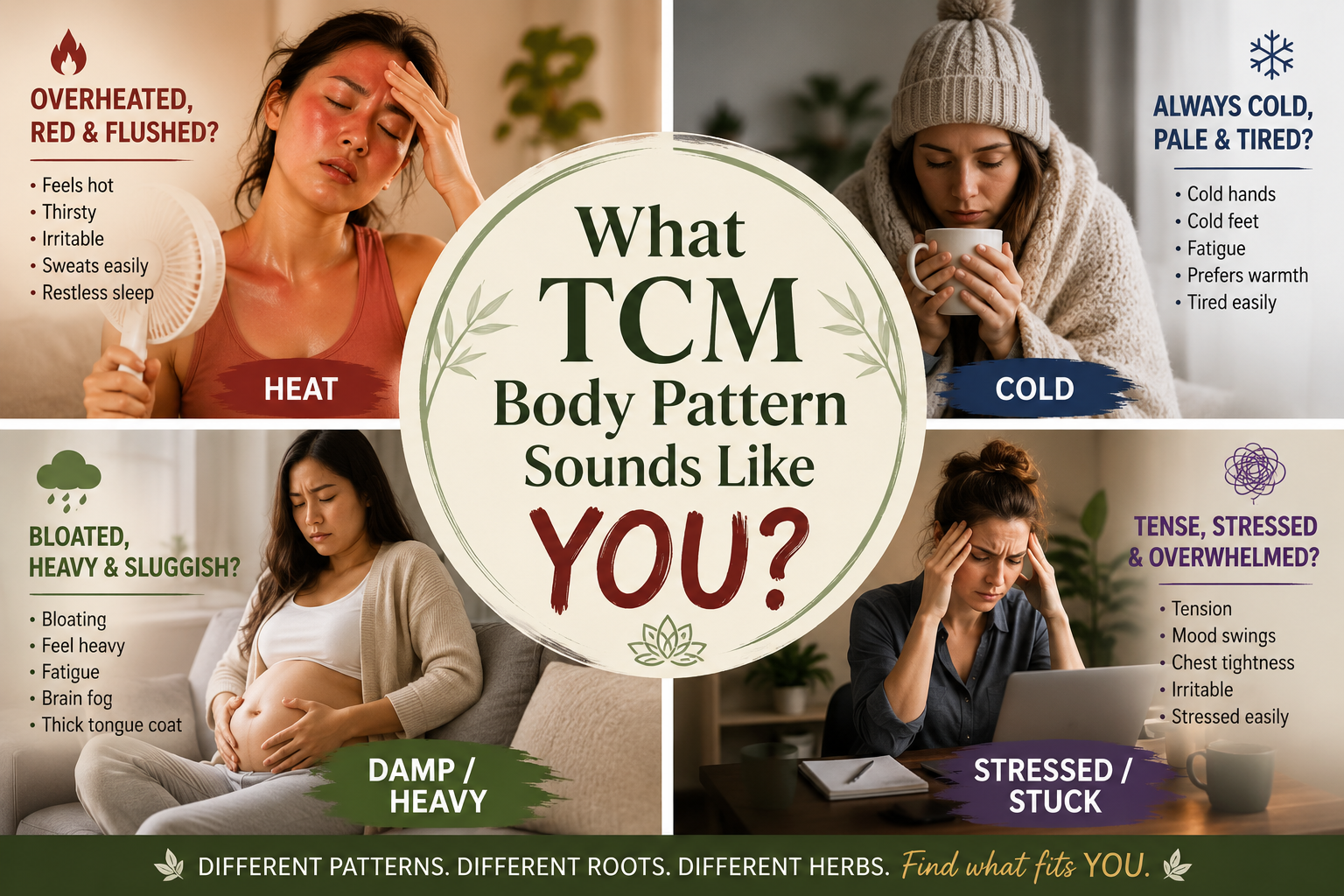
Which Pattern Sounds Most Like You?
Consumers often want a simple starting point. This checklist does not diagnose you, but it helps you notice which traditional pattern language may sound familiar.
Do You Tend to Feel Hot or Cold?
You May Lean Toward Heat Patterns If:
- You throw blankets off at night
- You feel irritated easily
- You prefer cold drinks
- Your face flushes easily
- You dislike hot weather
- You feel restless or overheated
You May Lean Toward Cold Patterns If:
- Your hands and feet are often cold
- You prefer warm drinks
- You dislike air conditioning
- You feel sluggish in winter
- You feel better with warmth
- You bundle up when others feel fine
Do You Tend to Feel Dry or Damp?
You May Lean Toward Dryness or Yin Deficiency If:
- Your mouth or throat feels dry
- Your skin feels dry
- You wake at night feeling warm
- You feel restless when tired
- You crave fluids
- You feel “wired but tired”
You May Lean Toward Dampness If:
- You feel heavy or puffy
- You feel foggy after eating
- You have bloating
- You notice mucus or congestion
- Your stools feel sticky or loose
- Your tongue has a thick coating
Do You Feel Depleted or Stuck?
You May Lean Toward Deficiency If:
- You feel weak or drained
- You recover slowly
- You tire easily
- You feel worse when overworked
- You crave rest
- You feel like your “battery” is low
You May Lean Toward Stagnation If:
- You feel emotionally tense
- You sigh often
- Stress affects your digestion
- You feel tightness or pressure
- Your discomfort feels stuck
- You feel better after movement
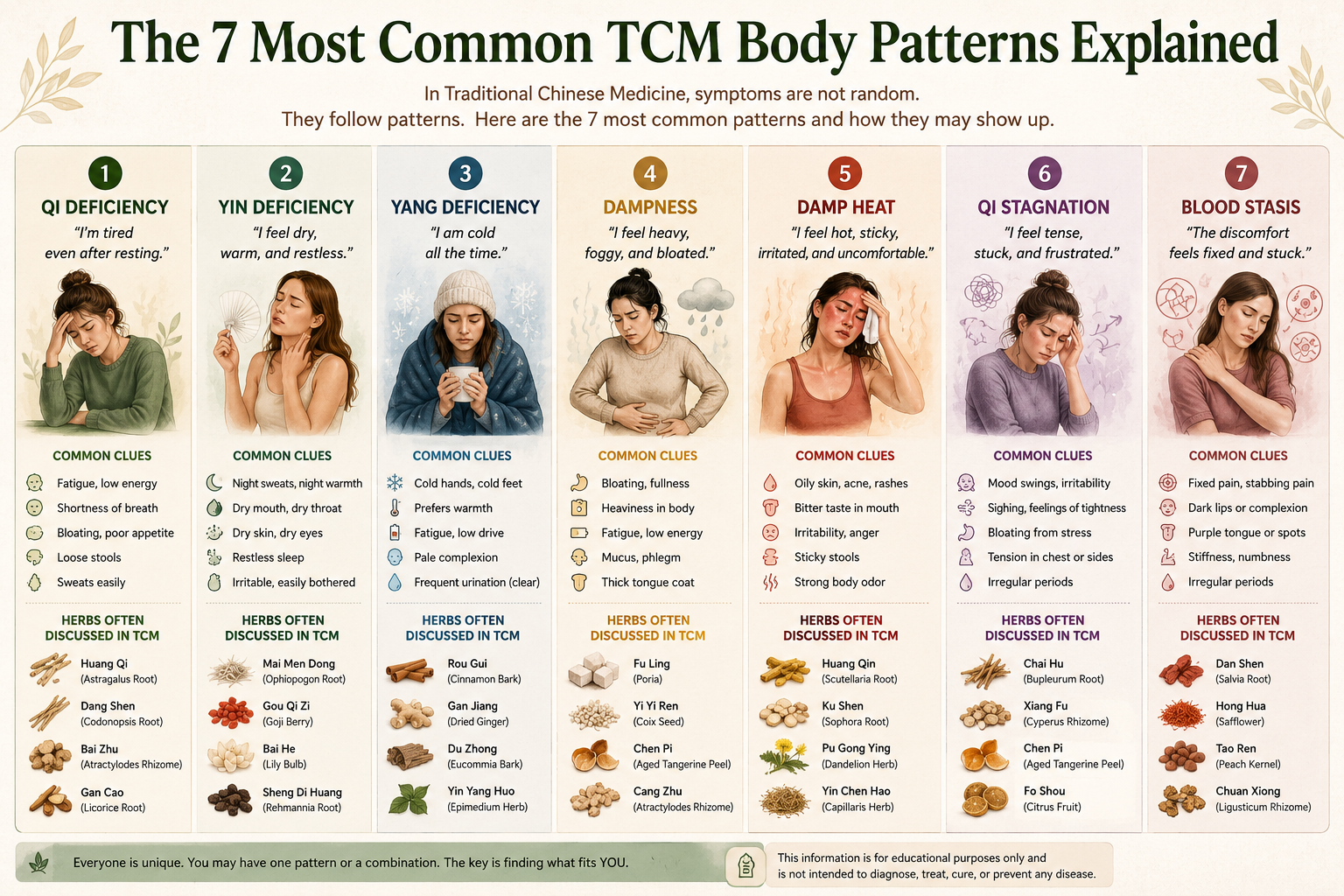
The 7 Most Common TCM Body Patterns Explained
1. Qi Deficiency: “I’m tired even after resting.”
Qi Deficiency is often described as low functional energy. This does not simply mean “I need caffeine.” In TCM theory, Qi helps power digestion, movement, recovery, and daily vitality.
People who relate to this pattern may feel worn down, easily tired, bloated after meals, weak-voiced, or less resilient than they used to be.
Traditional herb examples: Huang Qi, Dang Shen, Bai Zhu, and Gan Cao are commonly discussed in Qi-supporting formulas.
2. Yin Deficiency: “I feel dry, warm, and restless.”
Yin is associated with cooling, moistening, and nourishing qualities. When Yin is deficient, the body may feel like it is running too hot and too dry, especially at night.
Common clues may include dry mouth, dry throat, night warmth, restlessness, irritability, dry skin, or waking during the night.
Traditional herb examples: Mai Men Dong, Gou Qi Zi, Bai He, and Sheng Di Huang are commonly discussed in Yin-nourishing contexts.
3. Yang Deficiency: “I am cold all the time.”
Yang is associated with warmth, movement, and activation. When Yang is weak, the body may feel cold, slow, and underpowered.
People with this pattern may prefer warm drinks, dislike cold weather, have cold hands and feet, feel sluggish, or notice their digestion feels slow.
Traditional herb examples: Rou Gui, Gan Jiang, Du Zhong, and Yin Yang Huo are traditionally discussed in warming herbal contexts.
4. Dampness: “I feel heavy, foggy, and bloated.”
Dampness is one of the most relatable modern patterns. In TCM, Dampness is often connected with sluggish fluid metabolism and weak digestive transformation.
It may feel like heaviness, puffiness, brain fog, mucus, bloating, fatigue after eating, or a thick tongue coating.
Traditional herb examples: Fu Ling, Yi Yi Ren, Chen Pi, and Cang Zhu are commonly discussed in Dampness-related formulas.
5. Damp Heat: “I feel hot, sticky, irritated, and uncomfortable.”
Damp Heat combines two ideas: excess moisture and excess heat. Consumers often relate this to a feeling of internal stickiness, heat, discomfort, oiliness, or irritation.
Common clues may include oily skin, strong odor, irritability, bitter taste, sticky stools, or discomfort that feels hot and heavy.
Traditional herb examples: Huang Qin, Ku Shen, Pu Gong Ying, and Yin Chen Hao are often discussed in Damp Heat contexts.
6. Qi Stagnation: “I feel tense, frustrated, and stuck.”
Qi Stagnation is commonly associated with stress, emotional tension, and blocked movement. This is the “traffic jam” pattern of TCM.
It may show up as sighing, mood swings, frustration, tension, tightness, digestive upset during stress, or feeling like emotions get trapped in the body.
Traditional herb examples: Chai Hu, Xiang Fu, Chen Pi, Fo Shou, and Yu Jin are commonly discussed in Qi-moving formulas.
7. Blood Stasis: “The discomfort feels fixed and stuck.”
Blood Stasis is traditionally associated with poor movement, fixed discomfort, stiffness, or a sense that circulation is not flowing smoothly.
Common traditional clues may include fixed discomfort, purple tongue color, dark complexion, stiffness, or discomfort that feels localized rather than wandering.
Traditional herb examples: Dan Shen, Hong Hua, Tao Ren, and Chuan Xiong are commonly discussed in Blood-moving herbal formulas.
Common TCM Pattern Combinations
Most people do not fit perfectly into one neat little box. Bodies are more complicated than that. You may recognize more than one pattern, and that is normal.
| Pattern Combination | Common Traditional Clues | What Consumers Often Notice |
|---|---|---|
| Qi Deficiency + Dampness | Low energy, bloating, heaviness, loose stools | “I’m tired and feel puffy or foggy.” |
| Yin Deficiency + Heat | Dryness, night warmth, restlessness, thirst | “I’m exhausted but wired at night.” |
| Qi Stagnation + Dampness | Stress, bloating, heaviness, emotional eating | “Stress goes straight to my digestion.” |
| Yang Deficiency + Dampness | Coldness, sluggishness, water retention, low drive | “I’m cold, tired, and feel weighed down.” |
| Qi Stagnation + Blood Stasis | Tension, fixed discomfort, tightness, poor flow | “I feel blocked and tense in the same areas.” |
What Your Tongue May Traditionally Suggest in TCM
Tongue observation is one traditional tool used in Chinese medicine. A practitioner looks at color, shape, coating, moisture, cracks, and other details. This section is for education only and should not be used to diagnose yourself.
| Tongue Appearance | Traditionally Associated With | Simple Explanation |
|---|---|---|
| Pale tongue | Qi Deficiency, Blood Deficiency, Yang Deficiency | May suggest weakness, coldness, or deficiency patterns. |
| Red tongue | Heat or Yin Deficiency | May suggest internal heat or dryness. |
| Thick coating | Dampness, Phlegm, Food Stagnation | May suggest heaviness, sluggish digestion, or excess coating. |
| Purple tongue | Blood Stasis | May suggest poor movement or stagnation patterns. |
| Cracks | Yin Deficiency or dryness | May suggest reduced fluids or dryness in TCM theory. |
| Teeth marks on sides | Spleen Qi Deficiency, Dampness | May suggest weak digestion or fluid imbalance. |
Foods and Habits That May Aggravate Different Patterns
In TCM, food and lifestyle are part of the pattern picture. Herbs may be helpful, but daily habits matter too.
| Pattern | Foods or Habits Traditionally Thought to Aggravate It |
|---|---|
| Dampness | Excess sugar, greasy foods, heavy dairy, overeating, constant snacking |
| Heat | Alcohol, excessive spicy foods, fried foods, overheating stimulants |
| Cold | Too many cold drinks, raw foods, iced foods, exposure to cold |
| Qi Deficiency | Overwork, skipping meals, poor sleep, excessive worry, pushing through exhaustion |
| Yin Deficiency | Late nights, too much caffeine, overheating, overtraining, chronic stress |
| Qi Stagnation | Emotional suppression, lack of movement, chronic stress, irregular meals |
Real-Life Examples of TCM Patterns
The Exhausted Coffee Person
This person skips meals, runs on caffeine, crashes in the afternoon, feels bloated after eating, and wonders why energy herbs do not seem to work.
In TCM language, this may resemble Qi Deficiency with Dampness.
The Stressed-Out Tight-Chest Person
This person sighs often, feels emotionally tense, gets bloated during stress, and feels better after movement or deep breathing.
In TCM language, this may resemble Qi Stagnation.
The Wired-But-Tired Night Owl
This person is exhausted during the day but restless at night, feels warm in the evening, has dry mouth, and wakes up overheated.
In TCM language, this may resemble Yin Deficiency with Heat signs.
The Always-Cold Person
This person wears socks to bed, avoids cold drinks, feels sluggish in winter, and prefers warm foods and warm rooms.
In TCM language, this may resemble Yang Deficiency or Cold patterns.
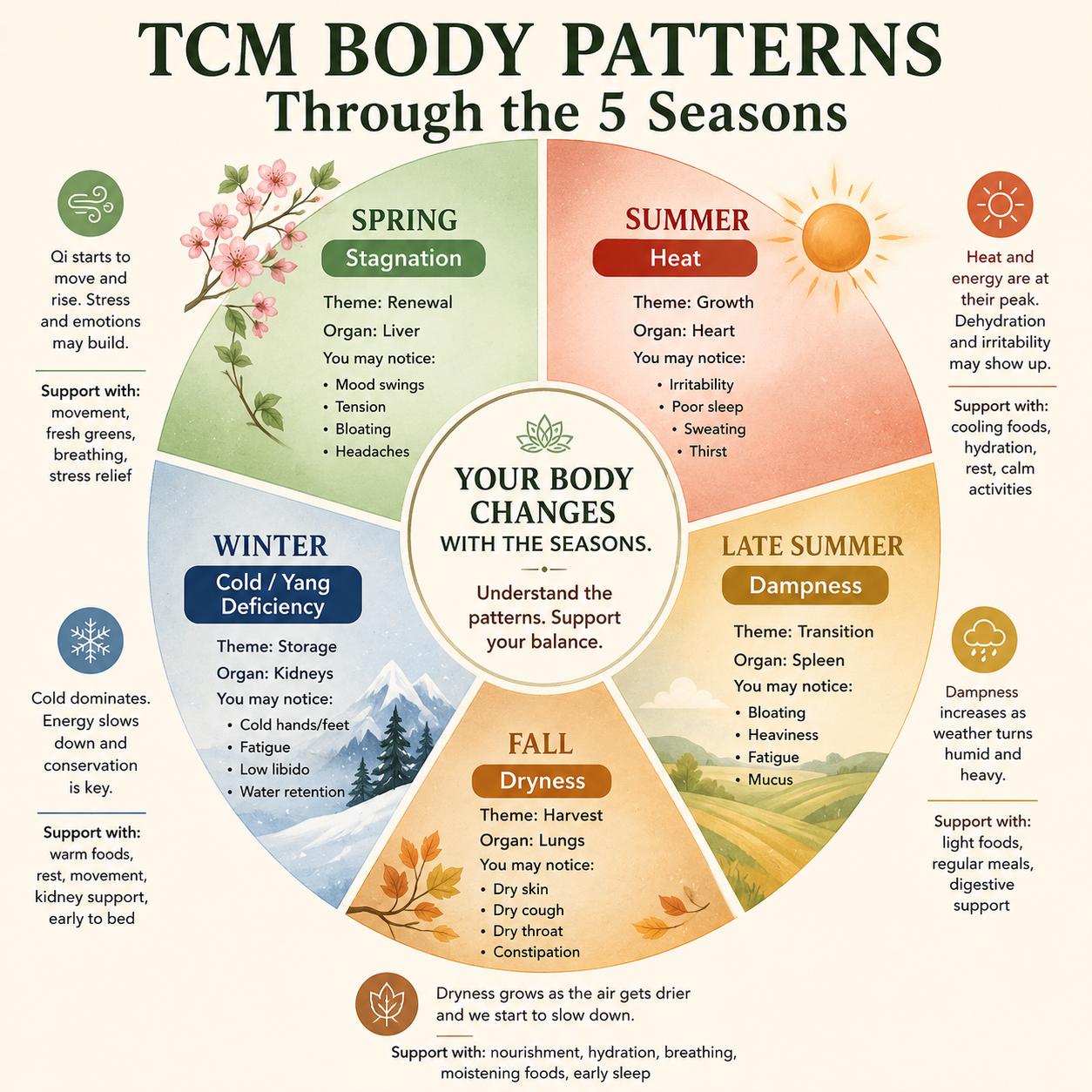
Seasonal TCM Patterns: Why Your Body May Feel Different Throughout the Year
Many people notice that their body changes with the seasons. Traditional Chinese Medicine has long connected seasonal shifts with patterns of warmth, cold, dampness, dryness, and movement.
| Season | Patterns Often Discussed | Common Consumer Experience |
|---|---|---|
| Spring | Qi Stagnation, Liver-related tension | Mood shifts, tension, allergies, frustration |
| Summer | Heat, Damp Heat | Overheating, sweating, irritability, sticky discomfort |
| Late Summer | Dampness, digestive sluggishness | Bloating, heaviness, fatigue after meals |
| Fall | Dryness, Yin Deficiency | Dry skin, dry throat, dry cough, thirst |
| Winter | Cold, Yang Deficiency | Cold hands, low energy, wanting warm foods |
How Long Does It Take to Notice Herbs?
This is one of the most common questions consumers ask, and it deserves an honest answer.
Some people notice changes quickly, especially with aromatic teas, digestion-supporting routines, or herbs that fit their pattern well. Other people need more consistency, especially when patterns have built up over time.
Several factors influence how herbs feel:
- The quality and freshness of the herb
- Whether the herb matches the person’s traditional pattern
- How the herb is prepared
- How consistently it is used
- Diet, sleep, stress, hydration, and digestion
- Whether the person is taking medications or has health conditions
Herbs are not magic buttons. They are part of a larger routine. If you are expecting one cup of tea to undo ten years of stress, poor sleep, and drive-through dinners, your expectations may need a little herbal reality check.
Important Safety Note
This guide is for education only. TCM pattern identification is traditionally done by trained practitioners using a detailed intake, including pulse, tongue, symptoms, constitution, lifestyle, and history.
If you are pregnant, nursing, taking medication, managing a medical condition, preparing for surgery, or buying herbs for a child, speak with a qualified healthcare professional before using herbs.
What You Need To Know About TCM Body Patterns
They make herbs sound one-size-fits-all.
Many websites say, “Take this herb for this symptom,” without explaining constitution, pattern, preparation, quality, or safety.
They skip the beginner explanation.
Some TCM websites use technical language that may be accurate but hard for everyday shoppers to understand.
They ignore herb quality.
Freshness, sourcing, plant part, storage, and testing matter. Weak herbs can create weak experiences.
They forget that consumers are overwhelmed.
Beginners do not need more confusion. They need clear guidance, honest expectations, and a safe place to start.
The Biggest Mistakes When Choosing Herbs
Mistake #1: Choosing by symptom only
“I’m tired” is not enough information. Tired from Qi Deficiency is different from tired from Dampness, Yang Deficiency, stress, or poor sleep.
Mistake #2: Using warming herbs when they already run hot
If someone already feels hot, dry, restless, or overheated, warming herbs may not always be the best educational category to explore first.
Mistake #3: Using cooling herbs when they already run cold
If someone feels cold, sluggish, and weak, too many cooling herbs may feel like throwing a wet blanket over an already slow fire.
Mistake #4: Ignoring digestion
In TCM, digestion is central. If the body is not transforming food and fluids well, even excellent herbs may not feel as helpful.
Mistake #5: Buying herbs without checking quality
Freshness, sourcing, storage, sulfur-free processing, identity testing, and correct plant part matter. Weak herbs can create weak results.
Beginner TCM Pattern Starter Flow
Not sure where to start? Use this simple flow as an educational guide.
- Do you feel mostly hot or cold?
- Do you feel mostly dry or damp/heavy?
- Do you feel mostly depleted or stuck?
- How is your digestion? Bloating, loose stools, heaviness, or appetite changes matter in TCM theory.
- How is your sleep? Restless sleep, waking hot, or deep exhaustion may point in different directions.
- How does stress affect you? Stress-related digestion, tightness, and sighing often matter.
- Choose herbs slowly and carefully. Start simple and avoid taking too many new herbs at once.
Which Herb Form Should You Choose?
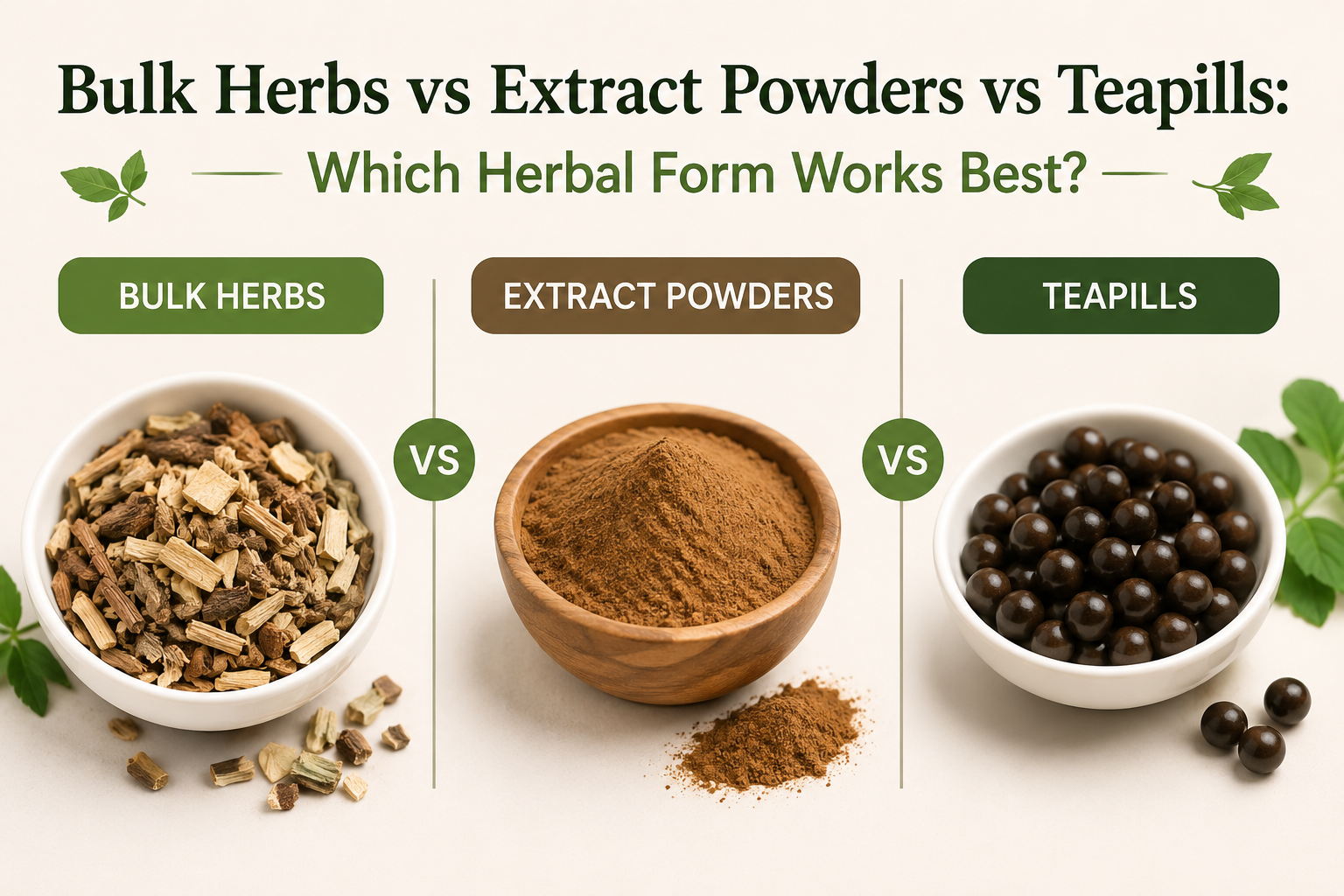
| Form | Best For | Why Consumers Like It | Shop |
|---|---|---|---|
| Bulk Herbs | Traditional decoctions, custom blends, tea routines | Flexible, traditional, easy to combine | Shop Bulk Herbs |
| Powders | Busy routines, smoothies, capsules, quick mixing | Convenient and easy to measure | Shop Powders |
| Teapills | People who want simple formula routines | Portable, easy, no brewing required | Shop Teapills |
Why Buy From 1st Chinese Herbs?
Since 1994, 1st Chinese Herbs has helped customers shop for Chinese herbs with more confidence, education, and transparency.
- Trusted Since 1994
- Lab-tested herbs available from trusted suppliers
- COA available upon request when available
- Sulfur-free and non-irradiated options
- Fast shipping from Washington State
- Beginner-friendly education, not confusing herb jargon
Our goal is simple: help you stop guessing, understand herbs better, and choose quality products with confidence.
Frequently Asked Questions About TCM Body Patterns
Can I have more than one TCM body pattern?
Yes. Many people have overlapping patterns. For example, someone may have Qi Deficiency with Dampness, or Yin Deficiency with Heat signs.
Can my pattern change over time?
Yes. Stress, age, diet, sleep, climate, activity level, and illness history may influence how patterns show up.
Is a TCM pattern the same as a medical diagnosis?
No. TCM patterns are traditional educational concepts. They are not the same as Western medical diagnoses.
Why did an herb work for my friend but not for me?
You may have a different constitution, different pattern, different quality product, different dosage, different preparation method, or different lifestyle factors affecting the outcome.
Should beginners start with single herbs or formulas?
It depends on your goal. Single herbs are helpful for learning, while formulas are traditionally designed to address patterns with multiple herbs working together.
What is the easiest way to start?
Start by learning whether you tend to feel hot, cold, dry, heavy, tense, or depleted. Then read beginner guides before choosing herbs.
Can tongue appearance tell me my pattern?
Tongue appearance is one traditional observation tool, but it should not be used alone. TCM practitioners consider the full picture, including symptoms, pulse, digestion, sleep, and constitution.
What if I sound like every pattern?
That is common when people first learn TCM. Start with your strongest, most consistent clues instead of trying to match every single symptom.
Helpful Next Steps
Stop Guessing. Start Understanding.
When you understand your body pattern, Chinese herbs become less confusing. Start with education, choose quality, and build your herbal routine with confidence.
Shop Chinese HerbsReferences
Scientific & Educational References
The following research articles explore Traditional Chinese Medicine concepts, herbal research, digestion, stress physiology, tongue observation, sleep, and herbal quality. These references are provided for educational purposes.
TCM Pattern & Constitution Research
- Pattern Identification in Traditional Medicine
- Traditional Chinese Medicine Constitution Research
- Personalized Medicine Research
Tongue Diagnosis Research
Digestion & Gut Health Research
Stress & Sleep Research
Inflammation & Herbal Research
Herbal Safety Research
These studies are provided for educational purposes only and are not intended to diagnose, treat, cure, or prevent any disease. Always consult a qualified healthcare professional before using herbs, especially if pregnant, nursing, taking medications, or managing a medical condition.