
Which Chinese Herbs Pair Well Together?
30 Easy Herbal Combinations Explained
Some herbs are wonderful on their own. But the right herbal pairing? That is where things get interesting.
In traditional herbalism, herbs are often combined because they balance each other, support the same goal, improve flavor, or make a tea easier to enjoy.
But for beginners, pairing herbs can feel confusing fast.
You may wonder:
- Which herbs go together?
- Will this taste terrible?
- Do I make tea, soup, or powder?
- When should I use the blend?
- Is this beginner friendly?
This guide makes herb pairing simple.
Below you’ll find 30 popular herb pairings, why they work well together, how they taste, the best way to use them, and who may like them best.
Simple. Practical. Easy to understand.
Quick Answer: Best Beginner Herb Pairings
| Pairing | Why People Like It | Beginner Friendly |
|---|---|---|
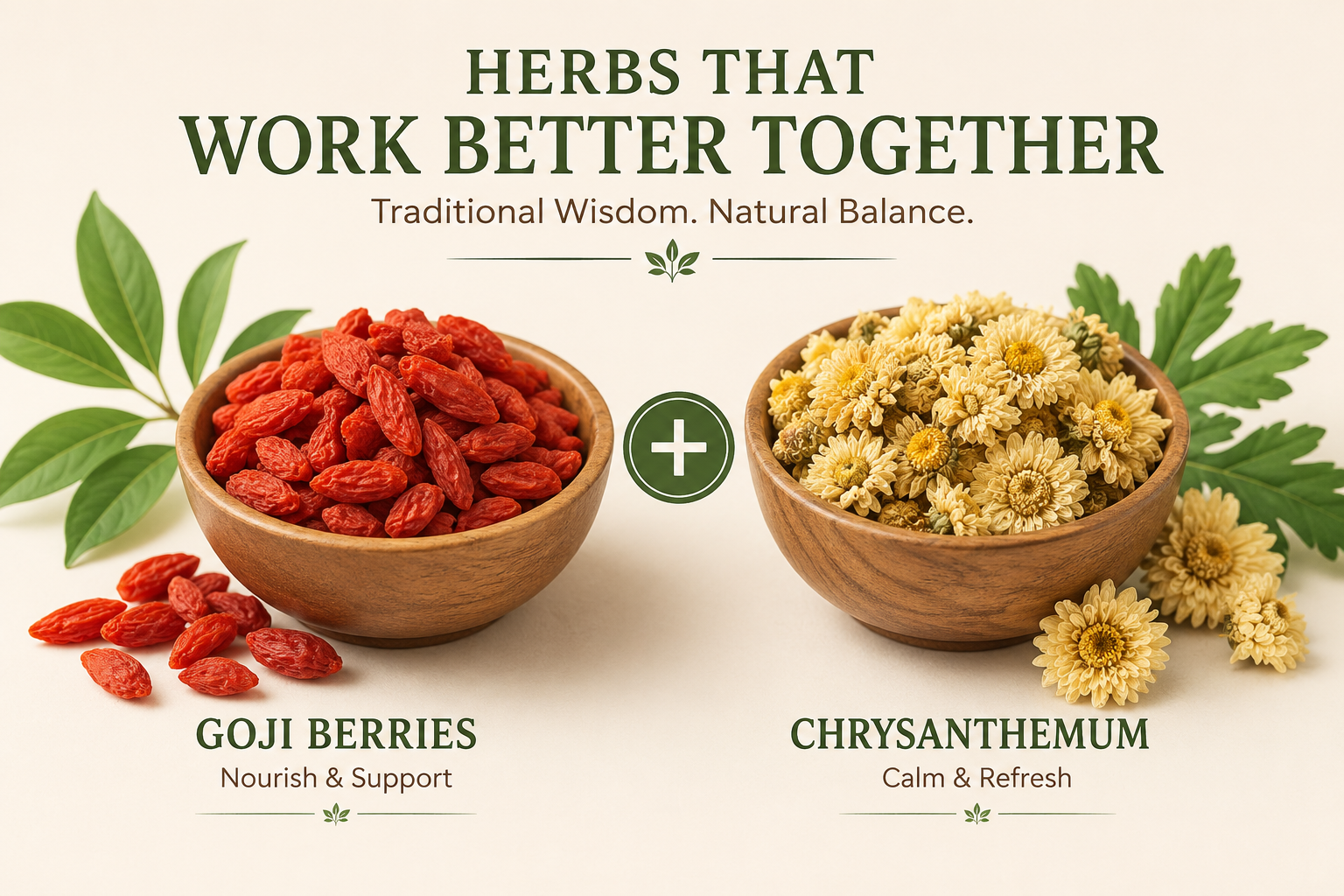
| Goji Berry + Chrysanthemum | Mild, floral, easy tea | 10/10 |
| Astragalus + Red Dates | Slightly sweet daily wellness blend | 9/10 |
| Ginger + Licorice Root | Warm, sweet, comforting | 9/10 |
| Mint + Chrysanthemum | Cooling and refreshing | 9/10 |
| Hawthorn + Red Dates | Tangy-sweet after-meal tea | 8/10 |
Master Herb Combinations
| Goal | Pairing | Why They Pair Well | Taste | Best Method | Best Time | Best For | Beginner Friendly |
|---|---|---|---|---|---|---|---|
| Energy | Astragalus + Red Dates | Daily nourishment and gentle energy support | Slightly sweet, mild | Tea, soup, crockpot | Morning | Busy, tired people | 9/10 |
| Energy | Cordyceps + American Ginseng | Energy, stamina, and active lifestyle support | Earthy, slightly bitter | Powder, tea, capsules | Morning | Active adults | 7/10 |
| Energy | American Ginseng + Goji Berry | Gentle energy with nourishing sweetness | Mild, slightly sweet | Tea | Morning or afternoon | People who dislike harsh energy herbs | 8/10 |
| Energy | Eleuthero + Schisandra | Stamina and focus support | Tart, earthy | Tea, tincture, capsules | Morning | Busy professionals | 7/10 |
| Energy | Lion’s Mane + Cordyceps | Mushroom pairing for focus and activity | Earthy, mild mushroom | Powder, capsules | Morning | Busy, active people | 8/10 |
| Wellness | Astragalus + Reishi | Long-term wellness and resilience support | Earthy, stronger | Decoction, broth, crockpot | Morning or midday | Daily wellness routines | 7/10 |
| Wellness | Cordyceps + Reishi | Daytime support balanced with deeper grounding | Earthy, mushroom-like | Powder, broth, capsules | Morning or afternoon | Mushroom users | 7/10 |
| Wellness | Astragalus + Goji Berry | Daily wellness and nourishment | Mild, sweet | Tea, soup | Morning | Beginners building a pantry | 9/10 |
| Wellness | Turkey Tail + Reishi | Deep mushroom wellness pairing | Earthy, strong | Tea, decoction, powder | Morning or afternoon | Mushroom enthusiasts | 6/10 |
| Calm / Sleep | Reishi + Albizzia Bark | Calm, unwind, and evening support | Earthy, mildly bitter | Tea, powder, capsules | Evening | Stressed people | 7/10 |
| Calm / Sleep | Albizzia Bark + Red Dates | Calming support with better flavor | Mild, slightly sweet | Tea | Evening | Gentle calm | 8/10 |
| Calm / Sleep | Bai Zi Ren + Fu Ling | Grounding and calm support | Mild, earthy | Tea, decoction | Evening | Sleep routines | 6/10 |
| Calm / Sleep | Reishi + Schisandra | Stress support and nourishment | Earthy, tart | Tea, powder | Afternoon or evening | People under stress | 6/10 |
| Seasonal Wellness | Goji Berry + Chrysanthemum | Classic gentle tea pairing | Floral, mild, sweet | Tea | Afternoon | Tea lovers | 10/10 |
| Seasonal Wellness | Chrysanthemum + Mint | Cooling and refreshing seasonal tea | Floral, crisp | Tea, iced tea | Afternoon | Spring and summer tea drinkers | 9/10 |
| Seasonal Wellness | Chrysanthemum + Honeysuckle | Cooling seasonal pairing | Floral, lightly bitter | Tea | Afternoon | Warm weather wellness | 7/10 |
| Digestion | Chen Pi + Hawthorn | Traditional digestive pairing | Citrus, tangy | Tea | After meals | After-meal tea drinkers | 9/10 |
| Digestion | Hawthorn + Red Dates | Tangy fruit balanced with sweetness | Tangy-sweet | Tea | After meals | Fruit tea lovers | 8/10 |
| Digestion | Ginger + Licorice Root | Warmth and sweetness together | Warm, sweet | Tea | Morning or after meals | Warming tea lovers | 9/10 |
| Digestion | Shan Yao + Bai Zhu | Traditional digestive nourishment | Mild, earthy | Soup, decoction | Morning or mealtime | Gentle nourishment | 6/10 |
| Movement / Mobility | Du Zhong + Xu Duan | Classic mobility support pairing | Mild, earthy | Decoction, soup | Morning or midday | Active aging adults | 6/10 |
| Movement / Mobility | Du Zhong + Sang Ji Sheng | Long-term support and nourishment | Mild, earthy | Decoction, soup | Morning or midday | Mobility routines | 6/10 |
| Movement / Mobility | Du Huo + Xu Duan | Traditional movement support | Strong, earthy | Decoction | Daytime | Experienced users | 5/10 |
| Movement / Mobility | Yan Hu Suo + Turmeric | Movement and comfort-focused pairing | Bitter, earthy | Capsules, powder | Daytime | Experienced users | 5/10 |
Beginner Friendly Rating Defined
Rating Scale
| Rating | Meaning | What It Usually Means |
|---|---|---|
| 10/10 | Extremely beginner friendly | Easy taste, easy prep, hard to mess up |
| 9/10 | Very beginner friendly | Great for most people |
| 8/10 | Beginner friendly | Slight learning curve |
| 7/10 | Moderately easy | Stronger taste or more prep |
| 6/10 | Intermediate | Less pleasant taste or more traditional |
| 5/10 | Better for experienced users | Strong taste, complex use |
| 4/10 or lower | Advanced | Usually stronger, more bitter, or less forgiving |
Best Herb Pairings by Goal
| Goal | Best Pairings |
|---|---|
| Energy | Astragalus + Red Dates, Cordyceps + American Ginseng, Lion’s Mane + Cordyceps |
| Calm | Reishi + Albizzia Bark, Albizzia Bark + Red Dates, Bai Zi Ren + Fu Ling |
| Digestion | Chen Pi + Hawthorn, Ginger + Licorice Root, Hawthorn + Red Dates |
| Seasonal Wellness | Chrysanthemum + Mint, Chrysanthemum + Honeysuckle, Astragalus + Reishi |
| Mobility | Du Zhong + Xu Duan, Du Zhong + Sang Ji Sheng, Yan Hu Suo + Turmeric |
| Beginner Tea | Goji + Chrysanthemum, Mint + Licorice, Astragalus + Goji |
Best Tasting Herb Pairings
| Taste Type | Best Pairings | Why You May Like It |
|---|---|---|
| Sweet | Astragalus + Red Dates, Red Dates + Long Yan Rou | Good for people who dislike bitter herbs |
| Floral | Goji + Chrysanthemum, Chrysanthemum + Mint | Light, pretty, easy tea flavor |
| Warm | Ginger + Licorice, Ginger + Cinnamon | Comforting and cozy |
| Earthy | Reishi + Astragalus, Turkey Tail + Reishi | Good for mushroom and root herb users |
| Tangy | Chen Pi + Hawthorn, Hawthorn + Red Dates | Bright, fruit-like, good after meals |
| Bitter | Yan Hu Suo + Turmeric, Qin Jiao + Sang Ji Sheng | Better for experienced users |
Herb Pairings That Are Best for Beginners
If you are new to herbs, start with pairings that taste good, are easy to prepare, and do not require complicated brewing.
| Beginner Pairing | Why It Works | Best Method |
|---|---|---|
| Goji + Chrysanthemum | Gentle, floral, slightly sweet | Tea |
| Astragalus + Red Dates | Mild and easy for daily routines | Tea, soup, crockpot |
| Ginger + Licorice | Warm and naturally sweet | Tea |
| Mint + Chrysanthemum | Refreshing and easy to drink | Tea, iced tea |
| Hawthorn + Red Dates | Fruity and balanced | Tea |
Herb Pairings That May Be Better for Experienced Users
Not every herbal pairing is beginner friendly.
Some combinations are stronger, more bitter, more warming, or better suited for people who already understand herbs.
If you are brand new, use caution with:
- Very bitter herb combinations
- Strong warming herbs used together
- Strong moving herbs
- Complex traditional formula-style pairings
- Pairings involving prescription medication concerns
Examples that may be better for experienced users include:
| Pairing | Why Use More Caution |
|---|---|
| Yan Hu Suo + Turmeric | Stronger movement-focused pairing; may not be ideal for beginners |
| Du Huo + Xu Duan | Traditional, more targeted mobility pairing |
| Qin Jiao + Sang Ji Sheng | More complex and bitter |
| Turkey Tail + Reishi | Strong mushroom flavor; better for mushroom users |
Simple Rule for Pairing Herbs
Start simple. Two herbs are often enough.
You do not need to build a 14-herb masterpiece in your kitchen on day one.
This is tea, not a NASA launch.
Choose one main herb for your goal and one supporting herb for taste, balance, or added traditional support.
That simple approach helps you avoid overwhelm and actually use the herbs you buy.
Final Thoughts
The right herbal pairing can make herbs easier to use, better tasting, and more practical for daily life.
Some pairings are gentle and beginner friendly.
Others are stronger and better for experienced users.
The key is knowing what each pairing is for, how it tastes, and how to use it.
Start with easy pairings like Goji + Chrysanthemum, Astragalus + Red Dates, or Ginger + Licorice.
Then build your herbal pantry from there. Herbs do not need to be confusing.
They just need to make sense. And once they make sense, using them becomes much easier.
Author
Sarah Johnson
Certified Herbalist | Founder, 1st Chinese Herbs
Trusted Since 1994
Sarah Johnson has spent more than 30 years helping customers understand Chinese herbs, mushrooms, roots, berries, flowers, teas, and botanical wellness products.
Medical Disclaimer: This article is for educational purposes only and is not intended to diagnose, treat, cure, or prevent any disease. Always consult a qualified healthcare professional before using herbs, especially if you are pregnant, nursing, taking medications, or managing a health condition.
References
Energy & Adaptogenic Herbs
Astragalus (Astragalus membranaceus)
Immune, adaptogenic, and wellness support research.
PubMed Astragalus Review
American Ginseng (Panax quinquefolius)
Research on energy, fatigue, and adaptogenic properties.
PubMed American Ginseng Review
Schisandra chinensis
Research on adaptogenic and traditional herbal properties.
PubMed Schisandra Review
Mushroom Research
Cordyceps
Traditional and modern research on Cordyceps species.
PubMed Cordyceps Review
Reishi (Ganoderma lucidum)
Research on mushroom bioactive compounds and wellness support.
PubMed Reishi Review
Lion’s Mane (Hericium erinaceus)
Research on Lion’s Mane mushroom and active compounds.
PubMed Lion’s Mane Review
Calming & Traditional Wellness Herbs
Chrysanthemum
Traditional botanical use and phytochemical research.
PubMed Chrysanthemum Review
Mint (Mentha species)
Research on mint and aromatic compounds.
PubMed Mint Review
Digestive & Botanical Pairing Research
Ginger (Zingiber officinale)
Research on ginger’s bioactive compounds and digestive support.
PubMed Ginger Review
Licorice Root (Glycyrrhiza glabra)
Traditional and modern botanical review.
PubMed Licorice Review
Mobility & Traditional Herbal Use
Turmeric (Curcuma longa)
Research on curcumin and botanical compounds.
PubMed Turmeric Review
Eucommia Bark (Du Zhong)
Research on traditional use and phytochemistry.
PubMed Eucommia Review
Important Note: Research studies often examine individual herbs, bioactive compounds, or traditional botanical uses. While many herbal pairings are rooted in traditional use, not every herb combination has been studied directly in clinical trials.