
Start Here / Beginner Herbal Education
The Complete Guide to Chinese Herbs: How They Work, How to Use Them, and How to Choose Quality Herbs
Chinese herbs can feel confusing at first. You see names like Huang Qi, Chen Pi, He Shou Wu, and Ling Zhi — and suddenly it feels like you need a dictionary, a tea pot, and possibly a wise mountain elder just to get started.
The good news? You do not need to understand everything at once. You simply need to understand the basics: what Chinese herbs are, how Traditional Chinese Medicine views the body, which herbs are commonly used for everyday wellness goals, how to prepare them, and how to choose herbs that are fresh, authentic, and properly tested.
This guide was created to help beginners feel confident, informed, and less overwhelmed when buying and using Chinese herbs at home.
Quick Answer: What Are Chinese Herbs?
Chinese herbs are roots, bark, seeds, flowers, fruits, minerals, and fungi traditionally used in Traditional Chinese Medicine to support balance, resilience, digestion, energy, sleep, seasonal wellness, and overall vitality. They are often used as teas, decoctions, powders, extracts, capsules, or teapills.
Unlike the “take this for that” approach, Chinese herbalism looks at patterns in the body. This is why herbs are often combined into formulas instead of used alone.
Why Chinese Herbs Still Matter Today
Many people turn to herbs because they are tired of guessing. They may be dealing with sluggish digestion, low energy, stress, poor sleep, seasonal discomfort, or the feeling that their body is simply out of rhythm.
Traditional Chinese Medicine, often called TCM, has used herbs for thousands of years as part of a larger wellness system that includes food therapy, movement, acupuncture, breathwork, and lifestyle awareness.
The goal is not to force the body into a quick reaction. The goal is to support balance over time.

How TCM Looks at the Body
Think of the body like a garden instead of a machine. In a machine, you replace one broken part. In a garden, you look at the soil, water, sunlight, roots, weeds, and seasons. Chinese medicine uses a similar idea.
Digestion: The Spleen and Stomach System
In TCM, digestion is not just about the stomach. It is about how well the body transforms food into usable energy. When this system is weak, people may feel tired after meals, bloated, heavy, foggy, or sluggish.
Seasonal Wellness: Wei Qi
Wei Qi is often described as the body’s protective energy. It is associated with resilience during seasonal changes. Herbs such as Astragalus root are traditionally used to support this defensive layer.
Stress: Liver Qi Flow
In TCM, stress can affect the smooth flow of Qi. When Qi becomes stuck, people may feel tense, irritable, restless, or uncomfortable in their digestion. This is why stress and digestion are often discussed together in Chinese medicine.
Sleep and Spirit: Shen
TCM often connects sleep quality, calmness, and emotional balance with the concept of Shen, often translated as “spirit” or “mind.” Certain herbs are traditionally used to nourish and calm this system.
Best Chinese Herb Categories for Beginners
Beginners do not need to start with dozens of herbs. It is better to understand the main categories first.
| Category | Common Herbs | Traditional Use | Best Form |
|---|---|---|---|
| Digestive Support | Ginger, Chen Pi, Shan Yao | Supports warmth, movement, and digestive comfort | Tea or decoction |
| Seasonal Wellness | Astragalus, Honeysuckle, Ban Lan Gen | Traditionally supports resilience and seasonal balance | Tea, decoction, or teapills |
| Stress and Energy | Schisandra, Reishi, Dang Shen | Supports calm energy and resilience | Powder, capsule, tea, or extract |
| Sleep and Calm | Suan Zao Ren, Bai Zi Ren, Albizia | Traditionally used to support calmness and restful routines | Tea, powder, or formula |
| Throat and Lung Comfort | Luo Han Guo, Loquat Leaf, Xing Ren | Supports moisture, comfort, and seasonal dryness balance | Tea or decoction |
What You Need To Know About Chinese Herbs
Most herb websites list benefits. Very few explain why two people can buy the same herb and have completely different experiences.
1. Quality Changes Everything
Old, poorly stored, faded, weak-smelling herbs may not provide the same experience as fresh, properly stored herbs. Color, aroma, texture, and sourcing matter.
2. Preparation Matters
Some herbs are best simmered. Others can be steeped. Powders are convenient, while teapills are simple for routine use. Using the wrong preparation method can make a good herb feel disappointing.
3. Herbs Are Often Meant to Work Together
In TCM, formulas are common because they help balance the actions of individual herbs. One herb may move Qi, another may nourish, another may harmonize the blend.
4. Consistency Usually Beats Intensity
Chinese herbs are not usually about taking a huge amount one time. They are commonly used as part of a steady wellness routine.
How to Choose Quality Chinese Herbs
Buying herbs should not feel like a mystery. A good supplier should make you feel confident, not confused.
| Look For | Why It Matters |
|---|---|
| Clear common, Latin, and Pin Yin names | Helps confirm you are buying the correct herb |
| Lab testing and COA availability | Supports transparency and consumer trust |
| Fresh aroma and appropriate color | Can indicate better storage and freshness |
| Sulfur-free and non-irradiated sourcing when available | Important for customers who want minimally processed herbs |
| Trusted supplier history | Experience matters when sourcing traditional herbs |
The 5-Senses Freshness Check
Before using bulk herbs, your senses can tell you a lot.
- Sight: Does the herb look vibrant for its type, or faded and lifeless?
- Smell: Does it have a clean, natural aroma, or does it smell musty, stale, or chemical-like?
- Touch: Is it properly dry, or does it feel rubbery, damp, or sticky?
- Sound: Some dried herbs should crackle or snap when handled.
- Taste: When appropriate, fresh herbs often have a clearer natural flavor.
If an herb smells moldy, looks dusty, or feels damp, do not use it.
How to Use Chinese Herbs at Home
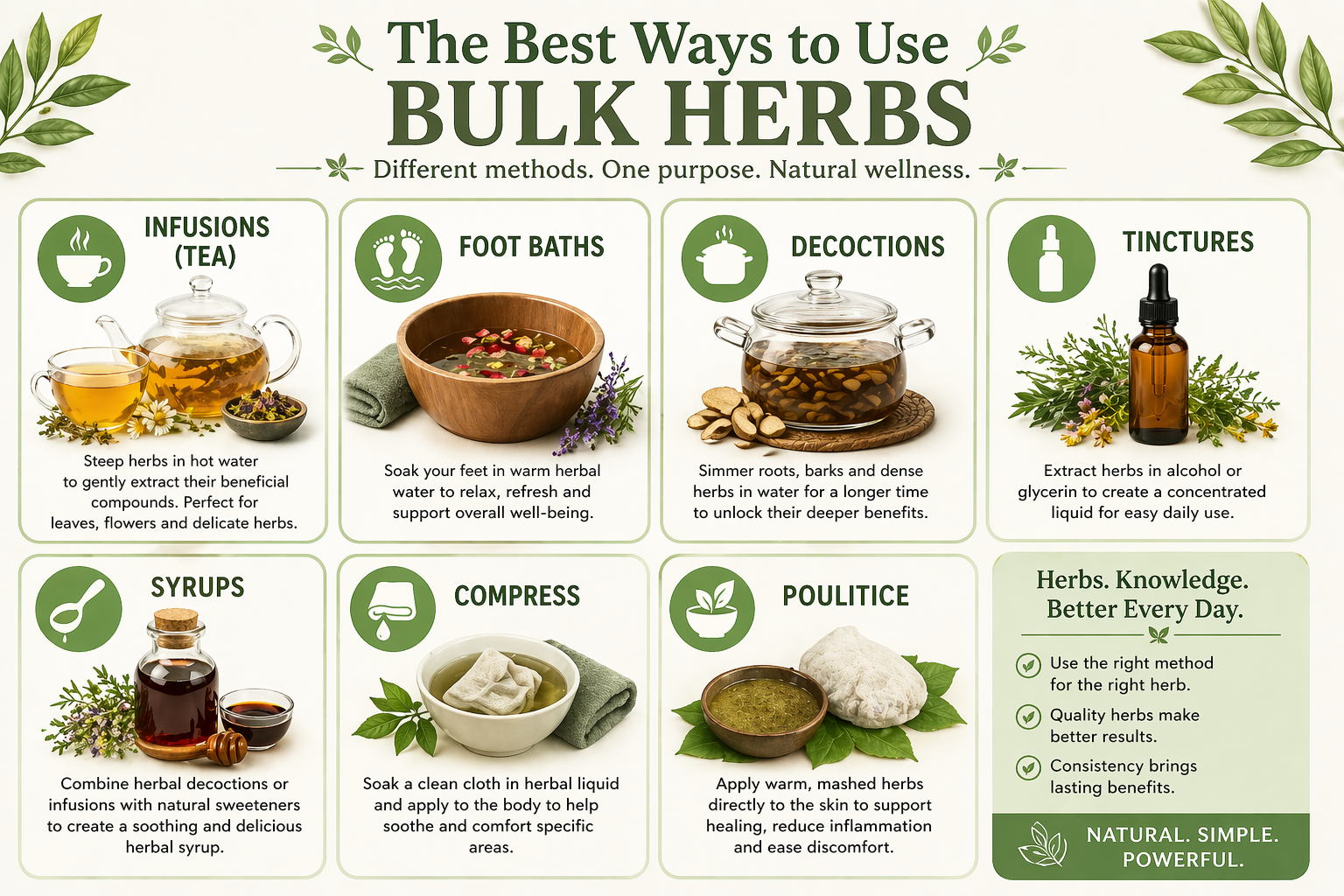
There are several common ways to use Chinese herbs. The best method depends on the herb, your schedule, and your comfort level.
1. Herbal Tea or Infusion
Best for leaves, flowers, light roots, aromatic herbs, and simple daily routines. Pour hot water over the herbs, cover, steep, strain, and sip.
2. Decoction
Best for dense roots, bark, seeds, and mushrooms. Decoctions are simmered longer, usually 20–45 minutes, to extract the herb’s traditional properties.
3. Powders
Powders are convenient and easy to add to warm water, smoothies, or recipes, depending on the herb. They are helpful when you do not want to simmer herbs.
4. Teapills
Teapills are small herbal tablets traditionally used for convenience. They are often chosen by people who want a simple, consistent routine.
5. Extracts
Extract powders are concentrated and convenient. They may be useful for people who want a stronger preparation without cooking raw herbs.
Beginner Herbal Tea Recipe: Morning Digestive Support
This simple tea is a good example of how herbs can be combined in a gentle, practical way.
Ingredients
- 1 teaspoon dried ginger root
- 1 teaspoon dried tangerine peel, also called Chen Pi
- Small pinch of licorice root, optional
- 8–10 ounces hot water
Directions
- Place herbs in a mug or tea infuser.
- Pour hot water over the herbs.
- Cover and steep for 8–10 minutes.
- Strain and sip warm.
Why this combination is traditionally used: Ginger brings warmth, Chen Pi supports Qi movement, and licorice root helps harmonize the blend.
Note: Licorice is not appropriate for everyone, especially those with high blood pressure, kidney concerns, heart conditions, or those taking certain medications. Ask a qualified practitioner if unsure.
How Long Do Chinese Herbs Take to Work?
This depends on the herb, the person, the preparation method, and the goal.
- Aromatic teas may feel soothing the same day.
- Digestive herbs may feel noticeable within days or weeks.
- Tonic herbs are usually used consistently over time.
- Sleep and stress herbs often work best as part of an evening routine.
Herbs are not magic buttons. They are more like gardening tools. Used correctly and consistently, they can support better balance over time.
Common Beginner Mistakes to Avoid
Mistake 1: Buying Too Many Herbs at Once
Start simple. One herb or one formula is easier to understand than a shelf full of mystery bags.
Mistake 2: Choosing Based Only on a Symptom
TCM is pattern-based. Two people with the same complaint may need different herbs.
Mistake 3: Ignoring Quality
Cheap herbs may seem like a bargain until they smell like an old basement and taste like disappointment.
Mistake 4: Expecting Overnight Results
Some herbs are used short-term, but many traditional herbs are meant to support a steady wellness routine.
Mistake 5: Not Checking Safety
Herbs can interact with medications, health conditions, pregnancy, nursing, and surgery preparation. Always check before using if you have concerns.
Are Chinese Herbs Safe?
Chinese herbs can be used safely when chosen carefully, prepared correctly, and used appropriately. Safety depends on the herb, dose, form, quality, and the person using it.
Speak with a qualified healthcare professional before using herbs if you are pregnant, nursing, taking medication, preparing for surgery, managing a medical condition, or buying herbs for a child.
This article is for educational purposes only and is not intended to diagnose, treat, cure, or prevent any disease.
Why Buy Chinese Herbs from 1st Chinese Herbs?
Since 1994, 1st Chinese Herbs has helped customers understand, choose, and use traditional Chinese herbs with more confidence.
- Trusted since 1994
- Lab-tested herbs when available
- COA available upon request when available
- Fast shipping from Washington State
- Clear herb names, including common, Latin, and Pin Yin names
- Beginner-friendly education to help customers use herbs correctly
Our goal is simple: help you stop guessing and start using herbs with more confidence.
Helpful Next Steps
If you are new to Chinese herbs, these pages are good places to continue:
Frequently Asked Questions About Chinese Herbs
What are the best Chinese herbs for beginners?
Common beginner-friendly herbs include ginger, Chen Pi, Astragalus, Chinese Yam, Luo Han Guo, and Reishi. The best choice depends on your goal, constitution, and preparation preference.
What is the easiest way to start using Chinese herbs?
Start with one simple tea, one bulk herb, or one traditional formula. Avoid starting five new herbs at once because it becomes hard to know what is helping.
Are bulk herbs better than powders or teapills?
Not always. Bulk herbs are excellent for traditional teas and decoctions. Powders are convenient. Teapills are simple for routine use. The best form depends on your lifestyle and the herb.
Why do Chinese herbs have so many names?
Many herbs have a common English name, a Pin Yin name, a Latin botanical name, and sometimes a pharmaceutical name. Learning these names helps you buy the correct herb.
How do I know if my herbs are fresh?
Look at color, smell, texture, dryness, and overall appearance. Avoid herbs that smell moldy, feel damp, look dusty, or seem unusually faded.
Can I take Chinese herbs with medication?
Ask your healthcare provider or qualified herbal practitioner before combining herbs with medications.
Can children use Chinese herbs?
Children should only use herbs under guidance from a qualified healthcare professional or trained herbal practitioner.
Do Chinese herbs diagnose or treat disease?
No. Herbs sold as dietary supplements are used to support general wellness and are not intended to diagnose, treat, cure, or prevent disease.
Final Thoughts: Chinese Herbs Do Not Have to Be Confusing
Chinese herbs can seem complicated at first, but the basics are simple. Choose quality herbs. Learn the right preparation method. Start slowly. Stay consistent. Pay attention to how your body responds.
You do not need to become a TCM scholar overnight. You just need a trustworthy starting point.
When used thoughtfully, Chinese herbs can become part of a grounded, practical wellness routine that supports balance, resilience, and everyday vitality.
Get Real Herbs. Feel the Difference.
Shop Trusted Chinese Herbs
Ready to begin? Explore high-quality bulk herbs, powders, mushrooms, and teapills from 1st Chinese Herbs.
Shop Bulk Herbs Shop Herb Powders Shop Teapills
Disclaimer: This information is for educational purposes only. These statements have not been evaluated by the Food and Drug Administration. Products are not intended to diagnose, treat, cure, or prevent any disease.
References
Immune & Seasonal Health
-
Reishi (Ganoderma lucidum): A randomized controlled trial found that β‑glucans from Reishi enhanced immune cell counts—including CD3⁺, CD4⁺, CD8⁺ T‑lymphocytes—and boosted natural killer (NK) cell activity in healthy adults PMC+9PubMed+9PubMed+9. Another study reported polysaccharides from Reishi modulated gut microbiota and immune responses, reducing inflammation and tumorigenesis in the colon PubMed.
Digestive & Gut Support
-
Ginger (Sheng Jiang): In healthy volunteers, ginger significantly accelerated gastric emptying and increased antral contractions, suggesting support for digestive motility PMC+15PubMed+15PubMed+15. A systematic review of clinical trials confirmed that ginger supports relief from functional dyspepsia symptoms and nausea PMC+2PubMed+2.
-
Licorice (Gan Cao): In vitro studies show licorice extract helps maintain intestinal epithelial barrier integrity, which is important for gut lining support PMC+15PMC+15PMC+15. Clinical studies also suggest that licorice (including DGL formulations) displays anti-ulcer effects and supports mucous regulation in the digestive tract PMC+1.
Gut Microbiome & Barrier Function / Immune Support
-
Astragalus (Huang Qi): Reviews indicate astragalus supports intestinal barrier function and immunity by modulating the gut microbiota PubMed+2PubMed+2. In animal models, astragalus polysaccharides (APS) also positively influenced gut immunity and microbiota balance via TLR4/NF-κB pathways and supported recovery from chemotherapy-induced mucosal damage PubMed+2PubMed+2.