
New to Chinese herbs? This beginner guide explains what Chinese herbs are, how herb names work, and how to understand quality so you can shop with confidence and avoid common mistakes. Chinese herbs are natural materials traditionally used in Chinese herbal practice. They may include roots, bark, flowers, seeds, fruits, mushrooms, minerals, and other plant-based ingredients used in teas, decoctions, powders, granules, or formulas. A key point for beginners: Chinese herbs are often used as part of a broader traditional system, not just as isolated ingredients. That is one reason the same herb may appear in different forms or in different traditional combinations. If you are shopping online, the most helpful beginner mindset is to focus on learning: the herb identity, the form, the preparation method, and the quality signals. Chinese herbs are commonly listed using several naming systems. This can feel confusing at first, but it becomes simple once you know what each name means. For safer and smarter shopping, it is best to confirm the botanical identity whenever possible—especially if different plants share similar common names. Not all herbs sold online are equal. Two products may use the same herb name but differ in freshness, cut size, cleanliness, identity verification, handling, and storage conditions. Beginners often search by price alone, but quality and suitability matter just as much. A lower-cost product that is old, poorly stored, or not clearly identified may not be the best value. No. Chinese herbal materials can include roots, bark, flowers, seeds, fruits, mushrooms, and other ingredients used in traditional herbal preparations. Many herbs are listed by Pin Yin, common English names, and botanical names. Each name type helps identify the herb from a different perspective. Start with herb identity (name/species), herb form (cut/powder/granules/teapills), and preparation basics. Those three areas prevent most beginner mistakes. Understanding Chinese herbs is the first step to using them with confidence. Explore our beginner resources to learn how to choose herb forms, prepare herbs at home, and buy herbs safely.Understanding Chinese Herbs: A Beginner’s Guide to Names, Uses, and Quality
What Chinese Herbs Are
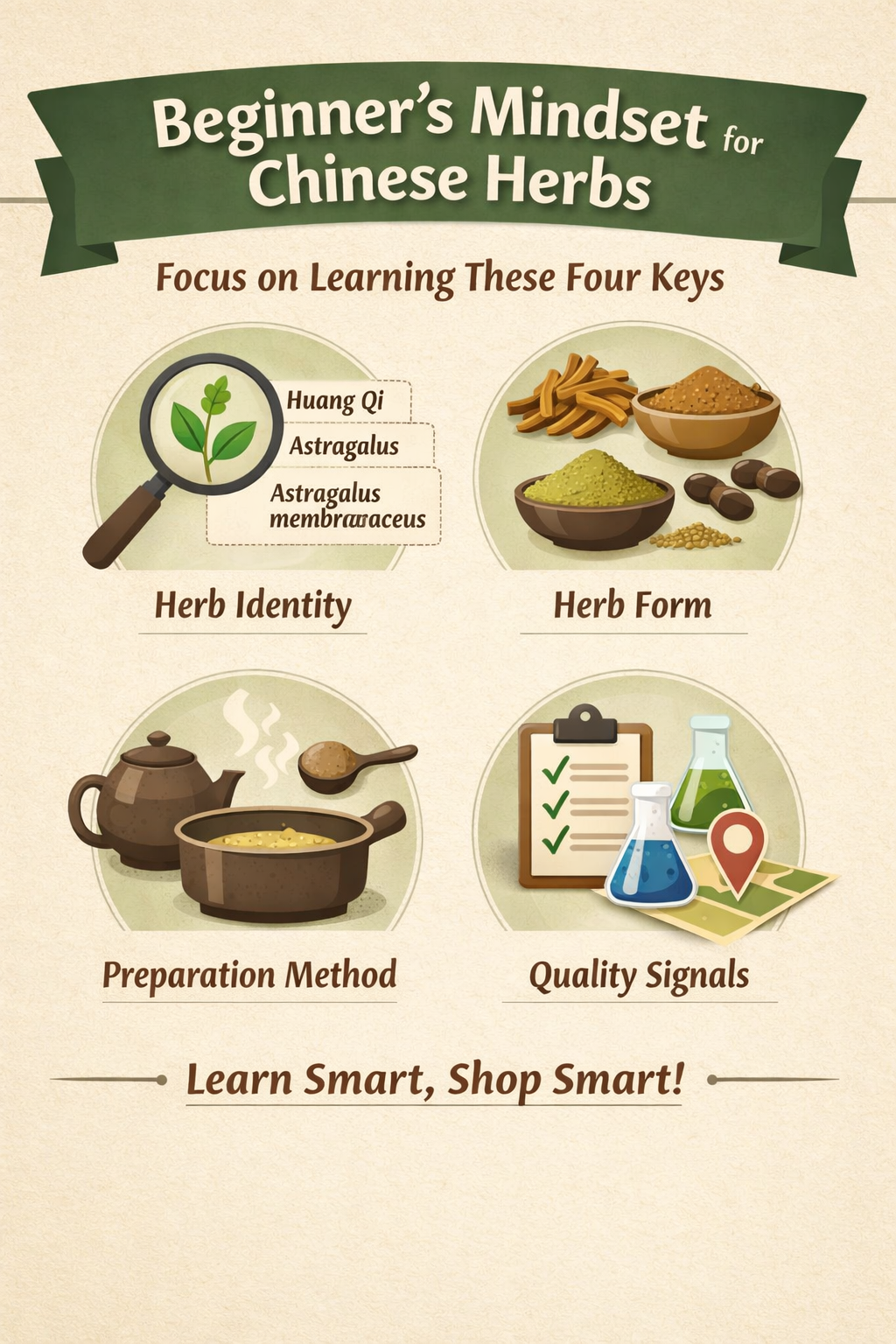
How Chinese Herb Names Work (Why One Herb Can Have Multiple Names)
Why Herb Quality Matters
Quality Signals Beginners Should Look For
Common Beginner Mistakes When Learning Chinese Herbs
How to Start as a Beginner (Simple Step-by-Step)
Recommended Next Steps
Beginner FAQ: Understanding Chinese Herbs
Are Chinese herbs only roots?
Why do Chinese herbs have so many names?
What is the most important thing for beginners to learn first?
Start Smarter, Shop Smarter
References
Safety surveillance of traditional Chinese medicine PubMed: https://pubmed.ncbi.nlm.nih.gov/25647717/ PMID: 25647717