
Chinese Herb Taste Guide
What Does This Chinese Herb Actually Taste Like?
Let's Make This Easy!
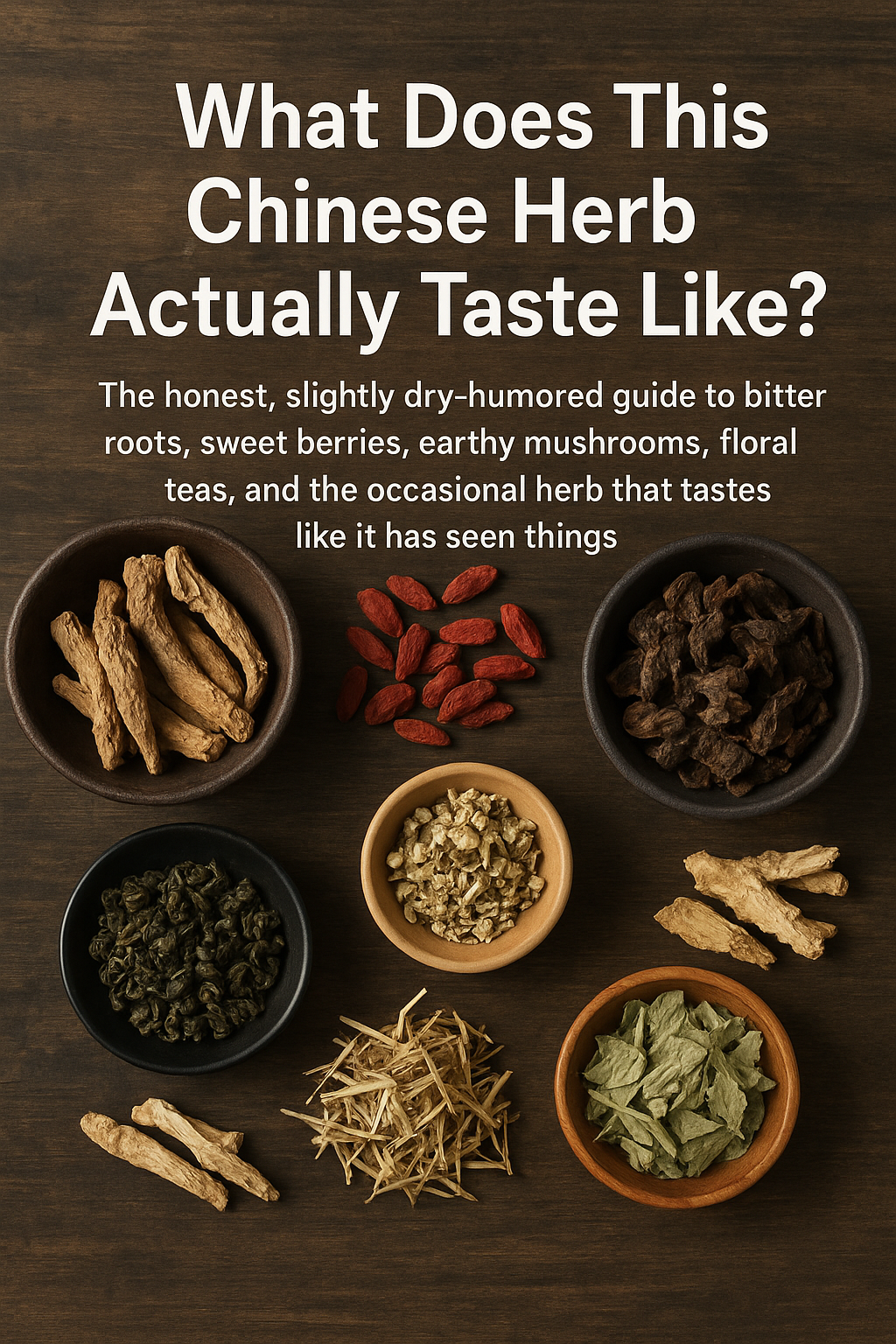
The honest, slightly dry-humored guide (because some herbal flavors practically demand a sense of humor) to bitter roots, sweet berries, earthy mushrooms, floral teas, and the occasional herb that tastes like it has survived several dynasties and has stories to tell.
If you have ever wondered whether a Chinese herb tastes bitter, earthy, sweet, smoky, fishy, grassy, or like something scraped from a wizard’s cabinet, you are not alone. Taste is one of the biggest reasons people hesitate to buy herbs.
Get Real Herbs. Feel the Difference.
Quick Answer: What Do Chinese Herbs Taste Like?
Chinese herbs can taste bitter, sweet, earthy, floral, aromatic, smoky, sour, bland, or mineral-rich depending on the plant part, preparation method, and freshness. Roots and bark are often deeper and earthier, flowers are usually lighter and more aromatic, berries may be naturally sweet, and some clearing herbs are famously bitter.
Why Taste Matters More Than You Realize
Most herb websites tell you what an herb is “traditionally used for,” but not what happens when it hits your tongue. That is a problem. Nobody wants to order a pound of roots and discover the tea tastes like a forest floor having a midlife crisis.
Taste matters because it affects whether people actually use the herbs they buy. A high-quality herb sitting untouched in a cabinet is not helping anyone. It is just expensive pantry decor.
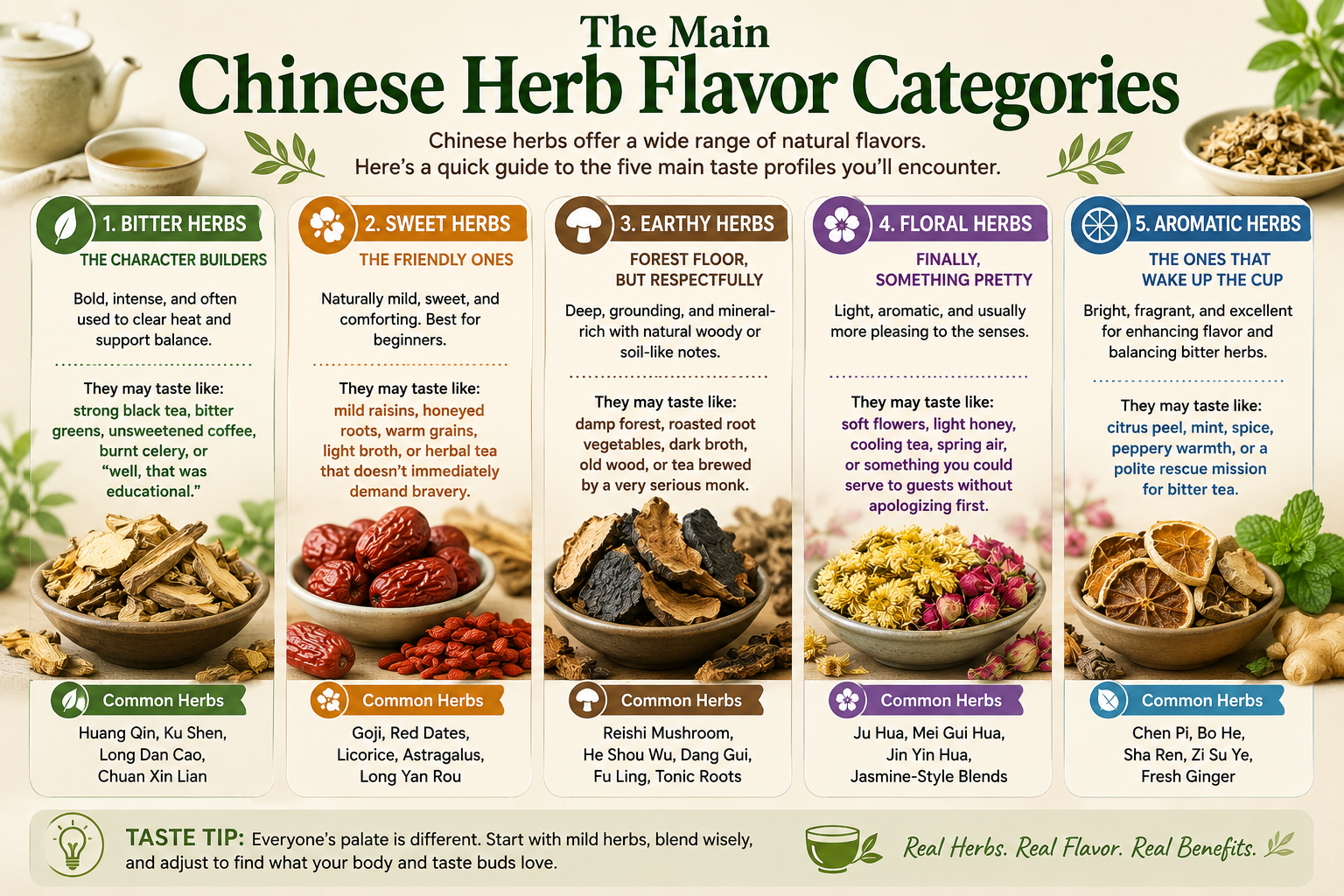
The Main Chinese Herb Flavor Categories
1. Bitter Herbs: The Character Builders
Bitter herbs are the ones that make people pause after the first sip and reconsider every decision that led them to this moment. In Traditional Chinese Medicine, bitter flavor is often associated with clearing, drying, and descending actions.
Common bitter herbs include: Huang Qin, Ku Shen, Long Dan Cao, Chuan Xin Lian, and some heat-clearing herbs.
They may taste like: strong black tea, bitter greens, unsweetened coffee, burnt celery, or “well, that was educational.”
2. Sweet Herbs: The Friendly Ones
Some Chinese herbs are naturally mild, sweet, or gently comforting. These are usually the herbs beginners tolerate best.
Common sweet or mild herbs include: Gou Qi Zi, Da Zao, Gan Cao, Huang Qi, and Long Yan Rou.
They may taste like: mild raisins, honeyed roots, warm grains, light broth, or herbal tea that does not immediately demand bravery.
3. Earthy Herbs: Forest Floor, But Respectfully
Earthy herbs are deep, grounding, and sometimes misunderstood. Many roots, mushrooms, and prepared herbs naturally have mineral-rich, soil-like, woody, or roasted notes.
Common earthy herbs include: Reishi mushroom, He Shou Wu, Dang Gui, Fu Ling, and certain tonic roots.
They may taste like: damp forest, roasted root vegetables, dark broth, old wood, or tea brewed by a very serious monk.
4. Floral Herbs: Finally, Something Pretty
Floral herbs are usually more beginner-friendly. They often smell pleasant, taste lighter, and work beautifully in teas.
Common floral herbs include: Ju Hua, Mei Gui Hua, Jin Yin Hua, and jasmine-style blends.
They may taste like: soft flowers, light honey, cooling tea, spring air, or something you could serve to guests without apologizing first.
5. Aromatic Herbs: The Ones That Wake Up the Cup
Aromatic herbs can make blends taste brighter and more pleasant. These are excellent for improving difficult teas.
Common aromatic herbs include: Chen Pi, Bo He, Sha Ren, Zi Su Ye, and fresh ginger.
They may taste like: citrus peel, mint, spice, peppery warmth, or a polite rescue mission for bitter tea.
Chinese Herb Taste Comparison Chart
| Taste Type | Common Herbs | Best For Beginners? | How To Improve Flavor |
|---|---|---|---|
| Bitter | Huang Qin, Ku Shen, Chuan Xin Lian | Usually no | Blend with red dates, licorice, or citrus peel |
| Sweet | Goji, Red Dates, Licorice, Astragalus | Yes | Use alone or blend with stronger herbs |
| Earthy | Reishi, He Shou Wu, Fu Ling | Sometimes | Add ginger, cinnamon, or citrus peel |
| Floral | Chrysanthemum, Rose, Honeysuckle | Yes | Steep gently and avoid overboiling |
How To Make Chinese Herbs Taste Better
The goal is not to turn Chinese herbs into candy. The goal is to make them easier to enjoy so you actually use them. This is not betrayal. This is strategy.
- Add red dates: Great for softening bitter or earthy teas.
- Add licorice root: Naturally sweet and often used in formulas to harmonize flavor.
- Use Chen Pi: Citrus peel helps brighten heavy, damp, earthy flavors.
- Try ginger: Adds warmth and makes some blends feel more comforting.
- Do not overboil flowers: Flowers are delicate. They are not construction lumber.
- Use fresh herbs: Old herbs may taste flat, dusty, or stale.
- Try iced herbal tea: Some herbs taste smoother chilled.
Beginner-Friendly Chinese Herbs That Usually Taste Better
If you are new to Chinese herbs, start with herbs that are naturally mild, sweet, floral, or aromatic. There is no need to begin your herbal journey with the most bitter root in the building. That is not bravery. That is poor onboarding.
- Goji Berries: Sweet, fruity, and easy to add to tea or food.
- Red Dates: Warm, sweet, comforting, and excellent in tea blends.
- Chrysanthemum Flower: Light, floral, cooling, and pleasant.
- Rose Buds: Fragrant and beautiful in blends.
- Astragalus Root: Mild, slightly sweet, and broth-like.
- Licorice Root: Naturally sweet and often used in formulas.
What Fresh Chinese Herbs Should Taste Like
Fresh, properly stored herbs usually have a clearer aroma, stronger identity, better color, and more noticeable taste. Old herbs may taste dusty, flat, cardboard-like, or lifeless.
A good herb should make you think, “That smells real.” It should not make you wonder whether it spent six years next to a lawn mower in someone’s garage.
Best Herbs To Blend With Bitter Chinese Herbs
If bitter herbs are too intense, try pairing them with herbs that improve flavor without turning the blend into dessert.
| Flavor Problem | Try Adding | Why It Helps |
|---|---|---|
| Too bitter | Red Dates or Licorice Root | Adds natural sweetness and softness |
| Too earthy | Chen Pi or Ginger | Brightens and warms the flavor |
| Too floral/perfumey | Goji or Red Dates | Balances aroma with mild sweetness |
| Too bland | Fresh Ginger or Citrus Peel | Adds aroma and flavor structure |
Related Guides
Frequently Asked Questions
Do Chinese herbs taste bad?
Some Chinese herbs taste bitter, earthy, or strong, but many are mild, sweet, floral, or pleasant when prepared correctly.
Which Chinese herbs taste best for beginners?
Goji berries, red dates, chrysanthemum flower, rose buds, licorice root, and astragalus are often easier for beginners because they are naturally mild or sweet.
Why are some Chinese herbs bitter?
Many bitter herbs naturally contain plant compounds that give them a strong taste. In Traditional Chinese Medicine, bitter flavor is often associated with clearing, drying, and descending actions.
Can I mix Chinese herbs to improve taste?
Yes. Many people blend stronger herbs with red dates, licorice root, ginger, citrus peel, goji berries, or flowers to improve flavor.
Why does my herbal tea taste weak?
Weak tea may be caused by too little herb, short brewing time, old herbs, poor water temperature, or using the wrong preparation method for that herb type.
Ready To Try Real Chinese Herbs?
Start with beginner-friendly herbs, learn how to prepare them correctly, and choose fresh, quality-tested herbs from a trusted source.
Disclaimer: This information is for educational purposes only and is not intended to diagnose, treat, cure, or prevent any disease. Consult a qualified healthcare professional before using herbs, especially if pregnant, nursing, taking medication, or managing a health condition.
About the Author
Sarah Johnson has worked with Chinese herbs, bulk herbs, traditional herbal preparation methods, and herbal education for decades through 1st Chinese Herbs, a family-owned herbal company serving customers since 1994.