
Which Chinese Herbs Pair Well Together? Simple Herbal Tea Combinations That Actually Taste Good
Most People Make Herb Pairing Harder Than It Needs To Be
After helping customers choose herbs for more than 30 years, I've noticed something interesting.
Most beginners assume they need to learn hundreds of herbs before they can make a good cup of tea.
They imagine complicated formulas. Long ingredient lists. Special equipment. Ancient secrets.
Then the herbs arrive, the kettle starts boiling, and the real question appears:
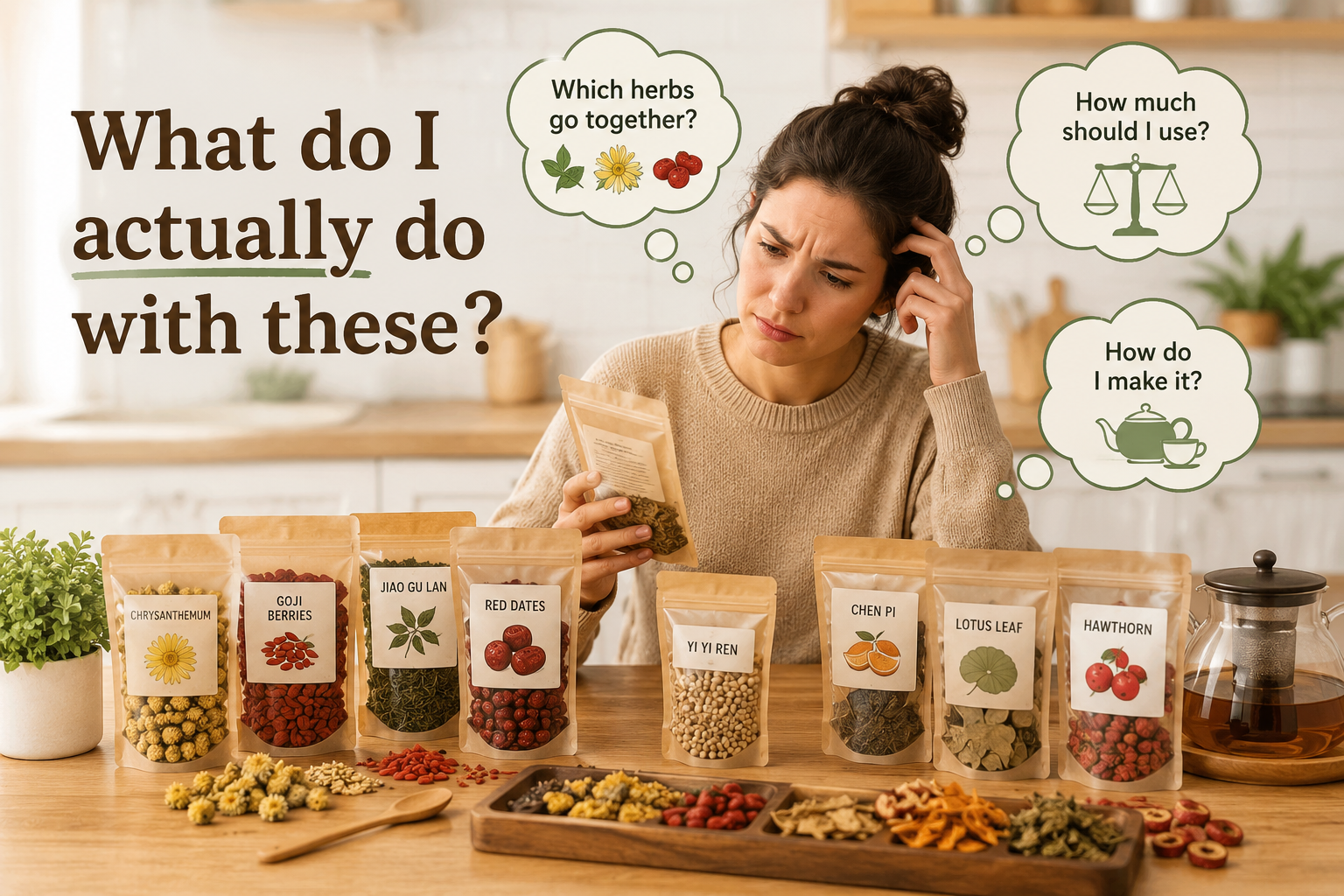
"What do I actually do with these?"
The answer is usually much simpler than people expect.
Many of the most enjoyable herbal teas contain only two ingredients.
Not ten. Not fifteen. Just two herbs that happen to complement each other.
Think about coffee and cream. Fresh bread and butter. Apples and cinnamon.
The ingredients are good by themselves.
The combination is even better. Herbs often work exactly the same way.
Why These Pairings Made This Guide
The combinations below were not chosen because they're trendy.
They were chosen because they are approachable.
Over the years, these are the kinds of pairings that beginners consistently enjoy and return to.
Some add sweetness. Some add freshness. Some soften stronger flavors.
Most importantly, they make herbal tea feel less intimidating.
Because if a tea tastes enjoyable, you're much more likely to make it again tomorrow.
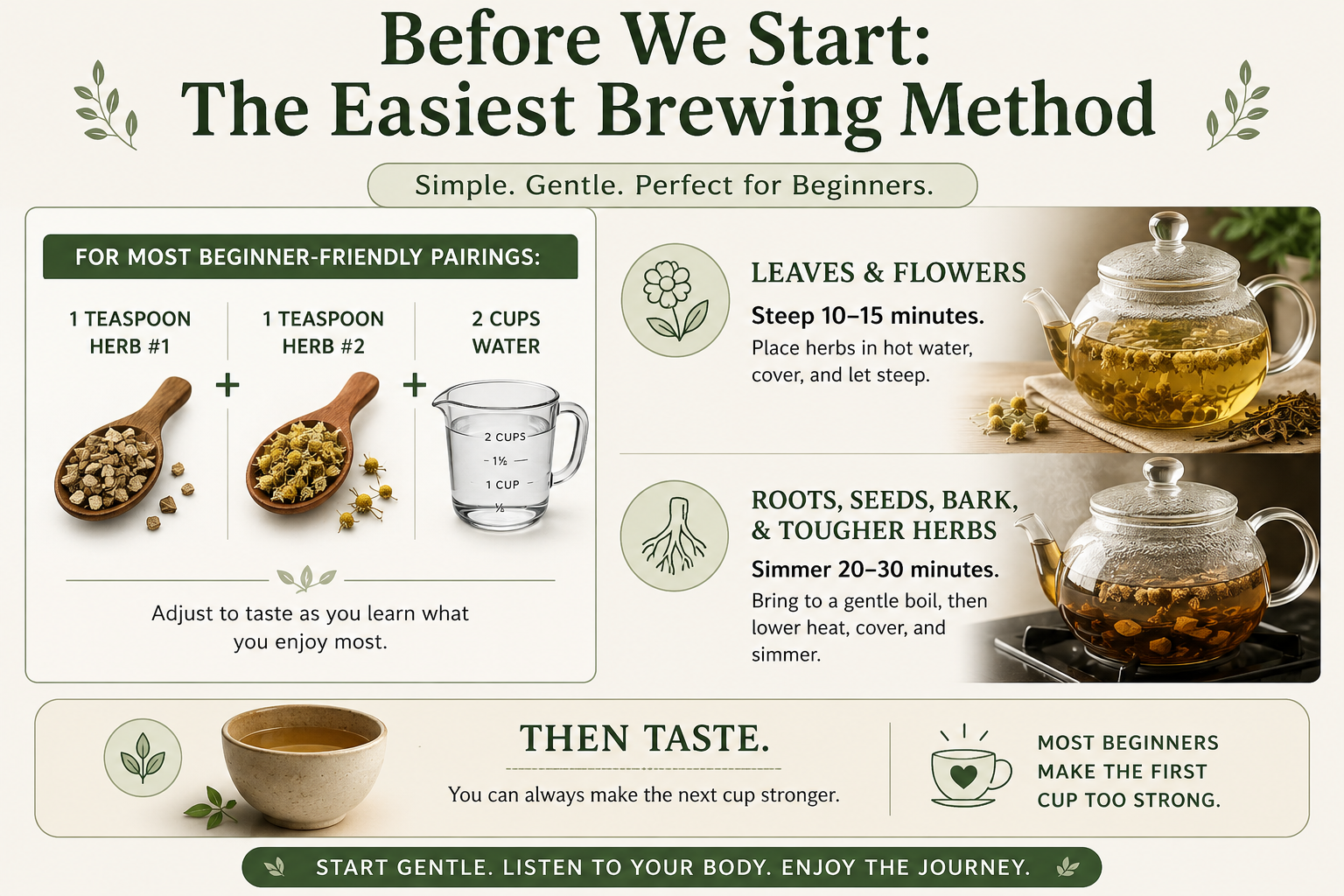
Before We Start: The Easiest Brewing Method
For most beginner-friendly pairings:
-
1 teaspoon Herb #1
-
1 teaspoon Herb #2
-
2 cups water
For leaves and flowers, steep 10–15 minutes.
For roots, seeds, bark, and tougher herbs, simmer 20–30 minutes.
Then taste.
You can always make the next cup stronger.
Most beginners make the first cup too strong.
If You've Never Paired Herbs Before, Start Here
If you're standing in your kitchen wondering which combination to try first, start with one of these:
Yi Yi Ren + Red Dates
Comforting and naturally sweet.
Mulberry Leaf + Chrysanthemum
Light, refreshing, and tea-like.
Honeysuckle + Mint
Fresh, cooling, and excellent hot or iced.
These three pairings consistently receive some of the best feedback from beginners because they are easy to enjoy.
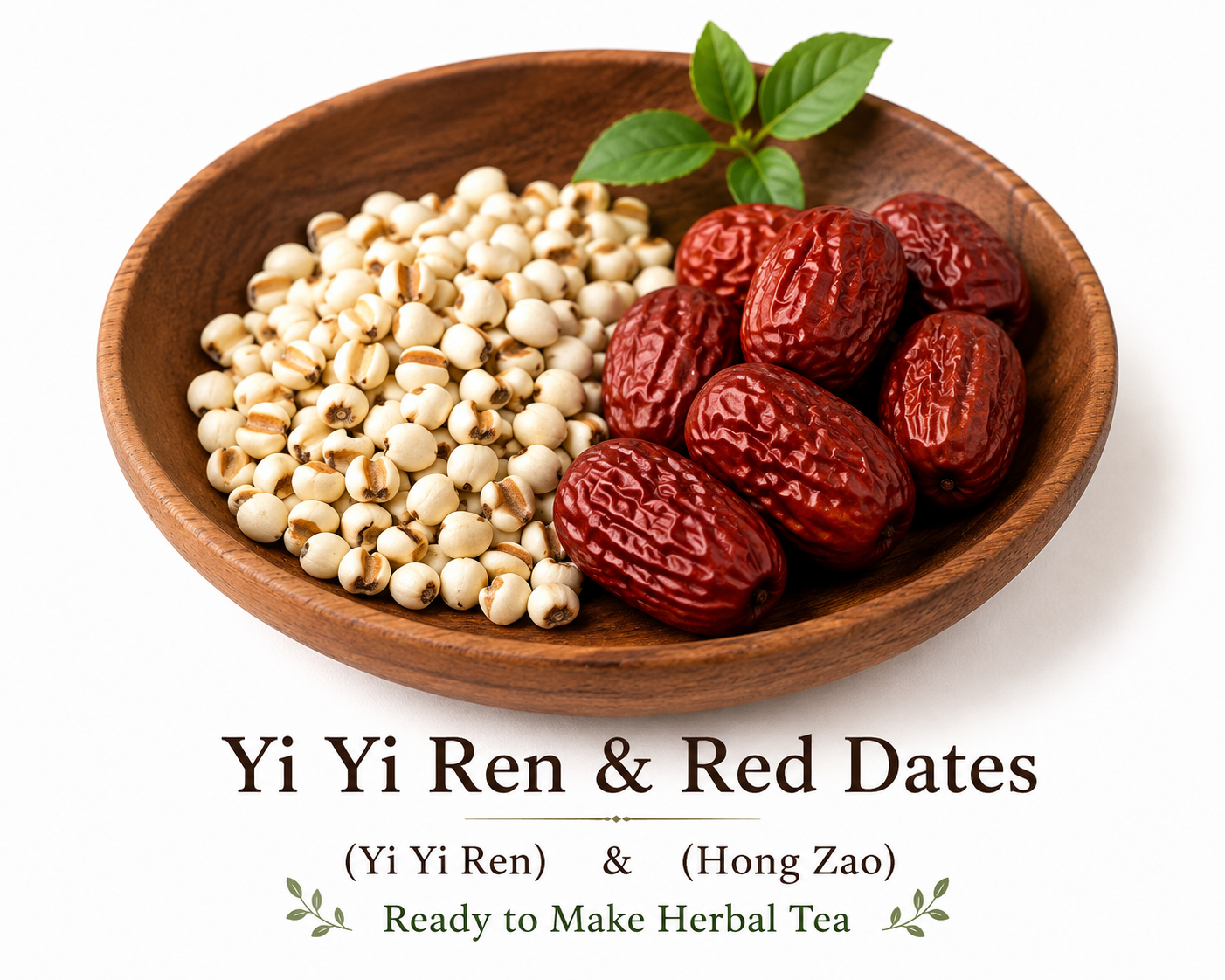 Yi Yi Ren + Red Dates
The Blend That Changes People's Minds About Herbal Tea
Most people expect herbal tea to taste medicinal.
This pairing often surprises them.
Yi Yi Ren has a gentle grain-like flavor that many people compare to barley tea.
Red Dates contribute notes of honey, raisins, baked apples, and caramel.
Together they create a tea that feels warm, familiar, and comforting.
Flavor Profile
Sweetness: ★★★★☆
Bitterness: ★☆☆☆☆
Comfort Factor: ★★★★★
Beginner Friendly: ★★★★★
Who Usually Loves This Pairing?
-
People who dislike bitter teas
-
Coffee drinkers looking for something gentler
-
Anyone who enjoys barley tea
-
Complete beginners
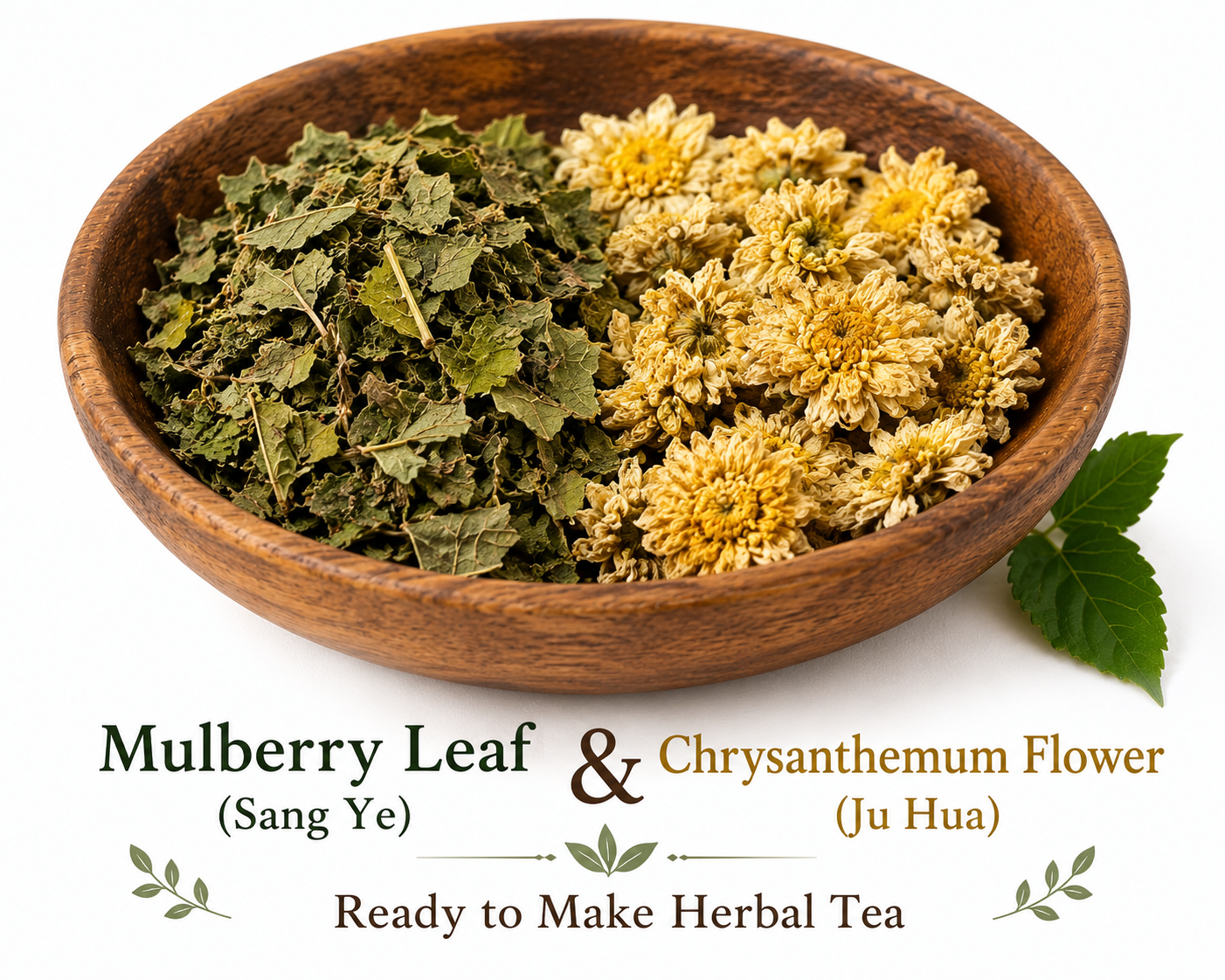 Mulberry Leaf + Chrysanthemum
The Pairing Tea Drinkers Usually Fall In Love With
Many herbal teas feel very different from traditional tea.
This one doesn't.
Mulberry Leaf contributes a clean, green quality.
Chrysanthemum adds a soft floral note.
Neither herb overwhelms the other.
The result feels balanced, refreshing, and surprisingly refined.
Flavor Profile
Sweetness: ★★☆☆☆
Freshness: ★★★★☆
Bitterness: ★☆☆☆☆
Beginner Friendly: ★★★★★
Who Usually Loves This Pairing?
-
Green tea drinkers
-
Jasmine tea lovers
-
Spring and summer tea drinkers
-
People who prefer lighter flavors
- On a personal note: I adjusted this combination the most by adding 1/2 more scoops of the chrysanthemum flower. For me, it made it a much more refreshing drink
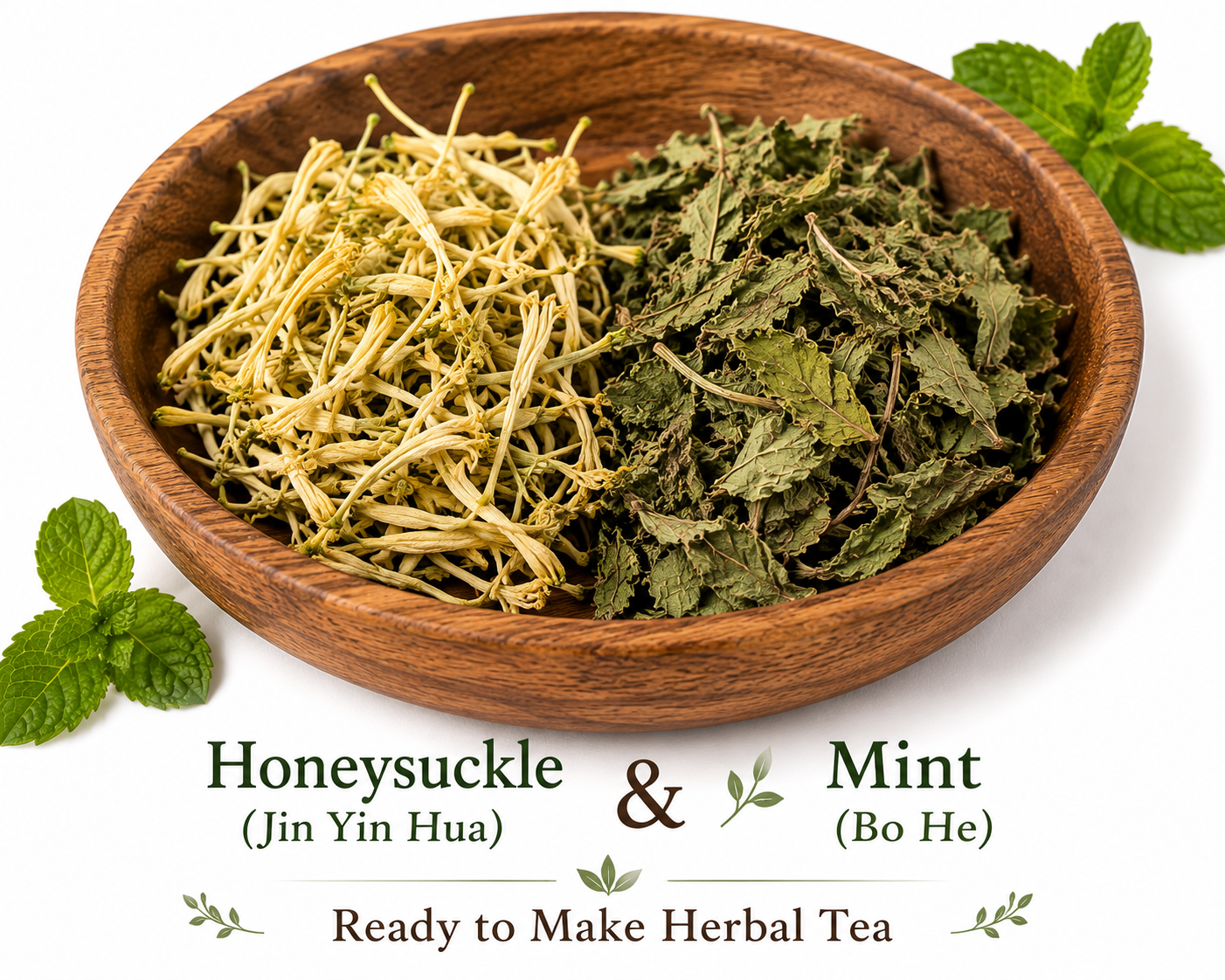 Honeysuckle + Mint
The Summer Garden Pairing
Every summer someone decides they want to drink less soda.
Then they discover plain water gets boring.
This pairing often becomes the solution.
Mint contributes freshness.
Honeysuckle contributes gentle sweetness.
Together they create a bright, refreshing tea that tastes wonderful served over ice.
Flavor Profile
Freshness: ★★★★★
Sweetness: ★★★☆☆
Bitterness: ★☆☆☆☆
Beginner Friendly: ★★★★★
Who Usually Loves This Pairing?
-
Iced tea drinkers
-
Mint lovers
-
People trying to reduce sugary beverages
-
Anyone looking for a summer tea
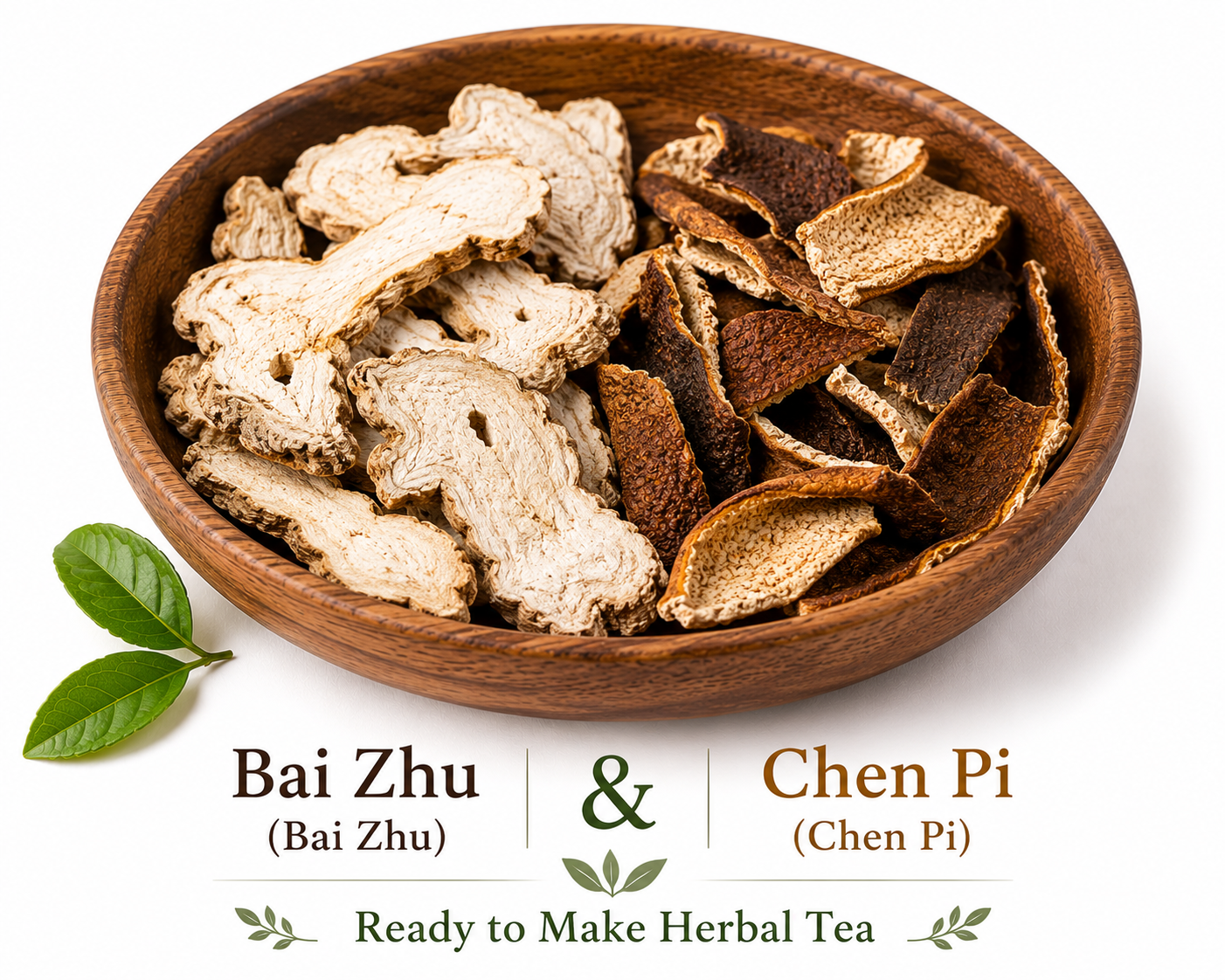 Bai Zhu + Chen Pi
The Pairing That Surprises Almost Everyone
Most people see an earthy root and dried citrus peel and assume the tea will taste medicinal.
Then they smell it.
The aroma is often the first surprise.
Bai Zhu contributes warmth and depth.
Chen Pi contributes bright citrus oils and orange peel aroma.
Many people compare the scent to orange zest and freshly baked bread.
Flavor Profile
Sweetness: ★★☆☆☆
Citrus Notes: ★★★★★
Bitterness: ★★☆☆☆
Beginner Friendly: ★★★★☆
Who Usually Loves This Pairing?
-
Citrus lovers
-
Bakers
-
People who enjoy cozy aromas
-
Tea drinkers looking for something different
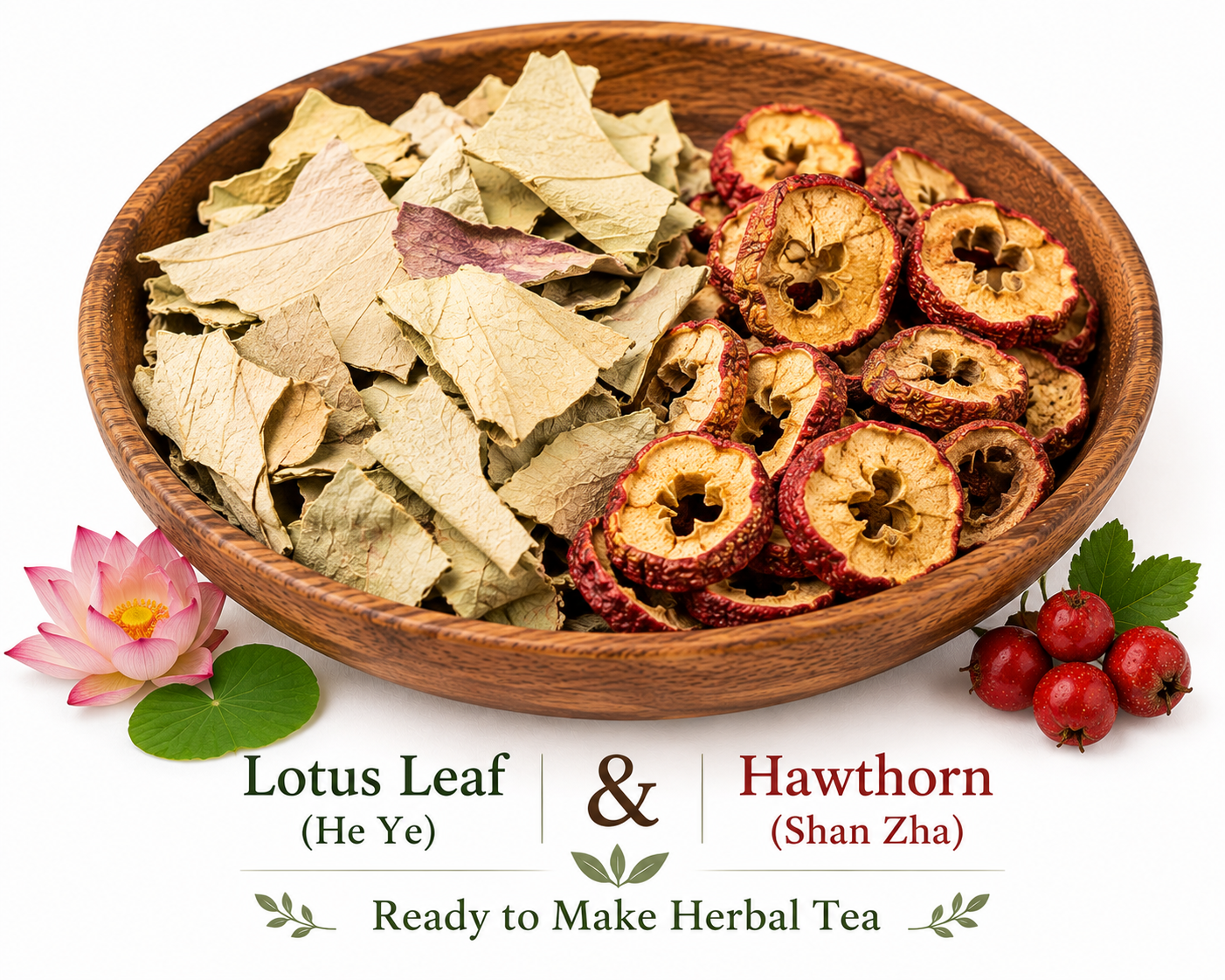 Lotus Leaf + Hawthorn
The Pairing That Doesn't Taste Like Herbs
If this tea is served cold, many people assume it's a fruit tea.
Lotus Leaf contributes freshness.
Hawthorn contributes bright tart fruit notes.
The result is refreshing, crisp, and surprisingly easy to drink.
Flavor Profile
Fruitiness: ★★★★★
Freshness: ★★★★☆
Bitterness: ★☆☆☆☆
Beginner Friendly: ★★★★★
Who Usually Loves This Pairing?
-
Fruit tea lovers
-
Summer tea drinkers
-
Iced tea enthusiasts
-
People who dislike heavy herbal flavors
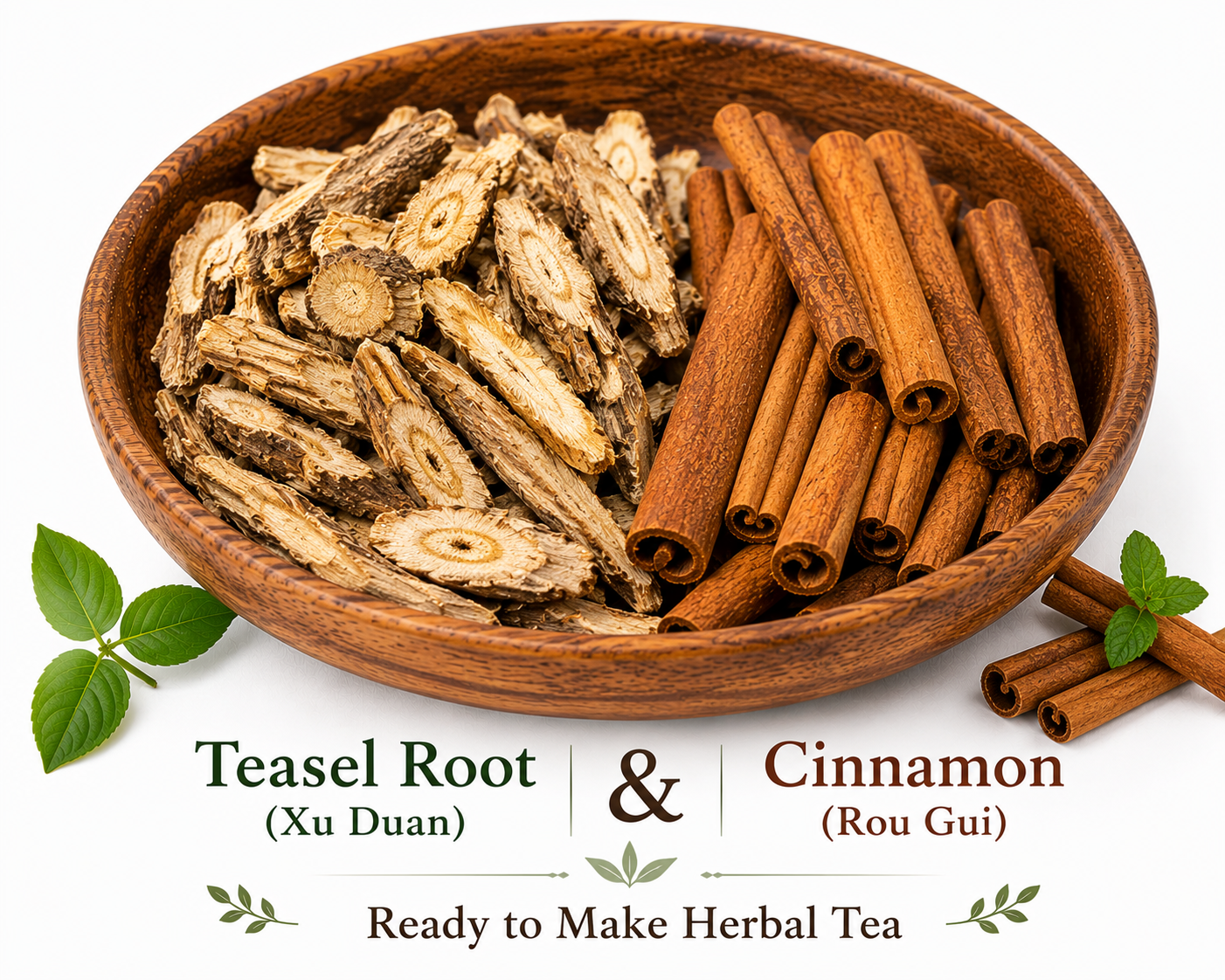 Teasel Root + Cinnamon
Autumn In A Mug
Some teas remind you of a season.
This is one of them.
Teasel Root contributes earthy depth.
Cinnamon contributes warmth and familiarity.
Together they create a tea that feels like cool mornings, falling leaves, and a favorite sweater.
Flavor Profile
Warmth: ★★★★★
Sweetness: ★★☆☆☆
Bitterness: ★☆☆☆☆
Beginner Friendly: ★★★★☆
Who Usually Loves This Pairing?
-
Coffee drinkers
-
Cinnamon lovers
-
Cool-weather tea drinkers
-
Comfort tea enthusiasts
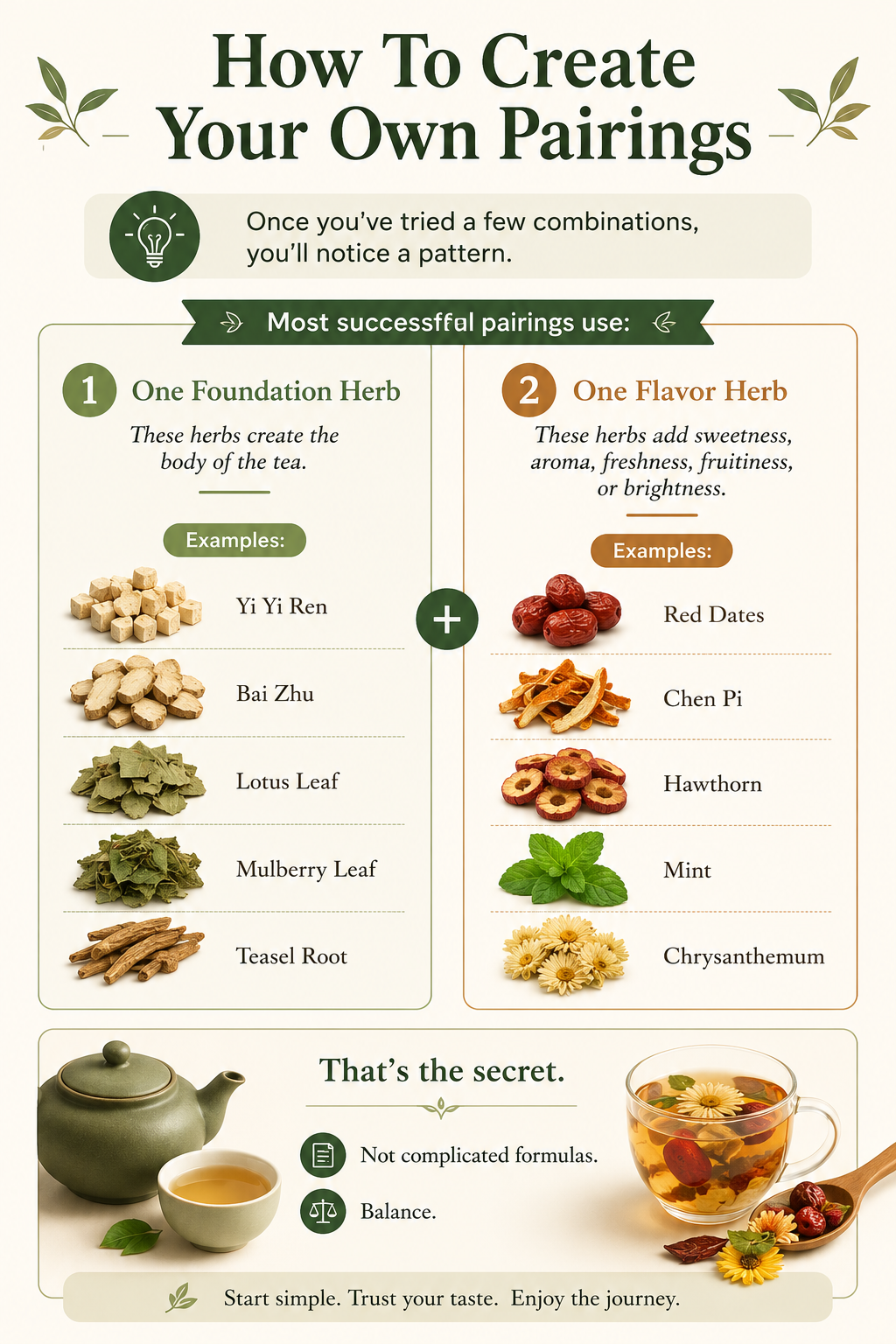
How To Create Your Own Pairings
Once you've tried a few combinations, you'll notice a pattern.
Most successful pairings use:
One Foundation Herb
Examples:
-
Yi Yi Ren
-
Bai Zhu
-
Lotus Leaf
-
Mulberry Leaf
-
Teasel Root
These herbs create the body of the tea.
One Flavor Herb
Examples:
-
Red Dates
-
Chen Pi
-
Hawthorn
-
Mint
-
Chrysanthemum
These herbs add sweetness, aroma, freshness, fruitiness, or brightness.
That's the secret.
Not complicated formulas.
Balance.
Herb Pairing Matchmaker
Already have herbs at home?
Use this quick-reference guide.
| Herb You Have | Pair It With | Flavor Result |
|---|---|---|
| Yi Yi Ren | Red Dates | Comforting grain tea |
| Bai Zhu | Chen Pi | Citrus and earthy |
| Hawthorn | Lotus Leaf | Tart fruit tea |
| Chrysanthemum | Goji Berry | Floral and fruity |
| Honeysuckle | Mint | Refreshing summer tea |
| Jiao Gu Lan | Goji Berry | Green tea with fruit notes |
| Reishi | Cinnamon | Warm and earthy |
| Dan Shen | Hawthorn | Complex fruit-herb blend |
| Shan Yao | Red Dates | Mild and comforting |
| Tu Fu Ling | Chen Pi | Fresh citrus herbal tea |
Quick Rule
If an herb tastes:
-
Earthy → Pair with Chen Pi
-
Bitter → Pair with Red Dates or Goji Berry
-
Floral → Pair with Hawthorn or Goji Berry
-
Fruity → Pair with Chrysanthemum
-
Mild → Pair with almost anything
Not Every Pairing Is A Winner
Every herbal tea drinker eventually creates a blend that sounded amazing and tasted terrible.
That's normal.
It's also why I encourage beginners to start with two herbs instead of six.
Simple combinations teach you more.
And they're usually much easier to enjoy.
Frequently Asked Questions
Can Chinese herbs be mixed together?
Yes. Many herbs are traditionally combined, and some pairings create more enjoyable flavor profiles than either herb alone.
How many herbs should beginners start with?
Two herbs are usually enough. Simpler combinations help you understand what each herb contributes.
Which pairing is easiest for beginners?
Yi Yi Ren and Red Dates is often one of the easiest and most approachable combinations.
Which pairing tastes most like tea?
Mulberry Leaf and Chrysanthemum is often a favorite among tea drinkers.
Which pairing works best as iced tea?
Lotus Leaf and Hawthorn or Honeysuckle and Mint are excellent choices.
What herb helps soften bitter flavors?
Red Dates and Goji Berry are often used to make stronger herbs more approachable.
Can I combine more than two herbs?
Absolutely. However, starting with two herbs makes it easier to learn what each ingredient contributes.
Do I need special equipment?
No. A simple kettle, pot, or tea infuser is enough for most beginner-friendly teas.
Start With One Cup
You don't need fifty herbs.
You don't need a complicated formula.
You don't need years of experience.
Choose one pairing.
Brew one cup.
See what happens.
Most people don't become interested in herbs because they read about them.
They become interested because they find one tea they genuinely enjoy.
Start there.
About The Author
Sarah Johnson
Certified Herbalist | Trusted Since 1994
For more than three decades, Sarah has helped customers explore Chinese herbs with confidence through 1st Chinese Herbs.
One lesson has remained constant:
People don't need more confusion.
They need practical guidance that helps them enjoy the herbs they purchase.
Because the best herbal tea isn't the most complicated one.
It's the one you're excited to make again tomorrow.