
Beginner-Friendly Guide • Traditional Chinese Herbs • Trusted Since 1994
Astragalus Root Explained: Benefits, Uses, Tea, Powders & Traditional Preparation
Astragalus Root, also known as Huang Qi, is one of the most beginner-friendly Chinese herbs because it is mild, versatile, and easy to use in everyday routines.
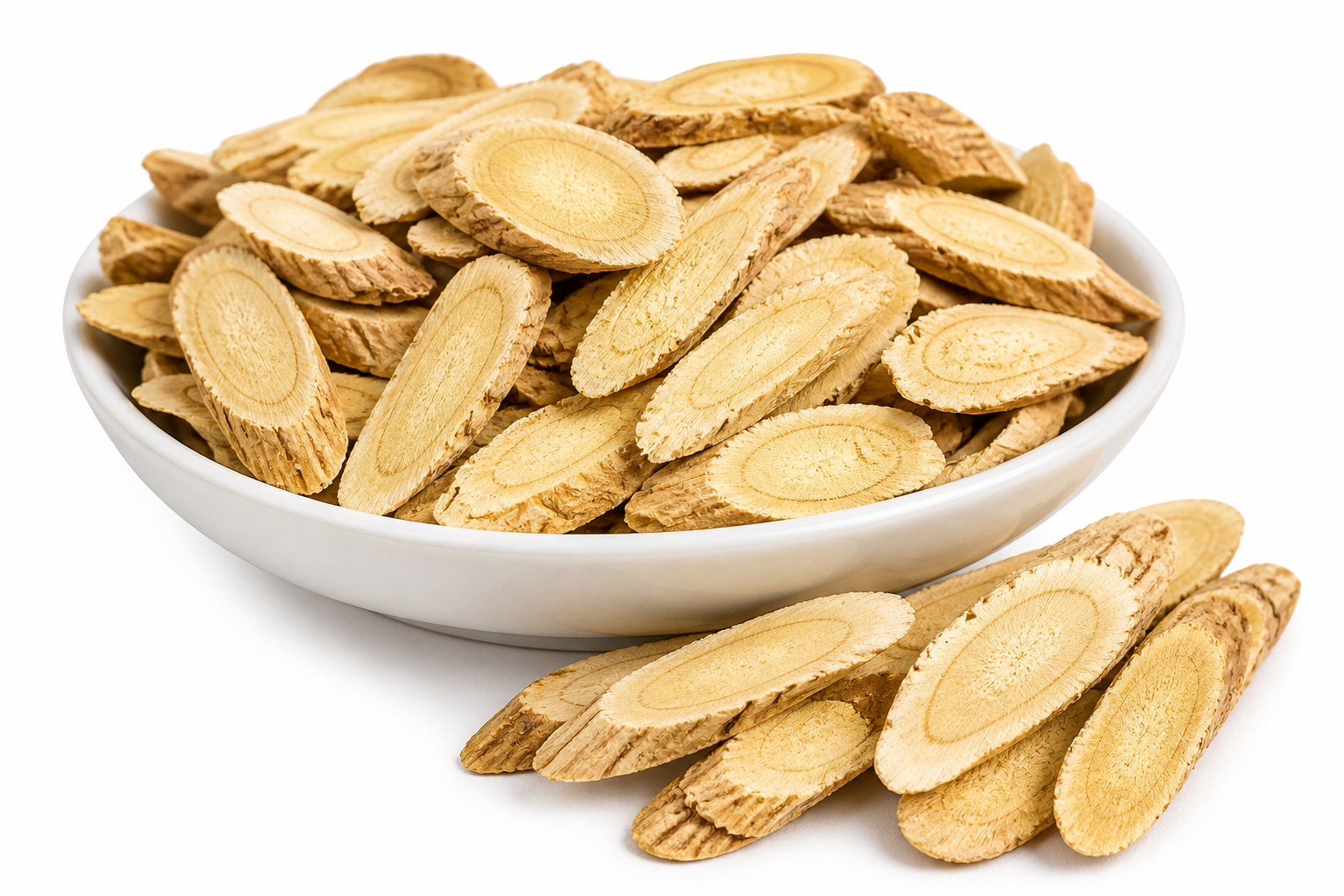
Some herbs feel intimidating. Astragalus usually does not. It works its way into people’s lives through soups, teas, broths, powders, extracts, and simple daily wellness routines.
Astragalus has remained popular for centuries because it is practical. You do not need a complicated herbal setup, a mysterious cabinet full of jars, or a kitchen that looks like a wizard moved in. You just need to understand which form fits your life and how to prepare it correctly.
Quick Answer: What Is Astragalus Root Used For?
Astragalus Root is traditionally used in Chinese herbal systems as a Qi tonic herb. It is commonly prepared as tea, soup, broth, decoction, powder, or extract as part of long-term wellness routines.
People are often drawn to Astragalus because it is mild, slightly sweet, easy to prepare, and pairs well with other herbs. It is especially popular with beginners because it does not have the harsh bitterness that makes some traditional herbs harder to enjoy.
Quick Facts About Astragalus Root
| Chinese Name | Huang Qi |
| Latin Name | Astragalus membranaceus |
| Traditional Category | Qi Tonic Herb |
| Flavor | Mildly sweet, earthy, root-like |
| Temperature | Slightly warm |
| Common Forms | Sliced root, tea cut, powder, extract powder |
| Best For | Soups, teas, decoctions, broths, smoothies, daily herbal routines |
Why Astragalus Has Become So Popular
Astragalus sits in a unique place in the herbal world. It is traditional, easy to use, and flexible enough for both old-fashioned soup making and modern powder routines.
Many people first discover Astragalus through Chinese herbal wellness, adaptogen discussions, seasonal routines, Lyme-related herbal communities, or simple soup recipes. What keeps people interested is how easy it is to use consistently.
Consistency matters with herbs. The best herb is not always the most exotic one. Sometimes it is the one you will actually remember to use.
Astragalus Root In Traditional Chinese Medicine
In Traditional Chinese Medicine, Astragalus Root is known as Huang Qi. It is traditionally categorized as a Qi tonic herb and is often associated with supporting Wei Qi, commonly translated as “protective Qi.”
In TCM theory, Qi is the body’s vital energy. When herbs like Astragalus are discussed traditionally, they are often connected with long-term support, resilience, and strengthening routines rather than quick, dramatic effects.
| TCM Name | Huang Qi |
| Category | Tonify Qi |
| Meridians | Lung and Spleen |
| Taste | Sweet |
| Temperature | Slightly warm |
What Does Astragalus Taste Like?
Astragalus has a mild earthy flavor with a slightly sweet finish. When simmered, it can develop a warm, broth-like taste that works especially well in soups and decoctions.
Compared with many Chinese herbs, Astragalus is gentle in flavor. That is one reason beginners often find it easier to use than very bitter or intensely aromatic herbs.
Astragalus Forms Explained
| Form | Best For | How To Use |
|---|---|---|
| Sliced Root | Traditional preparation | Simmer in teas, soups, broths, and decoctions |
| Tea Cut | Easier simmering | Use for quicker tea and decoction preparation |
| Powder | Convenience | Add to smoothies, warm drinks, soups, or capsules |
| Extract Powder | Fast daily use | Mix into water or drinks according to product directions |
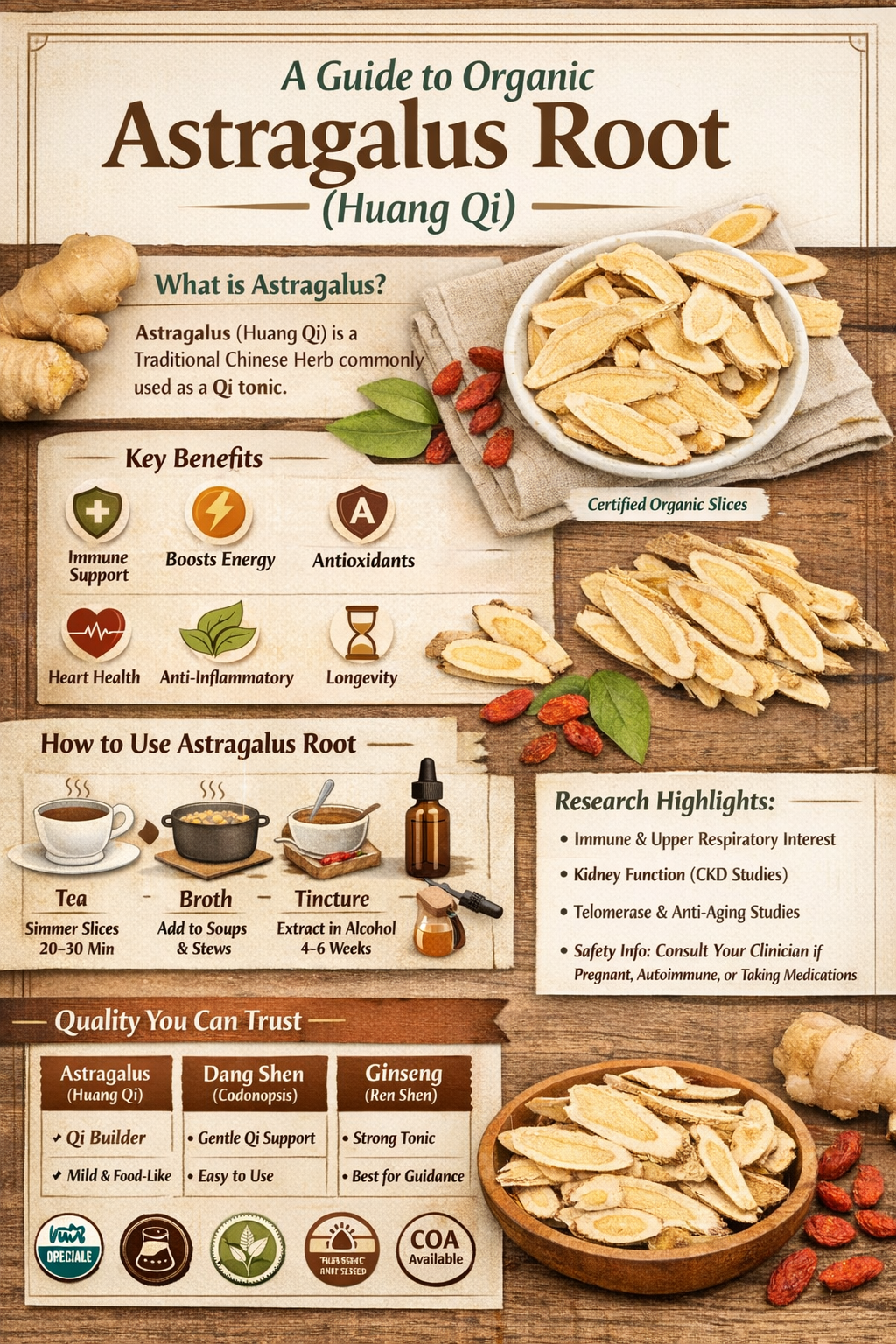 How To Prepare Astragalus Root Correctly
Astragalus can be prepared in several ways. The best method depends on whether you are using sliced root, powder, or extract.
Traditional Astragalus Tea
- Use 1–2 tablespoons sliced Astragalus Root.
- Add 3–4 cups filtered water.
- Simmer gently for 30–45 minutes.
- Strain before drinking.
Astragalus Soup or Broth
- Add sliced Astragalus to soup stock or broth.
- Simmer for 1–2 hours.
- Remove the root slices before serving.
Astragalus Powder
- Start with a small amount, often ¼ to 1 teaspoon.
- Mix into smoothies, soups, warm water, or herbal drinks.
- Use according to product directions.
Astragalus Extract Powder
- Mix into warm water, tea, or smoothies.
- Follow the serving directions on the product label.
- Use consistently as part of a daily routine if appropriate for you.
What Most Websites Never Tell You About Astragalus
The quality of Astragalus matters. A beautiful article about herbs will not help much if the herb itself is stale, poorly stored, or low quality.
Good Astragalus should have a clean appearance, light yellow to golden interior color, mild earthy aroma, firm dry texture, and a slight natural sweetness. It should not smell moldy, sour, damp, or stale.
This is where many beginners get stuck. They assume all herbs are the same. They are not. Storage, age, sourcing, drying method, and handling all influence the final herb experience.
Can Your Astragalus Pass the 5-Senses Freshness Test?
| Sense | What To Look For |
|---|---|
| Sight | Clean slices with a light yellow to golden interior |
| Smell | Mild earthy aroma without sourness, mustiness, or mold odor |
| Touch | Firm and dry, not soft, damp, sticky, or rubbery |
| Sound | Dry slices may make a crisp sound when handled or broken |
| Taste | Mildly sweet and earthy, not bitter, sour, or stale |
Astragalus & Lyme Disease Discussions
While many people discover Astragalus through soups and traditional wellness routines, others first hear about it through Lyme-focused herbal discussions.
Astragalus is frequently discussed in herbal wellness communities because of its long history in traditional systems. However, Lyme disease is complex, and herbal approaches are highly individualized.
Some herbalists discuss Astragalus differently depending on whether a person is focused on general wellness, prevention discussions, recovery support, or long-standing health concerns. This is why personalized guidance matters.
If you have Lyme disease, chronic symptoms, autoimmune concerns, or take prescription medication, speak with a qualified healthcare professional before using Astragalus.
Herbs Similar To Astragalus
Astragalus is often compared with other herbs used in traditional wellness, resilience, and adaptogen-style routines. Each herb has its own personality, flavor, preparation style, and traditional background.
| Herb | Why People Compare It | Common Use Style |
|---|---|---|
| Codonopsis / Dang Shen | Gentle Qi-support herb in TCM | Soups, broths, decoctions |
| Eleuthero Root | Popular in adaptogen and resilience discussions | Tea, powder, capsules, extracts |
| Reishi Mushroom | Used in long-term wellness routines | Tea, decoction, powder, extract |
| Schisandra Berry | Often used in traditional combinations | Tea, powder, extract |
| Cordyceps Mushroom | Popular in vitality and endurance conversations | Powder, capsules, extracts |
Who Should Use Caution With Astragalus?
Astragalus may not be appropriate for everyone. Speak with a qualified healthcare professional before using Astragalus if you:
- take immunosuppressive medications
- have autoimmune concerns
- have had an organ transplant
- are pregnant or nursing
- take prescription medications
- have a chronic health condition
- have Lyme disease or long-standing Lyme-related concerns
This information is educational and is not a substitute for medical advice.
Why Buy Astragalus From 1st Chinese Herbs?
Since 1994, 1st Chinese Herbs has focused on helping customers understand, choose, and use traditional herbs with more confidence.
- Trusted Since 1994
- Shipped from Washington State, USA
- Lab-tested herbs
- COAs available upon request
- Traditional bulk herbs, powders, extracts, and teapills
- Beginner-friendly herbal education
Our goal is simple: help you get real herbs, understand how to use them, and feel confident about what you are buying.
PubMed & Research References
Astragalus has been studied for its polysaccharides, flavonoids, saponins, and traditional applications. Research is ongoing and these references are provided for educational purposes only.
Frequently Asked Questions About Astragalus Root
Can Astragalus be used daily?
Many people traditionally include Astragalus in regular wellness routines through teas, soups, powders, broths, or extracts.
What is the easiest Astragalus form for beginners?
Powder and extract powders are often easiest for convenience. Sliced root is best for traditional teas, broths, and soups.
How long should Astragalus simmer?
Sliced Astragalus is commonly simmered for 30–45 minutes for tea and 1–2 hours in soups or broths.
Does Astragalus taste strong?
Usually not. Most people describe Astragalus as mild, earthy, and slightly sweet.
Can Astragalus go into soup?
Yes. Soup and broth preparation is one of the most traditional ways to use sliced Astragalus Root.
Can Astragalus powder go into smoothies?
Yes. Astragalus powder can be blended into smoothies, warm drinks, or soups according to product directions.
How do I know if Astragalus is fresh?
Fresh Astragalus should look clean, smell mildly earthy, feel dry and firm, and have a mild sweet taste.
Can Astragalus be combined with other herbs?
Astragalus is often paired with herbs such as Dang Shen, Reishi, Schisandra, or other traditional herbs depending on the purpose of the formula.
Who should avoid Astragalus?
People taking immunosuppressive drugs, pregnant or nursing individuals, transplant recipients, and those with autoimmune or chronic health concerns should speak with a healthcare professional first.
Final Thoughts
Astragalus has lasted for centuries because it fits into real life. It can be simmered in soup, brewed as tea, mixed as powder, or used as an extract depending on your routine.
The best form is the one you will use consistently and correctly. For some people, that means sliced root simmering quietly in a pot. For others, it means a simple powder routine that does not require rearranging the entire day.
Either way, learning how to choose, prepare, and store Astragalus properly helps you get much more value from this traditional herb.
Related Herbal Education Guides
Written By: 1st Chinese Herbs Editorial Team
1st Chinese Herbs has provided traditional Chinese herbs, powders, extracts, mushrooms, and herbal education since 1994.
Disclaimer: This content is for educational purposes only and is not intended to diagnose, treat, cure, or prevent any disease. Always consult a qualified healthcare professional before beginning any new herbal routine.