
Bar Soap vs. Liquid Soap: The Science of "Clean" and Why Your Choice Matters
Quick Summary: The Winner for Skin Longevity
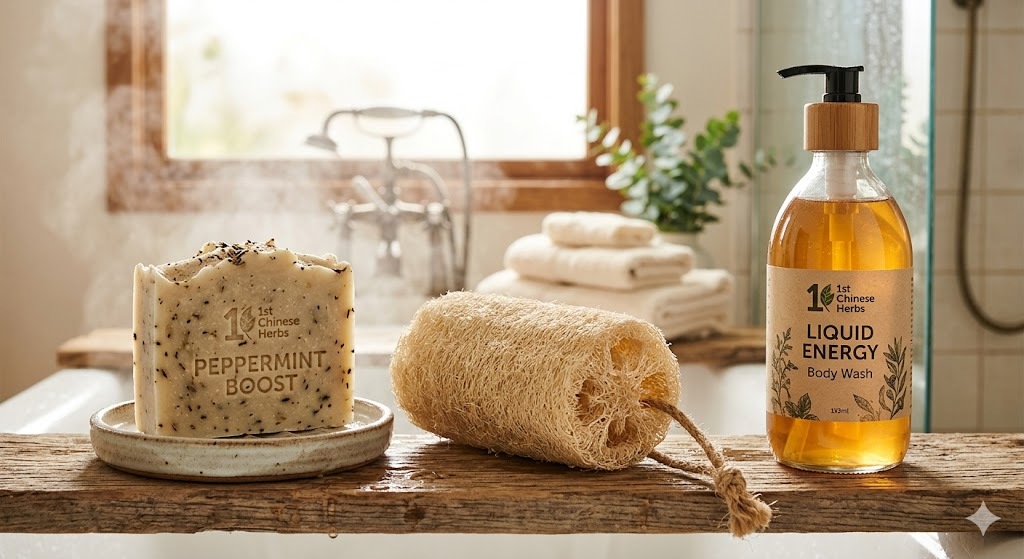
While liquid soap offers convenience, traditional bar soap is superior for those seeking minimalist ingredients, lower chemical exposure, and skin barrier preservation. Liquid soaps often rely on synthetic surfactants and heavy preservatives to maintain shelf stability, whereas high-quality bar soaps provide a "clean" delivery system for skin-nourishing botanicals.
The Hidden Truth: Soap is Your Largest Daily "Exposure"
Most wellness enthusiasts obsess over what they eat or the supplements they take. However, they overlook the transdermal absorption of their daily shower.
Your skin is your body’s largest organ. When you use liquid soap, you aren't just washing; you are applying a complex chemical cocktail to a porous surface—multiple times a day, for decades.
Why the "Formulation Gap" Exists
-
Liquid Soap: Is technically a synthetic detergent. To stay liquid in a bottle without growing mold or separating, it requires stabilizers, emulsifiers, and paraben-style preservatives.
-
Bar Soap: Is a solid-state delivery system. Because it doesn't contain the water volume of liquid soap, it requires far fewer (or zero) synthetic preservatives.
Scientific Breakdown: Ingredients to Watch
To outrank the competition, you must understand the "why" behind the label. Most commercial liquid soaps contain SLS (Sodium Lauryl Sulfate)—a foaming agent so harsh it is used as a laboratory standard for irritating skin.
| Feature | Natural Bar Soap | Commercial Liquid Soap |
| Primary Base | Saponified Plant Oils (Olive, Coconut) | Synthetic Surfactants (Detergents) |
| Preservatives | Minimal / None Required | High (Parabens, Phenoxyethanol) |
| Microbiome | Supports natural pH & oils | Often strips the "acid mantle" |
| ATP Impact | Low chemical stress on cells | Potential endocrine disruptors |
| Eco-Footprint | 100% Biodegradable / Paper wrap | Plastic waste / Microplastics |
Is Your Soap the Secret Culprit? The "Skin Stress" Checklist
Sometimes the very thing we use to get "clean" is actually causing the most damage. If you’re dealing with persistent skin issues, use this chart to identify if your soap is the root cause and how to fix it.
Soap Trouble-Shooting Guide
| The Symptom | What’s Likely Happening | The Fix |
| "The Squeaky-Clean" Tightness | Your soap has a high pH or harsh sulfates (SLS) that stripped your natural acid mantle. | Switch to a Superfatted Bar Soap (like Shea Butter or Olive Oil based). |
| Visible Flaking or Ashiness | The formula is too "detergent-heavy," pulling moisture out of the lower layers of skin. | Look for Coconut Milk or Honey ingredients for humectant support. |
| Redness & Itching | You are likely reacting to Synthetic Fragrances or "hidden" phthalates in liquid soap. | Choose Essential Oil scented soaps or Fragrance-Free options. |
| Post-Shower "Film" | Synthetic thickeners or hard water reacting with low-quality wax fillers in the soap. | Use a Natural Loofah to ensure a clean rinse and better exfoliation. |
| Persistent Breakouts | The soap is too heavy/clogging or failing to remove daily toxins and sweat. | Switch to Tea Tree or Charcoal soap to detoxify the pores. |
| Dull, "Lived-in" Texture | Lack of physical exfoliation is letting dead skin cells build up, trapping bacteria. | Pair your soap with a Plant-Fiber Loofah to stimulate circulation. |
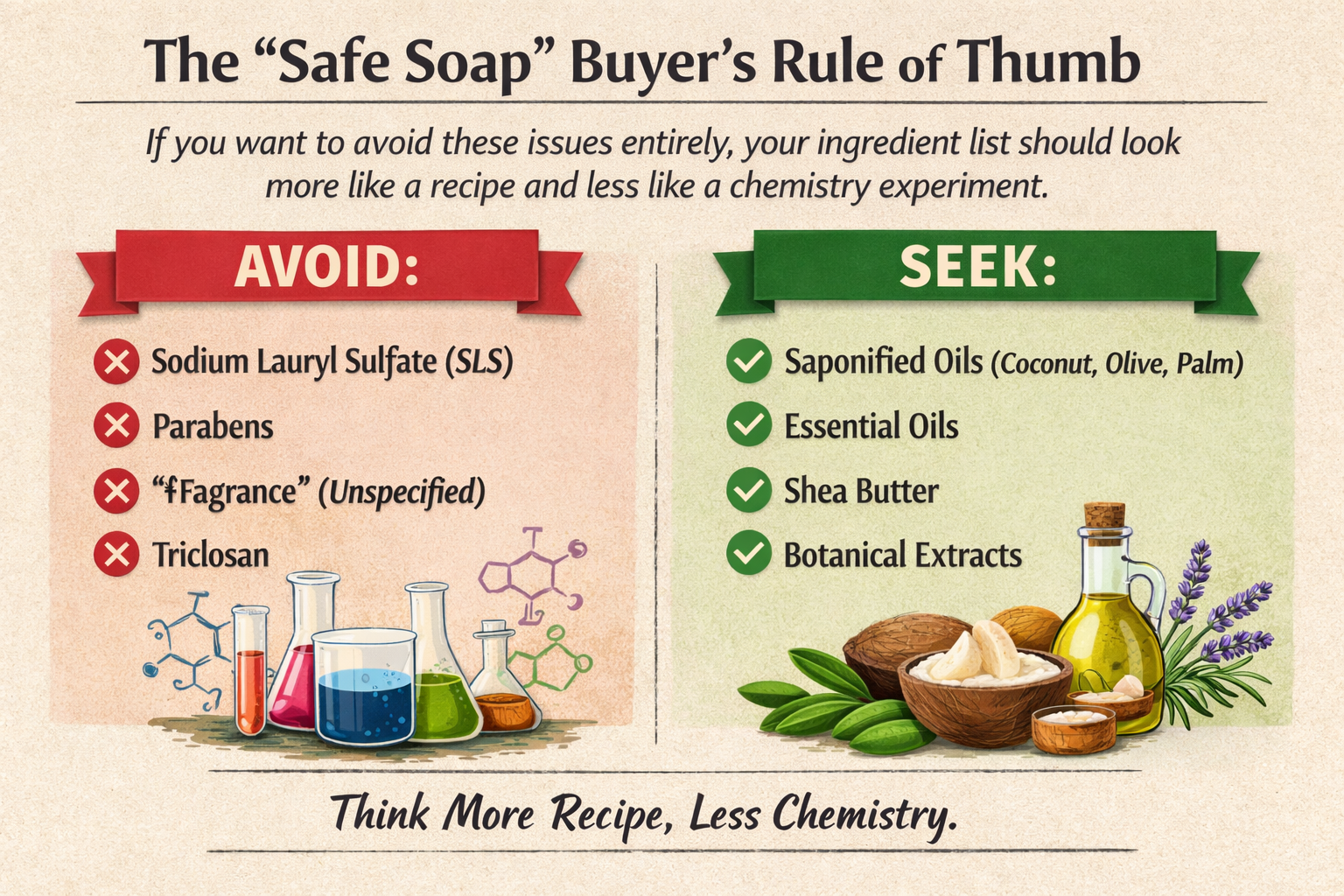
The "Safe Soap" Buyer’s Rule of Thumb
If you want to avoid these issues entirely, your ingredient list should look more like a recipe and less like a chemistry experiment.
-
Avoid: Sodium Lauryl Sulfate (SLS), Parabens, "Fragrance" (unspecified), and Triclosan.
-
Seek: Saponified oils (Coconut, Olive, Palm), Essential Oils, Shea Butter, and Botanical extracts.
The 5 Best-Selling Natural Alternatives
If you want to simplify your routine and improve your skin's resilience, look for these specific "superfood" soaps:
-
Peppermint & Eucalyptus: Best for the "Morning Wake-up" and increasing circulation.
-
Lemon & Shea Butter -
Coconut & Citrus -
Lavender & Chamomile: Best for the "Evening Reset" and calming inflammation.
-
Tea Tree & Charcoal: Best for detoxifying pores and post-workout hygiene.
-
Oatmeal & Honey: Best for ultra-sensitive skin or those with eczema.
The "Secret Weapon" for Better Skin: The Loofah
If you miss the "suds" of liquid soap, the solution isn't more chemicals—it's a better tool.
A Natural Loofah (the dried fruit of the Luffa plant) creates a massive, rich lather from a tiny bit of bar soap. More importantly, it provides lymphatic drainage support by stimulating blood flow as you scrub.
The Professional Protocol: Lather your Peppermint Bar Soap onto a damp Loofah. Scrub in circular motions toward the heart. This exfoliates dead skin cells, allowing the peppermint oils to penetrate deeper and wake up your sensory system.
Connecting the Dots: Soap and Your Mitochondria
As part of The Mitochondria Method, we examine "Total Toxic Load." When your body processes synthetic fragrances and phthalates absorbed through the skin, it diverts energy away from cellular repair.
By switching to a Peppermint Boost Bar Soap, you reduce the chemical burden on your system. This allows your cells to focus on ATP production instead of filtering out bathroom additives.
FAQ:
-
Is bar soap unhygienic? Science says no. Studies show that even if bacteria are present on a bar, they do not transfer to the user. Simply keep your soap on a Soap Saver to let it dry between uses.
-
Does bar soap leave a film?
"Soap scum" is usually a reaction between minerals in hard water and synthetic fillers. Pure, plant-based soaps rinse clean.
-
Is it better for the environment? Liquid soap has a 10x higher carbon footprint than bar soap due to the weight of the water being shipped and the plastic packaging.
Final Verdict: How to Make the Upgrade
Don't throw away your current products. Instead, as you run out of liquid soap, replace it with one high-quality bar.
References
On Soap & Skin Absorption
-
The Science: Synthetic surfactants (like those in liquid soap) can disrupt the skin barrier and facilitate the absorption of unwanted chemicals.
-
The Evidence:
Skin Cleansing without or with Compromise -
The Evidence:
Surfactant Effects on Skin Absorption