


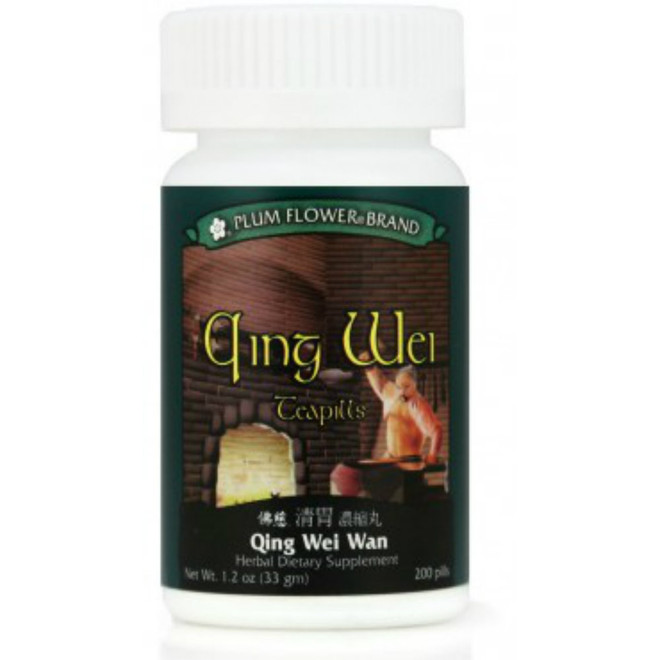
Clear the Stomach – Qing Wei Wan – Plum Flower Teapills
A classic five-herb Traditional Chinese Medicine formula traditionally associated with clearing Stomach Heat while supporting Yin and Blood within its appropriate TCM pattern.
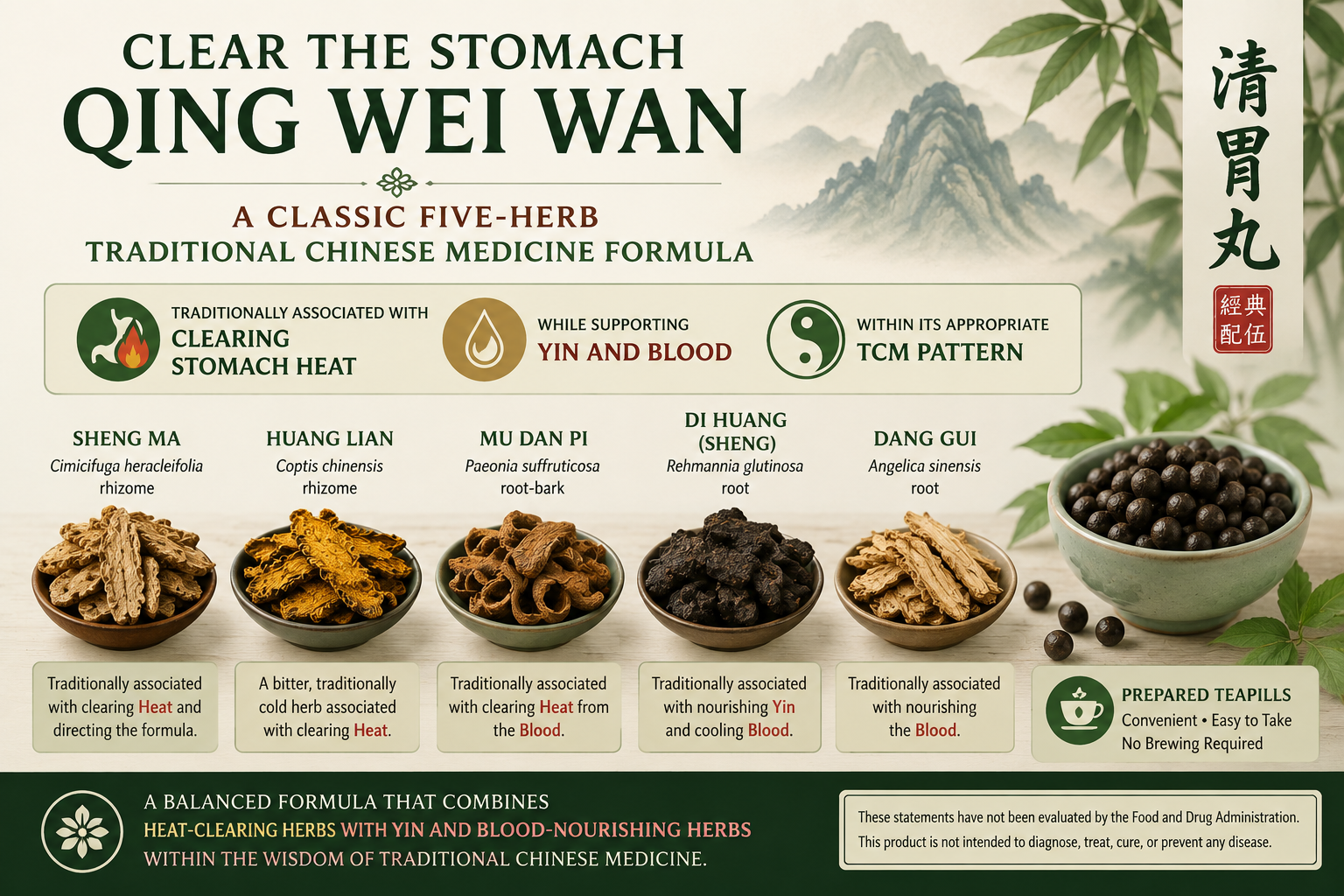
Qing Wei Wan, commonly known as Clear the Stomach, brings together five traditional Chinese herbs: Sheng Ma, Huang Lian, Mu Dan Pi, Sheng Di Huang and Dang Gui.
The formula is interesting because it does more than simply use bitter, traditionally cooling herbs. Its traditional strategy combines clearing Heat with herbs associated with Yin, Blood and nourishment, creating a more balanced formula for its specific TCM pattern.
Important: Stomach, Heat, Yin and Blood on this page describe concepts within Traditional Chinese Medicine. They are not Western medical diagnoses or claims that this product treats stomach disease, inflammation, infection, bleeding or other medical conditions.
What Is Qing Wei Wan?
Qing Wei Wan (清胃丸) is the prepared teapill form of a traditional Chinese herbal formula also known as Clear the Stomach Powder Pills.
Its five-herb composition combines ingredients traditionally associated with clearing Heat with herbs traditionally associated with cooling or nourishing within the TCM concepts of Blood and Yin.
This combination is important because Qing Wei Wan should not be understood simply from the words “Clear the Stomach.” The complete traditional pattern and the relationship among the five herbs provide a better understanding of the formula.
 Product Details at a Glance
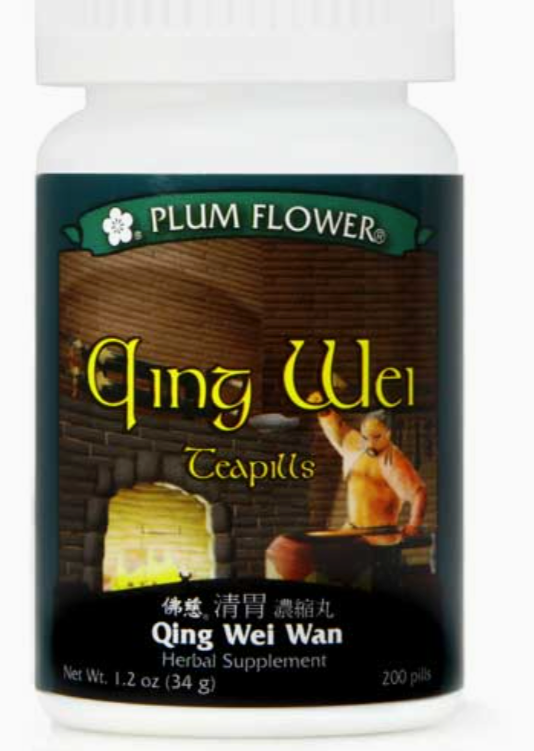
Traditional Name: Qing Wei Wan
Chinese Name: 清胃丸
English Name: Clear the Stomach
Also Known As: Clear the Stomach Powder Pills
Brand: Plum Flower
Form: Prepared Chinese herbal teapills
Formula Size: 5 traditional herbal ingredients
Label Directions: 8 teapills, 3 times daily
Pregnancy Caution: Caution during pregnancy
Preparation Required: None — swallow the prepared teapills with water
What's in Clear the Stomach Qing Wei Wan?
| Pin Yin | Botanical Ingredient | Traditional TCM Role |
|---|---|---|
| Sheng Ma | Cimicifuga heracleifolia rhizome | Traditionally associated with clearing Heat and directing the formula within its appropriate TCM pattern. |
| Huang Lian | Coptis chinensis rhizome | A bitter, traditionally cold herb associated with clearing Heat and drying Dampness within TCM. |
| Mu Dan Pi | Paeonia suffruticosa root-bark | Traditionally associated with clearing Heat from the Blood within Chinese herbal theory. |
| Di Huang (Sheng) | Rehmannia glutinosa root | Traditionally associated with nourishing Yin and cooling Blood within its appropriate TCM pattern. |
| Dang Gui | Angelica sinensis root | Traditionally associated with nourishing Blood within Chinese herbal theory. |
Other Ingredients: Dextrin (maltose), hydrated magnesium silicate, activated carbon and China wax.
 Why Are These Five Herbs Used Together?
The easiest way to understand Qing Wei Wan is to look at the relationship between clearing and nourishing.
The Heat-Clearing Side
Huang Lian and Sheng Ma contribute important traditional Heat-clearing characteristics to the formula.
Huang Lian is particularly well known in Chinese herbalism for its intensely bitter taste and traditionally cold nature.
The Blood and Yin Side
Mu Dan Pi, Sheng Di Huang and Dang Gui contribute another dimension to the traditional formula.
Within Chinese herbal theory, their traditional roles involve concepts such as Blood, Yin and nourishment, while Mu Dan Pi and Sheng Di Huang also have traditionally cooling roles within their respective TCM classifications.
This gives Qing Wei Wan a traditional strategy that can be summarized as:
Clear while also considering Yin and Blood.
Understanding this relationship is much more useful than interpreting Qing Wei Wan simply as an herb product “for the stomach.”
What Does “Stomach Heat” Mean in Traditional Chinese Medicine?
The name Clear the Stomach can be confusing if it is interpreted through Western medicine.
In Traditional Chinese Medicine, the Stomach is part of a traditional functional system used in Chinese medical theory.
Stomach Heat is a traditional pattern description. It does not mean that someone's physical stomach is literally too hot.
It also should not be interpreted as another name for gastritis, acid reflux, an ulcer, infection or another gastrointestinal diagnosis.
TCM practitioners traditionally evaluate a combination of observations before identifying a pattern. Therefore, the presence of a single digestive or other symptom does not by itself establish a Stomach Heat pattern.
The complete traditional pattern matters more than the product's English name.
What Does “Cool the Blood” Mean?
This is another traditional phrase that can sound very different when read through a modern medical lens.
Within Traditional Chinese Medicine, Blood is part of a broader traditional theoretical framework.
When an herb such as Mu Dan Pi or Sheng Di Huang is described in Chinese herbal literature using terminology involving cooling Blood, this refers to its traditional classification and role within a TCM pattern.
It does not mean the herb physically lowers the temperature of circulating blood, treats bleeding disorders or changes blood laboratory values.
Why Use Teapills & How Do I Use Them?
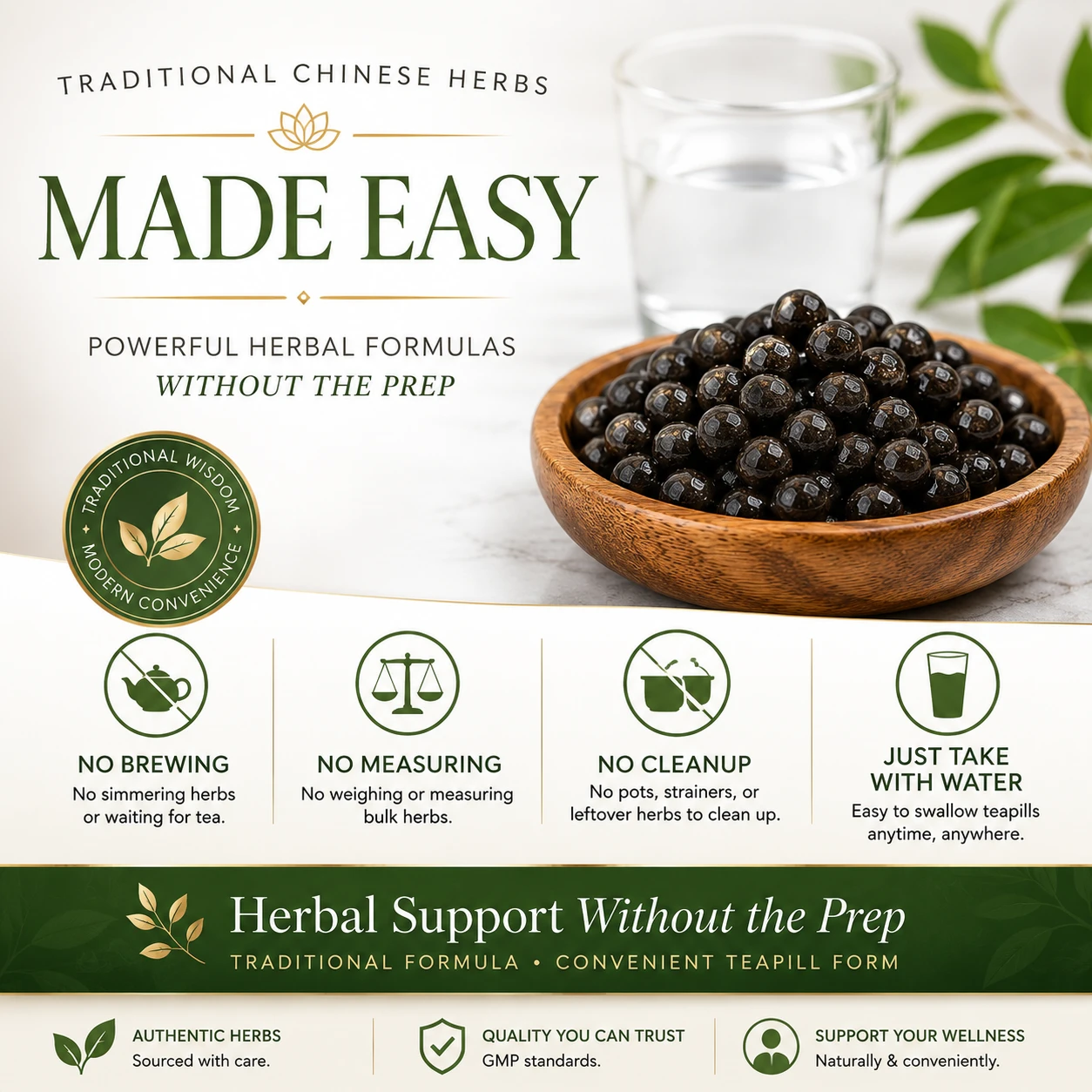
Traditional Chinese herbal formulas can be prepared in several forms. Teapills provide the herbs in a prepared, convenient form that can be swallowed with water.
For customers who are already familiar with Qing Wei Wan and have determined that its traditional TCM pattern is appropriate for them, teapills offer several practical advantages:
- No brewing: There is no need to prepare a daily herbal tea or decoction.
- No measuring individual herbs: The traditional five-herb combination is already prepared in teapill form.
- Easy to use: The small prepared pills can be swallowed with water.
- Convenient for regular use: The bottle is easy to store and the teapills require no special preparation.
Label Directions: Take 8 teapills, 3 times per day.
That equals 24 teapills per day. Follow the product label unless an appropriate healthcare professional or qualified Traditional Chinese Medicine practitioner has provided individualized guidance.
Is Qing Wei Wan the Same as Huang Lian?
No. Although Qing Wei Wan contains Huang Lian, it is a complete five-herb formula.
Huang Lian is only one component.
Qing Wei Wan combines:
- Sheng Ma
- Huang Lian
- Mu Dan Pi
- Sheng Di Huang
- Dang Gui
Each herb contributes a different traditional role to the overall composition.
This is why Qing Wei Wan and a single-herb Huang Lian product should not automatically be considered interchangeable.
Why Choose Qing Wei Wan Teapills?
Qing Wei Wan combines five traditional Chinese herbs in a prepared teapill form.
There is no daily measuring, simmering or straining required. The prepared teapills can simply be swallowed with water according to the product directions.
For customers already familiar with Qing Wei Wan and its appropriate traditional pattern, the teapill form provides a convenient way to use the complete traditional combination.
How Do I Take Qing Wei Wan?
The label directions are 8 teapills, 3 times per day.
That equals 24 teapills per day.
Swallow the teapills with water and follow the product label unless an appropriate healthcare professional or qualified Traditional Chinese Medicine practitioner has provided individualized guidance.
Important Safety Information
Caution during pregnancy.
Consult an appropriate healthcare professional before using Qing Wei Wan if you are pregnant or nursing, take prescription medications, have a medical condition, or are uncertain whether this traditional formula is appropriate for you.
Coptis (Huang Lian) naturally contains a variety of plant constituents, including berberine and related alkaloids. If you take prescription medications, consult an appropriate healthcare professional before using this product.
Do not use traditional terms such as Stomach Heat, Blood Heat or Yin deficiency as substitutes for medical evaluation or diagnosis.
Seek appropriate medical evaluation for new, severe, persistent or unexplained symptoms.
Frequently Asked Questions About Qing Wei Wan
What is Qing Wei Wan?
Qing Wei Wan is a prepared teapill form of a traditional five-herb Chinese formula commonly known as Clear the Stomach.
How many herbs are in Qing Wei Wan?
This Plum Flower formula contains five traditional herbal ingredients: Sheng Ma, Huang Lian, Mu Dan Pi, Sheng Di Huang and Dang Gui.
What is Qing Wei Wan traditionally associated with?
Within Traditional Chinese Medicine, Qing Wei Wan is traditionally associated with clearing Stomach Heat while supporting Yin and Blood within its appropriate traditional pattern.
Does “Clear the Stomach” mean this product cleanses the stomach?
No. Clear the Stomach is an English translation of the traditional formula name. It should not be interpreted as a claim that the product physically cleanses the stomach or treats a gastrointestinal disease.
Does Stomach Heat mean acid reflux or gastritis?
No. Stomach Heat is a Traditional Chinese Medicine pattern concept. It is not another name for acid reflux, gastritis or another Western medical diagnosis.
Is Qing Wei Wan the same as Huang Lian?
No. Huang Lian is one of the five herbs contained in Qing Wei Wan. Qing Wei Wan is a complete traditional formula containing Sheng Ma, Huang Lian, Mu Dan Pi, Sheng Di Huang and Dang Gui.
How many Qing Wei Wan teapills do I take?
The label directions are 8 teapills, 3 times per day.
Can I use Qing Wei Wan during pregnancy?
The product information states caution during pregnancy. Consult an appropriate healthcare professional before use during pregnancy.
Clear the Stomach: Understanding Qing Wei Wan as a Complete Formula
Qing Wei Wan becomes easier to understand when you look beyond its English name and consider why its five herbs were traditionally combined.
Huang Lian and Sheng Ma contribute traditional Heat-clearing characteristics, while Mu Dan Pi, Sheng Di Huang and Dang Gui add traditional roles involving Blood, Yin and nourishment.
That relationship between clearing and nourishing is an important characteristic of Qing Wei Wan.
When comparing Chinese herbal formulas, consider the complete traditional pattern, ingredients and cautions rather than choosing a teapill from one symptom or from the English formula name alone.
References to Stomach, Heat, Dampness, Yin, Blood and related terminology on this page describe concepts within Traditional Chinese Medicine. They are not Western medical diagnoses or descriptions of organ function.
PubMed Research & Further Reading
Sheng Ma (Cimicifuga heracleifolia) Research
Huang Lian (Coptis chinensis) Research
Mu Dan Pi (Paeonia suffruticosa) Research
Sheng Di Huang (Rehmannia glutinosa) Research
Dang Gui (Angelica sinensis) Research
Research note: These PubMed links are provided for educational purposes. Research involving individual herbs, botanical constituents, extracts or other preparations does not establish that Qing Wei Wan Teapills diagnose, treat, cure or prevent any disease.
These statements have not been evaluated by the Food and Drug Administration. This product is not intended to diagnose, treat, cure, or prevent any disease.