ActiveHerb
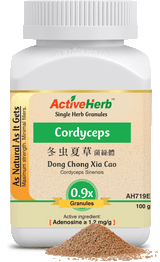
Cordyceps Extract Granules Dong Chong Xia Cao ActiveHerb 100 g
Cordyceps Mushroom Extract Granules — ActiveHerb 0.9×, 100 Grams Convenient Cordyceps mycelium extract granules for customers seeking a
Dandelion is much more than the familiar yellow-flowered plant seen in lawns and fields. Known in Traditional Chinese Medicine (TCM) as Pu Gong Ying (蒲公英), dandelion has a long history of traditional herbal use.
The botanical name commonly associated with dandelion is Taraxacum officinale. Different parts of the plant may be used in herbal preparations, including the root, leaf, and above-ground herb.
In Traditional Chinese Medicine, Pu Gong Ying is described according to traditional concepts such as taste, temperature, meridian association, and herbal category. These descriptions belong to the traditional TCM system and should not be interpreted as modern medical diagnoses or treatment claims.
Pu Gong Ying (蒲公英) is the Pin Yin name used for dandelion in Chinese herbal medicine.
Traditional Chinese herbal references generally describe Pu Gong Ying as a bitter, sweet, and cold herb associated with the Liver and Stomach meridians.
It is traditionally classified among herbs commonly translated as: Herbs That Clear Heat and Resolve Toxicity.
Important TCM Note: Terms such as “heat,” “toxicity,” “cold,” and “meridians” have specific meanings within traditional Chinese medicine theory. They are not equivalent to modern medical terms such as fever, infection, inflammation, poisoning, or liver disease.
| Pin Yin Name | Pu Gong Ying |
| Chinese Name | 蒲公英 |
| Common Name | Dandelion |
| Botanical Name | Taraxacum officinale |
| Traditional Taste | Bitter, sweet |
| Traditional Nature | Cold |
| Traditional Meridians | Liver, Stomach |
| TCM Category | Herbs That Clear Heat and Resolve Toxicity |
| Commonly Used Parts | Herb, leaf, and root depending on the product and herbal tradition |
| Common Forms | Cut herb, powder, tea, extracts, and herbal formulas |
Traditional Chinese Medicine developed its herbal system using concepts that differ from modern Western medical terminology. For this reason, it is important to describe Pu Gong Ying using traditional TCM language rather than translating traditional concepts directly into modern diseases or symptoms.
In traditional TCM terminology, Pu Gong Ying is described as:
These phrases describe how Pu Gong Ying has historically been classified and used within Traditional Chinese Medicine. They are not statements that dandelion has been proven to diagnose, treat, cure, or prevent a disease.
This traditional phrase can be confusing because the English words heat and toxicity have different meanings in modern medicine.
Within TCM, “heat” describes a traditional pattern or energetic quality. Likewise, “resolving toxicity” is a traditional herbal classification and does not mean that dandelion removes environmental toxins, poisons, drugs, or other substances from the body.
For this reason, we prefer to preserve the traditional phrase rather than describe dandelion as a modern “detox” treatment.
Dandelion is one of the world's most recognizable plants. Although many people think of it primarily as a lawn weed, plants in the Taraxacum genus have been used in multiple herbal traditions.
The plant produces its familiar yellow flower followed by a round seed head. Its seeds travel easily in the wind, helping explain why dandelion grows so widely.
Different herbal traditions have used different portions of the plant, which is why customers may encounter products labeled:
When following a traditional herbal recommendation, check both the botanical identity and plant part rather than assuming every dandelion product is interchangeable.
Dandelion root and dandelion leaf come from different portions of the same plant and may be prepared differently.
Dandelion root may be sold as:
Roasted dandelion root is also commonly used to prepare a rich, caffeine-free herbal beverage.
Dandelion leaf may be available as:
If you are purchasing dandelion for a particular traditional formula or practitioner recommendation, verify which plant part is required before ordering.
Dandelion naturally has a noticeable bitter character. Bitterness is a normal property of the plant and does not indicate poor quality.
The flavor can vary according to:
Dandelion root often has an earthy, bitter flavor. Roasted root develops a deeper, toasted flavor that is popular in herbal beverages.
Cut herbs are useful when preparing herbal teas, infusions, or other traditional water preparations.
Powdered dandelion can be mixed into water or other beverages. Herbal powders naturally settle, so stirring before drinking may be necessary.
Extract products vary substantially in concentration and preparation. Always follow the serving directions supplied with the specific product.
Dandelion may also be included as one ingredient in multi-herb preparations. Traditional Chinese formulas are generally constructed according to established formula principles rather than simply combining herbs with similar popular uses.
Preparation depends upon the form of dandelion being used.
For packaged herbs, powders, extracts, or supplements, follow the directions provided on the product label.
Loose leafy material is commonly prepared with hot water as an herbal infusion. The specific amount and steeping time depend on the product and intended preparation.
Roots are denser than leaves and flowers and are often prepared by simmering rather than by a short steep.
Powder may be stirred into warm water or another suitable beverage. Because it contains finely ground plant material, some settling is normal.
If you are using Pu Gong Ying according to Traditional Chinese Medicine principles, follow the guidance of a qualified practitioner or a reliable traditional reference.
Dandelion has been the subject of modern scientific investigation. Researchers have studied Taraxacum officinale, related species, plant extracts, and naturally occurring constituents.
Research areas have included:
It is important to distinguish between scientific investigation and established clinical effects of a commercially sold herb.
Research may involve:
Therefore, research involving dandelion or its constituents does not establish that a particular dandelion tea, herb, powder, extract, or supplement will produce the same effects in humans.
Customers who would like to explore modern scientific literature can search PubMed for research involving dandelion and Taraxacum officinale.
Research Note: Scientific studies involving herbs, isolated constituents, extracts, laboratory models, animals, or other preparations do not establish that a specific dandelion product has the same effects in humans. Research information is provided for educational purposes and should not be interpreted as a product claim.
Pu Gong Ying is the Pin Yin name associated with dandelion in Traditional Chinese Medicine. When purchasing an herb for a particular traditional use, verify the botanical identity and plant part listed by the supplier.
No. They are different portions of the plant and may be prepared and used differently across herbal traditions. Check the product description carefully before purchasing.
This is terminology from Traditional Chinese Medicine. “Heat” and “toxicity” describe traditional TCM pattern concepts. They should not be interpreted as modern diagnoses such as fever, infection, inflammation, or poisoning.
Many dried dandelion products can be prepared with water. Preparation varies according to the plant part and product, so follow the directions supplied with the herb you purchase.
Appropriate use depends on the product, serving amount, individual circumstances, medications, and intended use. Follow the product directions and consult a qualified healthcare professional when appropriate.
Herbs and supplements can interact with medications. Talk with your physician, pharmacist, or other qualified healthcare professional before using dandelion if you take prescription medications.
Dandelion is also used as a food plant, but concentrated herbal products and supplements require additional consideration.
Consult an appropriate healthcare professional before use if you:
Stop using an herbal product and seek appropriate medical advice if you experience an unexpected or allergic reaction.
When comparing dandelion products, look beyond the common name. Important information includes:
This is particularly important when following a Traditional Chinese Medicine formula or practitioner recommendation.
Explore available dandelion herbs, powders, and related traditional herbal products from 1st Chinese Herbs.
Shop Dandelion and Chinese Herbs »
1st Chinese Herbs provides traditional Chinese herbs, herbal powders, extracts, teapills, mushrooms, and other herbal products along with educational information designed to make traditional herbal shopping easier to understand.
Our educational resources explain topics such as botanical names, Pin Yin names, traditional terminology, herbal forms, preparation methods, and modern research without replacing guidance from a qualified healthcare professional.
Traditional Chinese Medicine terminology such as “heat,” “cold,” “dampness,” “toxicity,” “meridians,” “clearing,” and similar terms describes concepts within the traditional TCM system. These terms are not intended to represent modern medical diagnoses or claims that an herb treats a particular disease.
FDA Disclaimer: These statements have not been evaluated by the Food and Drug Administration. This information is for educational purposes only and is not intended to diagnose, treat, cure, or prevent any disease.