
The Complete Guide to Herbal Tea
How to Brew Herbal Tea That Actually Works (Without Guessing)
There’s something comforting about a warm cup of herbal tea.
It’s simple. Familiar. Easy to make.
But if you’ve ever made a cup and thought,
“Why doesn’t this feel like it’s doing anything?”
You’re not alone.
Most people aren’t using the wrong herbs.
They’re just not using them the right way.
A little more attention to how you prepare your tea—how much you use, how long you steep it, whether you cover it—can completely change the outcome.
This guide will walk you through that process in a way that actually makes sense, so your tea becomes something you feel, not just something you sip.
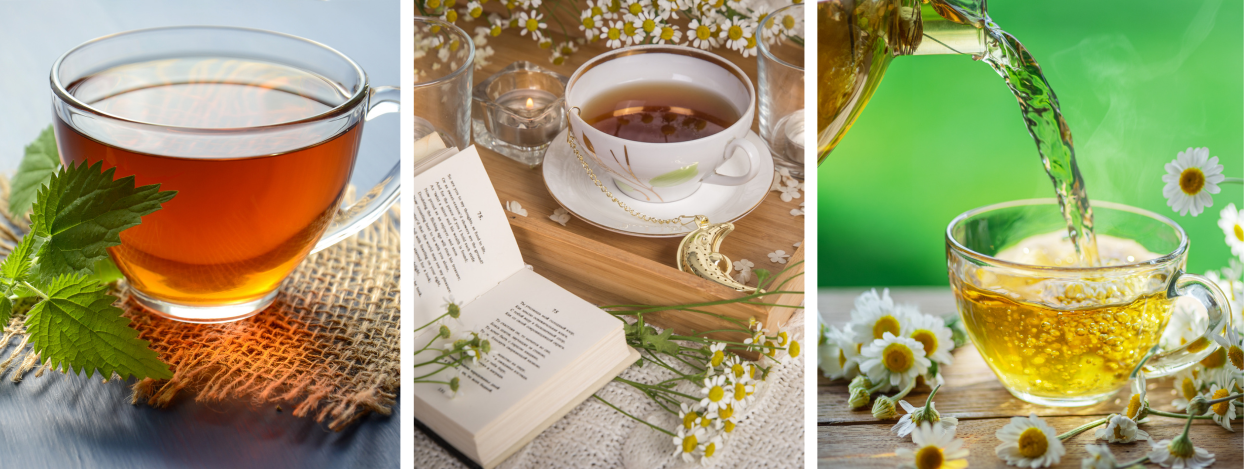
Quick Answer: How to Make Herbal Tea Correctly
If you want a stronger, more effective cup of herbal tea, start here:
- Use about 1 tablespoon of dried herbs per 8–12 oz of water
- Always cover your cup while it steeps - yes this is a crucial step
- Steep most herbs for 5–15 minutes
- Use roots and dense herbs differently (they often need simmering)
That alone will improve your results more than switching herbs ever will.
Start Here (If You’re New)
You don’t need to know everything to get started.
Keep it simple:
- Choose one goal (digestion, calm, daily wellness)
- Pick 1–3 herbs that match that goal
- Prepare them correctly
- Stay consistent for at least a week
That’s where most people begin—and it’s usually enough to start noticing a difference.
Why Herbal Tea Works (And Why It Sometimes Doesn’t)
Herbal tea works through extraction.
Hot water pulls out the plant’s natural compounds—flavor, aroma, and beneficial properties.
But here’s what many guides skip:
Not all herbs release the same way.
- A delicate flower needs gentle heat
- A leafy herb needs time but not boiling
- A dense root may need to be simmered
If the method doesn’t match the herb, the tea ends up weak.
That’s where most people go wrong.
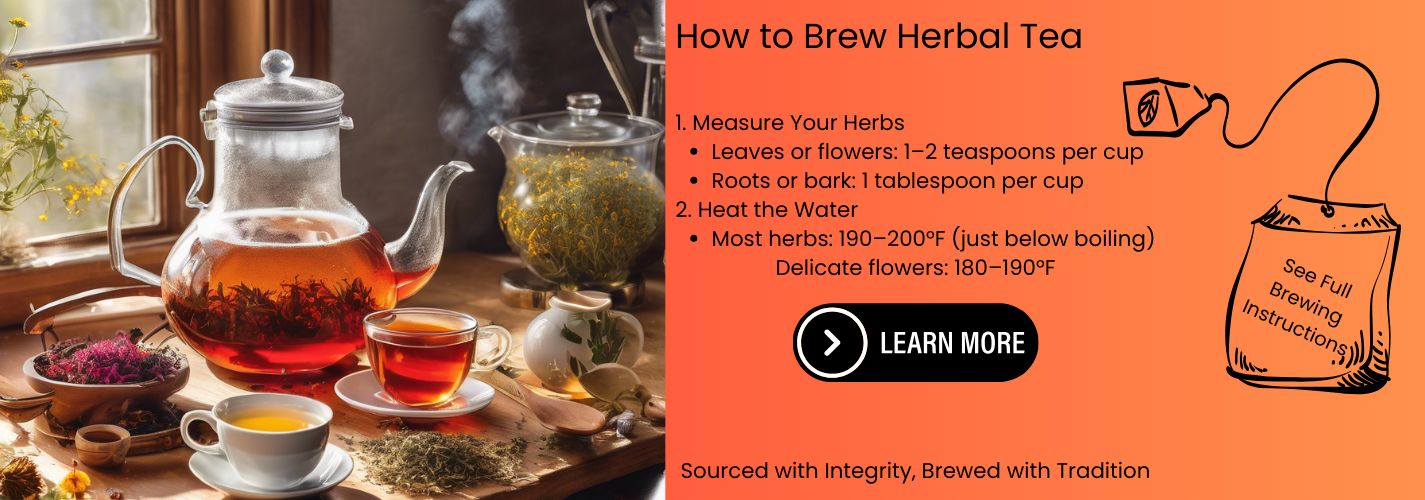
How to Make Herbal Tea (The Right Way)
Step 1: Choose Good Herbs
Start with herbs that smell fresh and look vibrant.
Loose herbs give you more control than tea bags—especially when you want to adjust strength or create your own blends.
Step 2: Use the Right Amount
A common starting point:
- 1 tablespoon dried herbs
- 2 tablespoons fresh herbs
If your tea tastes faint or watery, this is usually the reason.
Step 3: Heat Your Water Properly
- Leaves and flowers → warm, not boiling
- Stronger herbs → hotter water
- Roots and bark → often better simmered
Too much heat can damage delicate herbs.
Too little heat won’t extract enough.
Step 4: Cover While Steeping
This small step makes a real difference.
Many herbs release aromatic compounds into the steam.
If the cup is uncovered, those compounds are lost.
Covering keeps everything in the tea—where it belongs.
Step 5: Steep Long Enough
- Flowers → 3–10 minutes
- Leaves → 8–15 minutes
- Strong blends → closer to 15 minutes
If you’re unsure, using a steep timer can help you dial this in without guessing.
Step 6: Strain and Enjoy
Strain, sip slowly, and adjust to taste.
You can add honey, lemon, or ginger if it fits your blend.
Infusion vs. Decoction (A Key Difference)
One of the biggest upgrades you can make is understanding this:
Infusion (tea)
- Leaves, flowers, lighter herbs
- Shorter steep time
- Gentle extraction
Decoction (simmering)
- Roots, bark, seeds
- 20–45 minutes
- Stronger extraction
If you’re using roots like regular tea, you’re likely not getting much from them.
Best Chinese Herbs for Tea (Simple and Practical)
For Digestion
- Sheng Jiang
- Chen Pi
- Shan Zha
These are often used after meals when things feel heavy or slow.
For Relaxation
- Suan Zao Ren
- Bai He
- Long Yan Rou
These are commonly used in evening routines to help you wind down.
For Daily Wellness
- Gou Qi Zi
- Hong Zao
Gentle, slightly sweet, and easy to use regularly.
Simple Blends That Work
After-Meal Tea
Ginger + Chen Pi + Hawthorn
Warm, slightly citrusy, and helpful after heavier meals.
Evening Tea
Suan Zao Ren + Lily Bulb + Longan
Soft, nourishing, and calming.
Daily Tea
Goji + Red Date
Light, slightly sweet, and easy to drink every day.
What Most People Get Wrong
This is where herbal tea routines usually fall apart:
- Not using enough herb
- Not covering while steeping
- Not steeping long enough
- Using tea when they should be simmering
These small details make a big difference.
What to Expect
Herbal tea is not instant—but it’s not slow either.
- First few days → subtle shifts
- After a week → more noticeable balance
- After a few weeks → more consistent support
Consistency matters more than anything else.
Why Quality Matters
Even perfect preparation can’t fix poor-quality herbs.
At 1st Chinese Herbs:
- Trusted since 1994
- Focus on clean sourcing
- Lab-tested when available
- Education-first approach
That’s what helps people go from trying herbs… to actually using them with confidence.

Why Loose Herbs Work Better
Loose herbs give you:
Control over strength
Better blending options
More flexibility
Tea bags are convenient—but often limited.
Ready to Start?
If you’re just getting started:
Keep it simple.
Choose one tea.
Make it well.
Drink it consistently.
That’s how most people begin—and it’s often enough to notice a real difference.
Final Thought
You don’t need a complicated system to use herbal tea.
Just a good herb, a proper method, and a little consistency.
Over time, it becomes less about following instructions…
and more about understanding what works for you.
And once that happens, herbal tea stops being just a drink—and becomes part of your daily rhythm.
References
Digestion Support (Ginger)
- Ginger and digestive function
https://pmc.ncbi.nlm.nih.gov/articles/PMC6341159/ - Ginger and indigestion (clinical study)
https://pmc.ncbi.nlm.nih.gov/articles/PMC10525921/
Anti-Inflammatory & Antioxidant Support
- Ginger anti-inflammatory and antioxidant effects
https://pmc.ncbi.nlm.nih.gov/articles/PMC7019938/
Traditional Herbal Combinations
- Ginger and licorice decoction research
https://pmc.ncbi.nlm.nih.gov/articles/PMC7845735/
Gut Motility & Digestive Support
- Ginger and gastrointestinal motility
https://pmc.ncbi.nlm.nih.gov/articles/PMC11944625/
✅ Optional (Non-PubMed but Helpful for Readability)
- Herbal tea and digestive support overview
https://www.verywellhealth.com/herbal-tea-for-gut-health-11815745
? How to Use These (Best Practice)
Place them:
- 1–2 links inside your digestion section
- 1 link in your “why herbal tea works” section
- Then list all of them at the bottom under:
Research and References
Digestion Support (Ginger)
- Ginger and digestive function
https://pmc.ncbi.nlm.nih.gov/articles/PMC6341159/ - Ginger and indigestion (clinical study)
https://pmc.ncbi.nlm.nih.gov/articles/PMC10525921/
Anti-Inflammatory & Antioxidant Support
- Ginger anti-inflammatory and antioxidant effects
https://pmc.ncbi.nlm.nih.gov/articles/PMC7019938/
Traditional Herbal Combinations
- Ginger and licorice decoction research
https://pmc.ncbi.nlm.nih.gov/articles/PMC7845735/
Gut Motility & Digestive Support
- Ginger and gastrointestinal motility
https://pmc.ncbi.nlm.nih.gov/articles/PMC11944625/
Disclaimer
This content is for educational purposes only and is not intended to diagnose, treat, cure, or prevent any disease. Always consult a qualified healthcare professional before using herbs, especially if pregnant, nursing, taking medications, or managing a health condition.