
Start Here: Beginner Herbal Tea Lessons
How I Managed To Overbrew an Entire Jar of Sun Tea After 30 Years Working With Herbs
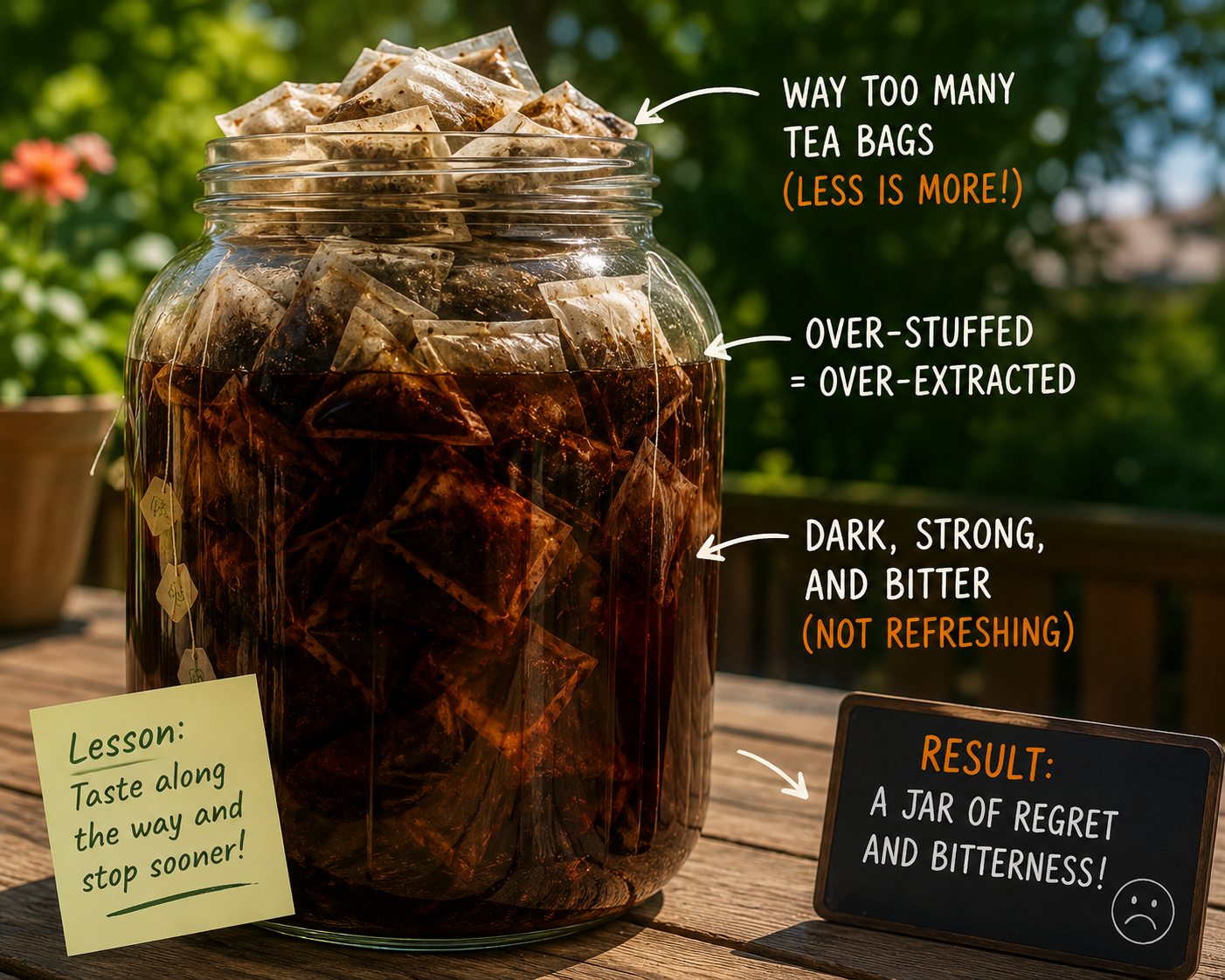
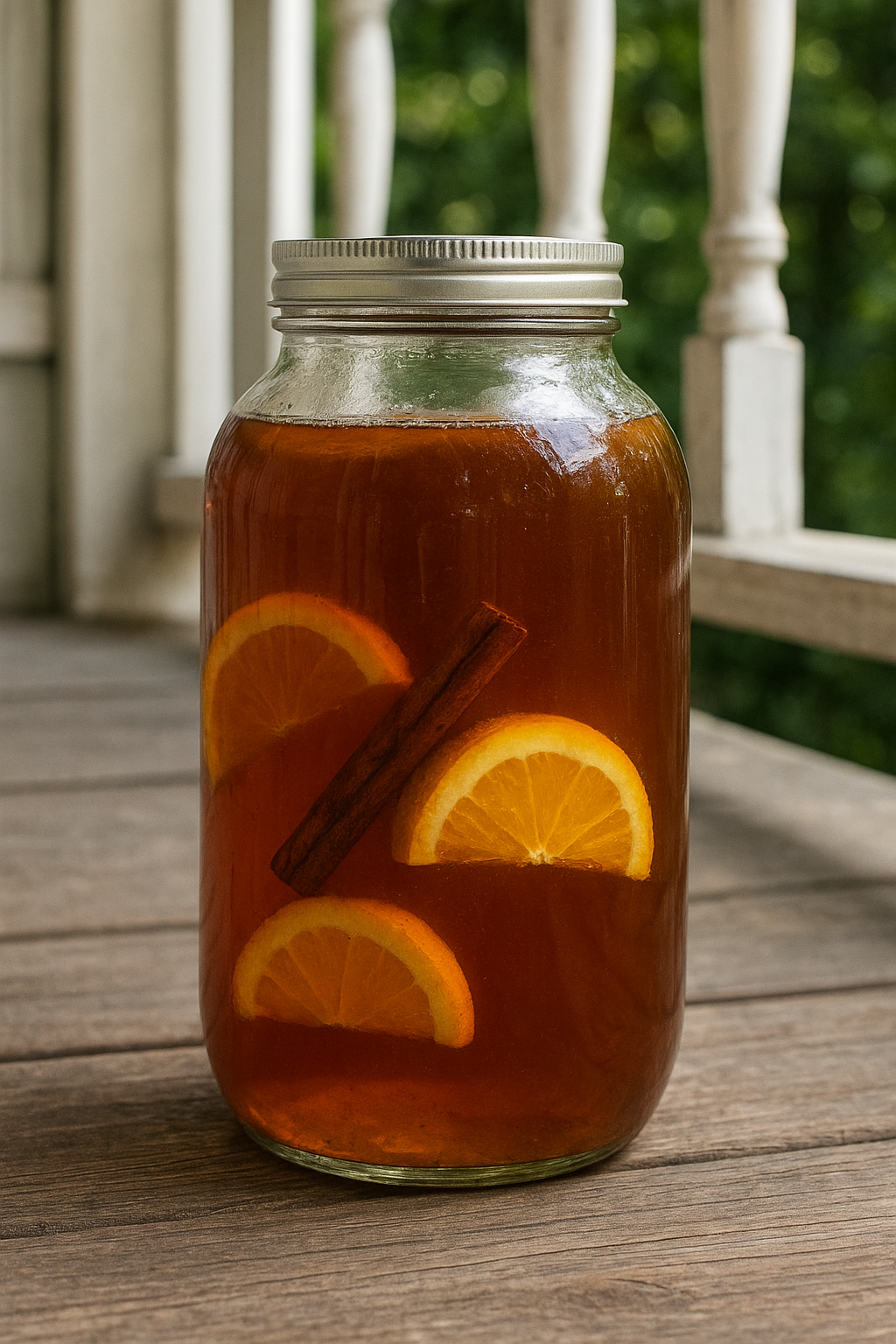 This would be hilarious if it were not painfully true. First beautiful sunny day of the year, and I thought, “I’m going to make the perfect orange spice sun tea.” Instead, I created an entire gallon of over-brewed bitterness and got humbled by a glass jar on the porch.
If you have ever forgotten tea was brewing, used too many tea bags because “stronger must be better,” or confidently ruined something you absolutely should have known how to make, welcome. You are among friends.
There are certain mistakes you expect beginners to make. Putting delicate flowers in boiling water for forty minutes? Beginner mistake. Using enough peppermint to clear your sinuses into another zip code? Beginner mistake. Forgetting to strain loose herbs before taking a sip and chewing your tea like a lawnmower? Also a beginner mistake.
But overbrewing an entire jar of orange spice sun tea after working with herbs for more than three decades? That takes commitment. That takes confidence. That takes the kind of boldness only experience can provide.
And apparently, I had all three.
It started innocently enough. One of those warm mornings where the sunlight hits the kitchen just right and suddenly you decide you are going to become the type of person who gracefully brews sun tea outside instead of stress-drinking coffee while answering emails.
I pulled out my favorite giant glass jar with the spout. You know the one. The jar that makes you feel organized, wholesome, and possibly like you should be wearing linen.
Into the jar went orange spice tea. Then more orange spice tea. Then cinnamon. Then orange peel. Then, because my judgment had clearly wandered away unsupervised, I added “just a couple more tea bags for extra flavor.”
Beginner Truth: “Extra Flavor” Is Where Trouble Starts
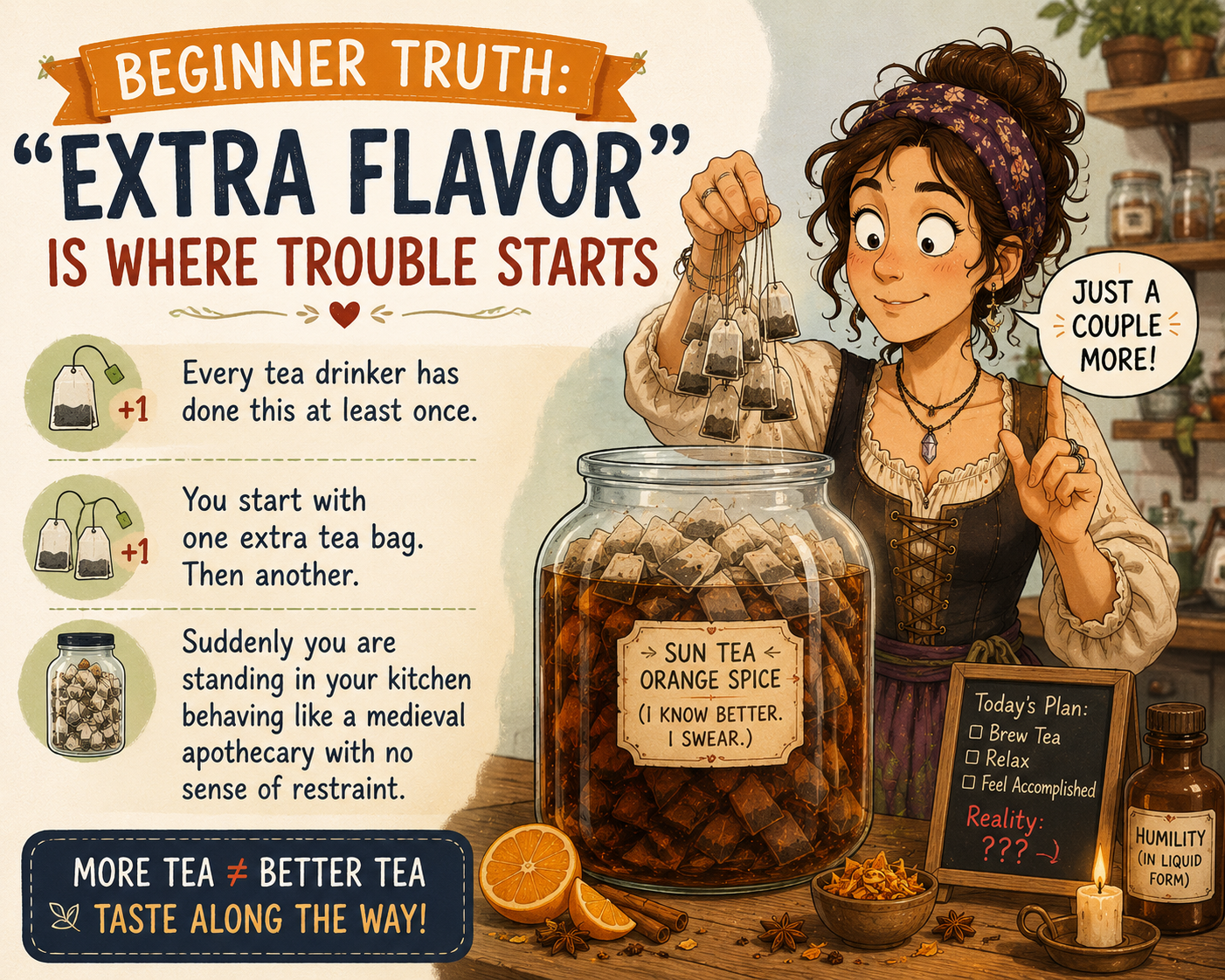
Every tea drinker has done this at least once. You start with one extra tea bag. Then another. Suddenly you are standing in your kitchen behaving like a medieval apothecary with no sense of restraint.
I carried the jar outside and placed it carefully in the sunlight. The light hit the glass beautifully. Birds were chirping. The breeze was perfect. I stood there admiring it for a moment thinking, “People would probably pay money for this lifestyle.”
That should have been the warning sign.
The plan was simple: let the tea brew for a few hours, bring it inside, pour it over ice, and feel deeply accomplished for no reasonable reason.
Instead, I forgot it existed.
Not for a little while. I forgot it long enough for the tea to enter another phase of existence entirely. At some point during the afternoon, the orange spice tea stopped being a refreshing summer drink and became a full personality disorder.
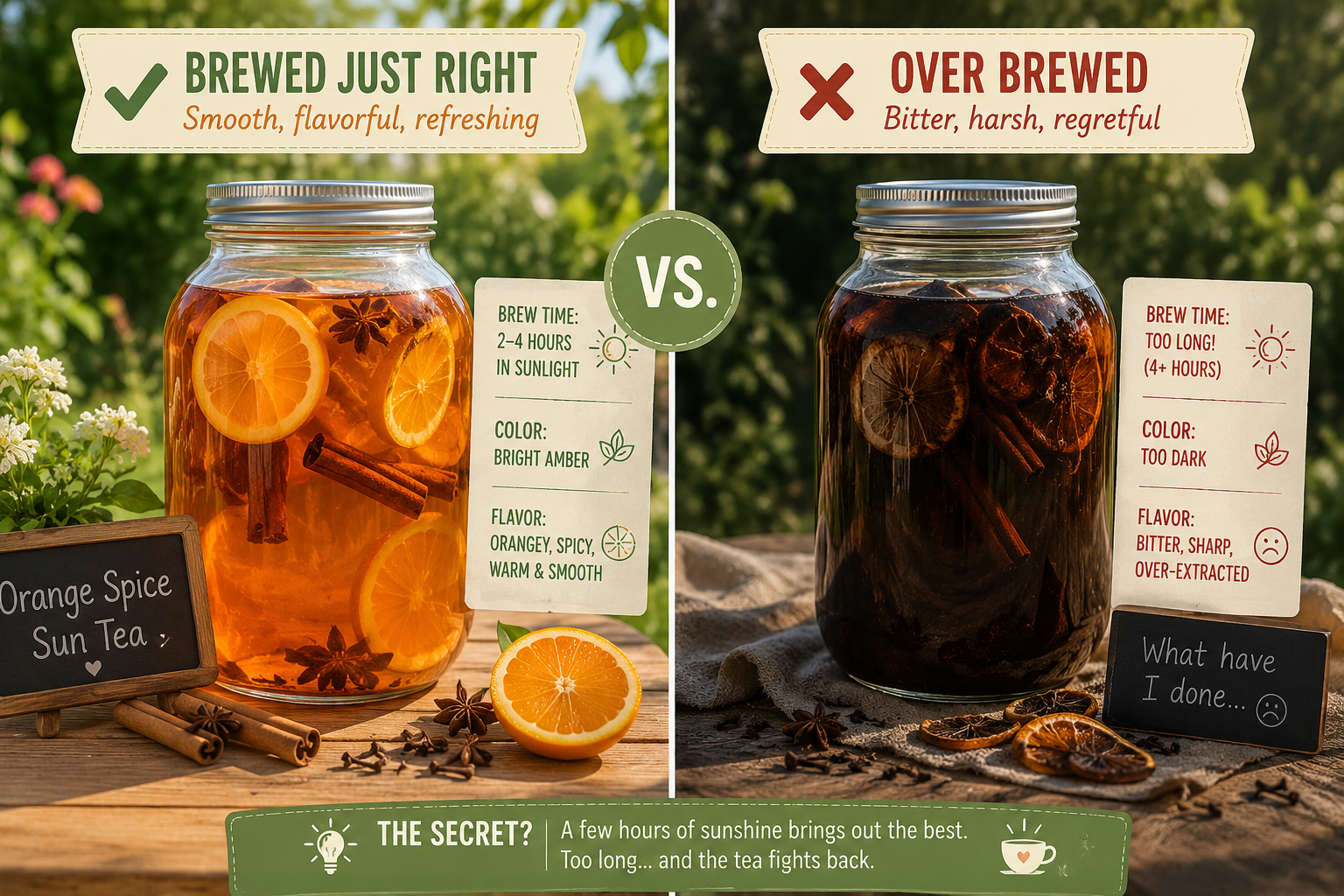
Hours later, I wandered back outside and saw the jar sitting there in the blazing heat looking unnaturally dark. Not rich amber tea dark. More like Victorian furniture polish with emotional trauma dark.
Yes, we do have a herbal steeping calculator. Did I use it? That would be a no.
Now, after 30 years around herbs, I apparently possess the dangerous confidence of a person who thinks, “I can fix this.”
The smell was wonderful. Orange. Cinnamon. Spice. It smelled like autumn had moved into a bakery and started paying rent. So I poured a giant glass over ice and took a proud sip.
The tea attacked me immediately.
Not physically. Emotionally.
The bitterness hit first, followed closely by angry citrus bark. The cinnamon tasted less like warm spice and more like I had licked an old holiday decoration. The black tea had become so over-extracted that my tongue briefly stopped trusting me as a person.
And there I stood in the kitchen, holding a full glass of beautifully ruined tea, asking myself the kind of question only adults ask in moments of quiet defeat:
“How am I still learning lessons like this?”
That is the humbling thing about herbs and tea. You can know better and still get cocky enough to think, “A few more hours won’t matter.”
Meanwhile, the tea was outside becoming progressively more bitter like an elderly man yelling at birds from his porch.
Naturally, I tried to save it. First came extra ice. Then honey. Then more water. Then lemon. At one point I stared at the jar in silence like emotional support alone might improve the flavor.
Nothing worked.
The tea had crossed into a realm no sweetener could rescue.
Why Beginners Sometimes Think Herbal Tea Tastes Terrible
Most of the time, it is not the herb itself. It is the preparation.
- Too much herb
- Too much heat
- Brewing too long
- Using the wrong water temperature
- Treating delicate herbs like they are soup bones
Even excellent herbs can taste harsh, muddy, flat, or bitter if they are brewed incorrectly.
The worst part was that I knew exactly what had happened. Black tea over-extracts in heat. Citrus peel can become sharp and harsh. Spices become muddy. Tannins take over. Balance disappears.
I know this. I have known this for decades.
And yet there I was, ruining tea like someone who had just discovered herbs five minutes ago on Pinterest.
That may be the funniest part about working with plants for years. Experience does not eliminate mistakes. Sometimes it just makes the mistakes more creative.
The entire disaster reminded me how often people blame the herb itself when the real issue is preparation. A beautiful tea can become bitter from overbrewing. Delicate flowers can taste harsh if overheated. Roots can become muddy when simmered too aggressively. Fresh herbs lose their brightness when treated like they are indestructible.
Preparation Matters. Timing Matters.
Good herbal tea is not about using the most tea bags, the hottest water, or the longest brewing time. It is about understanding what the tea or herb actually needs.
Delicate flowers usually need gentle steeping. Roots and bark often need longer simmering. Aromatic herbs can lose their fragrance if overheated. Black tea can become bitter fast, especially when it sits too long in heat.
And occasionally, even people who have spent most of their adult life around herbs still create a gallon of burnt orange regret in a mason jar.
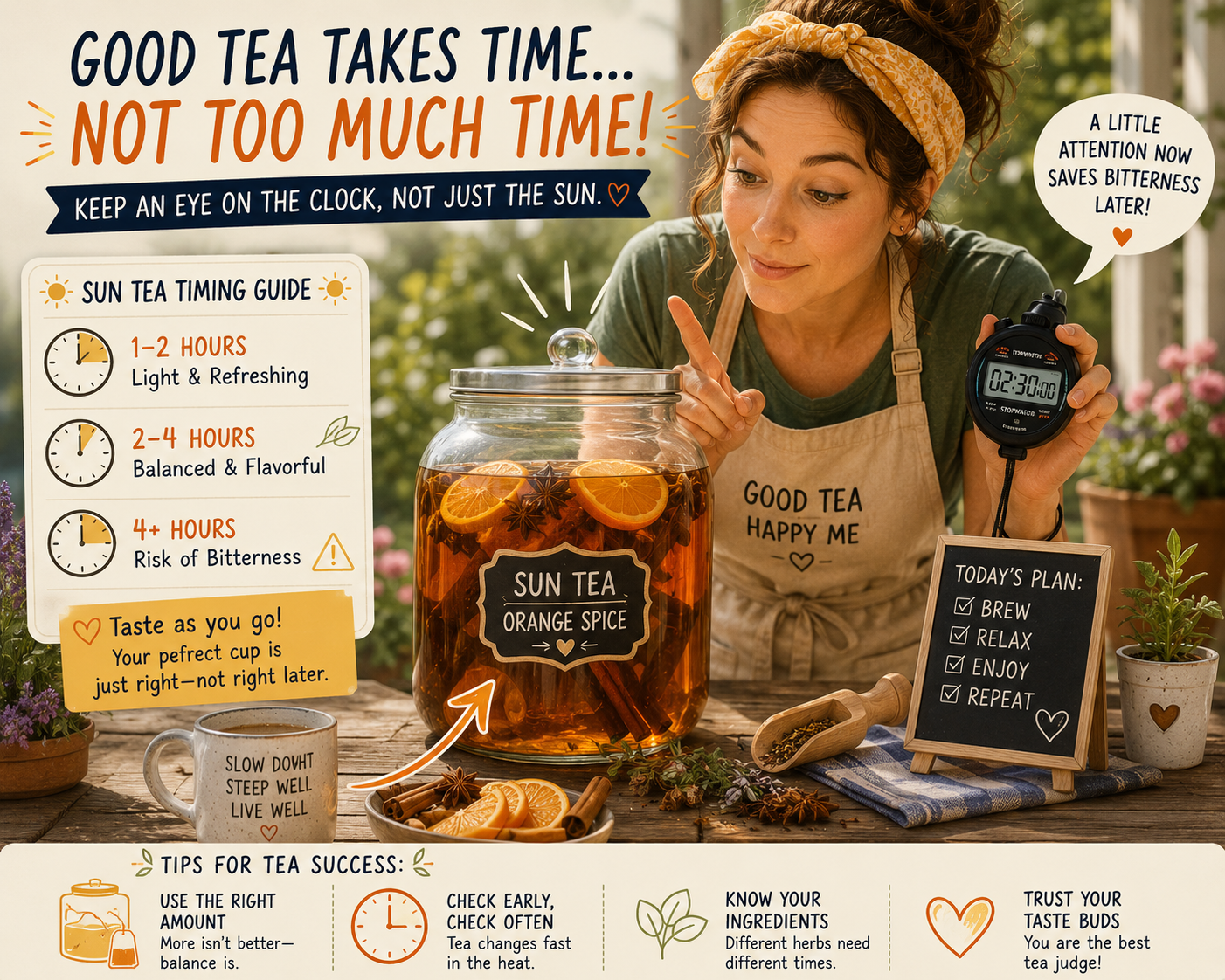
Lesson Learned From My Very Bitter Porch Tea Incident
More tea is not always better. A few extra tea bags can quickly turn “rich flavor” into “why does this taste angry?”
Taste along the way. Tea changes fast in heat, especially outside in direct sunlight.
Black tea becomes bitter surprisingly fast. The longer it sits in warmth, the more tannins and harsh flavors take over.
Timing changes everything. A perfectly balanced tea can cross into bitter territory much faster than people realize.
Preparation matters just as much as ingredients. Even high-quality tea can taste terrible if it is overbrewed.
Apparently, after more than 30 years working with herbs, I still needed orange spice sun tea to humble me publicly.
Beginner Confession Time
If you are new to herbs, let me save you some unnecessary frustration: everyone overbrews tea at some point. Everyone makes tea too strong once. Everyone forgets a jar outside eventually. Everyone has created at least one “why does this taste angry?” situation.
That does not mean you are bad at herbs. It means you are learning.
The trick is to stop treating every tea, root, flower, and spice the same way. Herbs have personalities. Some are gentle. Some are sturdy. Some are dramatic. Some will absolutely turn on you if left in hot water too long.
So What Is the Real Secret to Better Herbal Tea?
It is not expensive equipment. It is not fancy jars. And surprisingly, it is not using half the tea box at once.
Good herbal tea usually comes down to quality herbs, good timing, balanced preparation, and tasting along the way.
Most herbal brewing mistakes are completely fixable once you understand how herbs react to heat, water, and time.
That is why beginner guides matter. A little preparation knowledge can be the difference between “this tea is lovely” and “why does this taste like a candle got into a fight with orange peel?”
Start Here: Helpful Brewing Guides
Now when I make sun tea, I check it regularly like an overprotective parent. I taste it along the way. I stop pretending stronger always means better. And I no longer add “a couple extra tea bags” with the reckless confidence of someone entering their villain era.
Though every time I see orange spice tea now, I remember that gallon jar sitting in the sun like a slow-moving disaster I personally created.
Thirty years with herbs. Defeated by tea on a porch.
Nature remains humble. The rest of us are still learning.
Get Real Herbs. Feel the Difference.
Disclaimer: This article is for educational purposes only and is not intended to diagnose, treat, cure, or prevent any disease. Herbal preparation methods may vary depending on the herb, tea blend, and individual needs. Consult a qualified professional if you are pregnant, nursing, taking medication, or managing a health condition.
Last Updated: May 22, 2026
Author: Sarah Johnson, Herbal Educator at 1st Chinese Herbs