


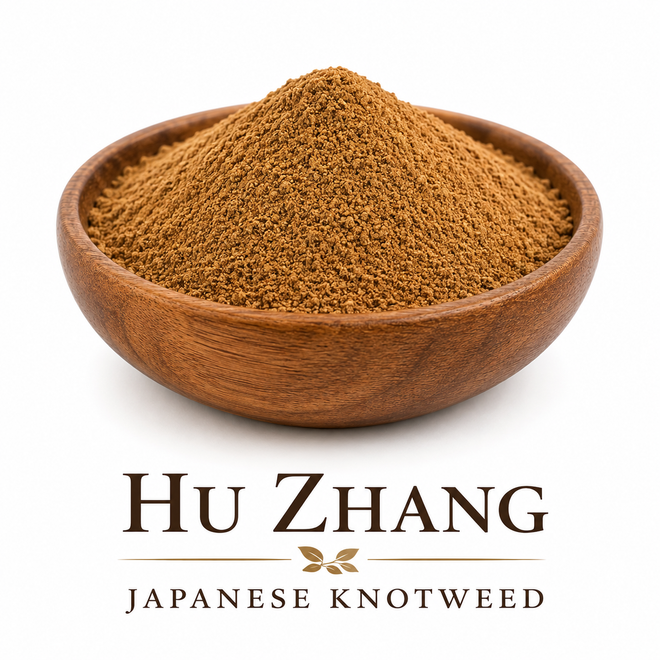
Hu Zhang (Japanese Knotweed Root) – Organic Tea Cut Coarse Ground (40–60 Mesh)
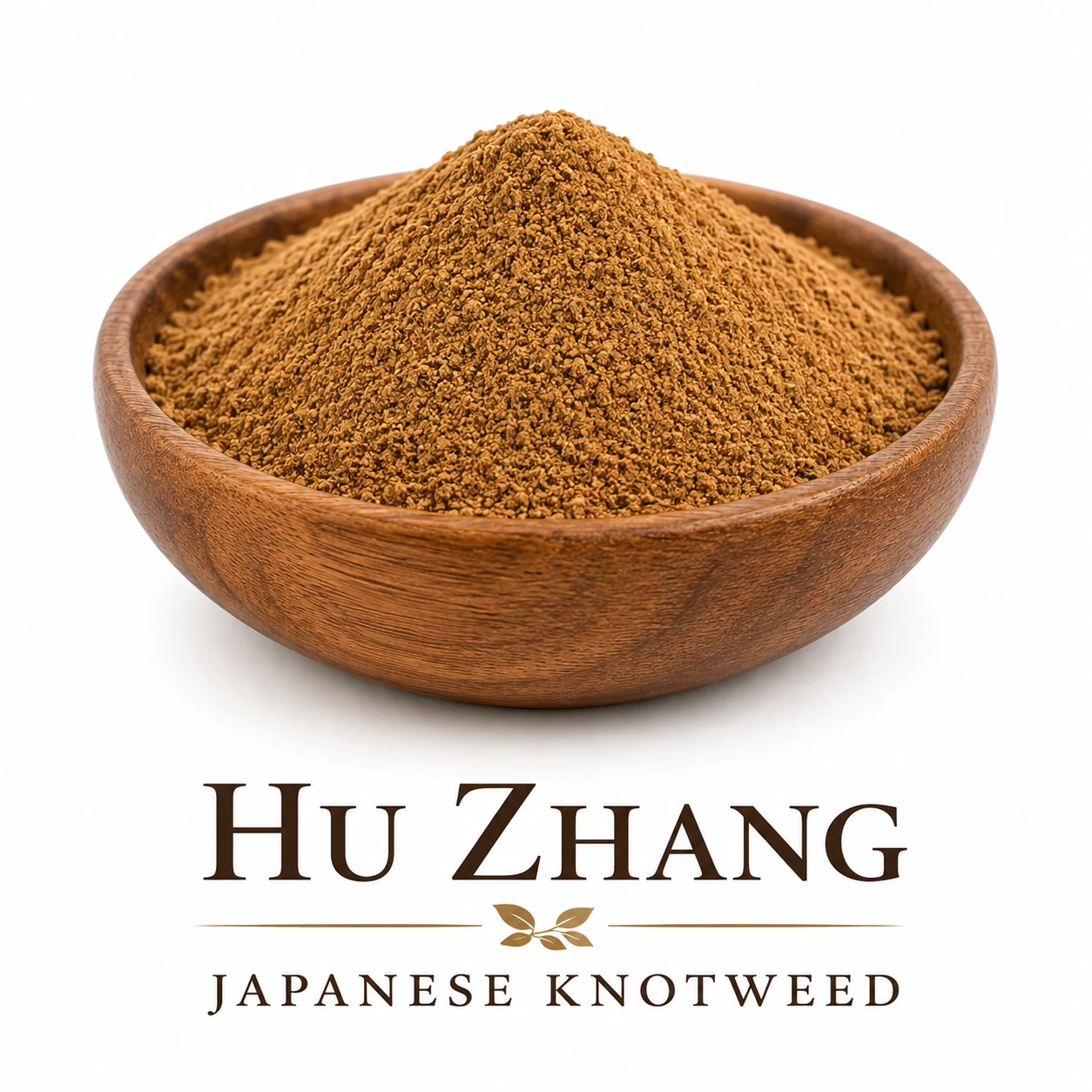
Hu Zhang Tea Cut – Japanese Knotweed Coarse Ground Root
A Convenient, Versatile Grind of Traditional Hu Zhang
Hu Zhang (Japanese Knotweed), botanically known as Polygonum cuspidatum, is a well-known root used in Traditional Chinese Herbalism. Our Hu Zhang Tea Cut is more finely ground than traditional sliced root, with a coarse, brown-sugar-like texture that makes it easy to measure, prepare, and use.
This versatile grind is an excellent choice for customers who want something finer than cut root but not as finely milled as powder. It works especially well for traditional decoctions and can also be used for filling capsules.
Why Choose Hu Zhang Tea Cut?
✓ Convenient coarse-ground texture — approximately the consistency of brown sugar
✓ Easier to measure and prepare than larger root pieces
✓ Excellent for traditional decoctions
✓ Suitable for filling capsules
✓ Single-herb product — Hu Zhang / Japanese Knotweed
✓ A versatile alternative to finely powdered Hu Zhang
Not quite a powder. Not large pieces of root. Hu Zhang Tea Cut gives you a convenient grind that's easy to work with and versatile enough for everyday herbal preparation.
Why This Hu Zhang Is Different
Not all Japanese Knotweed is processed the same. The form, grind, and preparation directly affect how clean your tea is and how easy it is to use.
| 1st Chinese Herbs | Typical Market | |
|---|---|---|
| Form | Tea cut coarse ground (clean brewing) | Fine powder or inconsistent cuts |
| Texture | Sand-like for controlled extraction | Muddy or overly fine |
| Use Flexibility | Tea, decoction, tincture, capsule | Limited use depending on form |
| Testing | Dual-lab tested | Rarely disclosed |
What Is Hu Zhang Used For?
Hu Zhang (Japanese Knotweed root) is a traditional Chinese herb valued for its naturally occurring plant compounds, including stilbenes like resveratrol and polydatin, along with anthraquinones such as emodin and physcion. It is commonly used in traditional herbal practices to support overall balance and circulation.
What Most People Get Wrong About Hu Zhang
- Not all forms brew the same — powder often creates muddy tea
- Texture determines usability more than people realize
- Quality and processing affect how well it performs in preparation
Key Herbal Properties
- Contains naturally occurring resveratrol and polydatin
- Traditionally used for circulation and balance
- Provides a broad spectrum of plant compounds
- Commonly included in multi-herb protocols
How to Use Hu Zhang
Tea / Infusion
Place in tea bag or infuser • steep 10–15 minutes • longer steep = stronger extraction
Decoction (Traditional Method)
Simmer gently for 20–30 minutes • strain well
Tincture
Alcohol-based extraction often used for certain compounds
Capsules
Can be encapsulated, though coarser than powder
Topical Use
Traditionally used in poultices or soaks (avoid broken skin)
Note: Consult a professional for proper dosage.
What to Expect
- Short-term: mild, gradual support
- Mid-term: improved consistency in use
- Long-term: best results when used as part of a routine
Product Details & Authenticity
| Common Name: | Japanese Knotweed |
| Botanical Name: | Polygonum cuspidatum |
| Pinyin: | Hu Zhang |
| Part Used: | Root / Rhizome |
| Form: | Tea Cut Coarse Ground (40–60 mesh) |
| Origin: | China |
| Size: | 1 lb |
| Ingredients: | 100% single herb (no additives) |
| Brand: | Nuherbs Organic |
Commonly Purchased Together
- Hu Zhang + Andrographis
- Hu Zhang + Cat’s Claw
- Hu Zhang + Eleuthero
Combine these for a more complete herbal routine
Important Safety Information
- Do not use if pregnant or nursing
- Use caution with blood thinners or before surgery
- Avoid high doses unless directed
- Consult a healthcare professional before use
This information is for educational purposes only and is not intended to diagnose, treat, cure, or prevent any disease.
Frequently Asked Questions
Is Hu Zhang the same as Japanese Knotweed?
Yes, Hu Zhang is the traditional Chinese name for Japanese knotweed root.
What does “tea cut” mean?
It refers to a coarse, sand-like texture that brews cleaner tea than powder.
Does Hu Zhang contain resveratrol?
It naturally contains stilbenes such as resveratrol and polydatin.
Can it be used in tea?
Yes, this form is specifically designed for tea and decoctions.
Helpful Resources
Ready to Add Hu Zhang to Your Routine?
Shop Now – Clean, Tested, and Ready for Use
Check out our How to Use Bulk Herbs page to see how to use herbs correctly.
Nuherbs
Each batch of herbs is dual-lab tested by in-house lab and independent third party lab. In-house lab is equipped with instruments such as a high performance liquid chromatograph, moisture determination meter, Fourier transform infrared spectrometer, atomic absorption spectrophotometer, gas chromatograph, etc.
In addition, the following additional tests are performed:
- Microbacteria
- Pesticides - over 200 pesticides tested for (Uab 2000 screen)
- Heavy Metals - Lead, Mercury and Arsenic
Traditional Chinese Herbs
Chinese Traditional herbs should be regarded as an added feature to modern western healthcare, and not as a replacement. Chinese traditional herbs (Teas) emphasize harmony, and balance.
References
- University of Missouri-Columbia. Grapes May Minimize Brain Damage In Stroke Victims. Science Daily (2003, November 27). <http://www.sciencedaily.com/releases/2003/11/031126070238.htm>.
- People Against Cancer. Resveratrol - The Wonder Nutrient. Finding the Best Cancer Treatement (2008, September 16). <http://www.peopleagainstcancer.com/pdfs/news/20080916n1.pdf>.
- http://www.chineseherbshealing.com/japanese-knotweed/
- https://tcmwiki.com/wiki/hu-zhang
- https://herbpathy.com/Uses-and-Benefits-of-Japanese-Knotweed-Cid3279