

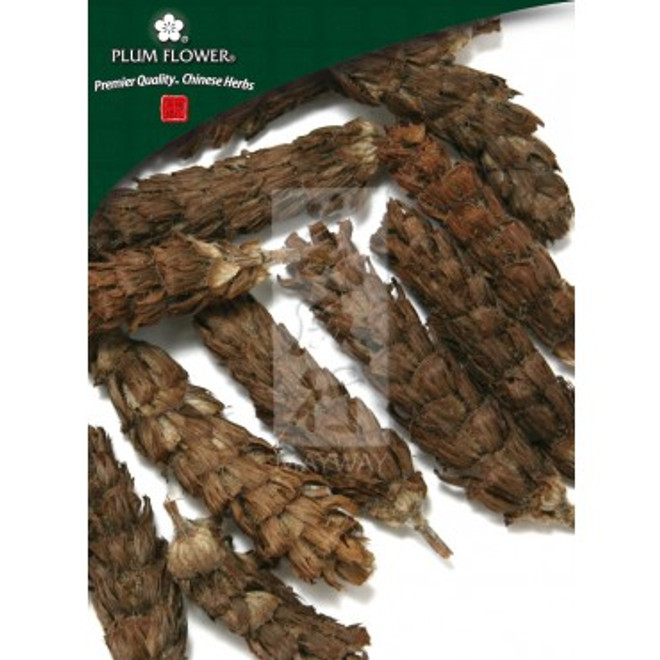
Xia Ku Cao (夏枯草) — Self-Heal Spike (Prunella vulgaris) Bulk Herb
Cooling support for “Liver fire” patterns, eye heat, and hot swelling—without the hype.
| Form: Cut/Sliced spike | Origin: China | Brand: Plum Flower (species-authenticated) | Size: 1 lb
Quick facts on Prunella Vulgaris - Self Heal
- Common names: Self-Heal Spike, Prunella Spike, Spica Prunellae
- Botanical name: Prunella vulgaris (spike)
- TCM nature/taste: Bitter, Acrid, Cold
- Meridians: Liver, Gallbladder
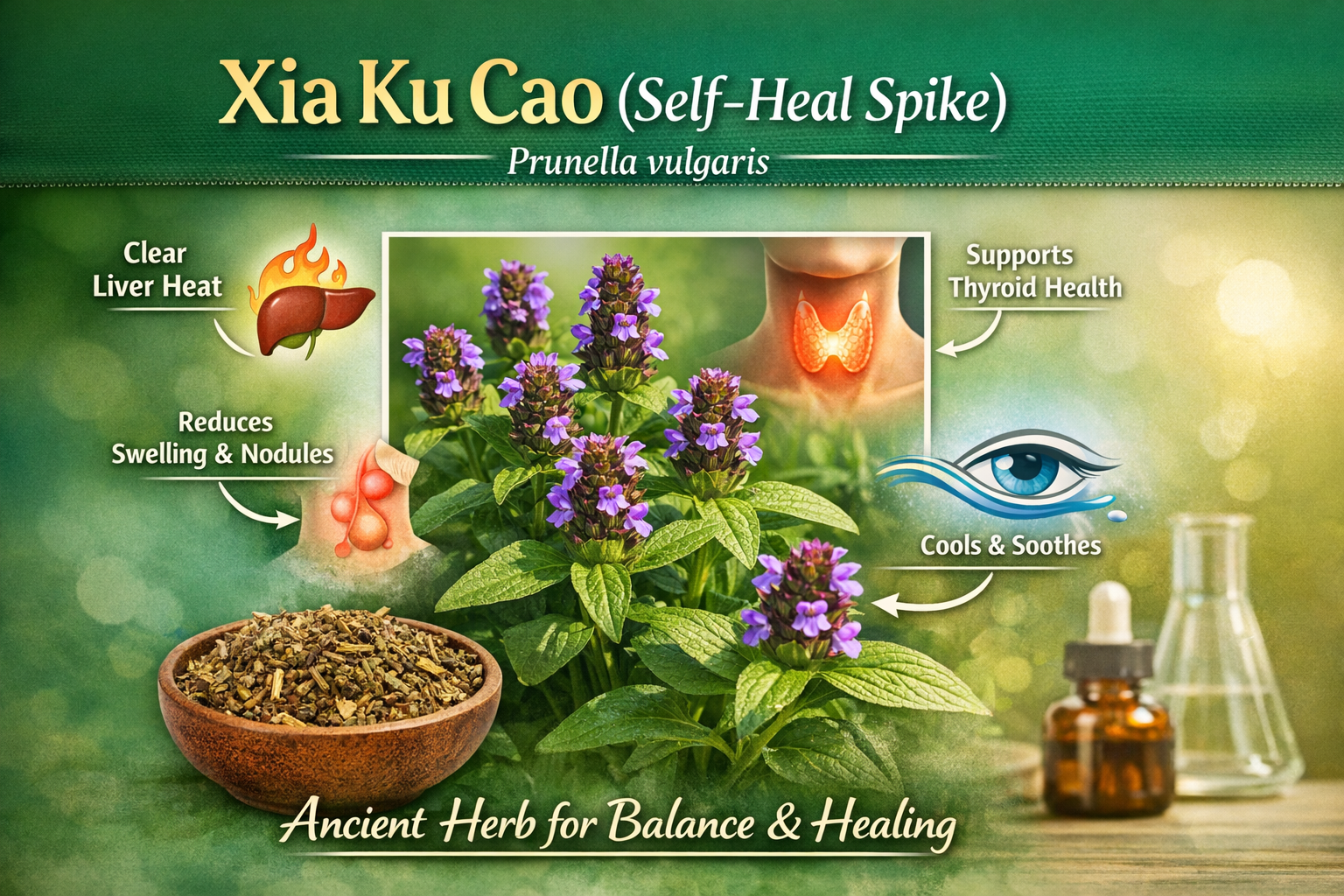
- Traditional functions: Clears Liver fire, benefits the eyes, dissipates clumps/nodules
- Best fit: “Heat rising” signs (red eyes, head pressure), hot/tender swelling patterns
- Not ideal for: Cold digestion / loose stools unless balanced by a practitioner
Why Xia Ku Cao is one of TCM’s go-to “cooling” herbs
In Traditional Chinese Medicine, Xia Ku Cao is valued for helping cool “Liver fire” and for addressing heat + stagnation patterns that can show up as red, irritated eyes, head tension, or hot swelling—especially around the neck and lymph areas. It’s often used as part of a formula approach rather than as a one-ingredient “miracle.”
Jump to what you need
- What is Xia Ku Cao?
- TCM pattern guide: when it fits (and when it doesn’t)
- Neck/thyroid area support: what to know (DSHEA-compliant)
- How to use (tea/decoction/powder)
- Best herb pairings
- Quality: how to pick a good Xia Ku Cao
- Cautions & who should avoid it
- FAQ
- Research & references (PubMed)
What is Xia Ku Cao?
Xia Ku Cao (夏枯草) is commonly sold as Prunella Spike or Self-Heal Spike. It is traditionally used to cool internal heat and support healthy movement of Qi and fluids when heat and stagnation are part of the picture. This product is the dried spike form of Prunella vulgaris.
TCM pattern guide: when Xia Ku Cao fits
Common traditional “yes” signals
- Heat rising to the head/eyes: red, irritated eyes; head pressure; tension headaches that feel “upward”
- Hot swelling patterns: tender, reactive swelling (often discussed around the neck/lymph regions)
- Stress + heat: wiry/tight feeling with heat signs (practitioner interpretation varies)
When to pause or get guidance
- Cold digestion: loose stools, low appetite, feeling chilled easily
- Pregnancy or nursing: avoid unless your clinician specifically approves
- Complex medical conditions: coordinate with your licensed clinician
Plain-English translation: Xia Ku Cao is a cooling, draining herb. If you already run “cold,” it may not be the best solo choice.
Neck/thyroid area support: what to know (without hype)
Xia Ku Cao is traditionally used for “clumps” in the neck area—often discussed today in the context of thyroid or lymph-related nodules. Some modern studies explore Prunella vulgaris preparations as an adjunct in thyroid nodule contexts, but this does not replace medical evaluation, labs, imaging, or prescribed care.
- New or changing neck lump? Get it assessed first.
- Already under care? Ask your clinician whether an herbal adjunct is appropriate for you.
How it may support the body (modern perspective)
Prunella vulgaris contains multiple compound families studied for antioxidant and inflammation-modulating activity, as well as antimicrobial potential. Practically, this is best thought of as “whole-system support” rather than a single-target herb.
How to use Xia Ku Cao
1) Tea / Decoction (most traditional)
- Traditional range: 9–15g dried herb per day (commonly cited in TCM references)
- How: Simmer 15–25 minutes; strain and sip
- Practical tip: Start lower if you’re sensitive, and avoid long-term unsupervised use if it irritates digestion.
2) Powder (simple, fast)
- Common use: 1–2g, 1–2x daily
- How: Mix into warm water or tea
3) Traditional external use
Some traditional use includes a cooled tea compress for hot, irritated areas. If you have sensitive skin, patch test first.
What many people notice: cooling comfort can feel quicker, while stubborn “clump/swelling” patterns tend to be slower and are commonly addressed with formulas—not single herbs.
Best herb pairings (traditional-style combinations)
- For eye heat support: Ju Hua (Chrysanthemum)
- For stronger heat-draining direction: Long Dan Cao (practitioner-guided)
- For hot sore throat patterns: Jin Yin Hua / Lian Qiao (often in formula-style approaches)
Quality: how to pick a good Xia Ku Cao
- Correct plant part: Look for “spike / fruit spike” (not only leaf)
- Identity transparency: Botanical + pinyin clearly listed (Prunella vulgaris, Xia Ku Cao)
- Clean handling: Airtight packaging and proper storage
- Trust signals: GMP-style sourcing, contaminant screening, and COA available upon request
Plum Flower quality notes: Plum Flower is a widely recognized manufacturer and distributor known for identity-forward labeling and quality practices. COAs are typically available upon request.
Cautions & who should avoid it
- Avoid during pregnancy or nursing unless your clinician approves.
- May aggravate weak digestion/cold patterns (loose stools, low appetite).
- Long-term use may irritate the stomach in sensitive individuals.
- If you take medications or have a medical condition, consult your clinician before use.
FAQ
Does Xia Ku Cao have caffeine?
No—this is an herb (not tea leaves), so it is naturally caffeine-free.
Can I take it every day?
Many people use it in short “cooling” cycles. For longer use—especially if your digestion is sensitive—get practitioner guidance.
Is it safe with thyroid medication?
Coordinate with your clinician. Herbs can be supportive, but they should not replace evaluation, monitoring, or prescribed therapy.
What if I have cold digestion?
This herb is bitter/cold and may not be a fit as a solo herb. A practitioner may balance it in a formula or choose another approach.
How do I store it?
Keep sealed, cool, dry, and away from sunlight and strong odors.
Research & references (PubMed)
- Thyroid nodules (adjunct research): PMID 34731129
- Anti-inflammatory activity: PMID 35636653
- Antioxidant effects: PMID 38732062
- Antimicrobial activity: PMID 38472772
Related links (helpful next steps)
- How to Use Bulk Herbs
- 7 Common Mistakes (and how to fix them)
- Contact Us
- Free Ebook: 10 Vital Medicinal Herbs
Educational information only. Herbs are not intended to diagnose, treat, cure, or prevent any disease.