

Pueraria Lobata Flower (Ge Hua) Cut Herb — 1 lb (Plum Flower)
Unsulfured • Species-Authenticated • Additive-Free • Traditional Wellness Support
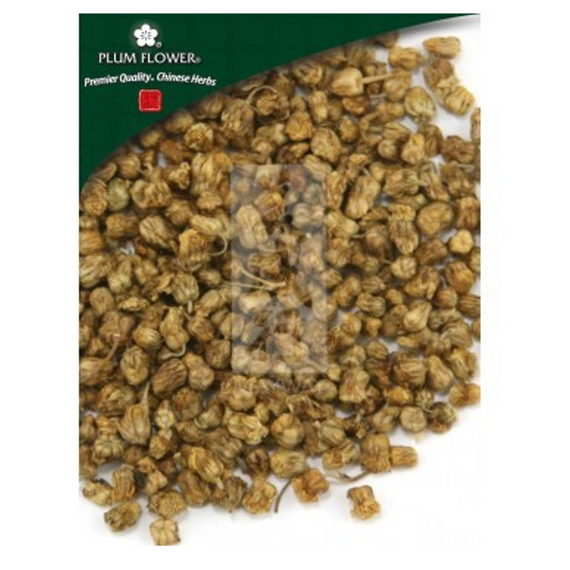
Pueraria Lobata Flower (Ge Hua) is a sweet, neutral traditional Chinese herb associated with the Stomach channel in TCM. This cut form is made for tea/decoction use and is ideal for customers who want an unsulfured, additive-free, species-authenticated herb from Plum Flower—with COA available upon request.
Quick Facts
-
Common Name: Pueraria Lobata Flower
-
TCM Name (Pin Yin): Ge Hua (葛花)
-
Botanical Name: Pueraria lobata flower
-
Form: Cut / sliced (natural size variation)
-
Taste & Temperature (TCM): Sweet, Neutral
-
Channels/Meridians (TCM): Stomach
-
Ingredients: 100% single herb (no additives)
-
Origin: China
-
Brand: Plum Flower (species-authenticated)
-
Net Weight: 1 lb (approx. 454 g)
-
Packaging: Airtight sealed bag
-
COA: Available upon request
-
Cautions: Not for pregnancy/nursing unless advised by a qualified professional
-
Prop 65: See notice below
What Is Ge Hua?
Ge Hua is the flower of Pueraria lobata. In Traditional Chinese Medicine, it is described as sweet and neutral and is traditionally chosen for gentle, food-like support when someone wants to feel more balanced and comfortable—especially after dietary excess.
This product page focuses on traditional use and general wellness support. It is not medical advice and does not replace care from a qualified professional.
Why Customers Choose This Ge Hua
1) It’s Unsulfured
“Unsulfured” means the herb is processed without sulfur fumigation, a method sometimes used to alter appearance or storage characteristics. Many customers prefer unsulfured herbs for transparency and traditional handling.
2) Single-Herb, Additive-Free
This is 100% Pueraria lobata flower — no fillers, no hidden blends, no added ingredients.
3) Species-Authenticated Brand
Plum Flower is known for clear labeling, authenticated species, and consistent manufacturing standards.
4) Real-World “Bulk Herb” Format
Cut/sliced herbs are designed for tea and decoctions, which many customers prefer because they can control strength, flavor, and brewing style.
Traditional Use and Wellness Support
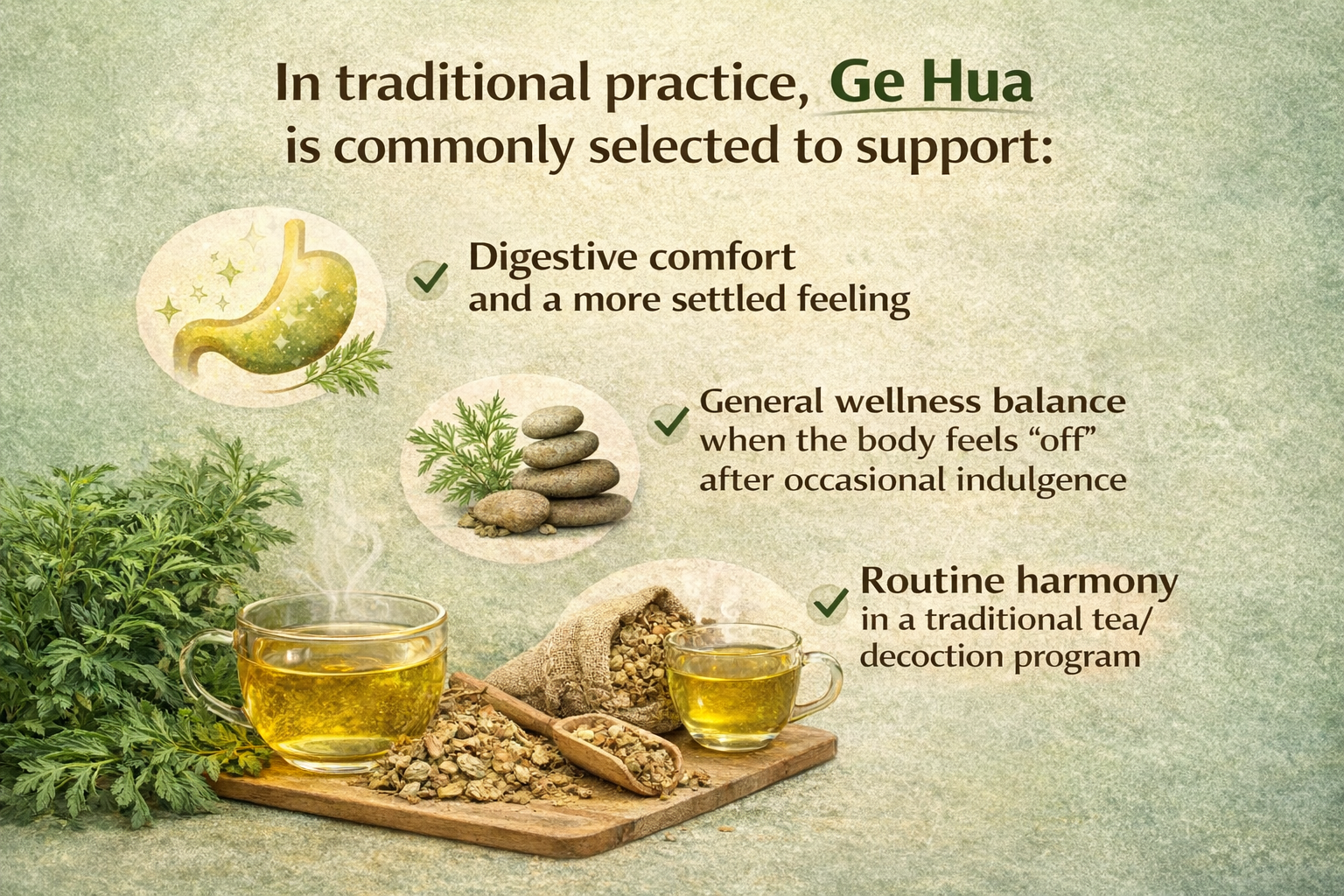
In traditional practice, Ge Hua is commonly selected to support:
-
Digestive comfort and a more settled feeling
-
General wellness balance when the body feels “off” after occasional indulgence
-
Routine harmony in a traditional tea/decoction program
Important: This is traditional-use information for general wellness support. If you’re managing a medical condition, pregnant/nursing, or taking medications, consult a qualified practitioner.
How to Use Ge Hua (Cut Form)
Because this is cut herb, it’s typically prepared as a tea or decoction.
Option A: Tea (steep)
-
Add the herb to a mug or teapot.
-
Pour hot water over it.
-
Steep, strain, and sip warm.
Option B: Decoction (traditional simmer)
-
Add the herb to a pot with water.
-
Bring to a gentle simmer.
-
Simmer, strain, and drink as directed.
How much should I use?
Follow practitioner instructions when available. If you are new to bulk herbs, start conservatively and observe how your body responds.
What Does “Cut/Sliced” Mean?
“Cut” means the plant material is sliced into natural pieces for brewing. Sizes vary because it’s a botanical product—variation is normal and expected.
Storage Tips
-
Keep sealed in a cool, dry place
-
Avoid direct sunlight and moisture
-
Reseal tightly after each use to preserve aroma and freshness
About Plum Flower Quality Standards
Plum Flower is a widely established manufacturer of Chinese herbs and herbal products with emphasis on quality control.
Quality attributes customers look for:
-
Harvested at appropriate maturity
-
No sulfur processing (unsulfured)
-
Manufactured in GMP-certified facilities
-
Quality control tests performed at manufacturing and confirmed via third-party testing
-
Airtight sealed packaging
-
Clearly labeled Pin Yin and botanical name
-
Certificate of Analysis available upon request
-
Conforms to standards used in Chinese pharmacopeial practice
-
No dyes, colors, bleaching, or preservatives
Cautions and Safety
-
Do not use if pregnant or nursing unless advised by a qualified professional.
-
Consult your clinician/practitioner if you have a medical condition, take medications, or are preparing for surgery.
-
Discontinue use if sensitivity occurs.
California Prop 65 Notice
Some natural products (including herbs) may carry Prop 65 warnings due to potential exposure to naturally occurring trace constituents or environmental contaminants. If you would like product-specific verification, request the COA.
FAQs
Is Ge Hua the same as Kudzu Root?
No. Ge Hua is the flower of Pueraria lobata. The root is a different plant part with different traditional applications.
What does “unsulfured” mean?
It means no sulfur fumigation was used during processing.
How do I prepare cut herbs correctly?
Use our step-by-step guide: How to Use Bulk Herbs
How long does 1 lb last?
It depends on how often you brew and how much you use each time. Many customers choose 1 lb as a “working size” for regular tea routines.
Shop Pueraria Lobata Flower (Ge Hua) — 1 lb Plum Flower
If you want an unsulfured, additive-free, species-authenticated Ge Hua in a true bulk herb format for tea/decoction, this is the trusted option.
RELATED LINKS
How To Use Bulk Herbs: Easy Step By Step Guides
Common Mistakes And How To Correct Them
References
Flower-specific (Ge Hua / Puerariae Flos) reviews & background
-
Puerariae Flos (Ge Hua) – review / overview
https://pubmed.ncbi.nlm.nih.gov/36621660/
Flower constituents (isoflavones like kakkalide / tectoridin)
-
Urinary metabolites of kakkalide (major flower isoflavonoid)
https://pubmed.ncbi.nlm.nih.gov/19910516/ -
Metabolism / estrogenic activity context of kakkalide & related compounds
https://pubmed.ncbi.nlm.nih.gov/16755017/
Alcohol-exposure model research
-
Tectoridin (from Pueraria lobata flower) and acute ethanol-induced liver steatosis in mice
https://pubmed.ncbi.nlm.nih.gov/20637825/ -
Human study: Pueraria thomsonii dried flower extract effects on ethanol/acetaldehyde measures
https://pubmed.ncbi.nlm.nih.gov/12395916/
Safety / toxicology (flower extract)
-
Oral toxicology study of pueraria flower extract (animal data)
https://pubmed.ncbi.nlm.nih.gov/24245900/