
Tick Bites and Lyme Disease Risk: Prevention, Early Action, and Herbal Support
Author: 1st Chinese Herbs Research Team
Updated: April 14, 2026
Tick bites are increasing across the United States, and so is concern about Lyme disease and other tick-borne illnesses. Recent surveillance data has shown that emergency room visits related to tick bites are running far above what is normally seen for this time of year. That matters because rising tick exposure means more people are facing questions about prevention, removal, symptom monitoring, and what supportive steps to take next.
If you have spent time outdoors recently, especially in grassy, wooded, or brushy areas, this is not the time for guesswork. The first hours and days after a tick bite are important. This page explains what to do after a tick bite, how to reduce future exposure, what early symptoms to watch for, and how Chinese herbs are often used in supportive wellness routines for people concerned about Lyme disease.
Why Tick Bite Risk Is Getting More Attention
Health tracking has shown a sharp increase in emergency room visits for tick bites compared with the usual seasonal average. The Northeast has reported the highest level of tick-related emergency visits, followed by the Midwest, Southeast, West, and South Central regions. While spring and early summer are traditionally the busiest times for tick activity, many experts believe ticks are becoming active earlier and staying active longer.
There are several reasons this may be happening. Warmer temperatures can extend tick season. Increased rainfall can create favorable habitat conditions. Public awareness of Lyme disease has also grown, which means more people are seeking medical care after noticing a bite. At the same time, evolving case definitions and stronger public education have made tick-borne illness a larger part of the national conversation.
The main takeaway is simple: tick exposure is a growing concern, and prevention needs to become part of normal outdoor routine rather than an afterthought.
The Before and After: Why Early Action Matters
Before someone understands tick risk, they often do what most people do: ignore a bite, assume it is not serious, or wait too long to act. They may be unsure how to remove a tick, unclear about what symptoms matter, and unaware of the importance of documenting exposure. This uncertainty can lead to delayed action and unnecessary stress.
After learning what to do, the situation changes. A person knows how to remove the tick properly, clean the area, take a photo, monitor symptoms, and respond with calm, informed action. Instead of feeling powerless, they have a plan. That shift from confusion to clarity is one of the most important parts of prevention and recovery support.
When Tick Season Peaks
Tick bites often peak in late spring and early summer, especially in May and June, but that pattern is becoming less predictable. Ticks tend to become active once temperatures reach around 45 degrees Fahrenheit. If cold weather arrives later and spring warmth begins earlier, the tick season can stretch longer than many people expect.
One of the biggest concerns is the immature tick stage, often called the nymph stage. These ticks are smaller and harder to notice, which makes them easier to miss during daily checks. Because of their size and seasonal activity, they are frequently involved in human exposure.
Where Ticks Are Commonly Found
| Environmental Factor | How it Attracts Ticks | High-Risk Examples |
|---|---|---|
| Humidity & Moisture | Ticks need a humid environment to prevent desiccation (drying out). They spend much of their lives near the damp ground and leaf litter. | Creek beds, shaded stream banks, marshes, heavily mulched garden beds. |
| Cover & Shade | Sunlight and heat are dangerous to ticks. They seek out covered, shaded areas to stay cool and hydrated. | Tall grass, dense shrubbery, underbrush in forests, stone walls. |
| Access to Hosts | Ticks require blood meals to survive and reproduce. They congregate where small mammals, birds, and deer frequent. | Deer trails, edges of property near woods, overgrown fields, wildlife feeders. |
| Vegetation Height | Ticks "quest" by climbing vegetation to wait for a host. They stay between ground level and roughly three feet high. Ticks do not fall from trees. | Blades of tall grass, low-hanging tree branches, low-lying bushes. |
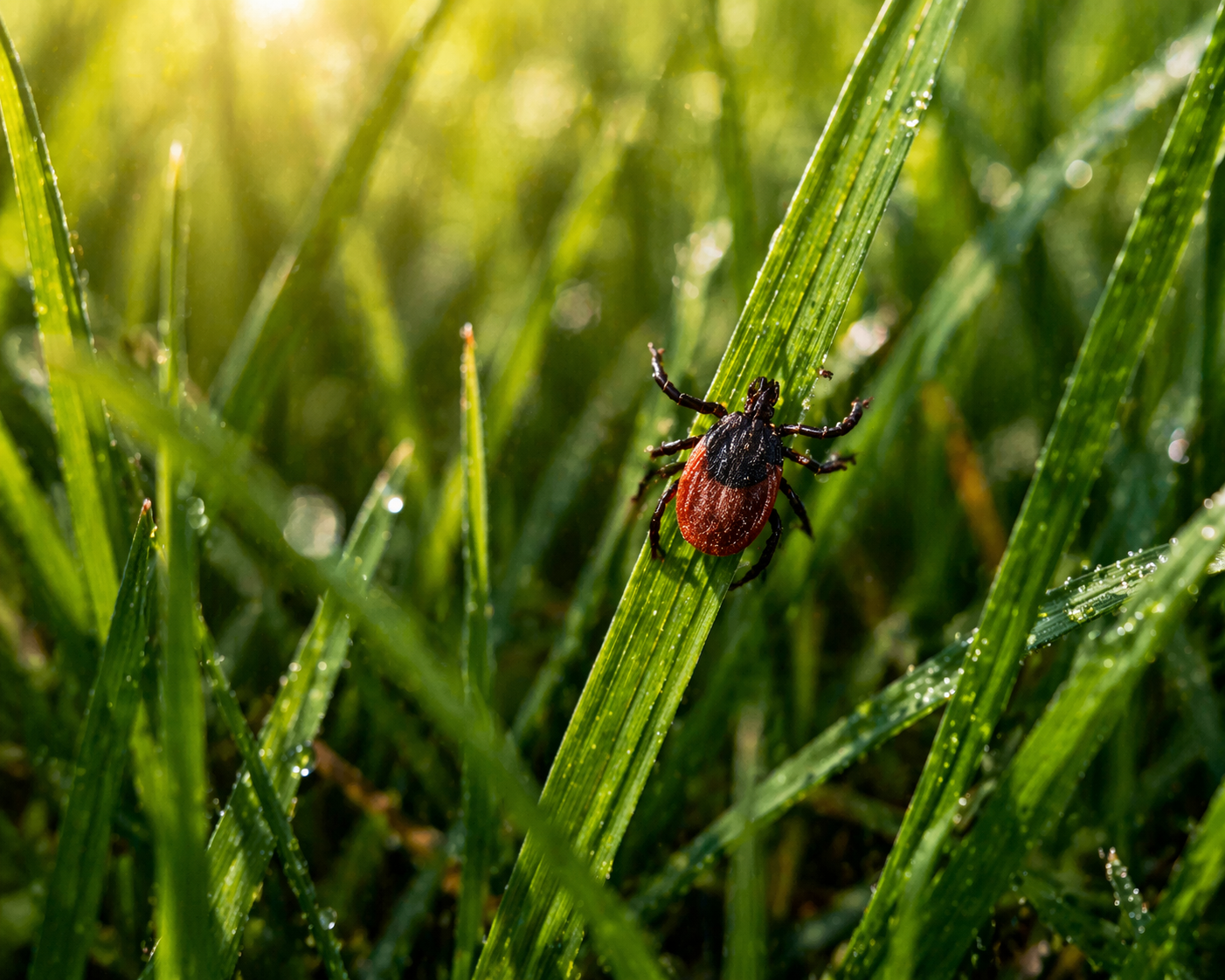
Ticks do not live everywhere equally. They strongly prefer certain environments, including tall grass, low brush, leaf litter, woodland edges, overgrown trails, and areas where small animals are common. Field mice are one of the best-known reservoir hosts in the Lyme disease cycle. When ticks feed on infected animals, they can later pass bacteria to humans.
If you spend time gardening, hiking, clearing brush, walking dogs, hunting, or simply living near wooded land, daily exposure can happen more easily than many people realize. You do not need to be deep in the forest to encounter ticks. Sometimes the highest-risk areas are the transition zones between lawn and brush.
How to Prevent Tick Bites
The best strategy is to make tick prevention routine. Wear long sleeves and long pants when possible. Stay in the center of trails instead of brushing against grass and low plants. Avoid sitting directly in leaf litter or dense vegetation. Use an EPA-registered insect repellent containing ingredients such as DEET or picaridin when appropriate, and follow label directions carefully.
Outdoor clothing and gear can also be treated with permethrin. This is commonly used on socks, pants, shoes, and equipment for added protection. Because ticks often begin on lower legs and move upward, clothing strategy matters more than people think. Light-colored clothing can also make it easier to spot ticks before they attach.
After spending time outdoors, do a full-body tick check as soon as possible. Check behind the knees, around the waist, under the arms, at the scalp line, around the ears, and anywhere clothing fits tightly. Showering after outdoor exposure can also help wash off unattached ticks and improve your chance of finding one early.
What to Do After a Tick Bite
- Remove the tick carefully.
Use fine-tipped tweezers. Grasp the tick as close to the skin as possible. Pull upward with steady, even pressure. Do not twist, jerk, burn, or smother the tick.
- Clean the skin.
Wash the bite area with soap and water, then clean it with alcohol or another appropriate skin cleanser.
- Document the exposure.
Take a photo of the tick if possible. Make note of the date, where you were, and where the tick was attached. This information can be useful later.
- Monitor for changes.
Over the next several days and weeks, watch for unusual fatigue, fever, headache, rash, muscle aches, joint pain, or changes in how you feel overall.
- Support your body early.
Many people focus only on the bite itself and forget that the body may benefit from broader support, including rest, hydration, nourishment, and immune-focused wellness strategies.
Symptoms to Watch For After a Tick Bite
Not every tick carries disease, and not every bite leads to illness. Still, it is wise to stay observant. Symptoms that often raise concern include fatigue, fever, chills, body aches, headache, joint discomfort, and skin changes. Some people notice a rash, including the classic bullseye-type pattern, but not everyone gets that presentation. Others may feel generally unwell without obvious skin findings.
Because symptoms can vary, it helps to think in terms of change from your normal baseline. If you feel noticeably off after a tick bite, that matters. Early recognition supports better decision-making.
Tick Prevention and Early Action Comparison
| Approach | What It Looks Like | Likely Outcome |
|---|---|---|
| Wait and see | No documentation, no symptom tracking, no prevention routine | More uncertainty and delayed response |
| Basic prevention | Repellent, trail awareness, clothing precautions | Lower exposure risk |
| Prevention plus early action | Tick checks, careful removal, tracking symptoms, body support | Greater confidence and faster response |
Herbal Support After Tick Exposure
Many people looking into Lyme disease also want to understand herbal support options. This is where traditional herbal systems, including Traditional Chinese Medicine, often become part of the conversation. Rather than framing herbs as quick fixes, a more useful approach is to see them as tools that may help support the body’s resilience, balance, and recovery process.
In Chinese herbal thinking, the focus is often on patterns such as heat, toxicity, stagnation, weakness, and disruption of normal flow. In modern wellness language, people often look for support in areas such as immune balance, inflammatory response, circulation, nervous system steadiness, and overall recovery capacity. These are not the same language systems, but they often overlap in practical goals.
Some herbs commonly discussed in herbal Lyme support conversations include Japanese Knotweed, Andrographis, Astragalus, Cat’s Claw, and Teasel Root. Each herb has its own traditional context, preparation style, and suitability depending on the person, the timing, and the overall wellness goal.
Commonly Discussed Herbs in Lyme-Oriented Herbal Protocols
| Herb | Chinese Name or Common Reference | Traditional or Functional Focus |
|---|---|---|
| Japanese Knotweed | Hu Zhang | Often discussed for circulation support and heat-clearing applications |
| Andrographis | Chuan Xin Lian | Commonly used in formulas aimed at clearing heat and supporting immune resilience |
| Astragalus | Huang Qi | Traditionally valued for qi support and defensive strength |
| Teasel Root | Xu Duan | Often included in broader supportive protocols focused on structure and recovery |
| Cat’s Claw | Common functional reference | Often used in modern herbal systems for immune and wellness support |
How to Think About Herbal Support the Right Way
The most grounded way to approach herbal support is not to ask, “What herb cures this?” but instead to ask, “How can I support my body intelligently and consistently?” That question leads to a better long-term strategy. The most effective routines are usually not built on panic. They are built on quality, consistency, thoughtful selection, and a realistic understanding of how herbs are used.
That means paying attention to herb quality, species accuracy, preparation methods, dosage form, and whether the herb makes sense for your current needs. It also means understanding that one herb is rarely the whole answer. Most people benefit from a systems-based approach that includes prevention habits, rest, hydration, nutritional support, and appropriate herbal guidance.
Internal Links
Questions People Are Asking
What should I do immediately after a tick bite?
Remove the tick properly with fine-tipped tweezers, clean the area, document the bite, and monitor for symptoms over the following days and weeks.
How long after a tick bite can Lyme symptoms appear?
Symptoms can appear within days or over several weeks. Fatigue, rash, fever, headache, and joint discomfort are among the best-known concerns to monitor.
Can herbs support the body after tick exposure?
Many herbs are traditionally used to support immune function, circulation, balance, and overall recovery capacity. They are best viewed as part of a broader wellness strategy.
What herbs are commonly researched for Lyme support?
Japanese Knotweed, Andrographis, Astragalus, Teasel Root, and Cat’s Claw are among the herbs most often discussed in Lyme-oriented herbal education.
Final Thoughts
Tick bites are rising, and Lyme disease concern is not going away. The strongest response is not fear. It is preparation. When you understand where ticks live, how to prevent bites, what to do after exposure, and how herbal support may fit into a wellness plan, you are in a much better position to act early and act wisely.
Disclaimer: The information on this page is for educational purposes only and is not intended to diagnose, treat, cure, or prevent any disease. Always consult a qualified healthcare professional for medical concerns, especially after a tick bite or if symptoms develop.
What the Research Shows About Herbs and Lyme Disease
Interest in herbal and botanical approaches to Lyme-related wellness has grown in recent years. While research is still developing, several published studies have explored how plant-based compounds interact with Borrelia burgdorferi (the bacteria associated with Lyme disease) and how certain herbs may support overall immune function and systemic balance.
Key PubMed Studies
1. Comprehensive Review of Herbal Supplements Used in Lyme Support
A Comprehensive Review of Herbal Supplements Used for Persistent Symptoms Attributed to Lyme Disease
This review evaluated multiple herbs commonly used in Lyme-focused wellness protocols, including andrographis, astragalus, cat’s claw, and Japanese knotweed. Researchers examined safety, traditional use, and emerging scientific insights related to these botanicals.
2. Botanical Medicines and Activity Against Lyme Bacteria
Evaluation of Natural and Botanical Medicines for Activity Against Borrelia burgdorferi
This laboratory-based study examined a range of plant extracts for activity against both active and stationary forms of Borrelia. Several botanicals demonstrated measurable activity in controlled conditions, supporting further research into plant-based compounds.
3. Johns Hopkins Research on Botanical Compounds
This study explored how certain herbal extracts performed against different growth phases of Lyme-associated bacteria in laboratory settings. Findings suggest that plant compounds may interact with microbial systems in ways that warrant continued investigation.
4. Essential Oils and Natural Compounds Research
Selective Essential Oils from Culinary Herbs Show Activity Against Lyme Bacteria
This research evaluated essential oils derived from common herbs and their activity in laboratory environments. Results contribute to the growing body of knowledge on natural compounds and their biological interactions.
Important: Much of the current research on herbs and Lyme disease is based on laboratory (in vitro) studies rather than human clinical trials. While these findings are promising and continue to guide further research, they should be viewed as part of an evolving scientific field.
Herbal strategies are best approached as part of a broader wellness plan that includes prevention, early awareness, and informed decision-making. Always consult a qualified healthcare professional for medical concerns, especially following a tick bite or if symptoms develop.