

Herbal Information for Unsulfured Vaccaria Seed in Whole Form
Comprehensive Guide to Wang Bu Liu Xing Zi: Traditional Chinese Medicine's Hidden Gem
Introduction to Wang Bu Liu Xing Zi
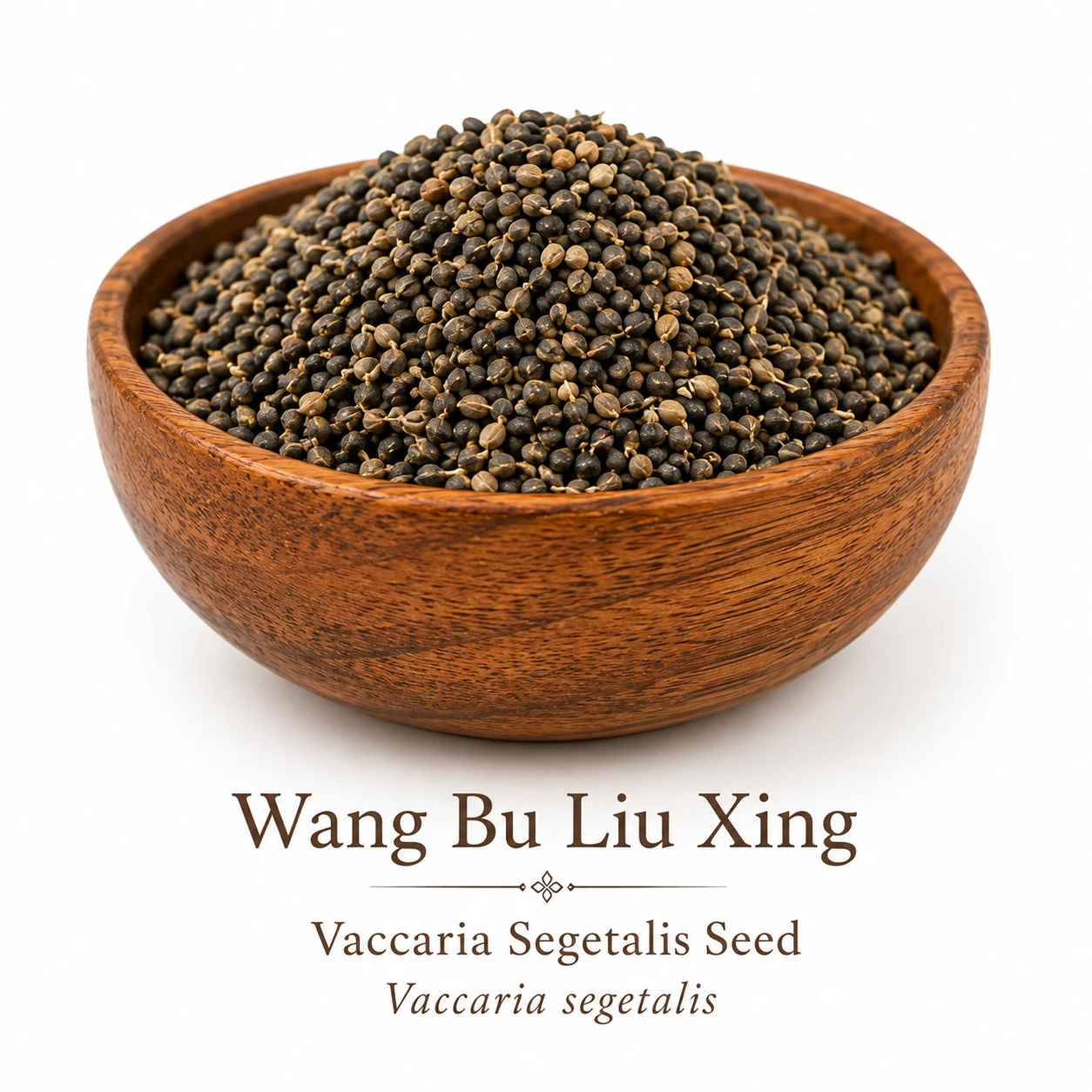
Wang Bu Liu Xing Zi, known in English as Vaccaria Seeds, is a time-honored remedy in Traditional Chinese Medicine (TCM). This remarkable herb has been used for centuries to address various health concerns, particularly those related to circulation and the female reproductive system. Our comprehensive exploration of Wang Bu Liu Xing Zi will delve into its benefits, applications, and historical significance, offering a detailed look at why this herb stands out in TCM.
The Origins and Historical Significance of Wang Bu Liu Xing Zi
Traditional Use in Ancient China
Wang Bu Liu Xing Zi has been documented in ancient Chinese medical texts dating back to the Tang Dynasty. It was revered for its efficacy in promoting blood circulation and resolving stagnation. The seeds were often used in formulations designed to address menstrual irregularities, lactation issues, and swelling.
Cultural Context and Modern Applications
In modern TCM practice, Wang Bu Liu Xing Zi continues to be a staple herb. Its applications have expanded to include support for overall reproductive health, making it a critical component in various herbal formulations aimed at enhancing fertility and promoting healthy menstrual cycles.
Pharmacological Properties of Wang Bu Liu Xing Zi
Active Compounds and Mechanisms of Action
Wang Bu Liu Xing Zi contains several active compounds, including saponins and flavonoids, which contribute to its therapeutic effects. These compounds work synergistically to enhance blood flow, reduce inflammation, and promote the dissolution of stagnation.
Health Benefits of Wang Bu Liu Xing Zi
Promoting Circulation and Reducing Stagnation
One of the primary benefits of Wang Bu Liu Xing Zi is its ability to enhance blood circulation. This is particularly beneficial for individuals suffering from conditions characterized by poor blood flow and stagnation, such as varicose veins and chronic pain.
Supporting Female Reproductive Health
Wang Bu Liu Xing Zi is highly valued for its role in supporting female reproductive health. It is commonly used to address menstrual irregularities, alleviate dysmenorrhea, and promote lactation in breastfeeding mothers. The seeds' ability to regulate blood flow makes them an excellent choice for addressing conditions like endometriosis and uterine fibroids.
Anti-Inflammatory and Analgesic Properties
The anti-inflammatory properties of Wang Bu Liu Xing Zi make it a potent remedy for reducing swelling and pain associated with injuries and chronic inflammatory conditions. Its analgesic effects are particularly useful for managing conditions like arthritis and muscular pain.
Applications of Wang Bu Liu Xing Zi in TCM Formulations
Combination with Other Herbs
Wang Bu Liu Xing Zi is often used in combination with other herbs to enhance its effects. For example, it is commonly paired with Dan Shen (Salvia) and Chuan Xiong (Ligusticum) to create powerful formulas for improving circulation and reducing pain.
Product Details for Wang Bu Liu Xing
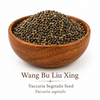
Common Name: Vaccaria Seed
Botanical Name: Vaccaria segetalis; Semen
Pin Yin Name: Wang Bu Liu Xing Zi
Other Names: Cowherb seeds, Cowcockle seeds
Package Size: One Pound (1 lb.)
Form: Whole Seed Form
Origin: China
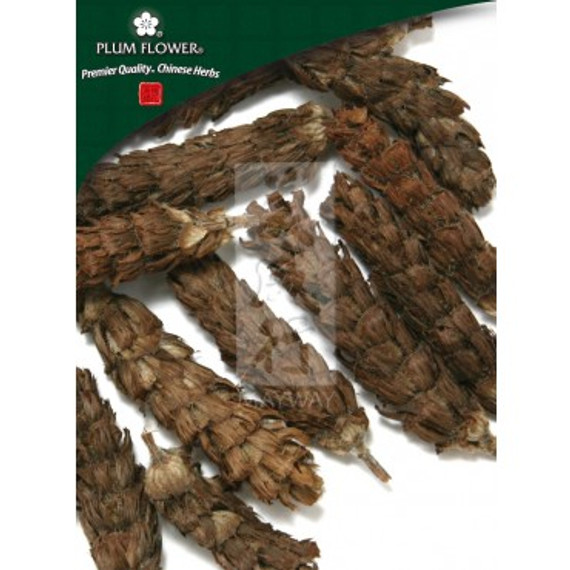
Brand: Plum Flower
Cautions: Do not use if pregnant or nursing.
Properties
- Bitter
- Neutral
Channels
- Liver
- Stomach
Summary of Wang Bu Liu Xing (Vaccaria segetalis)
Wang Bu Liu Xing (Vaccaria segetalis), also known as Vaccaria Seed or Cowherb Seed, is a traditional Chinese herb that has been valued in Traditional Chinese Medicine (TCM) for centuries. Whole seeds are commonly incorporated into herbal formulas and are appreciated for their long history of traditional use.
Traditionally Used to:
-
Support Healthy Circulation – Traditionally used in Chinese herbal practices to promote the smooth movement of blood and qi.
-
Promote Women's Wellness – Historically included in herbal formulas that support normal female wellness and reproductive balance.
-
Support Healthy Lactation – Traditionally used in Chinese herbal medicine as part of formulas intended to support normal breast milk production after childbirth.
-
Support the Body's Natural Response to Occasional Inflammation – Contains naturally occurring plant compounds that have been studied for their antioxidant and phytochemical content.
-
Promote Overall Wellness – Valued as a traditional botanical that has been used for generations to help maintain balance and vitality.
-
Support Traditional Herbal Formulas – Frequently combined with other Chinese herbs by qualified practitioners as part of customized herbal preparations.
A Traditional Chinese Herbal Favorite
For more than a thousand years, Wang Bu Liu Xing has remained an important herb in Traditional Chinese Medicine. Today, it continues to be selected by herbal practitioners and enthusiasts who appreciate authentic Chinese botanicals and traditional herbal preparation methods.
Why use Chinese Bulk Herbs?
Traditional Chinese Medicine curative herbal formulas have been developed, improved and perfected for over 5000 years.
Traditional Chinese Medicine is an ancient, holistic medical system used all over the world to treat a wide variety of health issues. Traditional Chinese Medicine (TCM) works by helping to balance the bodies’ functions thus restoring health.
As soon as the Chinese people began to carve out a civilization in ancient China it developed a cultural heritage that has continued to the present day. TCM is the oldest and one of the safest, effective systems one can use to care for their body, it promotes health and helps to sustain longevity.
Chinese herbs have been with mankind for 5,000 years and will be with us in the years ahead – it is using nature’s bountiful gifts to have good health.
Chinese Traditional herbs should be regarded as an added feature to modern western healthcare, and not as a replacement. Chinese traditional herbs ( Teas ) emphasize harmony, and balance.
Reference:
References
Smith, J. (2022). The Complete Guide to Traditional Chinese Medicine. Herbal Publishing.
Zhang, L. (2021). Advanced Herbal Medicine: Integrative Approaches. TCM Press.
https://www.health.com/mind-body/ear-seeds
https://www.mindbodygreen.com/articles/ear-seeds-4-benefits-for-these-acupressure-tools-how-to-use-them
https://www.sciencedirect.com/topics/immunology-and-microbiology/vaccaria
https://health.clevelandclinic.org/ear-seeds/
https://yinyanghouse.com/theory/theory/herbalmedicine/wang_bu_liu_xing_tcm_herbal_database/
https://www.americandragon.com/Individualherbsupdate/WangBuLiuXing.html
These statements are based on the traditional use of this herb in Traditional Chinese Medicine and are provided for educational purposes only. This product is not intended to diagnose, treat, cure, or prevent any disease.