
Why Does My Herbal Tea Taste Weak?
The Beginner-Friendly Guide to Better Flavor, Stronger Herbal Tea, and Avoiding the “Hot Leaf Water” Problem
Last Updated: May 2026
Trusted Since 1994 | Family-Owned | Beginner-Friendly Herbal Education
Quick Fix On Why Teas Taste Like ....
|
What's The Problem |
Solution - How To Fix |
|
Tea Too Weak? |
→ Brew slightly longer → Use a little more herb → Cover your cup while steeping |
|
Tea Too Bitter? |
→ Reduce steep time → Use less herb → Try cooler water for delicate herbs |
|
Using Roots, Bark, or Mushrooms? |
→ Simmer instead of steeping |
|
Want Fuller Flavor? |
→ Improve the water-to-herb ratio → Match the brewing method to the herb type |
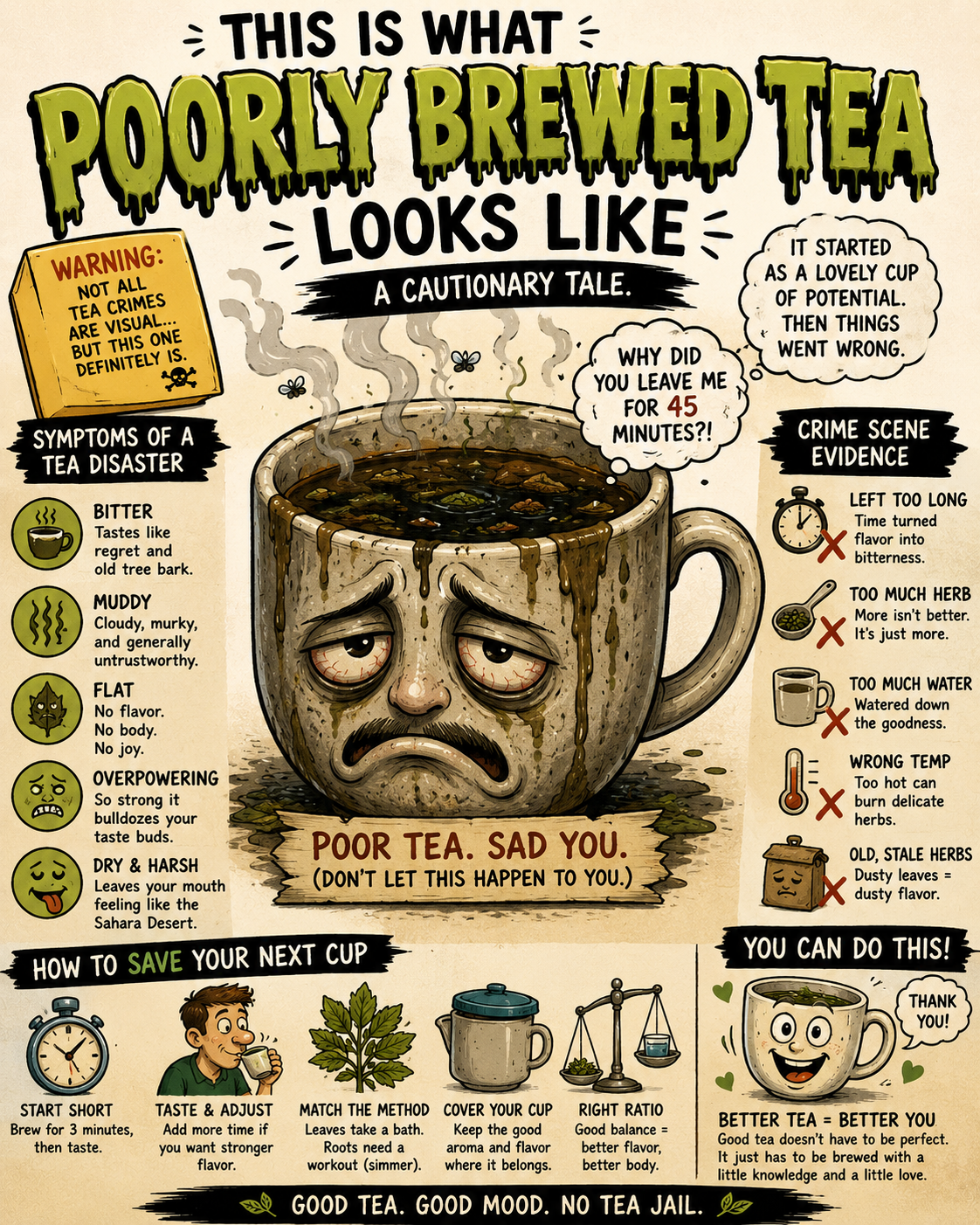 Let’s Be Honest… Sometimes Herbal Tea Tastes Terrible
Ever make a cup of herbal tea that smelled incredible…and then somehow tasted like somebody waved a leaf politely over warm water for three seconds?
Or maybe you forgot it brewing while answering emails, feeding the dog, folding laundry, and suddenly your tea tastes like:
boiled tree bark with emotional damage.
Yeah. That happens too. The truth is: most weak, bitter, muddy, or disappointing herbal tea is NOT because herbs are useless.
Usually:
the preparation method is off.
And honestly? That is GOOD news.
Because most tea problems are surprisingly fixable once you understand a few simple things.
What You Need To Know
Most herbal websites explain tea like:
you are preparing a chemistry experiment for a science fair judged by woodland elves.
Real life is not like that.
Real people:
- overbrew tea
- underbrew tea
- forget timers
- use giant mugs
- use tiny pinches of herbs
- wonder why the tea tastes weak
- assume all herbs brew like tea bags
This page was designed to make herbal tea:
easier, more practical, and far less intimidating.
Quick Answer
If your herbal tea tastes:
- weak
- watery
- bitter
- grassy
- flat
- muddy
- harsh
- hollow
…the problem is usually one of these:
- brewing too short
- brewing too long
- too little herb
- weak water ratio
- stale herbs
- wrong preparation method
- steeping roots instead of simmering them
- poor water quality
- or simply brewing the tea differently than YOUR taste buds prefer
Because here is something many websites forget:
Your taste preferences matter too.
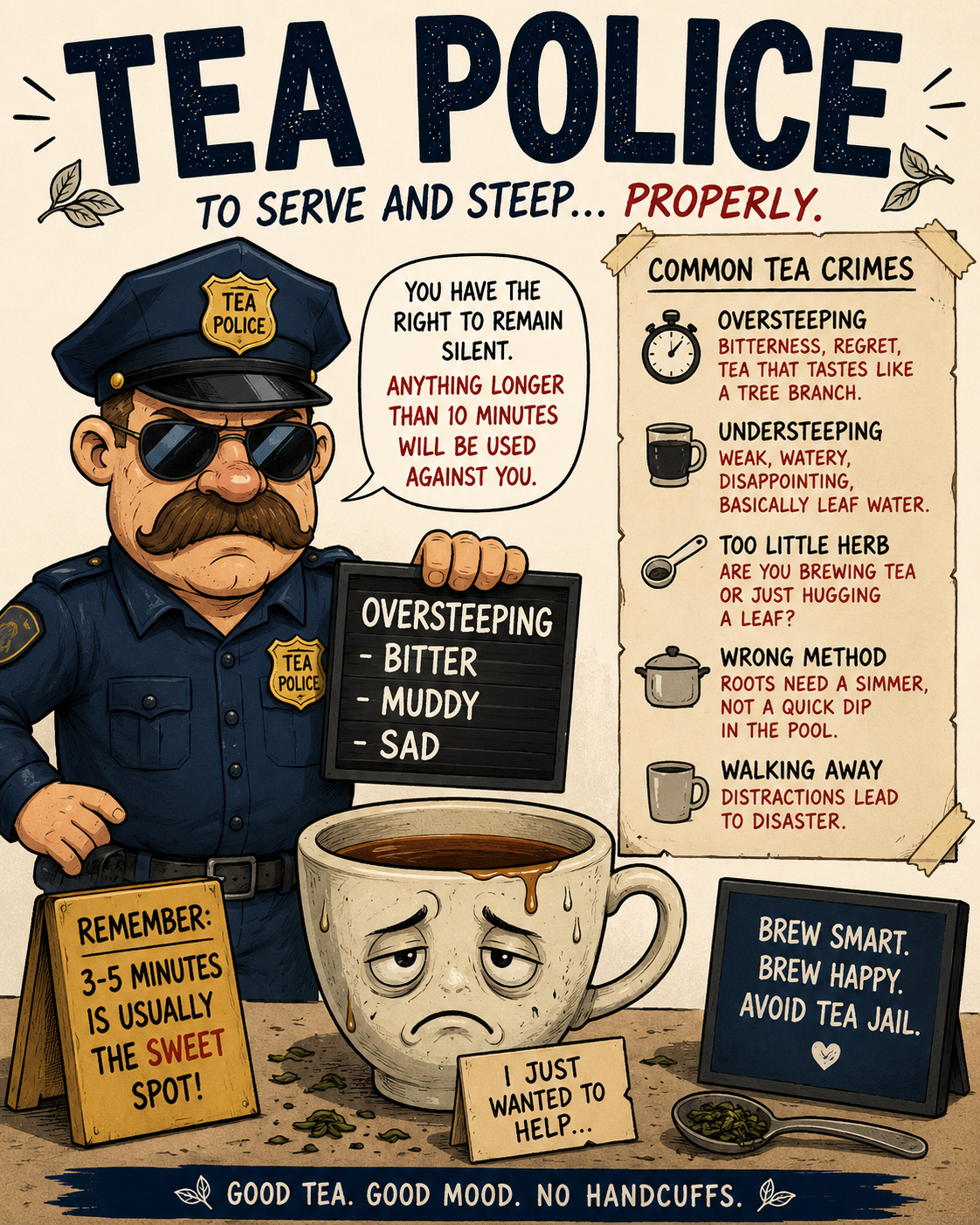 There Is No “Tea Police”
This may honestly be one of the most important things beginners need to hear.
Some people LOVE:
- strong earthy decoctions
- dark bitter tea
- rich mushroom brews
- bold herbal flavors
Others prefer:
- lighter tea
- smoother flavor
- floral notes
- softer herbal blends
Neither person is wrong.
A lot of websites act like there is:
one perfect steep time.
There is not. There are:
- starting points
- general guidelines
- suggested timing
But YOU still get to decide: what actually tastes good to you.
The Simplest Way to Find Your Perfect Tea
Honestly? Keep this simple.
Try this beginner method:
Step 1
Brew your tea for:
3 minutes
Taste it.
Step 2
Want stronger flavor?
Brew another:
2 minutes
Taste again.
Step 3
Still too weak?
Keep adjusting slowly until:
- the flavor feels balanced
- the tea feels comforting
- the aroma feels pleasant
- the strength matches YOUR preference
That is honestly how many experienced tea drinkers learned.
Not by memorizing charts.
By: tasting, adjusting, experimenting.
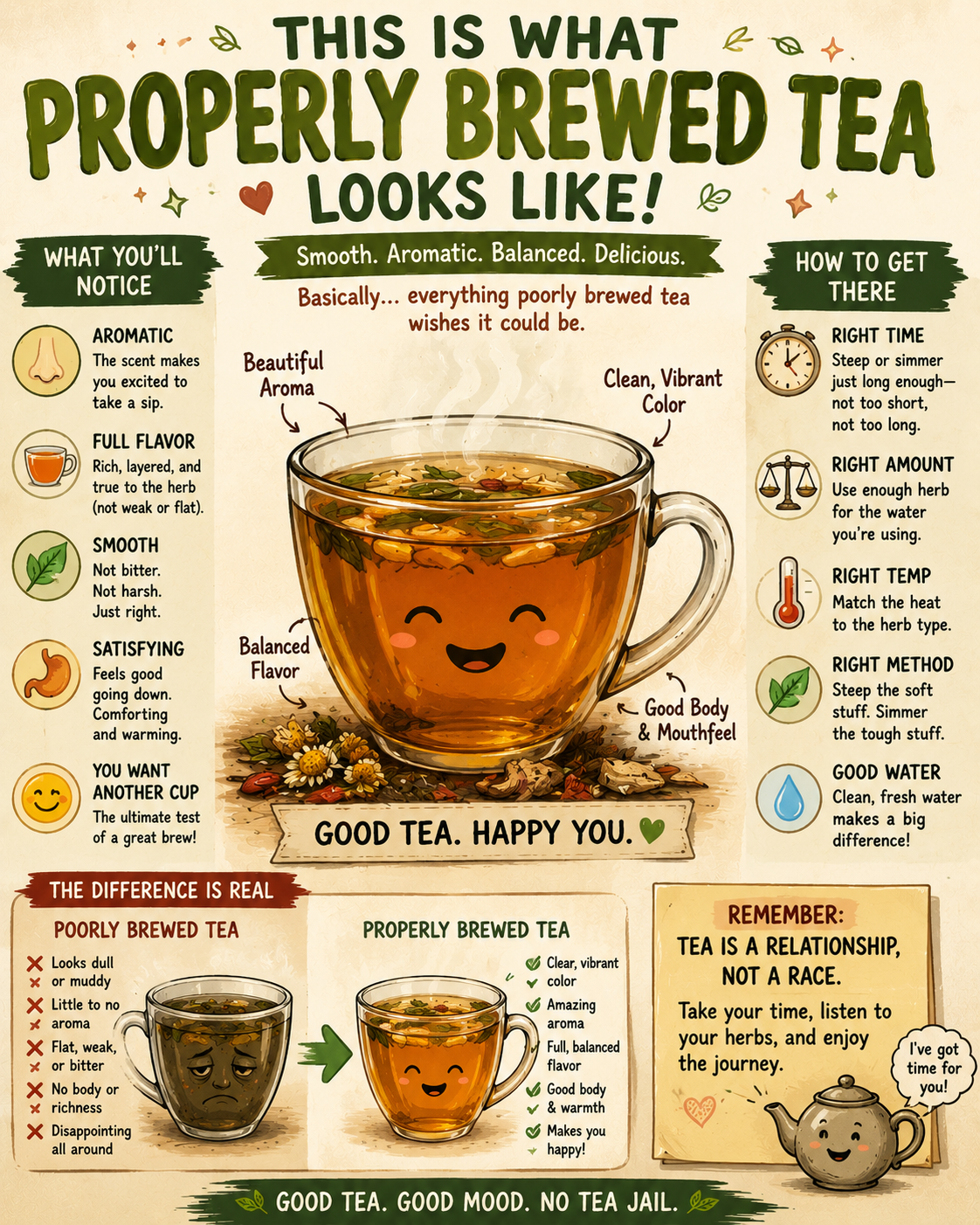 Why Brewing Time Changes EVERYTHING
The “Perfect Window” Problem
Many herbs have: a sweet spot.
Too short:
- weak
- watery
- thin
- disappointing
Too long:
- bitter
- muddy
- harsh
- overly drying
- overpowering
There is a very fine line between: “comforting herbal tea” and “forest-flavored regret.”
Delicate Herbs Usually Need Less Time
Herbs like:
- chrysanthemum
- chamomile
- peppermint
- Sang Ye (Mulberry Leaf)
often release flavor fairly quickly.
These herbs usually contain:
- lighter aromatic oils
- delicate flavor compounds
- softer volatile constituents
If steeped too long:
- tannins increase
- bitterness rises
- flavor becomes grassy or dull
Ever accidentally leave mint tea brewing for 40 minutes?
Suddenly your “relaxing tea” tastes like mint leaves filed a formal complaint.
Dense Herbs Are Completely Different
Roots, bark, mushrooms, and seeds are: much denser.
Which means:
simple steeping often leaves the flavor trapped inside.
This is why some people think: “These herbs do nothing.”
Meanwhile the roots are basically sitting in the pot thinking: “You barely warmed me up.”
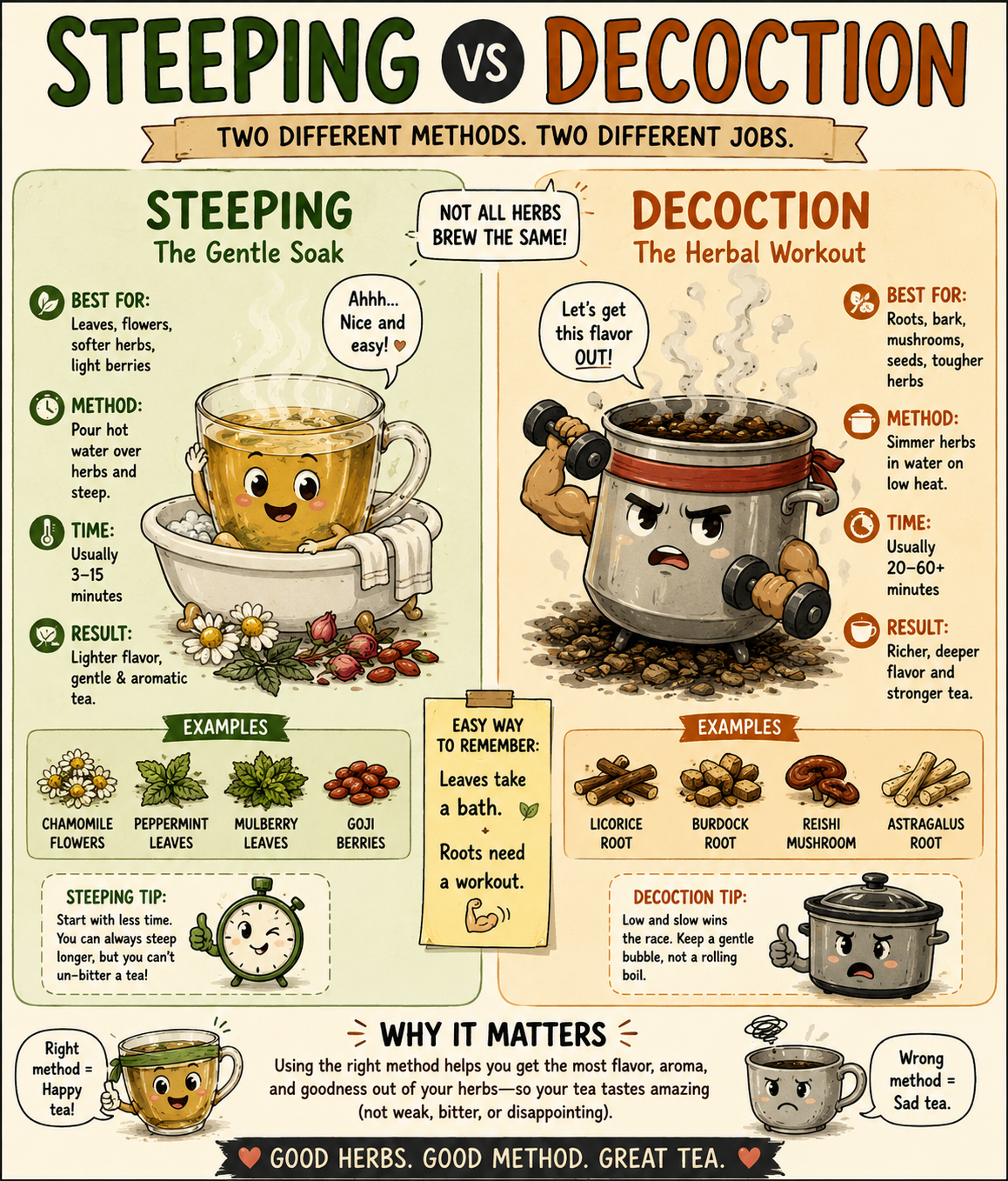
Dense herbs often need: decoction. That simply means: simmering.
How I remember this: Soft herbs steep gently. Tough roots need heat and patience.
This helps extract:
- deeper flavor
- fuller body
- richer compounds
- stronger tea
Steeping vs Decoction
This is one of the most important herbal concepts beginners can learn.
| Method | Best For | Typical Result |
|---|---|---|
| Steeping | Leaves, flowers, lighter herbs | Lighter, smoother tea |
| Decoction | Roots, bark, mushrooms, seeds | Richer, deeper extraction |
 Weak Tea Often Has No “Body”
This is something people notice immediately… even if they cannot fully explain it.
A properly brewed herbal tea often feels:
- rich
- rounded
- warm
- comforting
- satisfying
Weak tea feels:
- thin
- hollow
- watery
- empty
Like somebody described tea to water instead of actually making tea.
This usually means:
- too little herb
- too much water
- weak steep time
- incorrect preparation
The Giant Mug Problem
This is EXTREMELY common. Some people use:
- one tiny teaspoon of fluffy herbs
in: - a giant 20-ounce mug
Then wonder why the tea tastes weak.
That is usually a: water ratio problem.
More water often requires:
- more herb
OR - longer extraction
The Tannin Problem Nobody Explains Well
Tannins are naturally occurring plant compounds found in many herbs and teas.
In small amounts:
they can create:
- depth
- complexity
- structure
Too much extraction? Now things get ugly. Suddenly your tea tastes:
- bitter
- dry
- sharp
- harsh
This is why:
longer is NOT always better. A tea that tastes perfect at:
5 minutes
might taste terrible at:
25 minutes.
In Simple Terms
Too Short
- weak
- watery
- lacks depth
Too Long
- bitter
- muddy
- harsh
Properly Brewed
- smooth
- aromatic
- balanced
- rich
- comforting
Why Herb Density Matters
This is another HUGE beginner mistake. One teaspoon of:
fluffy chamomile
is VERY different from:
dense extract powder.
Different herbs:
- weigh differently
- absorb water differently
- extract differently
This changes:
- steeping time
- flavor strength
- mouthfeel
- richness
That is why measurements matter MUCH more than people realize.
Why Water Quality Matters More Than Most People Think
Nobody likes hearing this… but yes: your water matters too. Poor water can flatten herbal flavor dramatically. Very hard or heavily chlorinated water can make tea taste:
- dull
- muted
- oddly harsh
Good water often creates:
- cleaner flavor
- fuller body
- smoother tea
- better aroma
What Most People Get Wrong About Herbal Tea
Most beginners assume:
all herbs brew like tea bags.
They do not.
Some herbs:
- steep quickly
- extract easily
Others:
- require simmering
- need more heat
- need more time
That difference changes: EVERYTHING.
Common Reasons Herbal Tea Tastes Weak
| Problem | What Happens |
|---|---|
| Too little herb | Thin watery tea |
| Brewing too short | Weak flavor |
| Brewing too long | Bitter tea |
| Wrong preparation method | Poor extraction |
| Using roots like leaves | Flat tea |
| Stale herbs | Dusty flavor |
| Poor water quality | Dull taste |
| Weak water ratio | No body |
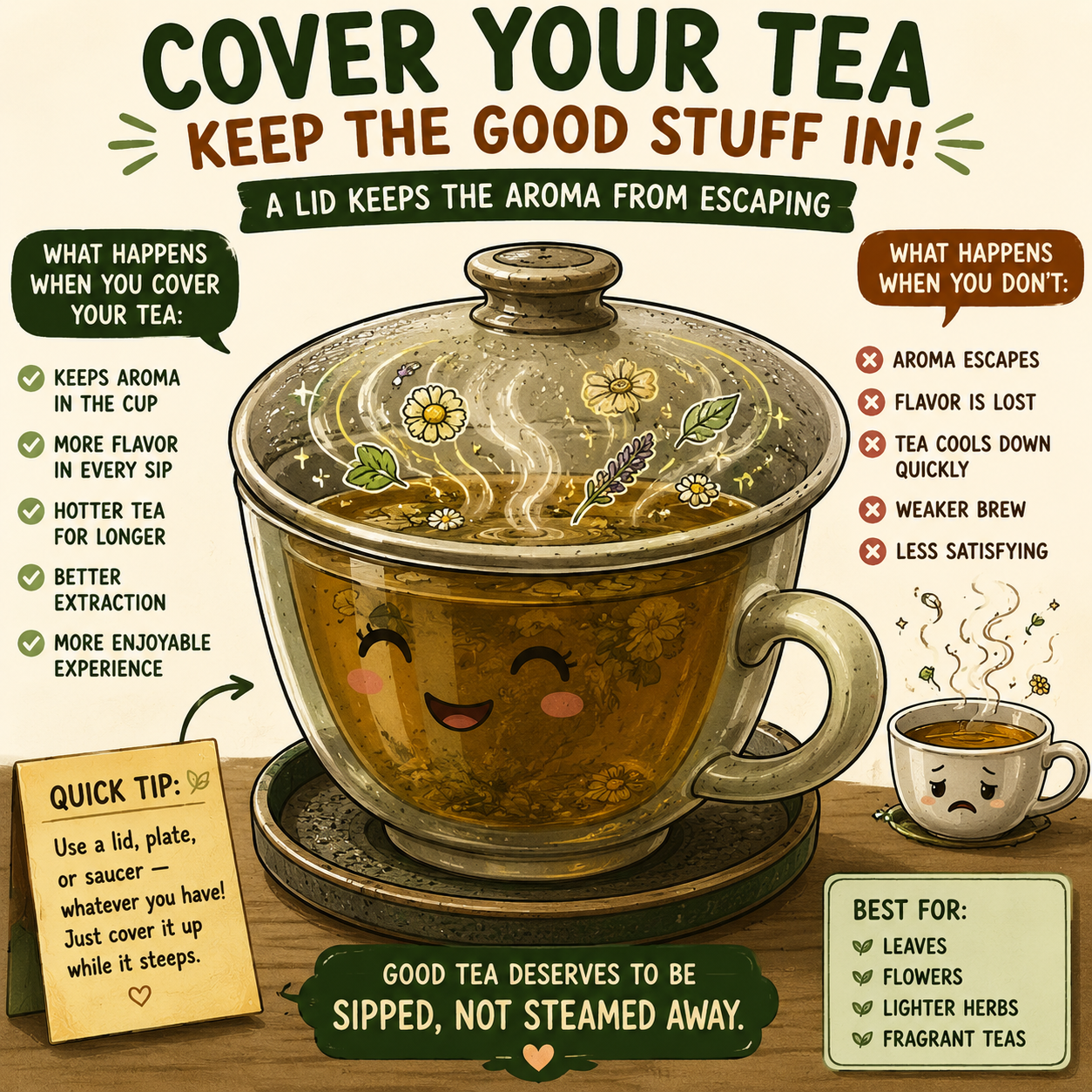 Beginner Brewing Tips That Actually Help
Cover Your Tea Steam carries aroma away.
Start Shorter
You can always brew longer.
You cannot un-bitter a cup of tea.
Taste As You Go
One of the BEST ways to learn.
Match the Method to the Herb
Leaves and flowers usually steep.
Roots and bark usually simmer.
Stop Trying to Brew “Perfect Tea”
Seriously.
Tea is personal.
The goal is NOT: impressing imaginary tea judges.
The goal is: making tea YOU actually enjoy drinking.
Helpful Beginner Herbal Guides & Tools
Beginner-Friendly Herbs for Tea
Easier Steeping Herbs
- Gou Qi Zi (Goji Berries)
- Sang Ye (Mulberry Leaf)
- Chrysanthemum
- Mint
These are often easier for beginners because they steep more gently and predictably.
Herbs Often Better for Decoction
Dense Herbs
- roots
- bark
- mushrooms
- Shan Yao
- He Huan Pi
These often benefit from simmering instead of simple steeping.
Trusted Since 1994
At 1st Chinese Herbs, our goal is to help make herbs:
- easier to understand
- easier to prepare
- easier to use confidently
We believe herbal education should feel:
- practical
- beginner-friendly
- honest
- approachable
Not overwhelming.
Final Thoughts
If your herbal tea tastes:
- weak
- bitter
- flat
- muddy
- disappointing
…it does NOT automatically mean:
the herbs are bad.
Sometimes the difference between:
“This tastes awful.”
and:
“Wow… this is actually amazing.”
is simply:
- 2 more minutes
- less water
- the right preparation method
- better herb ratios
- or realizing your taste buds prefer lighter tea instead of ultra-dark herbal swamp water.
And honestly?
That is part of the process.
Most experienced tea drinkers did not magically know the “perfect brew.”
They learned:
- gradually
- imperfectly
- one cup at a time
Usually after accidentally making at least ONE cup that tasted like somebody boiled a hiking trail.
My Personal Tip: