Starwest Botanicals
Organic White Tea Bags
White Tea Bags vs. Green Tea: Why They’re Different White tea and green tea come from the same plant—Camellia sinensis—but they’re made differently. That difference in processing is why white tea...
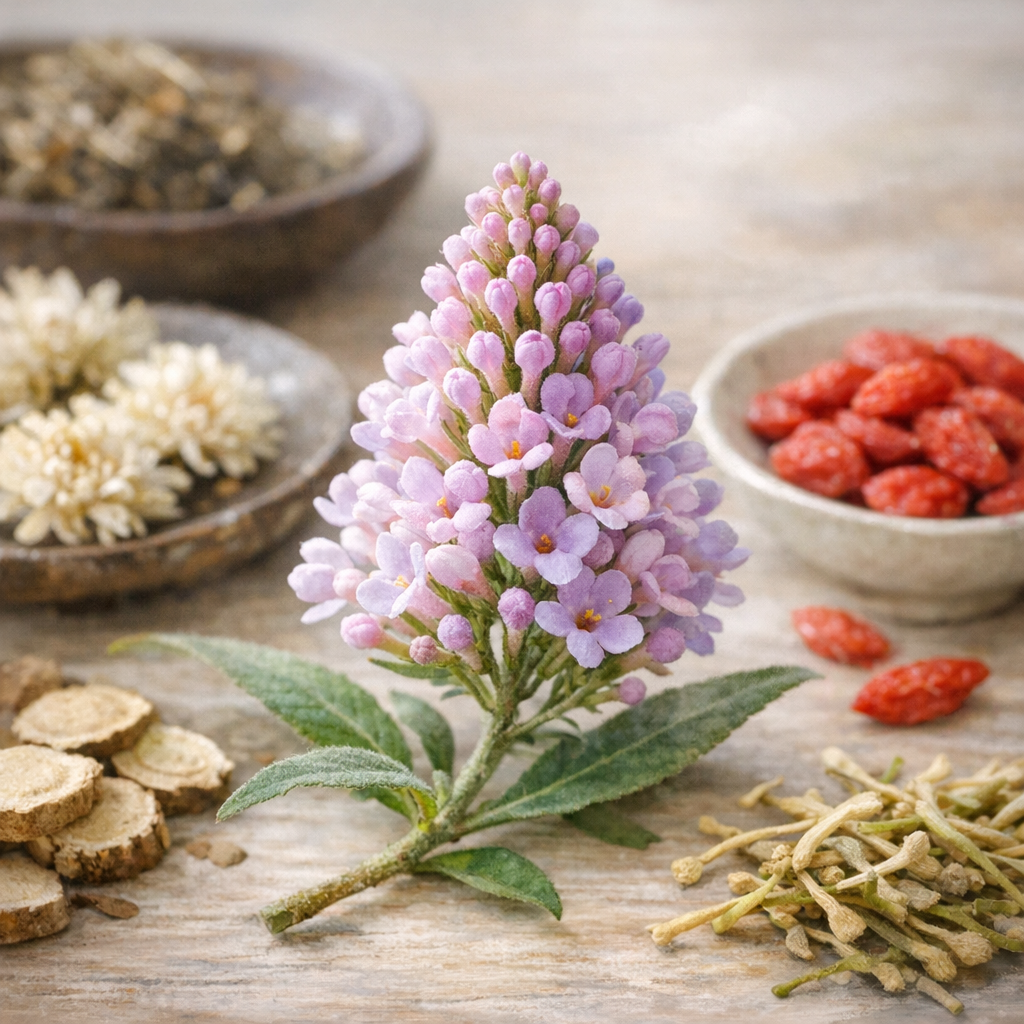
If your eyes feel hot, irritated, or “wind-blown” (think: red, itchy, dry-feeling, glare-sensitive), Traditional Chinese Medicine has a classic flower for that category: Mi Meng Hua—the flower bud of Buddleja (Butterfly Bush). In TCM language, it’s used to clear Liver heat and benefit the eyes—which is basically a poetic way of saying it’s traditionally chosen when the eyes feel inflamed, overworked, and cranky.
We’ll break down what it is, how to use it safely as a tea, what consumers commonly misunderstand online, and how to choose the right “Mi Meng Hua” (because yes—mislabeling happens).

Mi Meng Hua (Buddleja officinalis flower bud) is traditionally used to:
Support eye comfort when eyes feel red, irritated, dry, or sensitive to light (TCM “Liver heat / wind-heat” patterns).
Provide botanical compounds studied for antioxidant / anti-inflammatory activity in lab research.
Brew into a simple floral tea or combine with classic “eye-support” herbs like chrysanthemum and goji (depending on your pattern).
Taste/Temp/Channels (TCM): Sweet, Cool; Liver channel.
Typical decoction dosage: commonly 3–9 g (practitioner-guided).
Mi Meng Hua (密蒙花) typically refers to Flos Buddlejae—the dried flower buds / inflorescences of Buddleja officinalis used in Chinese herbal practice.
Buddleja flower / Buddleia flower
Butterfly bush flower bud
Mi Meng Hua / Flos Buddlejae
In some markets, herbs sold under “Meng Hua / Mi Meng Hua” can be mixed up with similar-looking flowers (including regional substitutes). A Hong Kong CMRO document notes confusion between Flos Buddlejae and other “meng hua” materials in trade.
What we recommend:
Buy Buddleja officinalis specifically (not just “butterfly bush”).
Choose vendors who can provide a Certificate of Analysis (COA) and identity verification.
In Traditional Chinese Medicine, Mi Meng Hua is commonly described as a flower that:
Clears Liver heat
Disperses wind
Benefits the eyes (used when eyes feel hot, red, uncomfortable, watery, or blurry in “wind-heat / Liver fire” type patterns).
TCM Category (common classification): “Herbs that drain fire / clear heat” groupings vary by school, but the consistent theme is heat-clearing for eye presentations.
Mi Meng Hua contains multiple compound classes (including flavonoids and phenethyl alcohol glycosides) that are studied for antioxidant and anti-inflammatory behavior in lab settings.
A 2024 review summarizes traditional use history and research interest around eye-related applications and chemistry—but human evidence varies by outcome and preparation.
Important: Dietary supplements are not approved to diagnose, treat, cure, or prevent disease. We discuss traditional use + emerging research so you can make informed choices with your clinician.
Traditionally chosen for eye presentations associated with “heat” and “wind.”
Certain constituents have been studied for antioxidant activity in lab research.
In TCM, the Liver system is linked with the eyes; Mi Meng Hua is commonly paired in formulas aimed at that pattern picture.
How to Use Mi Meng HuaBasic method
Rinse quickly (optional).
Add 3–9 g dried buds to a mug or small pot.
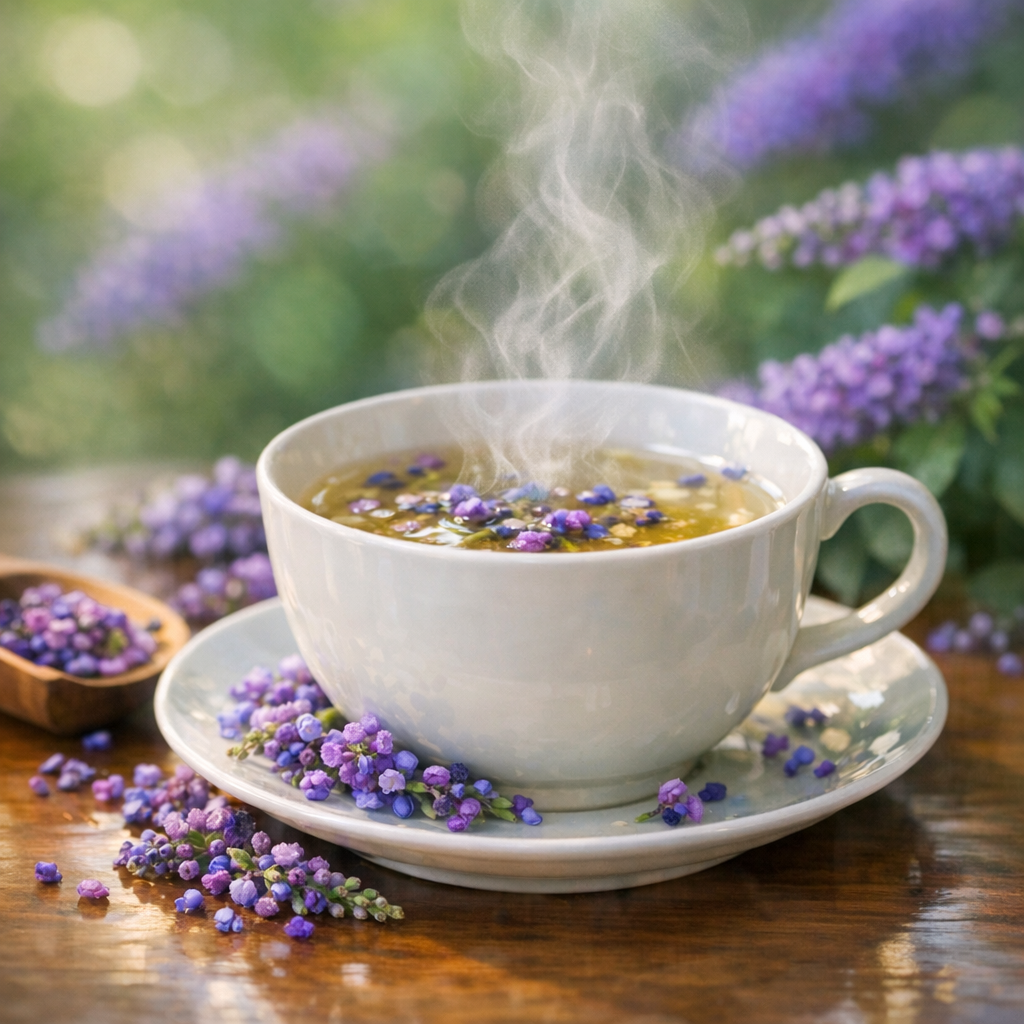
Pour hot water, steep 10–15 minutes (or gently simmer 10–20 minutes if you want a stronger brew).
Drink 1–2x/day as needed.
Taste tip: It’s mildly floral. Many people add chrysanthemum or a squeeze of lemon.
Simmer with other herbs 20–30 minutes; dosage is typically practitioner-guided (often still in the 3–9 g range for the flower component).
Powder can be convenient, but quality + identity matters more here. Choose products with COAs and clear sourcing.
These are popular traditional pairings for eye comfort patterns, but your best match depends on whether the presentation is more “heat,” “dryness,” or “deficiency.”
Ju Hua (Chrysanthemum): common “wind-heat” + eye comfort pairing.
Gou Qi Zi (Goji): often chosen when the pattern leans more “nourish” than “clear.”
Gu Jing Cao: frequently mentioned as a complementary eye herb in the same conversation.
Simple blend idea (starter):
Mi Meng Hua + chrysanthemum as a gentle tea, then adjust based on how you feel.
Common TCM dosage range: 3–9 grams (in decoction/tea), unless directed otherwise by a practitioner.
Because you may be taking medications (and many of our customers are managing complex health pictures), we recommend:
Start low
Use for short periods first
Reassess rather than “mega-dosing”
Use extra caution if you:
Are pregnant or nursing (always clinician guidance)
Have chronic digestive weakness (flowers can still be drying/cooling for some)
Take multiple medications
One herb guide warns: avoid taking concurrently with diuretics.
(If you’re on a “water pill,” ask your clinician/pharmacist before using.)
Quality/safety rule: Avoid unknown “marketplace bundles” where identity isn’t verified—this is where giant marketplaces like Amazon can be a mixed bag unless the seller provides real testing documentation.
How to Choose a High-Quality Mi Meng HuaWhen customers compare us to Me & Qi or Plum Dragon Herbs, the deciding factors for trust usually come down to:
Correct species listed: Buddleja officinalis (not generic “butterfly bush”)
Harvest part: flower bud/inflorescence
COA available + clean handling
Appearance: intact buds, clean aroma, not dusty, not stale
“Butterfly bush” is a common name used for several Buddleja species. In Chinese herb practice, Mi Meng Hua is typically tied to Buddleja officinalis specifically.
Traditional use is often “as needed” for short-term comfort, but response varies with the person and the pattern. If symptoms are severe, persistent, or involve vision changes, get medical evaluation.
Some people use it seasonally. We prefer short trial periods first, then reassess—especially if you take medications.
That’s where pattern matters. Some people combine “clear” herbs (like Mi Meng Hua) with “nourish” herbs (like goji) depending on the presentation.
1) Buddleja officinalis Maxim.: A review of its botany, ethnopharmacology, phytochemistry, pharmacology, and therapeutic potential for ophthalmic diseases (2024)
https://pubmed.ncbi.nlm.nih.gov/37541402/
2) Anti-inflammatory and antioxidant activities of chemical constituents from the flower buds of Buddleja officinalis (Nat Prod Res)
https://pubmed.ncbi.nlm.nih.gov/34498975/
3) Antioxidative constituents from Buddleia officinalis (flowers; classic constituent paper)
https://pubmed.ncbi.nlm.nih.gov/12877553/
4) Chemical profiles and quality evaluation of Buddleja officinalis (HPLC-Q-TOF-MS/MS; quality/chemistry)
https://pubmed.ncbi.nlm.nih.gov/30412801/
5) Separation of acteoside and linarin from Buddlejae Flos (Buddleja officinalis) (quality/marker compounds)
https://pubmed.ncbi.nlm.nih.gov/32031325/
6) Effects of extract of Buddleja officinalis on partial inflammation of lacrimal gland in a dry eye model (animal model)
https://pubmed.ncbi.nlm.nih.gov/22553532/
7) Effects of Buddleja officinalis extract eye drops on lacrimal gland cell apoptosis in a dry eye model (animal model)
https://pubmed.ncbi.nlm.nih.gov/22553515/
8) Neuroprotective effect of Buddleja officinalis extract in a stroke model (traditional use context; non-eye)
https://pubmed.ncbi.nlm.nih.gov/16880613/