

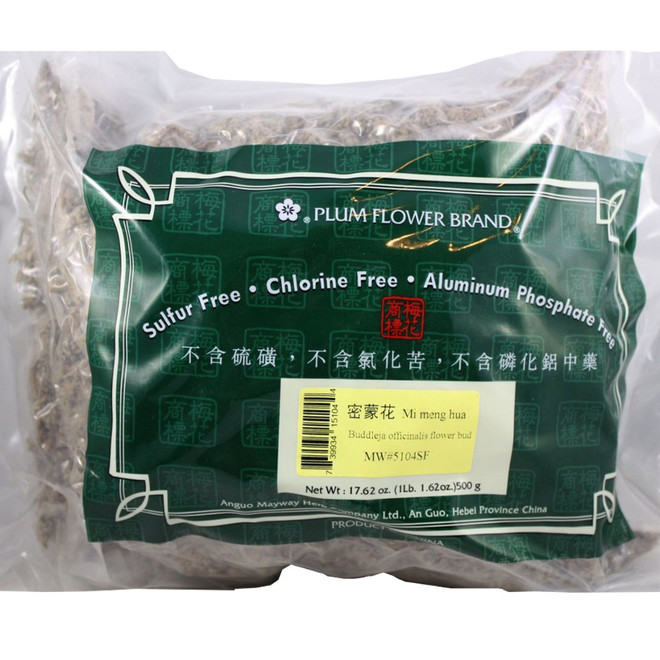
Buddleja Flower Bud (Mi Meng Hua) — Bulk Cut Herb (Plum Flower)
Species-Authenticated • Additive-Free • Traditional Chinese Herb for Liver Channel Support
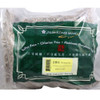
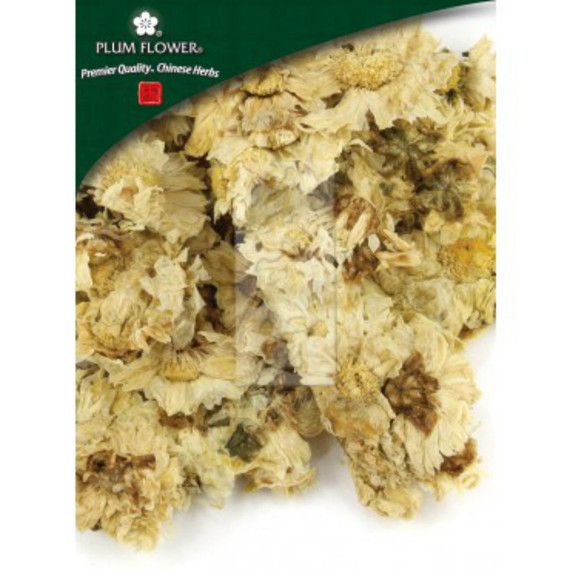
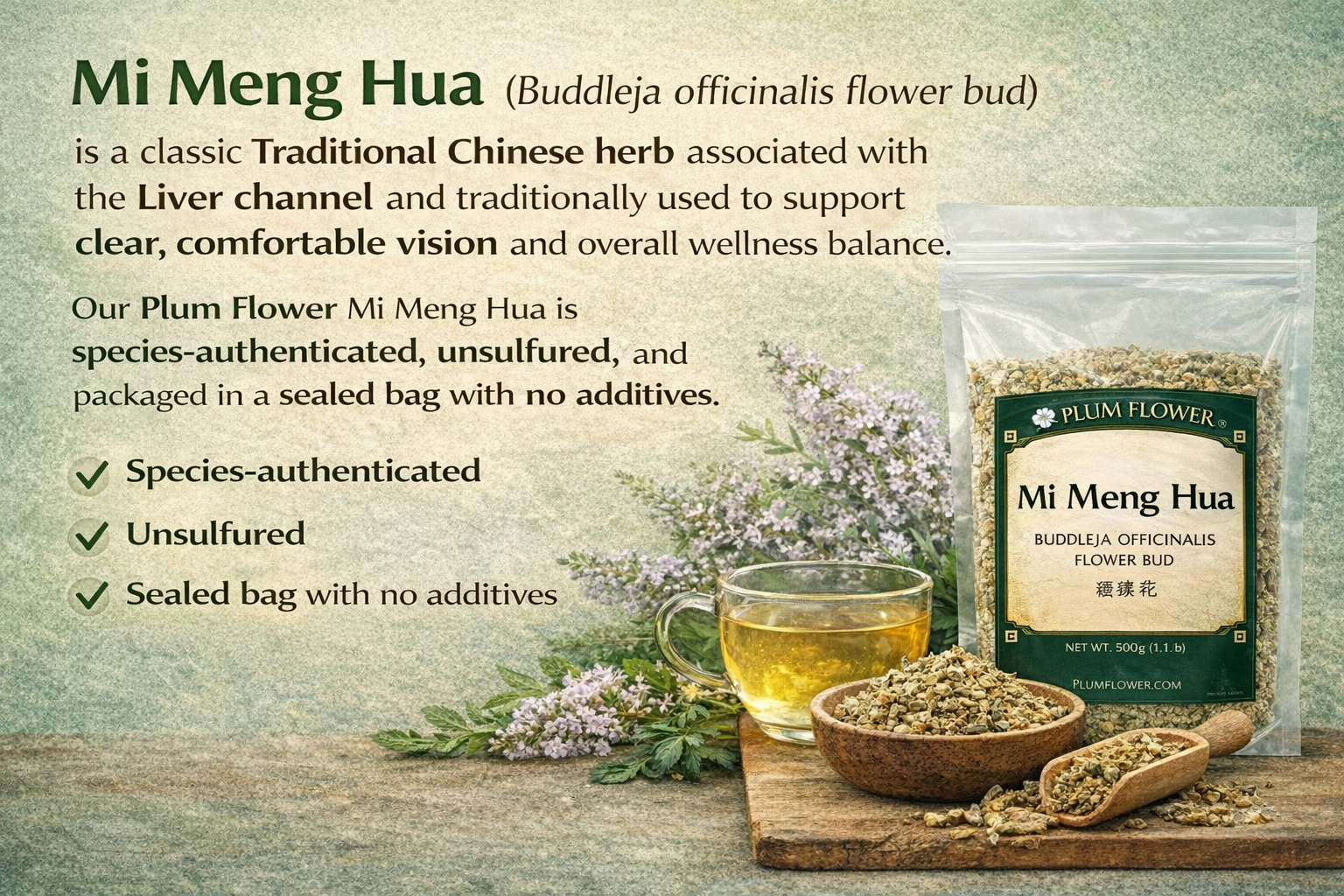
Mi Meng Hua (Buddleja officinalis flower bud) is a classic Traditional Chinese herb associated with the Liver channel and traditionally used to support clear, comfortable vision and overall wellness balance. Our Plum Flower Mi Meng Hua is species-authenticated, unsulfured, and packaged in a sealed bag with no additives.
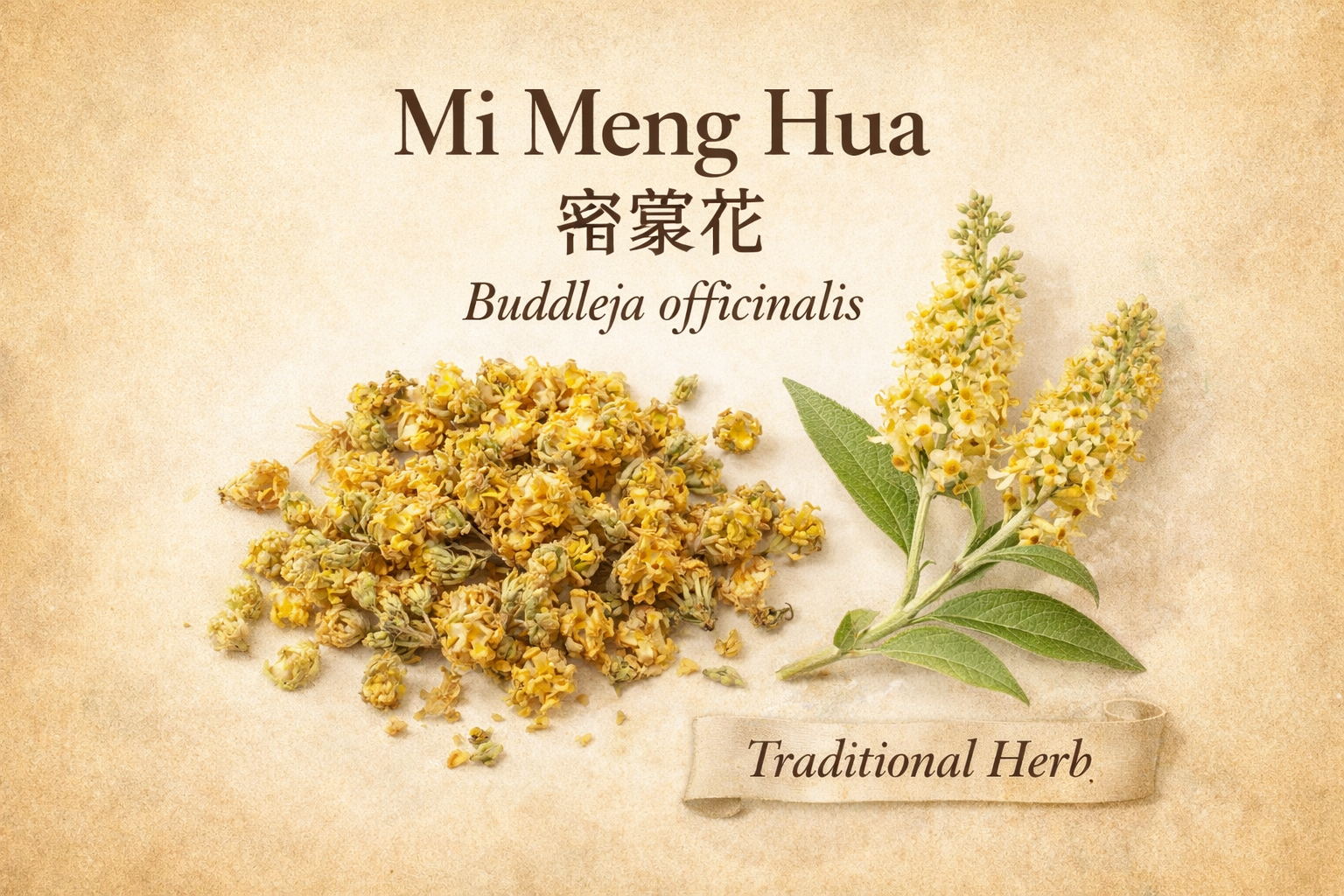
Quick Facts About Mi Meng Hua
-
Common Name: Buddleja (Buddleia) Flower Bud
-
Pin Yin: Mi Meng Hua (密蒙花)
-
Botanical Name: Buddleja officinalis flower bud
-
Other Names: Flos Immaturus Buddlejae Officinalis; Buddleja Flower Bud
-
TCM Channels/Meridians: Liver
-
Taste & Temperature (TCM): Sweet, Cool
-
Form: Cut / sliced buds (sizes vary naturally)
-
Net Weight: 500 g (1.1 lb)
-
Ingredients: 100% single herb (no additives)
-
Origin: China
-
Brand: Plum Flower (species-authenticated herbs)
-
Cautions: Not for pregnancy/nursing unless advised; avoid large doses
-
Prop 65: See notice below
What Is Mi Meng Hua?
Mi Meng Hua is the immature flower bud of Buddleja officinalis. In Traditional Chinese Medicine, it is commonly selected as part of wellness routines focused on the Liver system, which in TCM is traditionally linked with the eyes and visual clarity.
This page is written for education and general wellness support and is not medical advice.
Why People Use Mi Meng Hua in Traditional Practice
In traditional use, Mi Meng Hua is commonly chosen to support:
-
Comfortable, clear vision support as part of a traditional wellness routine
-
Liver-channel balance (TCM framework)
-
Seasonal or lifestyle “reset” routines when eyes feel tired from daily strain
Important: These are traditional wellness uses. This product is not intended to diagnose, treat, cure, or prevent any disease.
Naturally Occurring Components
Mi Meng Hua naturally contains plant compounds often discussed in herbal literature, including:
-
Acacetin
-
Luteolin
-
Buddleo-glucoside
-
p-Methoxycinnamoylaucubin
(These are naturally occurring constituents found in the plant and are not added.)
How to Use Mi Meng Hua (Bulk Cut Form)
Because this is cut/sliced bulk herb, it’s most often used as a tea or decoction.
Option A: Tea (steep)
-
Place the herb in a teapot or mug infuser.
-
Pour hot water over the herb.
-
Steep, strain, and sip.
Option B: Decoction (traditional simmer)
-
Add herb to a pot with water.
-
Bring to a gentle simmer.
-
Simmer, strain, and use as directed.
How much should I take?
Follow practitioner instructions. If you don’t have a practitioner, use conservatively and consider professional guidance—especially if you’re combining multiple herbs.
What Herbs Combine with Mi Meng Hua?
In traditional pairing practice, Mi Meng Hua is often combined with other herbs depending on the practitioner’s strategy. Common pairings include:
-
Abalone Shell + Mi Meng Hua
-
Chaste Berry + Mi Meng Hua
-
Astragalus Milk Vetch Seed + Mi Meng Hua
-
Cassia Seed + Mi Meng Hua
(Pairing choices should be guided by a qualified practitioner for best results and appropriate fit.)
Quality and Trust: Why Plum Flower?
Many shoppers compare herb listings across marketplaces and competitors. The difference is often verification, handling, and documentation.
Plum Flower quality standards (as provided by brand practice and standard expectations):
-
Species-authenticated sourcing
-
GMP-manufactured handling standards
-
Quality control testing at manufacturing and third-party confirmation
-
Airtight sealed packaging for freshness
-
Pin Yin + botanical name clearly labeled
-
COA commonly available upon request (where applicable)
If you’d like documentation, contact us and request the COA.
Storage Tips
-
Store sealed in a cool, dry place
-
Avoid sunlight, moisture, and strong odors
-
Reseal tightly after each use to maintain freshness
Cautions and Safety
-
Do not use if pregnant or nursing unless advised by a qualified professional.
-
Do not use in large doses.
-
If you take medications or have a medical condition, consult your clinician or practitioner before use.
-
Discontinue use if sensitivity occurs.
California Prop 65
California requires Prop 65 warnings on many natural products due to potential exposure to trace constituents or environmental contaminants. If you’d like product-specific documentation, request a COA.
Frequently Asked Questions
Is Buddleja the same as “butterfly bush”?
“Buddleja/buddleia” can refer to multiple species commonly called butterfly bush. This product is labeled specifically as Buddleja officinalis flower bud (Mi Meng Hua), a traditional Chinese herb species.
What does “cut form” mean?
It means the herb is sliced/cut for brewing. Natural size variation is normal.
Can I take Mi Meng Hua every day?
Some people use herbs in routine wellness programs, but the best approach depends on the person. If you’re using it regularly, it’s smart to consult a qualified practitioner.
How do I prepare bulk herbs properly?
Use our step-by-step guide in the Related Links section below.
Shop Mi Meng Hua (Buddleja Flower Bud) — Bulk Cut (Plum Flower)
If you want a single-herb, additive-free, species-authenticated Mi Meng Hua in true bulk cut form for tea/decoction, this is a trusted choice.
Traditional Chinese Herbs
Chinese Traditional herbs should be regarded as an added feature to modern western healthcare, and not as a replacement. Chinese traditional herbs (Teas) emphasize harmony, and balance.
References
What it is / traditional use” (Mi Meng Hua / Flos Buddlejae)
-
Buddleja officinalis Maxim.: A review of its botany, traditional uses, phytochemistry and pharmacology
https://pubmed.ncbi.nlm.nih.gov/37541402/
2) Antioxidant activity + key constituents from the flower buds
-
Antioxidative constituents from Buddleia officinalis (isolates flower compounds; highlights luteolin/acteoside antioxidative activity)
https://pubmed.ncbi.nlm.nih.gov/12877553/ -
Total peroxynitrite scavenging capacity of phenylethanoid and flavonoid glycosides from the flowers of Buddleja officinalis
https://pubmed.ncbi.nlm.nih.gov/19952410/ -
Anti-inflammatory and antioxidant activities of chemical constituents from the flower buds of Buddleja officinalis
https://pubmed.ncbi.nlm.nih.gov/34498975/
3) Anti-inflammatory research
-
Anti-Inflammatory effect of Buddleja officinalis on vascular inflammation
https://pubmed.ncbi.nlm.nih.gov/20503474/ -
Activation of AMPK by Buddleja officinalis Maxim. flower extract (mechanism-focused preclinical paper)
https://pmc.ncbi.nlm.nih.gov/articles/PMC5394415/
4) Modern profiling
-
Pharmacological in vitro profiling of Buddleja officinalis extracts
https://pubmed.ncbi.nlm.nih.gov/39541792/
-
“Mi Meng Hua (Buddleja officinalis flower bud) is a traditional herb with modern review literature describing its historical use and phytochemistry.”
-
“Flower buds contain naturally occurring flavonoids/phenylethanoid glycosides, including compounds such as luteolin and related constituents studied for antioxidant activity in lab research.”
-
“Extracts and isolated constituents have been studied in preclinical research for anti-inflammatory pathway activity.”