Starwest Botanicals
Organic White Tea Bags
White Tea Bags vs. Green Tea: Why They’re Different White tea and green tea come from the same plant—Camellia sinensis—but they’re made differently. That difference in processing is why white tea...
If your hair, skin, and energy feel “dried out,” this is the herb ancient healers reached for.
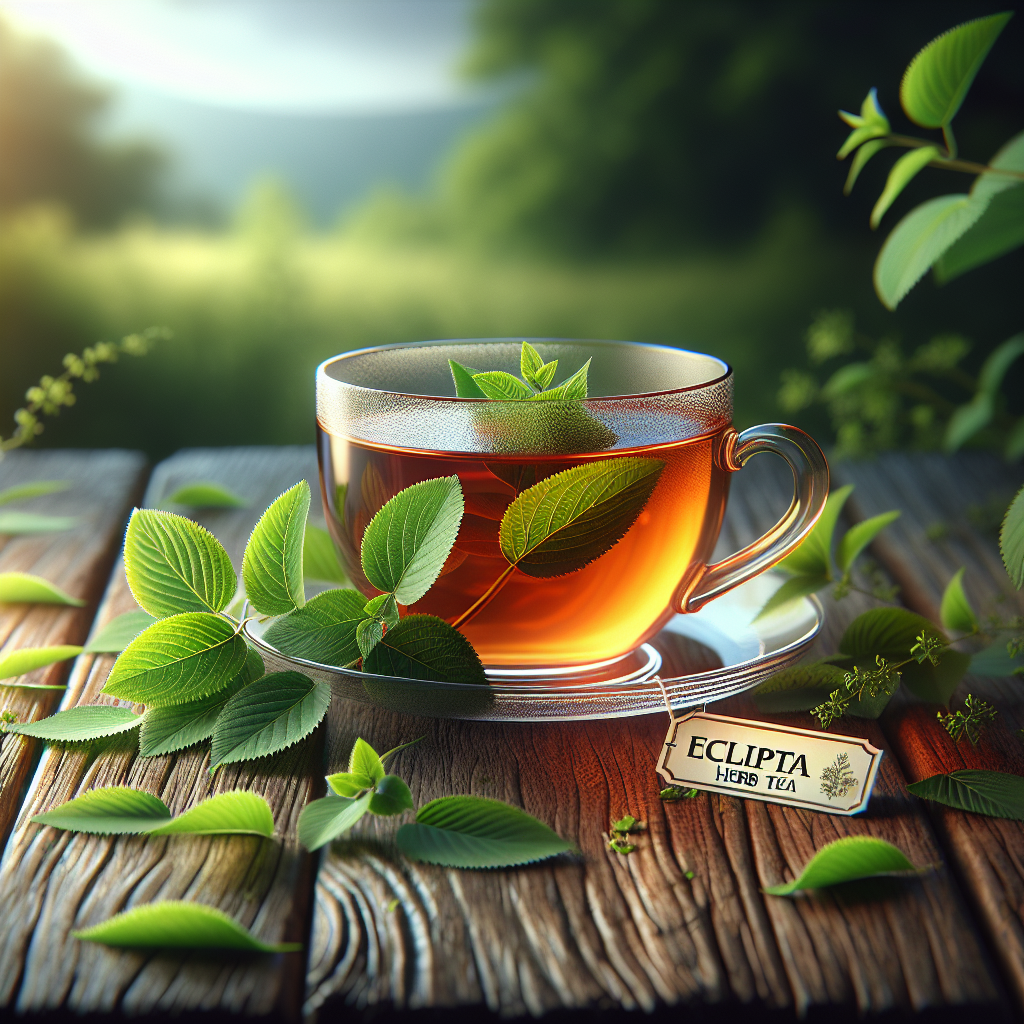
Eclipta — known in Chinese medicine as Mo Han Lian and in Ayurveda as Bhringraj — nourishes Yin, supports the Liver & Kidneys, and has been cherished for centuries to maintain healthy hair, hydrated skin, calm energy, and graceful aging.
Trusted across China and India, this humble leaf has a legendary reputation as “the herb of beautiful hair and longevity.”
| Attribute | Details |
|---|---|
| Names | Eclipta, Mo Han Lian, Bhringraj, False Daisy |
| Category | Nourish Yin |
| Meridians | Liver, Kidney |
| Taste | Sweet, Sour |
| Temperature | Cool |
| Best For | Dry scalp, dull hair, Yin deficiency, heat signs, dry skin, aging support |
| Pairs Best With | Nu Zhen Zi, He Shou Wu, Goji Berry |
| Forms | Whole herb, powder, tea extract, capsules |
Eclipta (Mo Han Lian/Bhringraj) is used in Traditional Chinese Medicine to nourish Yin, support the Liver and Kidneys, and promote healthy hair, skin, and complexion. Commonly taken as a tea, powder, or tincture, it is known for helping maintain natural scalp hydration, vitality, and graceful aging. Best used consistently for several weeks. Avoid if digestion is weak or body feels cold.
| TCM Understanding | Modern-Language Explanation |
|---|---|
| Nourishes Liver & Kidney Yin | Supports balance, hydration, and healthy aging systems |
| Cools & nourishes Blood | Helps maintain calm, moisture balance, and skin vitality |
| Maintains hair & scalp vitality | Antioxidant compounds traditionally used for scalp comfort and shine |
| Calms excess heat & dryness | Balances internal dryness from stress, aging, heat, or depletion |
✅ This herb isn't stimulating — it replenishes. Think cool dew on dry earth.
You may consider Eclipta if your pattern includes:
Dry hair or scalp
Hair lacking luster or fullness
Heat from deficiency
Feeling “dried up” or depleted
Yin deficiency signs (warm at night, dry eyes, dryness)
Seeking graceful aging support
Avoid or balance with warming herbs if digestion is weak or stools are loose.

Daoist herbal journals called Eclipta “the herb that returns youthful essence.”
Used with Ligustrum (Nu Zhen Zi) for vitality and hair longevity.
Ancient Ayurvedic tradition says:
“Use Bhringraj and your hair will turn black and glossy like a raven’s wing.”
Legends tell herbalists placed the leaves on temples for clarity, calm, and renewal.
"I brewed Eclipta tea with Goji berries daily. After 8 weeks my hair looked fuller and shinier."
"Warm nights and restlessness eased when I added Eclipta to my evening routine with Reishi."
"Adding Eclipta powder to my morning tea noticeably supported my skin moisture and clarity over time."
(Anecdotal user experiences. Individual results vary.)
| Herb | Best Use | Temperature | Key Benefit |
|---|---|---|---|
| Eclipta | Hair hydration, scalp comfort, calm Yin support | Cool | Moisturizes & nourishes |
| He Shou Wu | Thickening, longevity tradition | Neutral | Essence & blood nourishment |
| Nu Zhen Zi | Dry eyes, aging Yin support | Neutral | Kidney Yin + eyes |
| Gou Qi Zi | Dryness, beauty tonifier | Neutral | Yin + blood + eyes |
| Goal | Best Choice |
|---|---|
| Shiny, nourished scalp & hair | Eclipta |
| Thickness & longevity tradition | He Shou Wu |
| Deep Yin & eye support | Nu Zhen Zi |
| Youthful glow & dryness | Goji Berry |
How to Use Eclipta| Strength | Amount | Water | Time |
|---|---|---|---|
| Light | 3g | 2 cups | 20 min simmer |
| Standard | 6g | 3 cups | 25–30 min |
| Strong | 9g | 3 cups | 35 min |
Tip: Drink warm in evening to nourish Yin.
1–3 grams daily in warm water, tea, or smoothie
| Goal | Add |
|---|---|
| Hair vitality | Goji + He Shou Wu |
| Skin glow | Dang Gui + Chrysanthemum |
| Calm Yin | Reishi + Schisandra |
A traditional Yin-nourishing decoction for hair vitality, skin hydration, and inner calm.
Eclipta is a Yin-nourishing herb with dense medicinal compounds, so it is traditionally simmered (decocted) — not just steeped like a green tea.
3–9 grams dried Eclipta herb
(3g gentle daily balance, 6g standard, 9g deep Yin support — based on practitioner teachings)
2–3 cups clean water
Optional pairing herbs (choose one for synergy):
Goji Berry (Gou Qi Zi) – glow & eyes support
He Shou Wu – hair nourishment tradition
Chrysanthemum – clarity and cooling
Schisandra – gentle adaptogenic harmony
These herbs are traditionally combined in TCM formulas — adjust amounts as guided by a practitioner.
Small non-reactive pot (ceramic, clay, stainless steel)
Fine strainer
Mug or thermal flask
| Step | Action | Time |
|---|---|---|
| 1 | Measure 3–9 grams of Eclipta | — |
| 2 | Add herb to pot with 2–3 cups of water | — |
| 3 | Bring to a gentle boil, then reduce to a low simmer | — |
| 4 | Cover the pot to preserve aromatics | — |
| 5 | Simmer | 20–35 minutes |
| 6 | Strain into mug | — |
| 7 | Drink warm and preferably evening-time | — |
Traditional TCM tip:
The cooling, Yin-nourishing nature makes this best enjoyed in the late afternoon or evening.
| Goal | Amount | Notes |
|---|---|---|
| Gentle daily tonic | 3g | Subtle support |
| Standard TCM use | 6g | Most common |
| Deep Yin focus | 9g | Stronger taste, deeper effect |
Start low and increase gradually based on comfort and professional guidance.
Many classical herbalists recommend two extractions to fully draw constituents.
1st boil: 25 minutes
2nd boil: 20 minutes
Combine liquids → sip slowly.
(For busy lifestyles)
1 teaspoon dried Eclipta or ½ teaspoon powder
Add to tea strainer
Bloom in just-boiled water for 8–10 minutes
This method works — but a simmered decoction gives richer medicinal extraction.
Eclipta has a mild, earthy, cooling herbal taste.
Few goji berries
Drop of organic honey (add after cooling slightly — avoid heating raw honey)
Splash of lemon slice (for enjoyment — note: lemon adds a tiny warming quality)
Avoid too much sugar — sweetness weakens Spleen Qi in TCM.
| Time | Why |
|---|---|
| Evening | Traditionally nourishes Yin as the body transitions to rest |
| After meditation/yoga | Enhances inner calm & grounding |
| Before bed | Gentle settling, mental quiet support |
Yes — but warming or room-temperature is classically preferred in TCM to protect digestion.
What it is: Eclipta (Mo Han Lian / Bhringraj) is a cooling Yin-nourishing herb used in TCM for balancing Liver/Kidney systems and traditional hair/skin support.
Why it’s used (TCM): Replenishes Yin and “cools the blood,” traditionally linked with hair vitality, scalp comfort, skin moisture, and graceful aging.
References
How it may work (modern lens): Rich in wedelolactone and flavonoids with antioxidant and inflammatory-pathway effects explored in preclinical studies, which offers a modern rationale for traditional uses. PubMed+2PMC+2
Antioxidant capacity / key constituents: Narrative and analytical reviews summarize Eclipta’s wedelolactone, demethyl-wedelolactone, phenolics, flavonoids and broad antioxidant activity. This supports the page’s “cooling/oxidative-stress” education. PubMed+2PMC+2
Hair-related preclinical signals: Multiple mouse/rat studies (topical or extract) report hair growth facilitation (anagen induction, follicle density/length). These are animal data and not clinical claims. PubMed+5PubMed+5PubMed+5
Liver/hepatoprotective models: Extracts show protective effects in CCl₄/ethanol/high-fat models in rodents, often attributed (in part) to wedelolactone and antioxidant pathways. Educational support for “Liver system” discussion in TCM (not treatment claims). PubMed+3PubMed+3PubMed+3
Anti-inflammatory pathway work (mechanistic, preclinical): Wedelolactone and Eclipta extracts have been investigated for NLRP3 inflammasome modulation and other inflammatory cascades; this provides a modern mech-bridge to the page’s “calming/cooling” language. PMC+1
Broad ethnopharmacology/pharmacology reviews: Overviews document traditional uses (hair/skin/liver) and phytochemistry, PubMed+2PMC+2