
Many people searching for energy-supporting herbs quickly discover that Ginseng is only one of several herbs traditionally compared for vitality, resilience, and long-term wellness support. The problem is that many tonic herbs sound similar online while feeling completely different in real life. Some herbs are warming and stronger. Some are gentler and easier for beginners. Others are traditionally preferred for tea, soups, powders, or modern adaptogen-style routines. How These Herbs Compare Compare herbs, explore traditional differences, and find the herbal forms that best fit your routine and preferences. Scientific & Traditional Research References Modern researchers continue studying traditional tonic herbs because many contain naturally occurring compounds associated with resilience, stress adaptation, endurance, recovery, and long-term wellness support. Traditional Chinese herbal systems evaluate these herbs differently than modern Western systems, and many studies are still ongoing. Panax Ginseng Review: Traditional uses, active compounds, and modern pharmacological research. Journal of Ginseng Research. https://pmc.ncbi.nlm.nih.gov/articles/PMC3659612/ Ginseng and Fatigue Support Research: Review discussing energy, vitality, and stress adaptation research. PLOS ONE. https://pmc.ncbi.nlm.nih.gov/articles/PMC5102849/ Astragalus membranaceus: Traditional tonic uses and modern research review. American Journal of Chinese Medicine. https://pubmed.ncbi.nlm.nih.gov/17080552/ Astragalus Root Polysaccharides and Wellness Research. Frontiers in Pharmacology. https://pmc.ncbi.nlm.nih.gov/articles/PMC8509239/ Codonopsis pilosula: Traditional use review and phytochemical research. Journal of Ethnopharmacology. https://pubmed.ncbi.nlm.nih.gov/31557572/ American Ginseng Research Review: Cooling tonic applications and modern investigations. Nutrients. https://pmc.ncbi.nlm.nih.gov/articles/PMC5579577/ Rhodiola rosea: Adaptogenic properties and fatigue-related research review. Phytomedicine. https://pubmed.ncbi.nlm.nih.gov/19016404/ Rhodiola and Stress Adaptation Research. Molecules. https://pmc.ncbi.nlm.nih.gov/articles/PMC9228580/ Eleutherococcus senticosus (Eleuthero): Traditional adaptogenic research review. Journal of Ethnopharmacology. https://pubmed.ncbi.nlm.nih.gov/11755480/ Adaptogens in Fatigue and Resilience Research. Medicines (Basel). https://pmc.ncbi.nlm.nih.gov/articles/PMC3991026/ Trusted Since 1994 | Lab-Tested Herbs | COA Available Upon Request | Fast Shipping from Washington StateGinseng vs Similar Energy Tonics: Which Herb Is Right for You?
Compare Ginseng, Astragalus, Codonopsis, Rhodiola, Eleuthero & American Ginseng Side-by-Side
Herb
Traditional Feel
Taste
Best Use
Good Starting Point?
Ginseng
Strong, warming, activating
Earthy & slightly bitter
Capsules, decoctions, sliced root
Moderate
Astragalus
Steady, balanced, mild
Slightly sweet
Tea, soups, daily wellness blends
Excellent
Codonopsis
Gentle, nourishing
Sweet & earthy
Tea, decoction, soup blends
Very Good
American Ginseng
Cooling & smoother
Slightly bitter
Slices, tea, capsules
Good
Rhodiola
Sharp, uplifting
Rosy & earthy
Capsules, extracts
Moderate
Eleuthero
Balanced & steady
Woody & earthy
Capsules, decoctions
Good
What You Need To Know
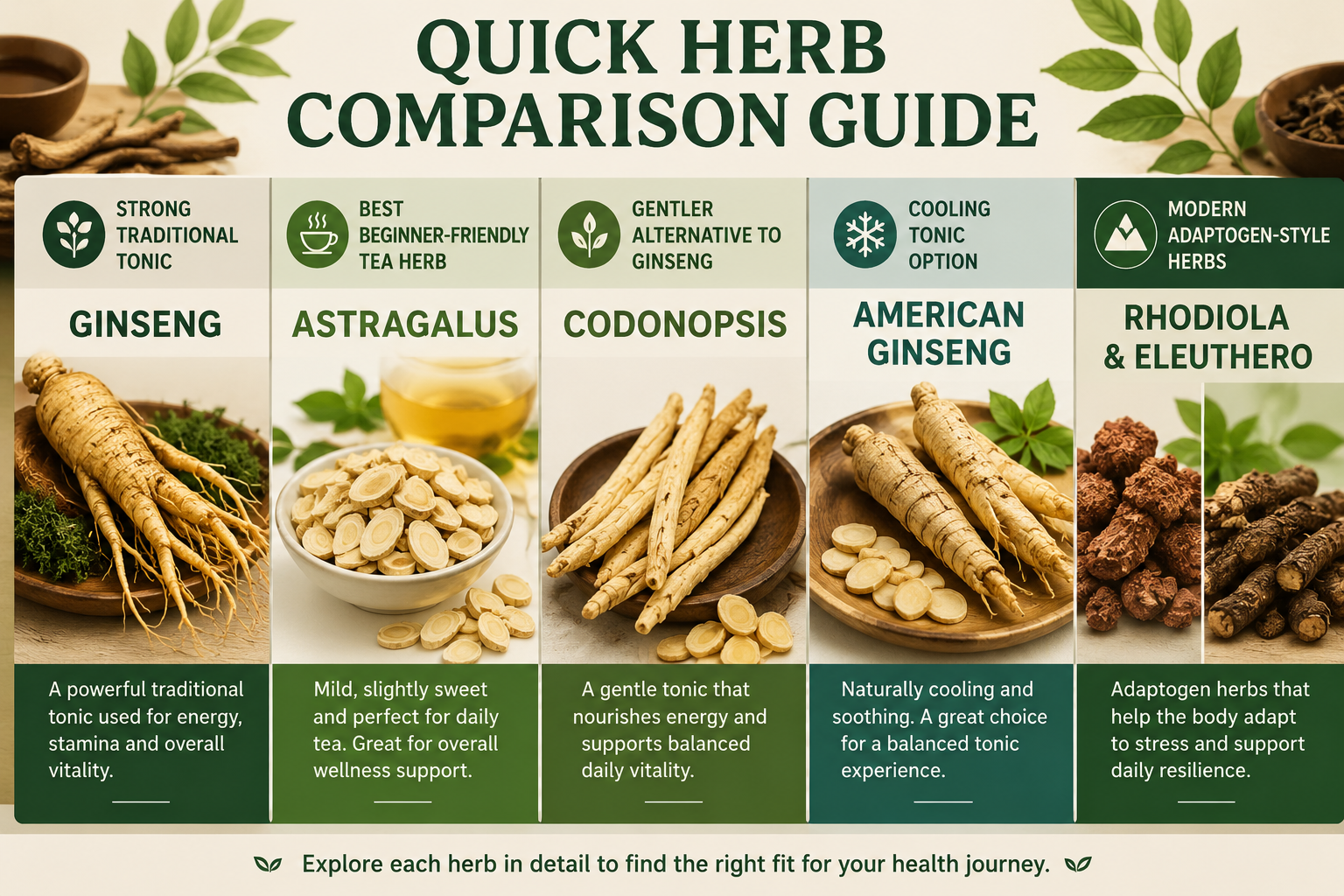
Astragalus and Codonopsis are often considered easier for beginners because the flavor is milder and the herbs are simple to prepare.
Ginseng is traditionally viewed as the strongest and most activating herb in this comparison group.
Astragalus and Codonopsis are usually preferred by people who dislike bitter herbal flavors.
American Ginseng is traditionally viewed as cooler in nature compared to standard Asian Ginseng.Best Way to Use Each Herb & Why
Often preferred as capsules, powders, or sliced root because the flavor can be strong. Capsules are popular for consistency and convenience.
Excellent in soups and teas because the flavor is naturally mild and slightly sweet, making it easy for long-term daily use.
Traditionally popular in tea and soup blends because it combines well with other herbs and has a softer flavor profile.
Often used as sliced root or tea because the cooling-style flavor works well for simple steeping.
Frequently chosen in capsule or extract form because many people find the flavor stronger and more bitter.
Often preferred as capsules or decoctions for steady long-term routines and convenience.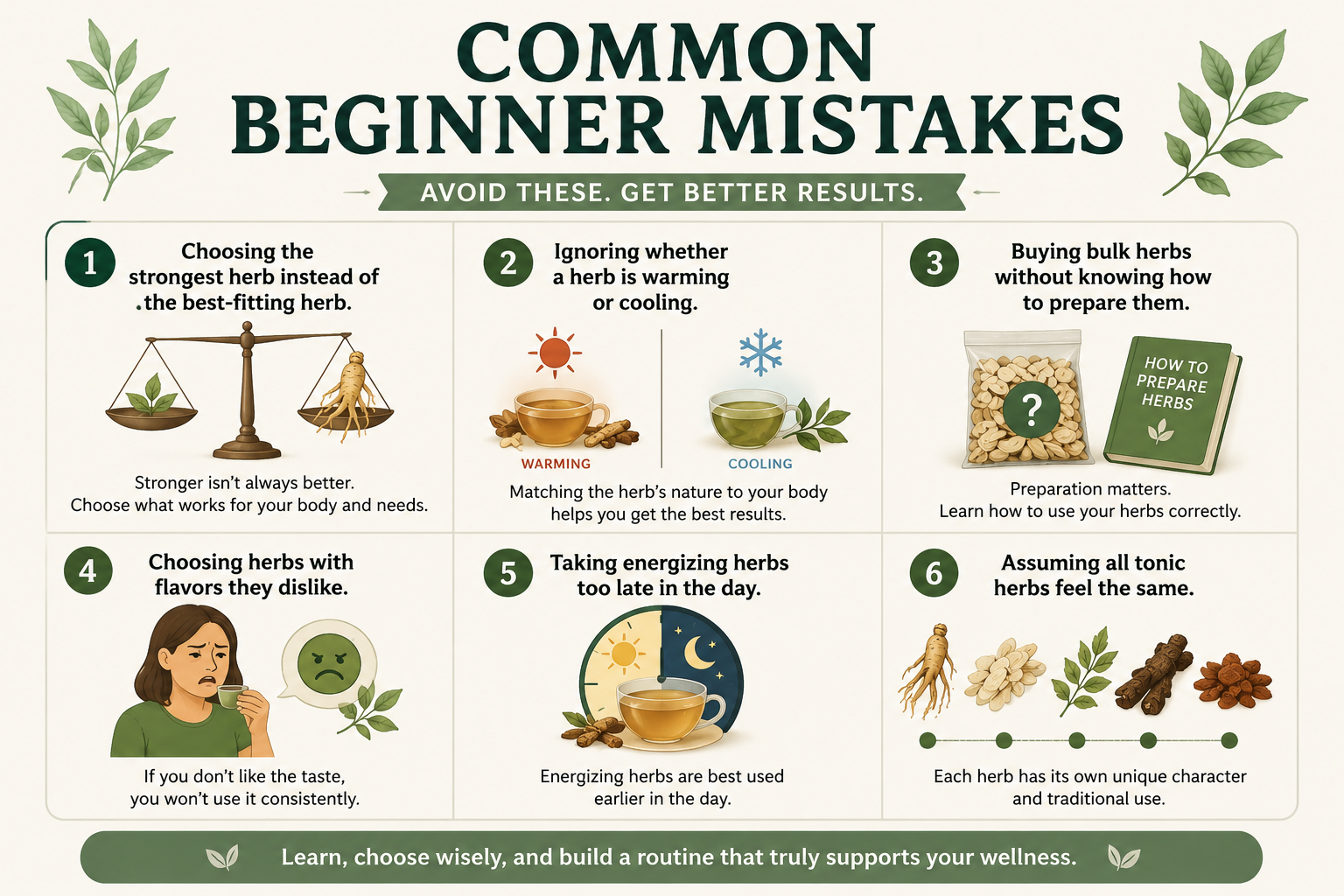
Common Beginner Mistakes
Helpful Herbal Guides
Explore Traditional Energy Tonics