
 How to Store Dried Herbs, Herbal Teas, and Spices
Proper storage helps dried herbs, herbal teas, roots, powders, and spices maintain their natural color, aroma, flavor, and overall quality. Even carefully sourced botanicals can deteriorate more quickly when exposed to light, heat, moisture, air, or strong household odors.
The best way to store dried herbs is in a clean, airtight container placed in a cool, dry, and dark location. A few simple storage habits can help protect your herbal products and make your pantry easier to organize.
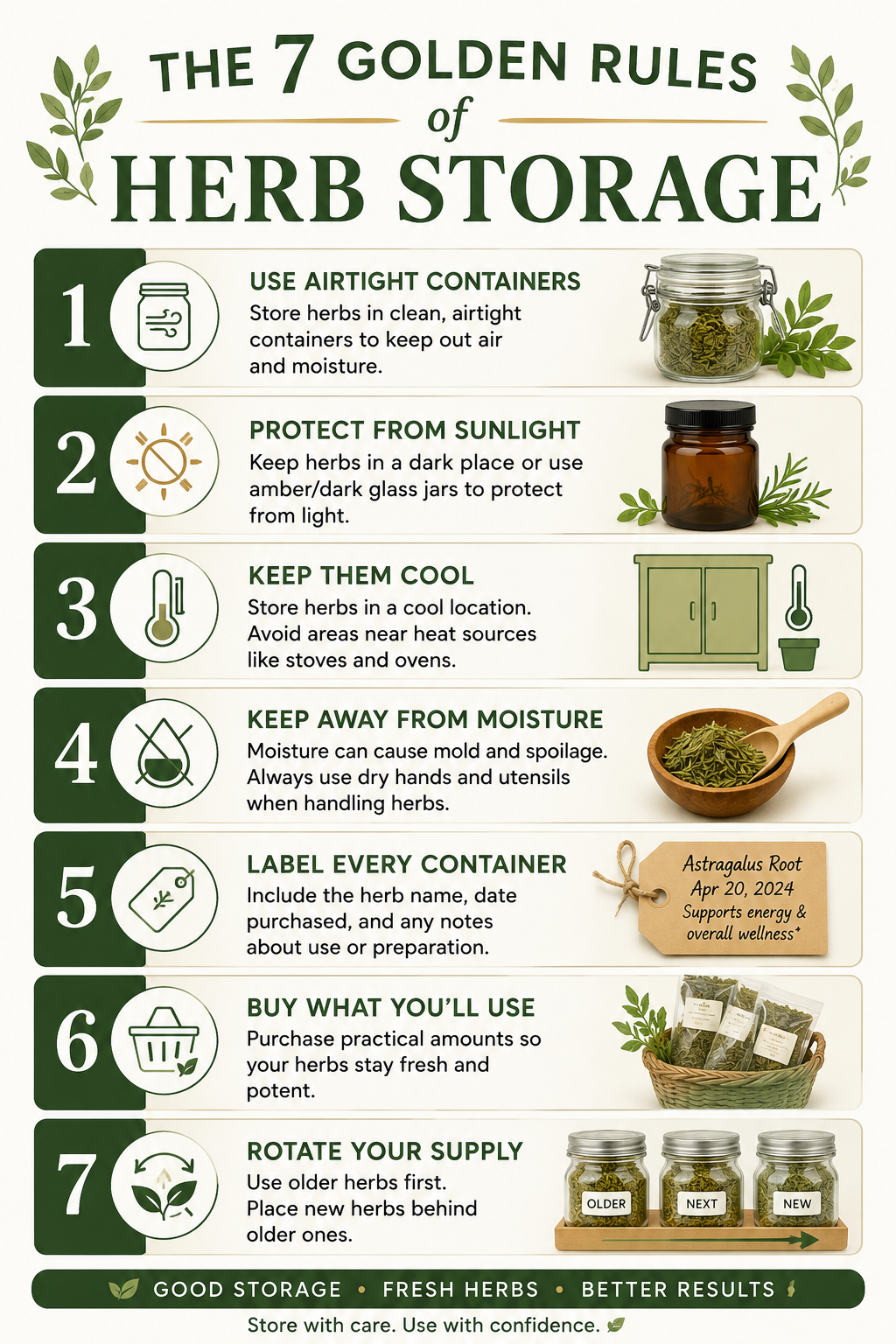
The Seven Golden Rules of Herb Storage
- Use airtight containers. Limit exposure to air and humidity by keeping lids tightly closed.
- Protect herbs from sunlight. Store herbs in a dark cupboard or use amber-colored glass jars.
- Keep herbs cool. Avoid cabinets near ovens, stoves, heating vents, or other heat sources.
- Prevent moisture exposure. Never use wet utensils or hold an open container over a steaming pot.
- Label every container. Include the herb name, purchase date, supplier, and preparation information.
- Buy practical quantities. Purchase amounts you are likely to use while the herbs are still fresh and aromatic.
- Rotate your supply. Place older herbs toward the front so they are used before newly purchased products.
Why Proper Dried Herb Storage Matters
Dried herbs are shelf-stable, but they are not completely unaffected by their environment. Their quality gradually changes over time, especially when they are stored improperly.
The five main factors that can reduce the freshness of dried herbs are:
- Light: Prolonged exposure to sunlight or bright indoor light can fade the natural color of leaves, flowers, roots, and spices.
- Heat: High temperatures may cause herbs to lose their distinctive aroma and flavor more quickly.
- Moisture: Humidity and condensation can cause clumping, spoilage, or visible mold.
- Air: Frequent exposure to air can gradually weaken an herb's aroma and freshness.
- Odors: Dried herbs may absorb strong smells from nearby foods, cleaners, spices, or household products.
Good storage cannot make an old herb new again, but it can help slow normal deterioration and protect the quality of freshly purchased herbs.
What Is the Best Container for Dried Herbs?
The best containers for dried herbs are clean, dry, food-safe, and airtight. The container should protect the herb from air, moisture, pests, and outside odors.
Glass Jars
Glass jars with tight-fitting lids are one of the best choices for storing dried herbs, teas, and spices. Glass does not easily absorb odors, allows you to inspect the contents, and can be washed and reused.
Amber, cobalt, or other dark-colored glass offers additional protection from light. Clear glass is also suitable when the jar is stored inside a closed cupboard, pantry, drawer, or covered storage box.
Clear Jars and Brown Paper Bags
If you only have clear glass jars and cannot store them in a dark cabinet, place each jar inside a clean brown paper bag. The bag helps block light and provides a convenient surface for labeling.
Do not rely on a paper bag alone for long-term storage. Paper is not airtight and does not adequately protect herbs from humidity, insects, or household odors.
Metal Containers
Food-safe metal tins with tight-fitting lids can be useful for storing tea, spices, and dried herbs. Choose containers intended for food storage and make sure the inside is clean, dry, and free from rust.
Plastic Containers and Bags
Food-safe plastic containers may be used for short-term storage, but glass is generally a better long-term option. Thin plastic bags can be punctured, may not seal completely, and offer limited protection from light and odors.
If herbs arrive in a resealable package, press out excess air before closing it and keep the package in a cool, dark cupboard. For longer storage, consider transferring the contents to a properly labeled airtight jar.
Container Comparison for Bulk Herbs
| Container Type | Best Use | Advantages | Considerations |
|---|---|---|---|
| Airtight glass jar | Long-term pantry storage | Reusable, easy to clean, protects from air and moisture | Clear glass should be kept away from light |
| Amber glass jar | Light-sensitive herbs and spices | Provides added protection from light | Contents may be harder to see |
| Food-safe metal tin | Tea, spices, and dried herbs | Blocks light and is easy to organize | Must remain dry and rust-free |
| Resealable product pouch | Short- to medium-term storage | Convenient and space-saving | Seal must remain tightly closed |
| Thin plastic bag | Temporary storage | Lightweight and inexpensive | Limited protection from punctures, light, and odors |
| Paper bag | Covering a clear jar | Blocks light and provides labeling space | Should not replace an airtight container |
How to Prepare a Storage Container
Before placing herbs into a jar or tin, make sure the container is completely clean and dry.
- Wash the container with warm, soapy water.
- Rinse thoroughly to remove soap residue.
- Allow the container and lid to dry completely.
- Check for lingering odors, cracks, rust, or moisture.
- Add the dried herb only after the container is fully dry.
- Attach a clear label before placing the container in storage.
Even a small amount of trapped water can create unwanted moisture inside a sealed jar. Never place dried herbs into a container that is still damp from washing.
Where Should You Store Dried Herbs?
The best place to store dried herbs, herbal teas, spices, and botanical powders is in a cool, dry, dark cupboard with a consistent temperature. A dedicated pantry shelf or kitchen cabinet away from heat and moisture helps preserve the natural quality of your herbs.
Frequent temperature changes and high humidity can gradually reduce freshness. Choosing the right storage location is just as important as selecting the proper container.
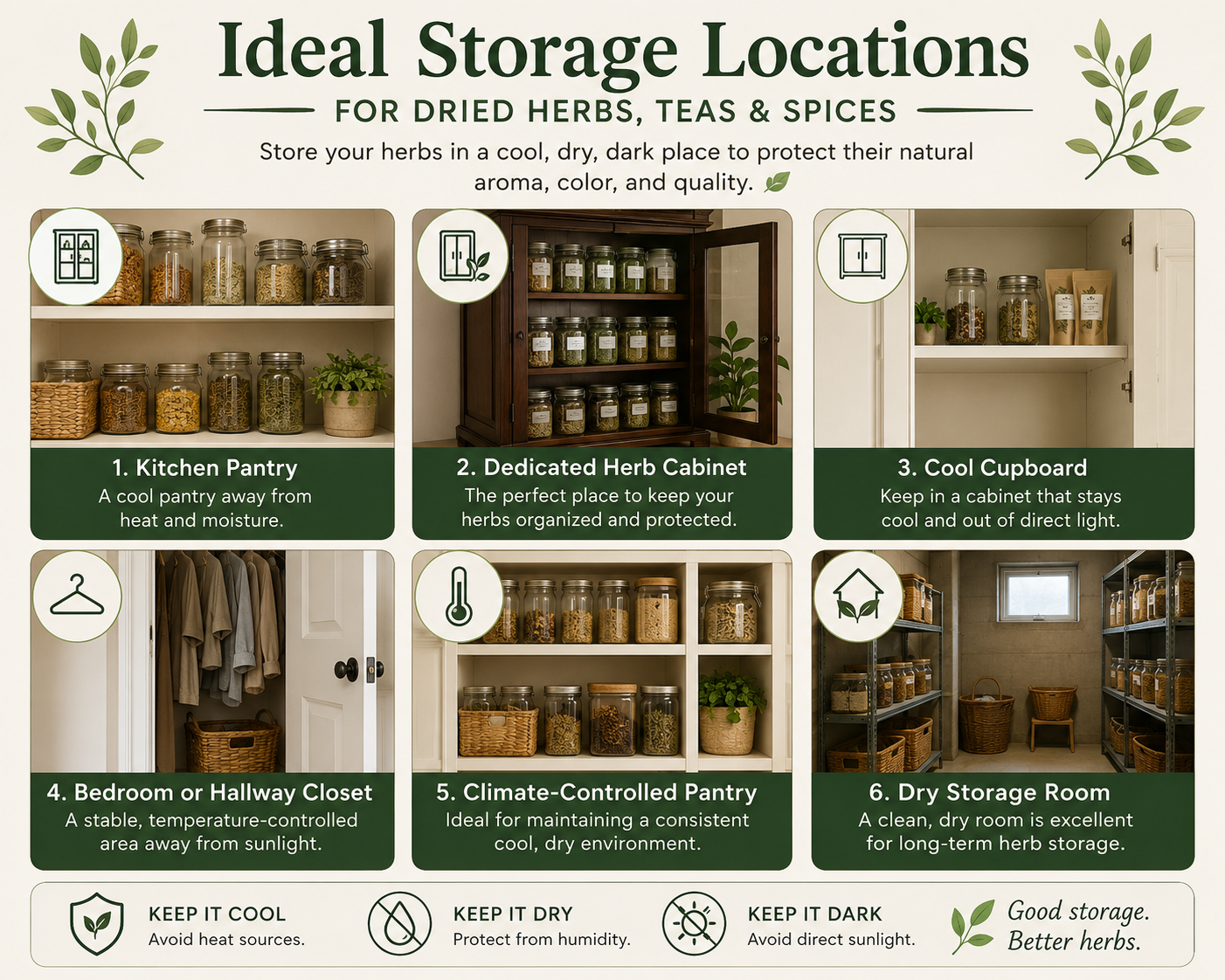
Ideal Storage Locations
- Kitchen pantry
- Dedicated herb cabinet
- Cool cupboard
- Bedroom or hallway closet
- Climate-controlled pantry
- Dry storage room
Avoid Storing Herbs Near
- Stoves and ovens
- Dishwashers
- Kitchen sinks
- Microwaves
- Coffee makers
- Kettles that produce steam
- Windows with direct sunlight
- Heating vents and fireplaces
- Bathrooms or laundry rooms
Should Herbs Be Stored in the Refrigerator?
For most dried herbs, teas, roots, powders, and spices, refrigeration is generally not recommended. Every time a container is removed from the refrigerator and returned, condensation can develop inside the jar as it warms to room temperature.
Even a small amount of moisture may affect the appearance, aroma, and quality of dried botanicals. Unless a product specifically recommends refrigeration, a cool, dry pantry is usually the better choice.
Can You Freeze Dried Herbs?
Most dried herbs do not require freezing. While freezing may seem like a good way to extend storage, repeated thawing and refreezing can introduce moisture into the container.
If you choose to freeze dried herbs for long-term storage, divide them into smaller airtight containers so each portion only needs to be thawed once.
How to Label Your Herb Containers
A clearly labeled container makes your herbal collection easier to organize and helps you quickly locate the herbs you need. Good labeling is especially helpful if you keep a variety of roots, leaves, flowers, mushrooms, teas, and powders.
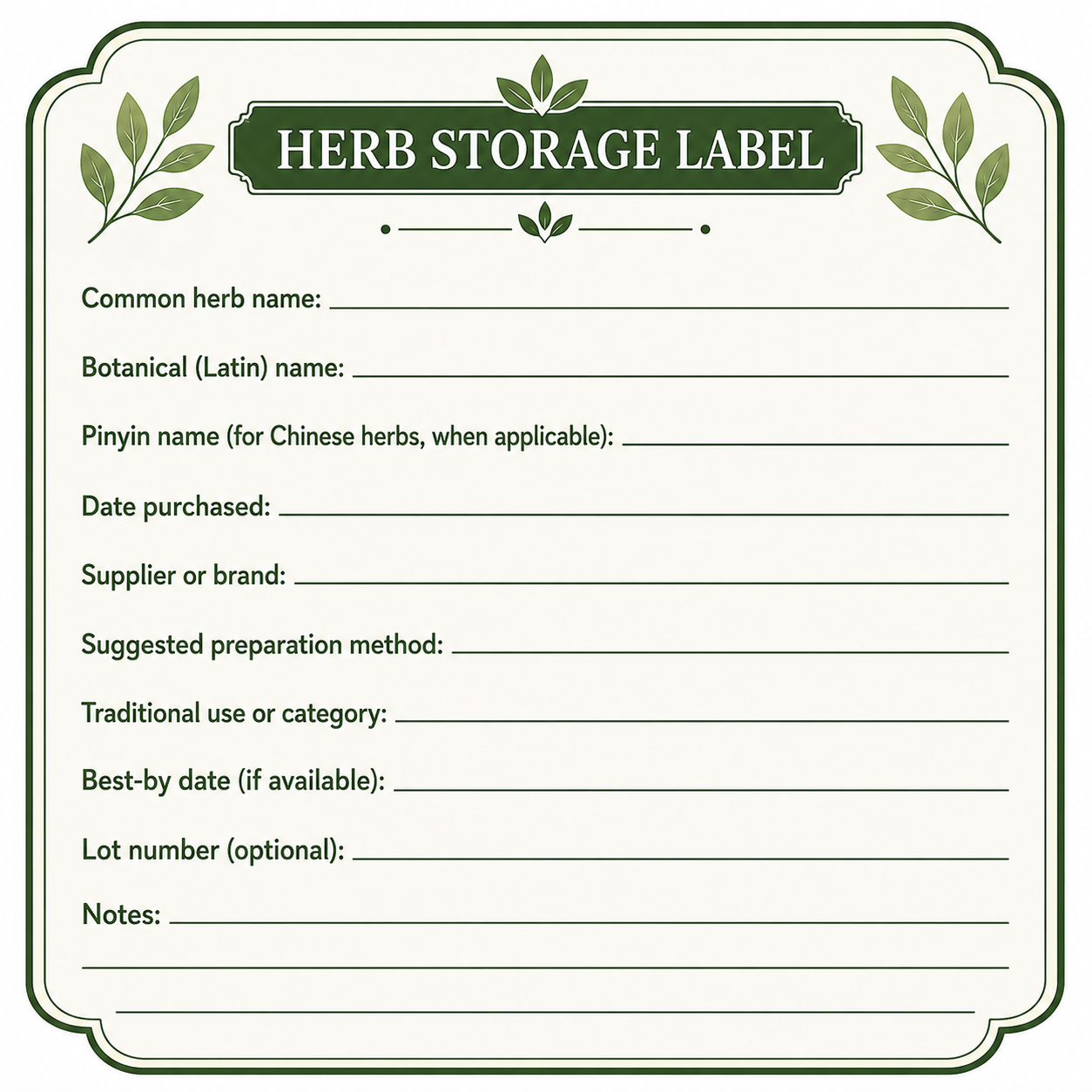
Consider including the following information on every container:
- Common herb name
- Botanical (Latin) name
- Pinyin name (for Chinese herbs, when applicable)
- Date purchased
- Supplier or brand
- Suggested preparation method
- Traditional use or category
- Best-by date, if available
- Lot number (optional)
Adding preparation notes and traditional uses to the label can be especially helpful when you have a large collection of herbs. Instead of searching through books or websites, the basic information is already available whenever you're ready to prepare your herbal tea, decoction, or recipe. Here is an example of one that you can copy and use.
How Long Do Dried Herbs Stay Fresh?
Dried herbs don't suddenly become unusable on a specific date, but their aroma, appearance, and flavor naturally decline over time. Proper storage can help maintain quality for a longer period.
| Product Type | Typical Best Quality |
|---|---|
| Whole roots and bark | 2–3 years |
| Whole leaves and flowers | 1–2 years |
| Cut and sifted herbs | 1–2 years |
| Powdered herbs | 6–18 months |
| Herbal teas | 1–2 years |
| Dried culinary spices | 1–3 years |
Storage conditions, packaging, and the type of herb all influence how well a product retains its quality over time.
Signs Your Herbs May Be Past Their Best
Inspect your herbs before preparing them. While many dried herbs naturally vary in color and texture, these signs may indicate that it's time to replace them.
- Very weak or no natural aroma
- Noticeably faded color
- Clumps caused by moisture
- Visible mold or mildew
- Evidence of insects or webbing
- Off or unusual odor
If you notice mold, insects, or an unusual smell, discard the product and clean the storage container thoroughly before reusing it.
Common Herb Storage Mistakes
Many people accidentally shorten the life of their herbs by making a few simple storage mistakes.
- Leaving containers open after use.
- Using wet spoons or measuring cups.
- Storing herbs above the stove.
- Keeping herbs on a sunny windowsill.
- Buying more than can reasonably be used.
- Mixing new herbs with older herbs in the same container.
- Forgetting to label jars.
A few simple storage habits can help keep your herbal collection organized, easy to identify, and ready whenever you need it.
Frequently Asked Questions About Storing Dried Herbs
Do dried herbs expire?
Dried herbs don't typically "expire" in the same way fresh foods do, but they naturally lose their aroma, flavor, and overall quality over time. Proper storage helps preserve their freshness for as long as possible.
Should dried herbs be kept in glass or plastic containers?
Glass containers with airtight lids are generally the preferred choice for long-term storage. Glass is easy to clean, doesn't readily absorb odors, and helps protect herbs when stored in a cool, dark location.
Can sunlight damage dried herbs?
Yes. Extended exposure to direct sunlight can gradually fade the natural color and aroma of dried herbs, teas, and spices. Store herbs in a dark cupboard or use amber-colored glass containers whenever possible.
Can I store different herbs together?
It's best to store each herb in its own labeled container. This helps preserve each herb's individual aroma and makes identification much easier.
Should I wash dried herbs before storing them?
No. Dried herbs should remain dry during storage. Introducing moisture may shorten their shelf life. If a recipe requires rinsing, do so immediately before use rather than before storage.
How can I tell if my herbs are still fresh?
Fresh, properly stored herbs usually retain their natural color and characteristic aroma. If a herb has very little scent, has become discolored, shows signs of moisture, mold, or insect activity, it should be discarded.
Quick Herb Storage Checklist
Use this checklist to help keep your herbs organized and maintain their quality.
- ✔ Store herbs in airtight glass containers whenever possible.
- ✔ Keep containers tightly sealed after every use.
- ✔ Store herbs in a cool, dry, dark cupboard.
- ✔ Keep herbs away from sunlight, heat, and steam.
- ✔ Never place wet utensils inside herb containers.
- ✔ Label every jar with helpful information.
- ✔ Rotate older herbs to the front of your collection.
- ✔ Check herbs periodically for freshness.
- ✔ Replace herbs that have lost their natural aroma or show signs of moisture.
Why Choose 1st Chinese Herbs?
Proper storage begins with purchasing quality herbs. Since 1994, 1st Chinese Herbs has supplied premium Chinese herbs, Western herbs, herbal teas, mushrooms, spices, and botanical ingredients to practitioners, herbalists, and wellness enthusiasts throughout the United States.
We carefully select products from trusted suppliers and offer one of the largest online selections of traditional herbs, roots, bark, flowers, fruits, seeds, powders, and extracts. Many products are available in multiple sizes, allowing you to purchase the quantity that best fits your needs.
- Trusted Since 1994
- Large Selection of Chinese & Western Herbs
- Lab-Tested Products Available
- Sulfur-Free Options
- Organic & Wildcrafted Selections
- Fast Shipping from Washington State
- Knowledgeable Customer Support
Final Thoughts
Learning how to store dried herbs properly is one of the easiest ways to help preserve their natural aroma, appearance, and overall quality. A few simple habits—using airtight containers, protecting herbs from light and moisture, labeling each container, and storing them in a cool, dry location—can make a noticeable difference in keeping your herbal collection organized and ready whenever you need it.
Whether you're building your first herbal pantry or managing an extensive collection of traditional Chinese herbs, culinary spices, herbal teas, or botanical powders, proper storage helps you get the most from every purchase.
Herb Storage Tip
Store herbs where you will remember to use them. The best storage system is one that's both protective and convenient. A well-organized herbal cabinet with clearly labeled containers makes it easier to enjoy your herbs regularly while helping maintain their quality.