
How to Use Chinese Herbal Teas for Immunity, Energy & Seasonal Wellness
Looking for the best herbal tea for immunity?
This guide explains how Chinese herbal teas support immune health,
which herbs to use, and how to prepare them correctly for daily use.
Every year, it happens.
School starts, routines shift—and suddenly colds, coughs, and fatigue begin making their way through homes, classrooms, and workplaces.
Most people react after they get sick.
But Traditional Chinese Medicine takes a different approach:
strengthen the body before illness takes hold.
This guide shows you how to use time-tested Chinese herbs to:
- support your body’s natural defenses
- stay consistent through seasonal changes
- build a simple daily tea routine that actually works
Pro Tip: Because the goal isn’t just to fight illness—it’s to stay resilient.
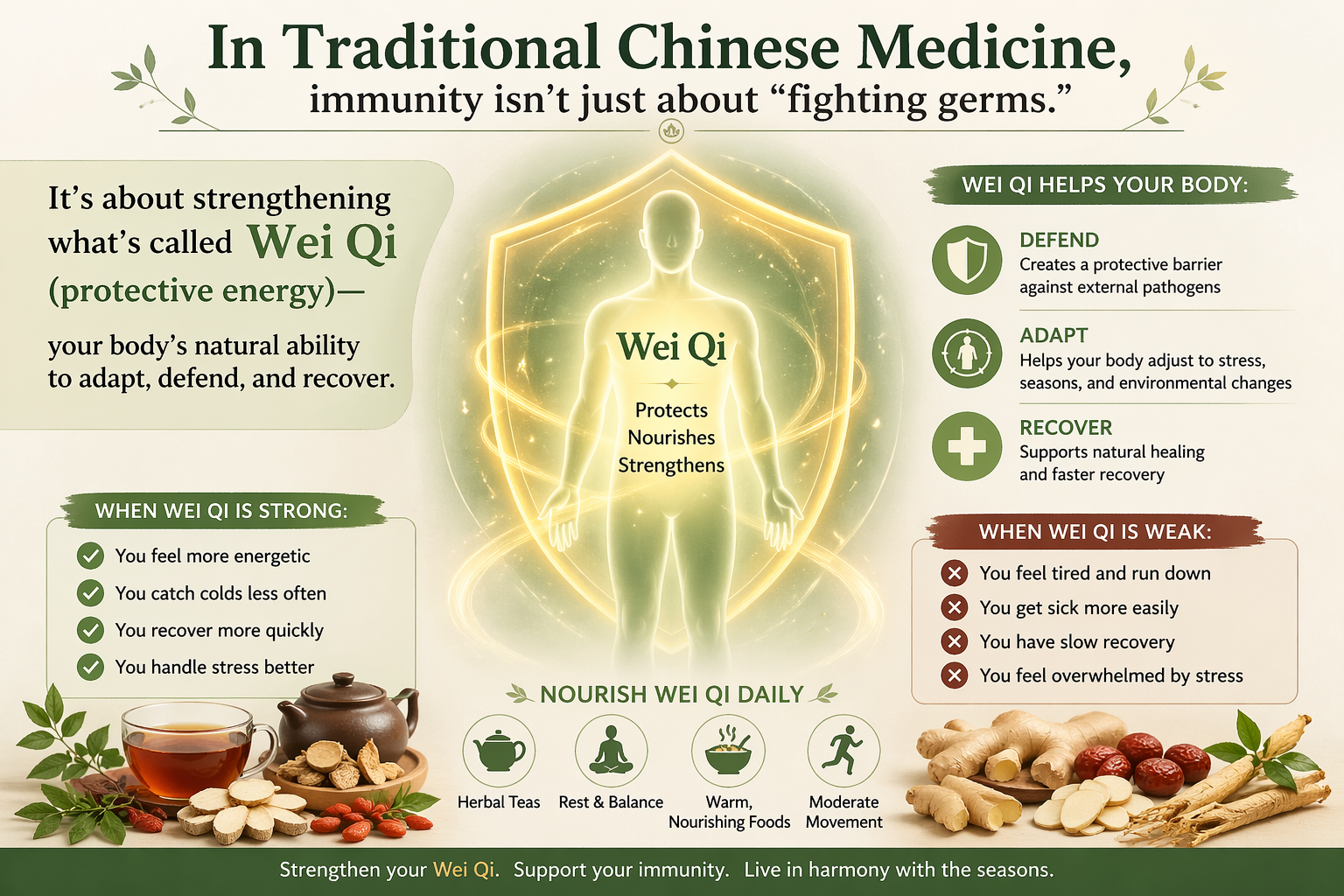
WHY TCM APPROACHES IMMUNITY DIFFERENTLY
In Traditional Chinese Medicine, immunity isn’t just about “fighting germs.”
It’s about strengthening what’s called Wei Qi (protective energy)—your body’s natural ability to adapt, defend, and recover.
When Wei Qi is supported:
- the body responds more efficiently
- seasonal transitions feel easier
- recovery tends to be smoother
This is why herbs are used daily, not just when symptoms appear.
CORE IMMUNE-SUPPORT HERBS
Astragalus (Huang Qi) — The Foundation Herb
Role: Builds long-term resilience
- Traditionally used to support protective Qi
- Often used daily during seasonal transitions
- Common in preventative herbal routines
Best use: simmered as a decoction for daily tea
Ginger (Sheng Jiang) — The Warming Activator
Role: Circulation + early-stage support
- Warms the body and supports digestion
- Often used at the first sign of imbalance
- Helps move and circulate fluids
Best use: quick tea or added to blends
Licorice Root (Gan Cao) — The Harmonizer
Role: Balances formulas + supports the lungs
- Frequently used in TCM formulas to harmonize herbs
- Soothing to the throat and respiratory system
- Helps tie blends together
Best use: combined with other herbs
Schisandra (Wu Wei Zi) — The Adaptation Herb
Role: Stress + resilience
- Supports the body’s ability to adapt to stress
- Traditionally used for lung and overall balance
- Adds complexity to tea blends
Best use: decoction or simmered tea
Elderberry — The Modern Addition
Role: Seasonal immune support
- Rich in antioxidants
- Widely used in Western herbal traditions
- Complements traditional formulas
Best use: syrup or tea
IMMUNE TEA FORMULA
Daily Immune Support Tea
Ingredients:
- 10g Astragalus
- 5 slices fresh ginger
- 5g licorice root
- 10g schisandra
Instructions:
- Add all herbs to 4 cups water
- Bring to a boil
- Reduce heat and simmer 25–30 minutes
- Strain and drink throughout the day
Use consistently for best results
WHY THIS FORMULA WORKS
| Herb | Role | Function in Blend |
|---|---|---|
| Astragalus | Foundation | Builds resilience |
| Ginger | Activator | Improves circulation |
| Licorice | Harmonizer | Balances formula |
| Schisandra | Adapter | Supports stress response |
Together, they create a balanced, functional formula
COMMON MISTAKES - EASY FIXES
Most people don’t get results because they:
- only use herbs when already sick
- use single herbs instead of combinations
- stop too quickly
- don’t use proper preparation methods
The biggest mistake: inconsistency
SIMPLE DAILY ROUTINE
Morning:
- Ginger tea
Midday:
- Immune blend
Evening:
- Light calming tea
Keep it simple. Stay consistent.
SCIENTIFIC SUPPORT
Modern research continues to explore traditional herbs:
- Astragalus immune modulation study
- Ginger and immune/inflammatory pathways
- Licorice root respiratory and anti-inflammatory effects
Build Your Immune Tea Routine Today
- Start with simple herbs
- Use the right preparation method
- Stay consistent